


Is silver a good investment? It can help diversify a portfolio and provide exposure to industrial demand, but its price can be volatile. In this article, we will examine returns, what drives price moves, the pros and cons, and practical ways to invest—so you can decide if silver fits your goals.
Is Silver a Good Investment?
Silver can be a useful addition to a diversified portfolio, but it isn’t suitable for everyone.
It may appeal to investors who can tolerate price swings and want exposure to both precious metals and industrial demand. Its price can rise when some investors buy silver to protect purchasing power during high inflation because it can hold value better than cash, but may fall when industrial demand weakens or market sentiment shifts. Silver’s industrial importance does not guarantee strong returns, so consider your goals, time horizon, and risk tolerance before investing.
Why People Buy Silver
There are various reasons why individuals invest in silver as both a defensive hedging and aggressive growth opportunities across multiple market environments:
✅ Inflation and Currency Protection: Silver is used as an asset that preserves value amid a declining currency or inflation.
✅ Safe-Haven Appeal: During geopolitical tensions, financial instability, or macroeconomic crises, silver frequently attracts safe-haven capital alongside gold.
✅ Portfolio Diversification: Due to its distinct historical correlation between stocks and bonds, silver reduces overall risk of the portfolio.
✅ Secular Industrial Growth: The long-term drivers of the inelastic demand of silver include the growing solar photovoltaic (PV), new energy vehicles (EVs), and AI electronic hardware industries.
Key Factors Impacting Silver Prices
Various factors influence silver prices, but the supply–demand equilibrium is the main determinant of price movements. Understanding where silver demand comes from—and how supply reaches the market—helps explain why prices can change.
Sources of Silver Demand
Industrial fabrication: Silver is used in solar panels, electronics, electric vehicles, and medical products.
Jewelry and silverware: Consumer demand for decorative items and tableware is particularly significant in markets such as Asia and the Middle East.
Bullion investment: Investors may buy physical silver as a store of value or as a hedge against inflation and currency depreciation.
Exchange-traded products (ETPs): These products provide investment exposure to silver, often backed by physical metal. Their holdings can shift in response to changes in investor sentiment and macroeconomic conditions.
Sources of Silver Supply
Mine production and byproduct dynamics: Much of the world’s silver is produced as a byproduct of copper, lead, zinc, and gold mining. As a result, silver output can depend on production decisions in those other mining sectors.
Recycling: Silver is recovered from industrial scrap, electronic devices, and jewelry.
Above-ground inventories: Existing stocks of bullion can be released to the market, helping meet demand when mine production and recycling are insufficient.
What Has Silver Actually Returned?
Silver has delivered solid gains over the past decade, but the ride hasn’t been smooth. Based on annual average prices, silver rose from $15.68 per ounce in 2015 to $40.03 in 2025—a gain of about 155%, or 9.8% a year on average, before inflation and costs. Although silver’s long-term annualized return is strong, it often shows large year‑to‑year swings, so investors should expect significant short‑term volatility.
Silver vs. other investments
Here’s how silver’s approximate annualized return compares with several familiar investments over the same period:
Silver’s returns can be a bumpy ride
Silver’s long-term gains don’t tell the whole story. Its price has dropped sharply after major peaks, including the spikes around 1980 and 2011. During the 2020 market shock, silver fell before rebounding later that year. Investors who bought near a peak may have waited years to see prices recover; those who bought during a downturn had a better starting price, though it’s difficult to know when a decline has reached its bottom.
That’s why silver may suit investors who can handle price swings and take a long-term view. If you’re considering silver, look beyond its average return and think about how comfortable you’d be holding it through a steep drop.
Silver Versus Gold—and the Alternatives
Both silver and gold don’t pay interest or dividends: silver tends to be cheaper for small purchases and benefits from industrial demand during rallies, while gold is more compact and trades in deeper, more liquid markets.
When Might Silver Be a Better Fit?
🔸When economic growth and manufacturing activity strengthen: Rising demand from industries such as electronics and solar energy often boosts silver demand.
🔸When precious metals are rallying and investors are willing to take more risk: Silver often outperforms gold during rallies, but it can also fall more sharply.
🔸When industrial demand is strong and supply is tight: Shifts in silver’s supply and demand may have a greater effect on its price.
🔸When you’re comfortable with bigger price swings: Silver may offer more upside during a strong rally, alongside greater risk.
When Might Gold Be a Better Fit?
🔸During geopolitical tensions or conflict: Investors may turn to gold when uncertainty rises and they seek a traditional safe-haven asset.
🔸During financial market stress or recession fears: Gold may attract demand when investors become more cautious about riskier assets.
🔸When inflation is high, real interest rates fall, or currencies weaken: These conditions can make gold more appealing to investors looking to preserve purchasing power.
🔸When central banks increase their gold reserves: Stronger official-sector demand may support gold prices.
When you want a less volatile precious metal: Gold has generally been less volatile than silver, though its price can still fall.
When Might Other Assets Be a Better Fit?
🔸When you need money for emergencies or near-term expenses: Cash or an easily accessible savings account is generally more suitable than metals, whose prices can fluctuate and which may take time to sell.
🔸When you want regular income: you can consider bonds or dividend-paying stocks; gold and silver typically don't provide interest or dividends.
🔸When your goal is long-term growth: a diversified stock portfolio may be a better fit as a core investment, though it can fall during market downturns.
🔸When you want smaller daily price swings: you can consider high‑quality short‑term bonds or cash‑like investments
In general, People tend to favor gold in political or financial instability. Silver usually does better when industrial demand is strong or metals are rallying. Other assets may be better suited to emergency savings, regular income, or long-term growth. Remember, no asset is guaranteed to win in every market.
Benefits and Risks of Investing in Silver
Silver offers portfolio diversification and exposure to industrial demand (electronics, solar), but its price is volatile and driven by demand shifts, investor flows, and macro policy. Before investing, weigh the potential benefits against the risks.
Benefits of Investing in Silver
✅Portfolio diversification: Silver often has low correlation with stocks and bonds, so a modest allocation can reduce overall portfolio volatility; it is not, however, a guaranteed hedge against losses.
✅Exposure to industrial demand: Silver is a key component in solar panels and electronics, so growth in these industries tends to increase industrial demand.
✅Potential during precious-metal rallies: Historically, silver has outperformed gold in some rallies, offering higher upside (and volatility).
✅Accessible in smaller amounts: Lower price per ounce allows investors to buy silver with less capital than gold.
Risks of Investing in Silver
❌High price volatility: Silver can experience sharp price swings and may fall more steeply than gold during a downturn.
❌Sensitivity to the economy: Because silver has significant industrial uses, weaker manufacturing activity can reduce demand and put pressure on prices.
❌No income: Physical silver won’t earn interest or dividends, so you rely on price gains.
❌Costs of owning physical silver: Dealer premiums, buy-sell spreads, storage, and insurance can reduce net returns.
The Different Ways to Invest in Silver
The best means of accessing the silver market depends on how long you want to stay invested in silver, your level of risk appetite, and if you want to have a physical asset or digital derivatives. Here are the main means that investors and traders use to access the silver market.
1. Bullion (Coins and Bars)
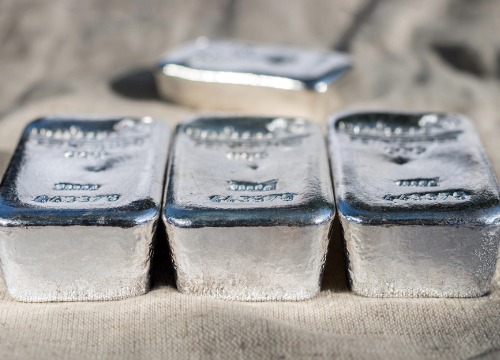
Having silver physically through coins and bars.
Best for:Wealth preservation over an extended period and possession of a physical asset.
| 💡The purchase of bullion normally comes with a premium for the cost of manufacturing, delivery, and profit margins for the merchant, thus making it more expensive than spot silver prices. |
2. Exchange-Traded Funds (ETFs)
Silver was bought and sold in the same manner as any other stock on conventional stock exchanges. Rather than storing the precious metal in your possession, you purchase the units of a fund, which is backed by physical silver kept in secure vaults for example, iShares Silver Trust (SLV), where the value of the fund moves according to the price of physical silver or mines like, Global X Silver Miners ETF (SIL).
Best for:Investors who would like to track the price of silver without being involved in storing it physically.
💡Subject to brokerage fees and management expense ratios. |
3. Mining Shares and Mining Funds
Investing in the stocks of publicly traded mining, exploration, and finance companies that deal in silver (for example, PAAS and WPM). In this case, you are not gambling at the price of precious metal but investing in the success or failure of a company.
Best for:Indirect investing with a focus on leveraged growth through stock performance.
💡Carries company-specific and operational risks beyond pure metal price fluctuations. |
4. Futures Contracts
Legal contracts involving the purchase or sale of a definite quantity of silver at a fixed price on an expiration date in the future. It is a highly complex instrument that is usually employed by institutional investors and experienced investors who have a lot of money.
Best for:Institutional participants, hedgers, and experienced active traders using leverage.
💡Involves expiration dates, margin maintenance requirements, and significant risk of leverage losses. |
5. Options
Derivative instruments that provide you with the option (without any obligation) to either buy or sell silver at a specified strike price during a fixed period of time. Consider it as buying an insurance policy or a flexible ticket, enabling you to benefit from the changes in prices without putting yourself into unlimited risk.
Best for: Advanced risk management, hedging existing portfolios, or speculative positioning.
💡Subject to time decay (theta) and complex pricing mechanics. |
6. Contracts for Difference (CFDs)
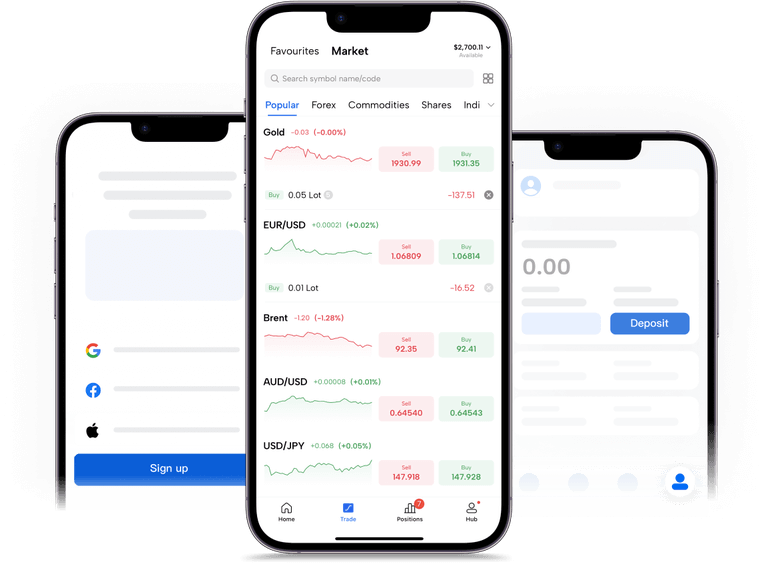
Online contracts made between yourself and a broker to trade the changes in the silver price from when you open the contract until when you close it. You will never actually possess any silver; rather, you will speculate solely based on how the price moves in real-time.
Best for:Active retail traders seeking flexible exposure, margin trading, and quick execution.
| 💡For UAE traders, Silver CFD with Mitrade provides flexible leverage, $0 commission, a minimum deposit of just $50, and a risk-free demo account valued $50,000 to test your strategies easily. |


The Future of Silver: What Could Strengthen or Weaken the Case?
Silver markets can be predicted by taking into account macroeconomic factors and changes in the monetary policies of governments. In most cases, the trend of silver prices follows three different routes:
1. Bull Scenario (Strong Upside)
Industrial demand exceeds the supply side, reducing the ratio between gold and silver, causing significant price rises in the precious metal market.
What Drives It: Rapid growth of green technology deployment in the world (photovoltaic solar panels and components for electric vehicles) coupled with shortages in the supply side and aggressive monetary policy easing by the central banks or inflation.
2. Base Scenario (Moderate Consolidation)
Silver performs within historical boundaries, responding predictably to economic news and manufacturing seasonality.
What Drives It: Economic growth remains steady and stable; there is gradual development of industries along with moderate levels of inflation and supply/demand equilibrium of major mining facilities.
3. Bear Scenario (Downside Pressure)
Consumption drops, resulting in oversupply, fall in price levels, and broader losses due to increased volatility of the precious metal.
What Drives It: Unanticipated global economic slowdown, slowdown in large manufacturing industries, prolonged interest rate hikes making US dollars stronger, or a sudden boost in silver scrap recovery.
A Step-by-Step Guide to Invest in Silver
Starting your silver investment journey requires a structured approach to manage risk, select the right assets, and execute trades efficiently. Here is a practical roadmap:
Conclusion
Silver offers a unique dual advantage—combining industrial growth potential with inflation protection. Whether you are building a long-term position or trading short-term market trends, having the right execution partner makes all the difference.
For UAE investors, Mitrade provides a seamless way to gain exposure through Silver CFDs. With zero-commission trading, a low starting threshold of $50, and a risk-free demo account, you can easily explore silver market opportunities at your own pace.
Is silver a good long-term investment?
Silver offers strong long-term strategic allocation value. Driven by robust industrial demand from sectors such as solar PV and electric vehicles (EVs), the silver market faces ongoing structural supply deficits. However, due to its price volatility, investors are advised to enter at reasonable valuations and maintain a multi-year horizon.
Is now a good time to buy silver?
Current market conditions remain overall constructive. Major institutional analysts (such as J.P. Morgan and UBS) project medium-to-long-term upside potential, with target prices ranging from $63 to $70/oz by the end of 2026. Given short-term market fluctuations, using a Dollar-Cost Averaging (DCA) strategy is recommended to smooth out cost basis and mitigate volatility risks.
Is silver better than gold?
Neither is inherently better; they serve distinct portfolio roles:
Gold: Functions primarily as a tool for wealth preservation and risk hedging, featuring lower price volatility and higher capital density.
Silver: Driven heavily by industrial demand, offering higher upside elasticity and lower entry barriers, though accompanied by significantly higher price volatility.
* The content presented above, whether from a third party or not, is considered as general advice only. This article should not be construed as containing investment advice, investment recommendations, an offer of or solicitation for any transactions in financial instruments.


