



Each year, thousands of people lose millions of dirhams to crypto scams. Not because they're careless—but because they don't know how to buy Bitcoin safely.
The truth is, buying Bitcoin is easy. Buying it safely? That takes strategy.
Whether you reside in Dubai, Abu Dhabi, or even elsewhere in the UAE, all the information you require on buying Bitcoin safely is contained in this guide. You will learn how to identify legit cryptocurrency trading platforms, stay away from cryptocurrency scams, implement wallet security measures, and make purchases confidently.
Why Buying Bitcoin Safely Matters More Than Ever
The UAE has quickly become the world’s crypto center owing to proper regulations, helpful banking institutions, and high levels of adoption in Dubai and Abu Dhabi. Nevertheless, with the flourishing ecosystem has come more sophisticated financial scams.
Unlike traditional finance, blockchain transactions are inherently irreversible; there is no customer support to roll back a fraudulent transfer. A single misstep—clicking a phishing link, trusting an unlicensed broker, or mismanaging private keys—can wipe out your entire investment in seconds. That is why mastering safe buying practices isn't just recommended—it is your first line of defense.
Top 5 Crypto Scams in the UAE and How to Avoid Them!
With the crypto market in the UAE growing rapidly, the fraudsters have become very convincing in their attempts to defraud both beginners and experienced traders. Awareness of such local risks is the key to protecting yourself.
1. Phony VARA Licensed Websites (Phishing Links):
Hackers develop clone sites that mimic legitimate VARA-licensed websites, exploiting paid advertisements or SMS and email messages for login details and seed phrases.
⚠️How to avoid it: Do not click on sponsored advertisements in search engines related to finance. You must enter the URL of the website directly in your browser. Ensure that you have licensed portals, and you can check them on the VARA Public Register or ADGM.
2. P2P Bank Freeze Scams
In P2P trades, you may receive AED via your UAE bank account from money stolen through false transactions and consequently have your account frozen by local authorities.
⚠️How to Avoid It: Never accept any third-party payment and make sure the account name from which the buyer pays is the same as their profile identity 100%.
3. Instagram & Telegram "Guaranteed Return" Brokers
Scammers on social media assume the identity of registered fund managers or VIP traders, offering zero-risk returns on investments (e.g., turning 2,000 AED into 20,000 AED).
⚠️How to Avoid It: Under no circumstances should money be sent to persons who are solely working through social media and private messaging sites, since no real broker guarantees profits.
4. SIM Swapping Attacks
The fraudsters deceive mobile carriers into moving your phone number to their SIM card so that they can steal the 2FA code sent to you via SMS and hack your exchange accounts.
⚠️How to Avoid It: Change from 2FA using SMS to using apps like Google Authenticator and set up a strict security PIN for your mobile carrier service.
5. Unlicensed Crypto OTC Desks in Dubai
The unregistered Over-The-Counter (OTC) dealers attract traders through zero-commission deals, only to scam them with fake banknotes or physical cash.
⚠️How to Avoid It: Do your cash-to-crypto exchanges with fully licensed OTC firms that do business only from legitimate commercial premises in the UAE.
The 4 Golden Rules of Buying Bitcoin Safely
However, knowing about such tricks is just a starting point; what you really require is a strategy that can actually help secure your money. If you plan to invest 1,000 AED or more in any trading, follow these four important rules.
⭐Rule 1: Platform Safety
Always trade through brokers regulated by Tier-1 authorities such as Dubai’s VARA or Abu Dhabi’s FSRA. It should never be attempted to deposit money on unauthorized platforms, and a segregated account should be ensured.
⭐Rule 2: Account Access Safety
Strong passwords are not enough to stop modern cyber threats. Protect yourself with 2FA authentication through apps such as Google Authenticator, not through SMS, and use anti-phishing codes in your settings.
⭐Rule 3: Payment Safety
Your method of funding will directly affect the security of transactions in accordance with UAE regulations. It is recommended that direct wire transfers be performed from a bank account that is based locally, whereas any card payments should only be conducted using 3D Secure (3DS).
⭐Rule 4: Custody Safety
Ownership through physical possession entails the management of private keys in cold or hot wallets, in which case loss of private keys results in loss of funds. Conversely, those who wish to be exposed to Bitcoin’s price action through trading can do so through Bitcoin CFDs on regulated brokers such as Mitrade with $0 commission and tight spreads.
How to Choose a Safe Bitcoin Platform
Choosing a licensed and secure platform is your primary defense against crypto scams. Before depositing any funds, every investor should evaluate the following critical factors:
✅Regulatory Compliance: Does the platform hold a valid license from a top-tier financial authority (e.g., VARA, ADGM, ASIC)? Does it operate strictly within the region's legal framework?
✅Fund Protection Mechanisms: Verify whether the platform segregates client funds in top-tier banks and utilizes advanced data encryption protocols.
✅Transparent Fee Structure: Choose platforms that offer transparent pricing, competitive spreads, and zero hidden trading fees.
✅Responsive Customer Support: Ensure the platform provides 24/7, reliable client support for immediate assistance when needed.
✅Risk-Free Practice (Demo Account): Opt for platforms like Mitrade that provide a virtual demo account (e.g., $50,000) so you can test trading strategies without risking real capital.
Safest Ways to Buy Bitcoin
Choosing how to invest in Bitcoin requires a comparison of the various methods of buying Bitcoin, from the viewpoint of safety, technical considerations, and the risk of scams. The table below analyses some of the more popular methods of purchasing Bitcoin:
1. Licensed Crypto Exchanges
Sites such as Binance or other VARA-approved exchanges enable individuals to purchase, trade, and withdraw real Bitcoin using fiat money (AED/USD). Such sites provide strong security measures such as 2FA and cold wallets for user funds.
✅Pros: Real possession of Bitcoin; freedom to store coins where desired.
❌Cons: Risk of losing private keys when managing crypto wallets personally.
2. Regulated CFD Trading Platforms
Brokers like Mitrade offer Contracts for Difference (CFDs), allowing traders to speculate on Bitcoin’s price movements without buying the underlying asset. These platforms make entry easier for beginners by providing zero commission trading, zero hidden fees, and a free $50,000 demo account to test trading strategies and practice risk management tools risk-free before using real capital.
✅Pros: Very secure; no need to manage crypto wallet or private keys; negative balance protection and leverage available.
❌Cons: No real Bitcoin to withdraw or spend elsewhere.
3. Peer-to-Peer (P2P) Trading
P2P exchanges allow one-on-one trading between individual buyers and sellers through escrow services that hold the money during local bank transfers.
✅Pros: Multiple payment options; local direct transactions.
❌Cons: Increased chances of bank account blocking from the use of third-party payments; the need for thorough ID verification procedures.
4. Bitcoin ATMs
The devices allow customers to buy Bitcoin using cash or a credit card and send the cryptocurrency to their mobile wallets.
✅Pros: Convenient cash transactions; quick setup.
❌Cons: Extremely high transaction fees (5% to 15%); security issues regarding the physical carrying of cash.
5. Licensed OTC Brokers
Over-The-Counter (OTC) desks provide high volume direct trading of Bitcoin from one person of high net worth or institution to another without affecting the spot market price.
✅Pros: Personalized service; good liquidity with no slippage.
❌Cons: Minimum trade amount requirements; for institutional or large clients only.
Physical Ownership vs. Price Exposure: Which is Safer for You?
When deciding how to invest in Bitcoin, one of the most critical security decisions is choosing between physical ownership (buying actual crypto on an exchange) and price exposure trading (trading Bitcoin CFDs via regulated brokers). Both avenues offer distinct security models, risk profiles, and operational requirements.
The comparison table below details how these two approaches stack up across key safety aspects:
Which Option Should You Choose?
Select Physical Bitcoin (Spot) in case your main objective is to invest in Bitcoin for a prolonged period, use it for transactions, or keep it as a store of value, only if you can handle the risk of keeping the private keys yourself.
Consider Bitcoin CFDs when your approach is short term, based on taking advantage of price movements (both upward or downward in market prices), without the hassle of handling cryptocurrency wallets and backup phrases. The benefits of trading on regulated brokers like Mitrade include zero commissions, narrow spreads, and a free $50,000 demo account.


Step-by-Step: How to Buy/Trade Bitcoin Safely in the UAE
Trading Bitcoin safely requires a clear, disciplined approach. By following this step-by-step guide on a regulated broker like Mitrade, you can execute trades seamlessly while maintaining full control over your capital and security.
Step 1: Choose a Fully Regulated Broker & Register, like Mitrade
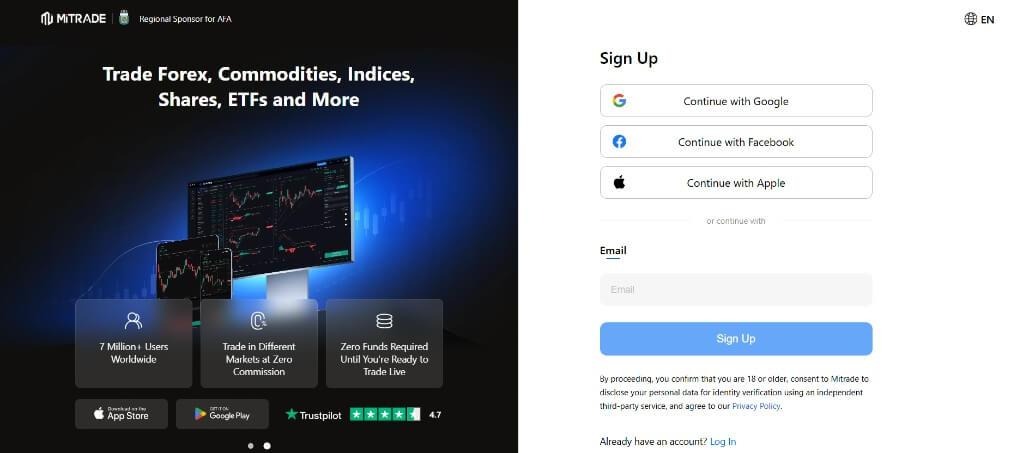
Register via the official Mitrade platform or app, which operates under strict regulations like ASIC and CIMA. Beginners can start with a free $50,000 demo account to practice risk-free.
Step 2: Pass Mandatory KYC Identity Verification
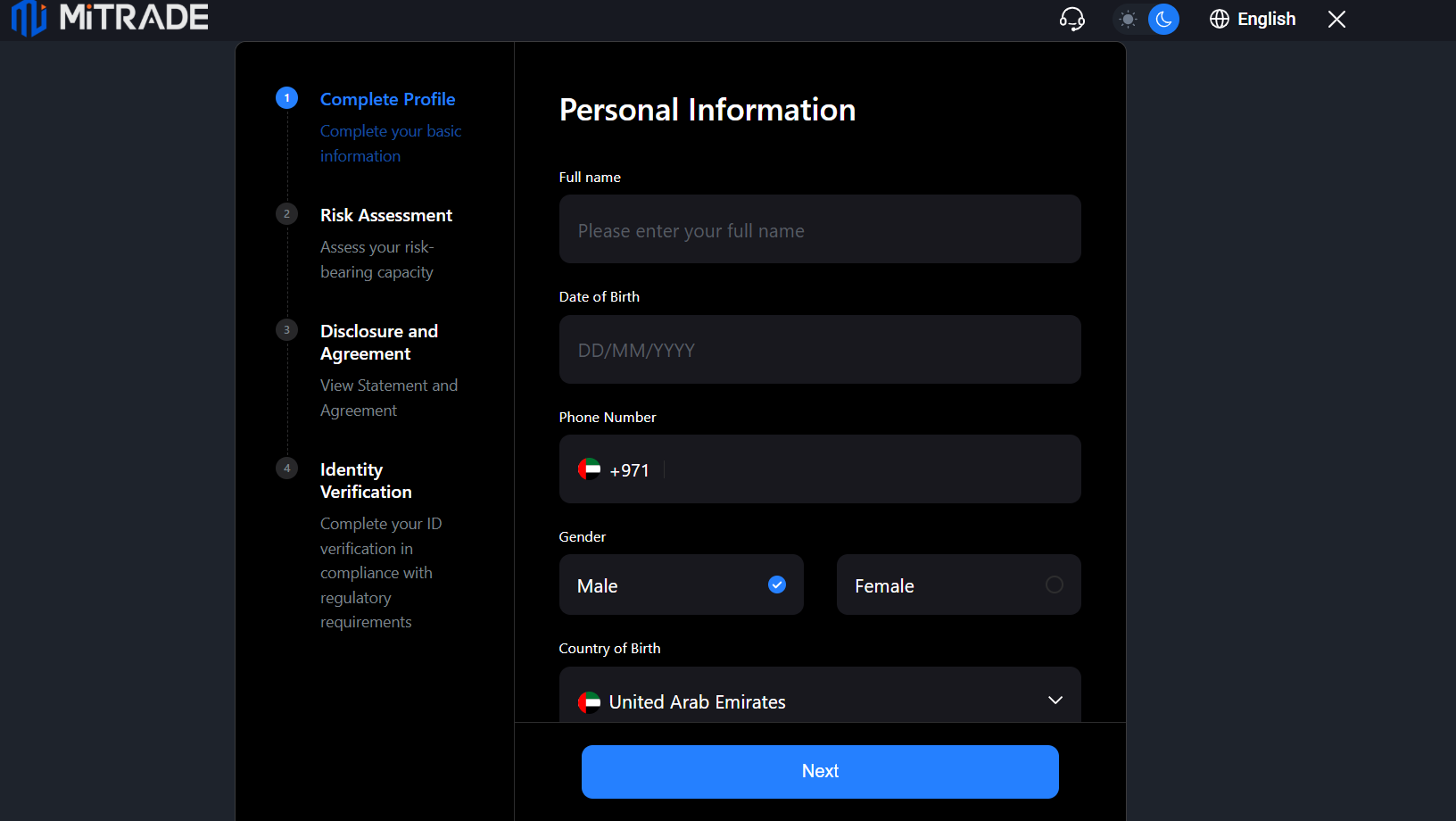
To follow the UAE anti-money laundering laws, get your KYC procedure done through uploading your government issued ID card (Emirates ID/Passport) and Proof of Address.
Step 3: Securely Deposit Funds
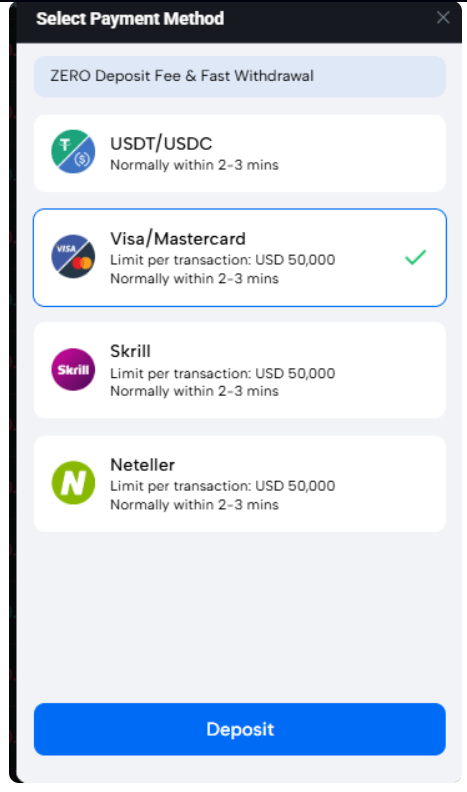
Deposit money into your verified account through secure methods such as Visa, Mastercard, or bank transfers. The minimum deposit you can make is $50.
Step 4: Set Up Risk Management Orders (Crucial Safety!)
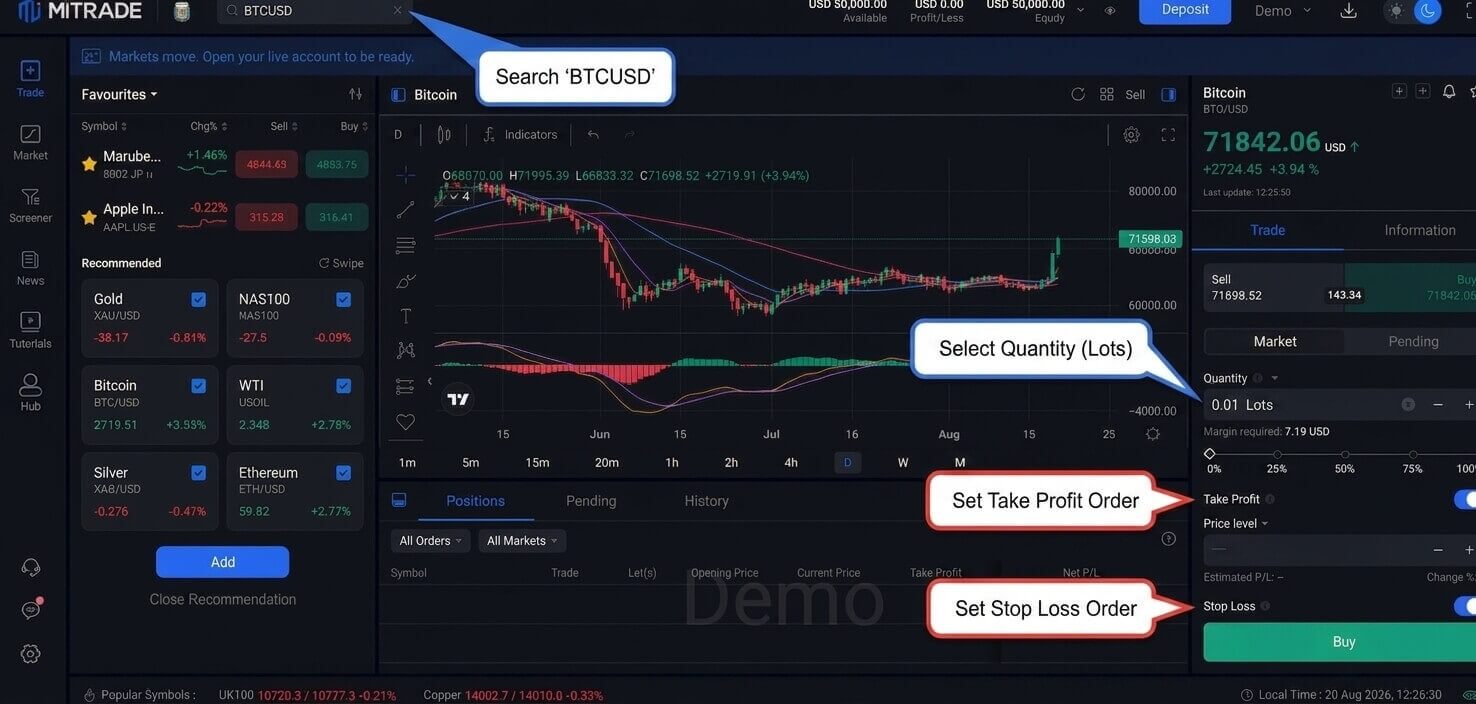
Log in the platform and search for “BTCUSD” , select the quantity of the trade (Lots), and use the Stop-Loss and Take-Profit orders to secure your funds.
Step 5: Exit Trade
When the market moves in your favor or the target is met, move to the Positions tab then, click close to secure your gains or cut losses.
How to Protect Your Bitcoin After Buying?
Keeping your Bitcoin safe is just as important as acquiring it. Considering how you trade and hold your Bitcoin, it is necessary to select the right way to store it and ensure good security measures for your accounts:
Cold Wallet: Your private keys are stored entirely offline on hardware devices such as Ledger or Trezor. The cold wallet ensures ultimate safety from any form of hacking that could be done online.
Hot Wallet: It is a quick and convenient wallet for storing your cryptocurrencies online. They are available in the form of apps for mobile and desktop, such as Trust Wallet, and it is recommended for trading.
Seed Phrase: It is the master 12- to 24-word key used to recover your crypto wallet account. The seed phrase should be written and stored offline, away from any kind of digital storage.
Backup: It entails having several physical copies of your recovery phrase in a safe and fireproof place.
2FA: Provides you with an additional security step for your accounts via Google Authenticator or similar applications. Protects against any form of unauthorized access, even if your account password gets stolen.
Password Manager: Provides you with strong and encrypted passwords for each of your crypto accounts. This solution helps you avoid the risk of having weak passwords or forgotten login information.
Multi-Sig: Uses several private keys to confirm a transaction before it is executed. Such a configuration provides you with no single point of failure when managing valuable cryptocurrencies.
Recovery: Provides you with a recovery solution for your funds in case of emergency situations. Helps you access your funds even after losing access and makes sure that your family can access them.
Essential Security Tips Every Beginner Should Follow
Securing your money entails security actions, and it is important that you remember these essential best practices to secure your cryptocurrencies:
- Never Invest on Telegram: It is a common trick used by scammers; never invest in unofficial groups.
- Be Careful About Guarantees: Cryptocurrencies are risky, and a guarantee of profit is always a sign of fraud.
- Check Wallet Addresses Always: Cryptocurrency transactions cannot be undone; ensure every character is correct.
- Update Your System: Regularly update your operating system and security applications to fix vulnerabilities.
- Use a Hardware Wallet: Cryptocurrency can be stored securely via cold storage wallets like Ledger.
- Avoid Unverified Browser Extensions: These extensions might capture your passwords or modify copied wallet addresses.
- Use Trusted Antivirus Software: This will prevent keylogger programs and online malware from attacking your system.
- Do Not Access Random Links: Do not click on phishing links in emails or chats that pretend to be legitimate.
Conclusion
Investing in Bitcoin has never been easy, but achieving long-term success is not possible without merging intelligent trading tactics with solid security measures. Trading platforms such as Mitrade can make your journey easier because it provides you with an easy-to-use, highly regulated platform, zero commissions, risk management options (Stop-Loss and Take-Profit), and a $50,000 demo account to test your strategies without any risks.
Risk-Free Demo Account
CMA-regulated | 24х5 | T+0 | low spreads. Enjoy limit and stop loss for every trade!
What is the safest way to buy Bitcoin in the UAE for a complete beginner?
For beginners, trading Bitcoin CFDs through regulated trading platforms such as Mitrade can be considered safer, as it avoids the complications of cryptocurrency wallets and private keys.
Can my UAE bank account get blocked for buying Bitcoin?
Absolutely not, as long as you make payments to legally authorized platforms. But engaging in unverified peer-to-peer (P2P) transactions might raise red flags for the banks.
What happens if I lose my crypto wallet private key?
However, if you lose your private key for your physical wallet, then there is no chance of retrieving your Bitcoins. It is the reason why people usually like to trade on regulated exchanges.
* The content presented above, whether from a third party or not, is considered as general advice only. This article should not be construed as containing investment advice, investment recommendations, an offer of or solicitation for any transactions in financial instruments.


