



Thinking about buying Bitcoin in the UAE but not sure where to start? Whether you want to own actual Bitcoin or trade its price movements through CFDs without wallet hassles, getting started in 2026 is simpler than ever.
In this guide, we’ll explain how to buy Bitcoin in the UAE step by step, including whether Bitcoin is legal, what you need before making your first purchase, how much fees can cost, and how to store your Bitcoin safely. We’ll also compare different buying methods and show you how to open a Bitcoin trading position with Mitrade, so you can choose an approach that fits your goals and risk tolerance.
Is Bitcoin Legal in the UAE?
Yes. Buying, owning, and trading Bitcoin is legal in the UAE, and the country has established clear regulations for crypto-related activities. However, the rules and regulators vary by jurisdiction:
VARA (Dubai): Regulates virtual asset activities in Dubai, including crypto exchanges, custody services, and crypto marketing.
FSRA (ADGM): Regulates digital asset businesses in Abu Dhabi Global Market (ADGM), including exchanges, brokers, and custodians.
SCA (Federal): Provides federal oversight for crypto-related activities across the UAE, outside financial free zones such as ADGM and DIFC.
In short, Bitcoin itself is legal in the UAE, but you should use a properly regulated and licensed platform when buying or trading it.
Why Are More People Buying Bitcoin in the UAE?
With the help of excellent regulatory structures, economic stability, and absence of any personal income tax, the UAE has become a hotspot of digital asset innovations in the world. Investors in Dubai, Abu Dhabi, and other Emirates are increasingly considering Bitcoin as part of a diversified portfolio for several reasons:
✅Inflation Hedge: As global central banks increase the supply of fiat currency, inflation and debasement of currency lead to depreciation of the purchasing power of traditional savings. In order to safeguard themselves against loss of value, many investors in UAE search for means of protecting against inflation, and thus opt for Bitcoin on account of its hard cap of 21 million coins, which prevents programmatic dilution.
✅Global Adoption: With the increasing popularity of Bitcoin among financial institutions across the world, the UAE is trying to link international acceptance with the real-life application of Bitcoin within the UAE. The major real estate developers, banks, and luxury retailers in Dubai and Abu Dhabi are starting to accept cryptocurrency payments or invest in cryptocurrencies.
✅Dubai's Crypto-Friendly Environment: The proactive and transparent regulatory framework provided by organizations such as VARA ensures a safe and friendly environment. Due to which, many major exchanges such as Bybit, Kraken, and Binance have set up operations within the region.
✅Zero Tax on Personal Gains: An important feature that gives a clear edge to the UAE over many others is the 0% personal income and capital gains tax on cryptocurrencies.
What Do You Need Before Buying Bitcoin?
Before opening an account with any licensed broker or exchange in the UAE, make sure that you have the following requirements ready:
Valid Identification: Emirates ID or a valid Passport.
Active UAE Phone Number: For two-factor authentication (2FA) and account security.
Payment Method: A local UAE bank account, debit card, or credit card for AED/USD deposits.
Crypto Wallet (Optional): Required only if you buy physical Bitcoin (Spot). If you trade Bitcoin CFDs, a wallet is not required.
Different Ways to Buy Bitcoin in the UAE
There are various ways to invest in Bitcoin within the UAE, each one having its own set of pros and cons.
1- Exchange (Spot)
Spot crypto exchanges are trading platforms specialized in enabling the purchase and ownership of genuine Bitcoin. Buyers may use fiat currencies such as AED or USD to purchase tokens while having complete control over their tokens; hence, they may keep their tokens in the spot crypto exchange or move them out into a secure private wallet.
✅Pros: Actual ownership of the underlying; flexibility to send coins to any destination.
❌Cons: Need to set up a wallet; high costs for fiat gateways; potential risk of hack or loss of private keys
🎯Where to Buy: Licensed local regional exchanges (such as BitOasis and Rain) or established international platforms (such as OKX and Binance).
👥Best for: Long-term holders (HODLers) wanting physical ownership.
2- CFD Brokers (Contract for Difference)
Financial platforms where you speculate on Bitcoin’s price movements without taking delivery of the actual token. You can profit whether the market moves up (Long) or down (Short).
✅Pros: Zero wallet management; no private key security risks; instant order execution; flexible payment options like credit card or local AED transfers; ability to go short during market drops.
❌Cons: You do not own the actual underlying Bitcoin, and using the wrong leverage could lead to huge profits and huge losses.
🎯Where to Buy: Specialized multi-asset brokers and regulated trading platforms such as Mitrade.
👥Best for: Active day traders, beginners seeking seamless onboarding, and investors who want to capitalize on short-term market volatility without managing hardware wallets.
Open a CFD Trading Account to Experience Now
*Profit from BTC Volatility: Start with $50, No Wallet Required
3- Crypto ATMs
Physical machines that allow customers to purchase Bitcoin using cash or bank cards.
✅Pros: Instant cash-to-crypto exchange.
❌Cons: Very high transaction charges (usually between 5%-10%); physical presence is restricted.
🎯Where to Buy: Select luxury hotels and commercial centers across Dubai (such as Rixos Premium Dubai).
👥Best For: Privacy-focused investors who prefer immediate cash purchases over lengthy online account setups.
4- Peer-to-Peer (P2P) Trading
Trading that involves direct interaction between buyer and seller, with assistance from an escrow service.
✅Pros: Enables several local payment methods, such as bank transfers.
❌Cons: Risks of delays on the part of the counterparties involved; need to be cautious about fraudulent sellers.
🎯Where to Buy: Integrated P2P platforms hosted within global cryptocurrency exchanges (such as Bybit P2P and Binance P2P).
👥Best For: Experienced users looking for specific payment options or better prices.
Bitcoin Fees You Need to Know Before Trading
Understanding platform fees is critical to retaining your profits.It is crucial to be familiar with all the costs before one tries to make money. This is due to the fact that various forms of transactions require various forms of costs:
Network / Gas Fees: Relevant only if transferring the physical Bitcoin through the blockchain network from the exchange to a personal wallet.
Commission: Regular spot trading transactions can be based on either a flat fee or a percentage per transaction (ranging from 0.1% to 0.5%). However, for zero-commission CFD brokers like Mitrade, there are no commission fees but just low spread.
Deposit and Withdrawal Fees: Almost all websites provide for feeless account depositing; however, other payment means may have processing fees. This means that using local UAE banks will cost nothing or just very little for processing while credit card deposits will attract processing fees of between 2% to 3.5%.
Overnight (Swap): It is the fee charged for keeping a leveraged CFD position open after the daily market closes.
Spread: The bid-ask spread forms the key cost component of CFD brokerage firms.
How to Buy Bitcoin?
3 easy steps to introduce simply.
Step1: Select & Verify. Select one of the legitimate crypto exchanges such as BitOasis or Binance and undergo the basic identity verification (KYC) process.
Step2: Fund Your Account. Make your initial deposit in AED using your own favorite payment methods, including the UAE bank transfer and credit card.
Step 3: Purchase & Store. Execute the purchase of the physical Bitcoins and move your tokens into a personal wallet.
How to Store Bitcoin Safely
When you choose to buy Bitcoin in physical form through a spot exchange, security of your investments is key. Crypto storage typically consists of two major forms:
Hot Wallets (Software Wallets):
Online wallets that have access to the Internet and are accessed through the use of mobile apps or desktops (such as Trust Wallet, Exodus).
Suitable for: Traders who need quick and constant access to cash.
Pros: Very convenient, easy to activate and is free of charge most of the time.
Cons: Increased danger of getting hacked through the internet.
Cold Wallets (Hardware Wallets):
Devices that are physical electronic storage for your private keys and keep them entirely separate from the internet (Ledger and Trezor).
Best For: Long-term investments for those who have a lot of cryptocurrency in their portfolio for an extended period.
Pros: The highest level of security against hacking attacks and phishing.
Cons: High installation cost, inconvenience when used for immediate transactions.
Don't Want to Manage a Crypto Wallet? Consider Bitcoin CFDs
If you don't want to manage a crypto wallet or private keys, Bitcoin CFD trading is another option. With a Bitcoin CFD, you don't own the underlying Bitcoin. Instead, you trade on its price movements and can potentially profit from either rising or falling prices.
For example, with Mitrade, you can trade Bitcoin CFDs without setting up a separate crypto wallet or managing private keys. This removes the need to worry about wallet backups, lost recovery phrases, or directly securing Bitcoin on-chain.
However, CFDs are leveraged derivatives and carry a higher level of risk. You should understand how leverage works and use appropriate risk management before trading.

Common Mistakes Beginners Make
When starting with Bitcoin trading, avoid these frequent pitfalls:
❌1. Trading on Unregulated Platforms: Trading using an unlicensed platform will make you vulnerable to fraud, slippage, and lack of legal backing. Beginners should choose regulated and licensed platforms (like Mitrade) that enforce strict user security and clear policies.
❌2. Over-Leveraging: Using excessive leverage without a proper strategy can lead to fast account closures due to high market volatility when no plan is in place. Then trade with little leverage, particularly when you are starting out, and ensure that you have an approach to your trading.
❌3. Poor Risk Management: Not placing a stop-loss order can put your assets at risk for severe drops in the market. Thus, always place Stop-Loss and Take-Profit orders before entering a position to protect your balance automatically.
❌4. Emotional Investing (FOMO): Trading without an actual plan, driven only by emotions such as Fear of Missing Out, is one of the fastest methods of losing money. You should base every trade on technical or fundamental analysis rather than market hype or sudden impulse.
❌5. Storing All Assets in One Place: Keeping all your funds in a single active exchange account increases exposure to system downtime or security risks. You can diversify your storage by transferring long-term holdings to secure offline cold wallets while keeping active trading funds separate.
Is Bitcoin Still a Good Investment in 2026?
Yes, Bitcoin can still be a compelling long-term investment in 2026, but it is not suitable for every investor. Its long-term investment case is supported by growing institutional adoption, ETF demand, and its limited supply. However, Bitcoin remains highly volatile, so investors should consider their risk tolerance and investment horizon before buying.
Institutional Adoption & ETF Demand: The continued participation of institutional investors and spot Bitcoin ETFs has helped Bitcoin become more accessible to traditional investors and strengthened its position as a mainstream digital asset.
Limited Supply: Bitcoin has a maximum supply of 21 million coins, while new supply continues to decrease over time following scheduled halvings. This scarcity is one of the key factors behind Bitcoin's long-term investment thesis.
Growing Crypto Adoption in the UAE: The UAE's developing regulatory framework, including oversight from VARA in Dubai and federal authorities, has created a more structured environment for digital asset activity.
That said, Bitcoin is not a guaranteed hedge against inflation or a guaranteed source of profit. Large price swings are common, and leverage can significantly increase losses. If you decide to invest, consider using appropriate position sizes, avoiding excessive leverage, and investing only money you can afford to lose.
How to Profit from Bitcoin Price Movements in the UAE via Mitrade?
If you want to capitalize on Bitcoin’s market opportunities without the hassle of purchasing, storing, or securing actual cryptocurrencies, trading price movements via CFDs on a platform like Mitrade is an ideal path. You simply speculate on whether the price will go up or down—no private keys, digital wallets, or blockchain transfer delays required.
Follow these quick steps to get started:
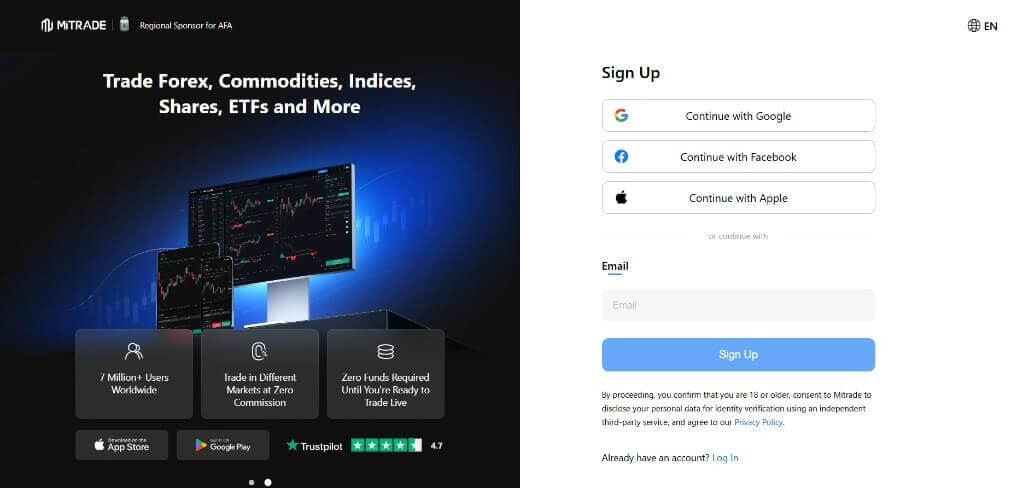
Step 1: Open an Account
Navigate to the Mitrade website or use the application and sign up there. You can choose to open either a demo account to trade with $50000 virtual money or a live one with a minimum deposit starting at $50.
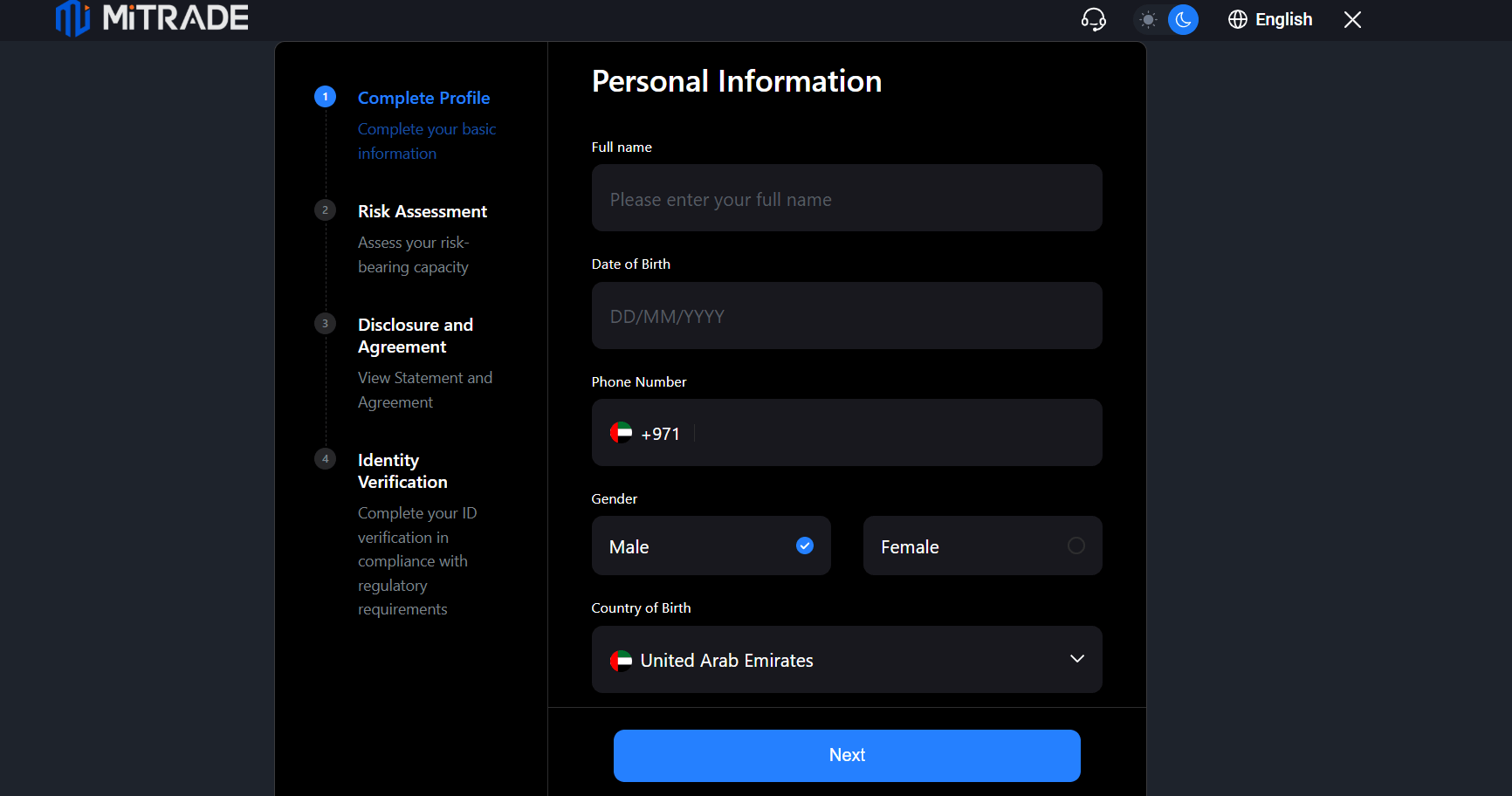
Step 2: Complete KYC Identity Verification
To comply with regulatory standards in the UAE, you must complete the Know Your Customer (KYC) verification process. This requires uploading valid government-issued documents, typically including:
Proof of Identity: A valid Emirates ID or Passport.
Proof of Address: A recent utility bill, bank statement, or tenancy contract showing your full legal name and address.
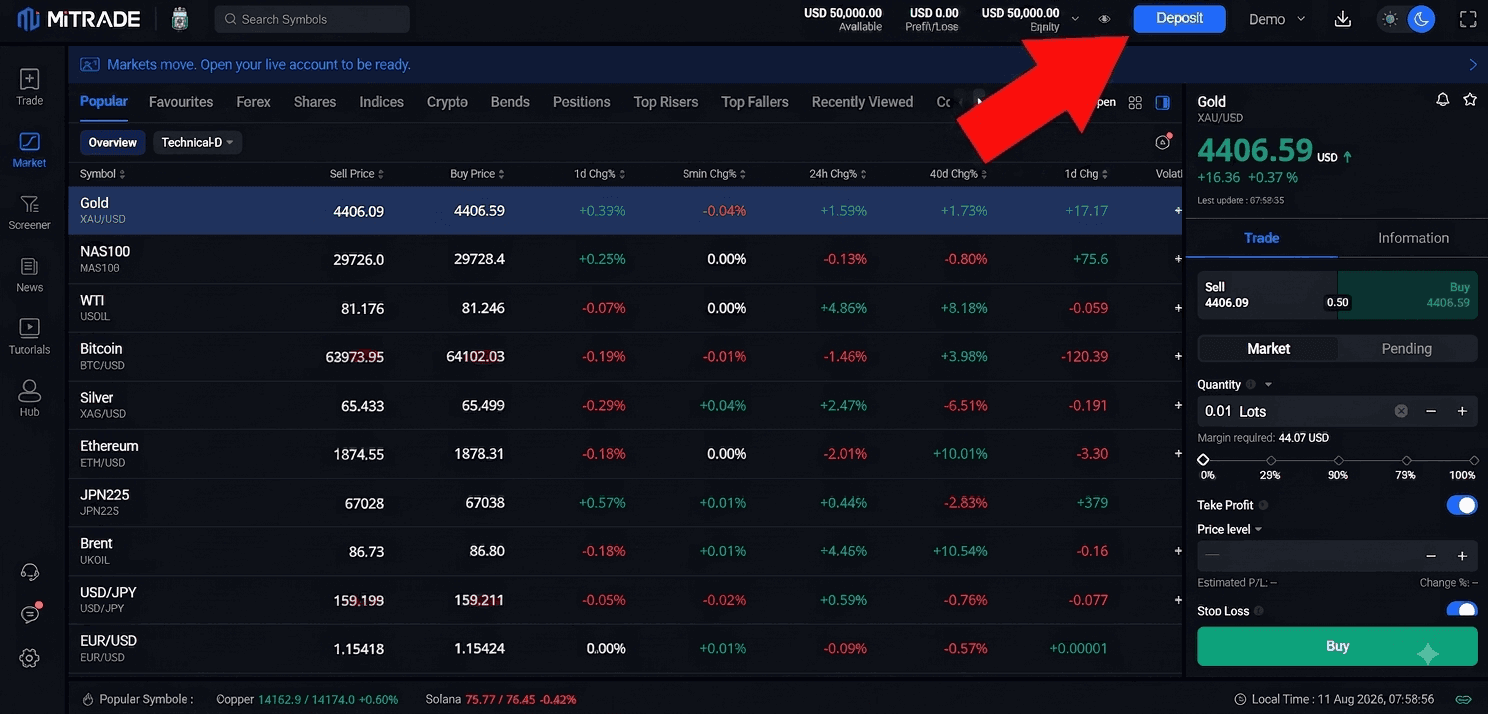
Step 3: Deposit Funds
Press on the “Deposit” button at the top right corner of the account dashboard that appears in a blue color. Choose the currency you want to use (either AED or USD) as well as the means of payment and enter the required amount.
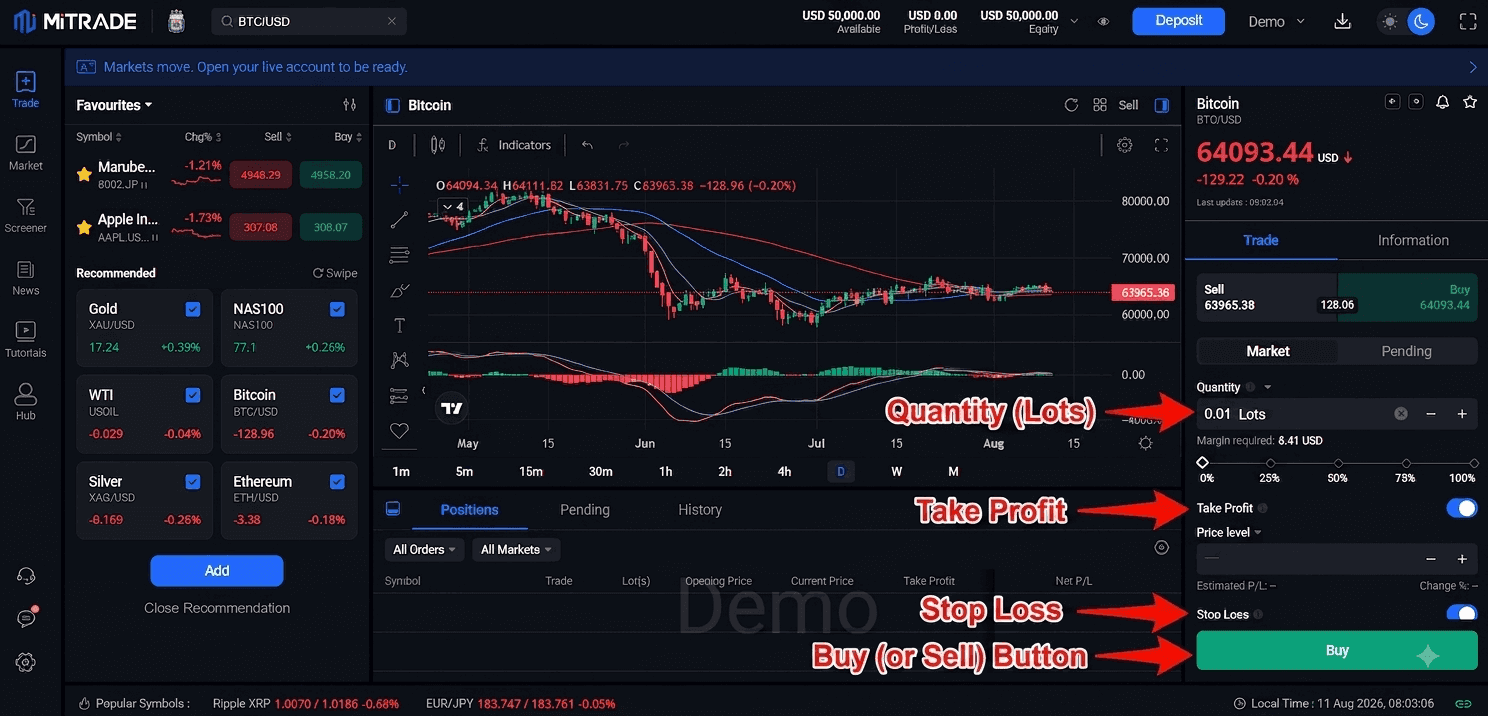
Step 4: Open a Buy (Long) or Sell (Short) Position
Use the search box on the platform to locate BTC/USD. Once you click on BTC/USD, the trading chart will open. In the panel for order execution, you can select the desired volume as well as the risk management features such as Take Profit and Stop Loss. Click Buy/Sell to open your market position.
Step 5: Close Your Position
When you’re ready to exit, go to your active positions and select BTC/USD. Review your current profit or loss, then click “Close” to exit the trade.
FAQs
1. Is cryptocurrency taxed in the UAE?
No. Currently, the United Arab Emirates taxes capital gains from trading and investments in cryptocurrencies at 0% personal income tax rate.
2. What is the minimum Bitcoin purchase?
There is no need to buy the entire amount of Bitcoin.
Spot Buying (Physical Bitcoin): Using crypto exchange platforms, you will be able to buy fractional Bitcoin starting at $10-$50. That way, you will actually own the digital currency.
CFD Trading (via Mitrade): You don't need to buy a whole Bitcoin. With Mitrade, you can trade Bitcoin CFDs from a relatively small position size with as little as $10 to $20 , without buying, storing, or managing the underlying cryptocurrency.
3. Is Bitcoin halal?
Bitcoin itself is generally considered halal by many scholars because it can be treated as a digital asset without inherent interest (riba). However, whether a specific Bitcoin trading method, such as CFDs, is halal depends on its structure and the scholar’s interpretation of Islamic finance principles.

 $0 Commission, Tight Spreads, Min. Deposit $501:1-1:200 Fexible leverage with support24*5 customer support serviceOne account to access global markets
* The content presented above, whether from a third party or not, is considered as general advice only. This article should not be construed as containing investment advice, investment recommendations, an offer of or solicitation for any transactions in financial instruments.


