


What Is the S&P 500? Why Do the Investors Care About It?
The headline “The S&P 500 closes at a record high” has become so ubiquitous this year that investors are almost hooked on it. And this is for a good reason because the United States’ equity market has been in a generational rally since late March 2026. If the rally holds, one can rest assured that the S&P 500 will continue to grace headlines for the foreseeable future.
Unfortunately, those who do not know what the media is talking about may miss out on a lot. Which means there has never been a more auspicious time to learn what is S&P 500.
🎯 In this light, this article will explain the S&P 500, show how it is calculated, and discuss how investors in the UAE can add the index to their portfolio.
What Is the S&P 500?
The S&P 500 is a shortened version of Standard & Poor’s 500, and it is a stock market index that tracks the performance of 500 of the largest publicly traded companies listed on US stock exchanges. For starters, an index is a tool that measures the performance of a group of stocks. In that sense, the S&P 500 is much like a quick scoreboard that tracks how the 500 companies in its basket are performing. And investors use the index to quickly see if the stock market is healthy or struggling without checking thousands of individual companies.
Standard & Poor’s established the index in 1957. When it introduced it to the public, the company told the press and investors that their goal was to provide a reliable, broad, and mathematically rigorous snapshot of the entire US stock market in a single number. In other words, the Standard “500”, as the index was known at introduction, was intended to cure the limitations of the Dow Jones Industrial Average, or DJIA, which had been in operation for 61 years already.
The index has lived up to expectations mainly because of its features, which include:
✅Market-cap weighting: The index gives larger companies a bigger impact based on their total market value.
✅Large sample size: It tracks 500 companies, which reduces the risk of a single stock distorting its value.
✅Broad market coverage: It controls roughly 80% of all available US stock market value.
✅Sector diversification: The companies in the index’s basket are obtained from 11 different economic sectors.
✅Strict eligibility rules: For a company to be selected into the basket, it must be highly liquid, be based in the US, and be profitable over recent consecutive quarters.
✅Float adjustment: Only the shares that the public can buy and sell are counted
✅Quarterly rebalancing: It automatically updates the basket four times a year to remove declining companies and add rising stars.
The Historical Performance of the S&P 500
The S&P 500 is, to many, a proxy for the health of the US economy, and its track record over more than half a century supports that role. The index has declined during economic downturns and risen during periods of growth, making its direction a reliable signal of where the broader economy stands.
Throughout its life, the index lost the most value in 2008 when it tanked 38.49%. And the highest return on record was 38.06% in 1958. The table below highlights some of the key performance numbers in the index’s history (all figures are as of June 2, 2026, except performance since inception, which covers 1957-2025; all returns are annualized):
How to Calculate the S&P 500?
Every day, the news reports that the S&P 500 hit a new high or closed lower. But how exactly is this number calculated? And why do the movements of giants like Apple and Microsoft affect it more than smaller companies?
For starters, the index is calculated and managed by S&P Dow Jones Indices LLC through a float-adjusted market capitalization weighted methodology. This process boils down into the following steps:
Step 1: Calculate each company's market cap
Market cap is the total value of a company's shares, which is just its share price multiplied by the number of shares available in the market.
Step 2: Apply the float adjustment
Not all shares are freely available for everyday investors to buy and sell because some are held by insiders and long-term private owners. So, the index strips those out and counts only the shares freely trading in the open market. This is the float.
Step 3: Calculate the float-adjusted market cap
For each of the stock in the basket, the committee calculates:
float-adjusted market cap = share price x float percentage x total shares outstanding
Step 4: Add them all up and divide by the index divisor
The index divisor is a constant that S&P Dow Jones Indices adjusts daily to ensure events like stock splits don't artificially distort the headline number. The final formula is:

Constituent Stocks of the S&P 500
The S&P 500 tracks 500 companies, but as of this writing, the basket holds 503 individual stocks. Why is that?
Some companies the index tracks have more than one class of shares, and each trades under its own ticker. And when that happens, the index tracks each share class as a separate listing. A good example is Alphabet Inc. The S&P 500 includes its Class A shares (GOOGL), which carry voting rights, and its Class C shares (GOOG), which don’t.
The index also organizes its companies into 11 sectors of the US economy. This grouping supports the index committee’s work, that is, when they revise the basket’s contents, sector groupings help ensure selections align with the prevailing economic cycle. The grouping also allows investors to compare a company’s performance against its direct peers rather than the broader market.
See the table for more details:
What Are the Screening Criteria for the S&P 500?
To be sure, the S&P 500 is a large-cap club. But a trillion-dollar market cap alone doesn’t guarantee a spot in the basket. For example, Taiwan Semiconductor Manufacturing Company, Saudi Aramco, and Samsung Electronics all boast trillions of dollars in value, but because they do not satisfy the screening criteria, they can’t be part of the 500. They fail most of the inclusion rules listed below:
An eligible company must be incorporated in the US.
It must be listed on either the NYSE or NASDAQ.
It must have an unadjusted total market capitalization of $22.7 billion or more.
Its stock must have traded at least 250,000 shares in each of the six months leading up to the evaluation date.
The public must be able to buy at least half of the company’s outstanding shares.
It must report positive earnings in its most recent quarter. Also, its cumulative earnings across the prior four quarters must be positive.
It must have been publicly listed on an eligible exchange for at least 12 months.
It must issue common stock and cannot be a limited partnership, ADR, or similar non-corporate structure.
Please Note: A company can meet all these requirements but that doesn’t guarantee a spot in the basket. The index committee makes the final call, and whose most important concern is sector balance. If one sector appears overrepresented, this affects the chances of a company making the jump from eligible to the basket.
Why Do Investors Care About the S&P 500?
✅Trillions of dollars in index funds and ETFs are built to mirror the S&P 500. This makes it the most accessible way for everyday investors to participate in the US stock market.
✅The index is the standard for measuring investment performance. Even professional fund managers use the index’s return to measure whether their own portfolio or fund is performing well or poorly.
✅It signals global market sentiment. Because many S&P 500 companies operate internationally, a move in the index often ripples through stock markets worldwide, which makes it relevant to investors far beyond the US.
S&P 500 vs. Nasdaq 100 vs. Dow Jones
The S&P 500 is the most closely watched index in the US, but it is not the only one. Two others, the Nasdaq 100 and the DJIA, regularly appear in financial headlines, and they too matter in their own way. The table below shows how they differ:
Advantages and Disadvantages of the S&P 500
The S&P 500 offers investors broad exposure to the US stock market and has delivered around 10% in average annual returns over almost 70 years. But like any investment vehicle, the index is not without its downsides. It is tightly tied to Wall Street movements and the weightings of the corporate giants within it. Therefore, it is best viewed from two perspectives: what makes it a strong choice for investors, and what limitations should be considered?
Advantages of Investing in S&P 500
✅Broad market exposure in one move: Buying into the S&P 500 allows you to bet on companies that make up roughly 80% of the US stock market's total value.
✅A long track record of wealth building: The index has delivered an average annual return of around 10% over almost 70 years, through recessions, market crashes, and geopolitical crises. Therefore, it is one of the most reliable long-term wealth-building tools available.
✅Lower costs than active investing: ETFs and index funds that track the S&P 500 charge significantly lower fees than actively managed funds, which means more of your returns stay in your pocket.
✅You invest in quality by default: Only profitable, financially healthy, and highly liquid companies qualify for the index, so your money is never exposed to weak businesses.
✅Your portfolio updates itself: The index removes underperforming companies and replaces them with stronger ones automatically, so you benefit from a continuously refreshed portfolio without lifting a finger.
✅Full transparency at all times: The index's composition, weights, and methodology are publicly available, so you always know exactly where your money is.
Disadvantages of Investing in S&P 500
❌Heavy concentration in tech: The largest technology companies dominate the index's weight, meaning a downturn in the tech sector can hit your overall returns harder than the word diversified might suggest.
❌The index only tracks US-domiciled companies, so your portfolio misses out entirely on growth happening in other economies around the world.
❌Fast-growing startups and small companies don't qualify, which means you only get in after a company is already large.
❌No shelter in a broad market crash: Because the index tracks the overall market, a widespread sell-off pulls nearly all 500 stocks down together. The diversification across sectors does not protect you when the entire market declines at once.
❌Past performance drives selection: A company must already be profitable and established to qualify, meaning the index rewards yesterday's winners rather than tomorrow's.
How to Invest in the S&P 500 from the UAE?
You cannot invest in the S&P 500 directly because it is merely a benchmark. The closest you can get is by buying either ETFs, contracts for difference, or CFDs, and options linked to the index.
1. ETFs
An S&P 500 ETF is a fund that holds all the stocks in the index and in the same proportions. So, its returns often mirror the index.
Pros:
✅You capture the index's full long-term returns, which has historically averaged around 10% per year.
✅Low annual fees because the fund is passively managed
✅Easy to buy and sell on a stock exchange like any regular share
Cons:
❌UAE-based investors face a withholding tax on dividends because the UAE has no tax treaty with the US.
❌You need a brokerage account with access to US exchanges
A CFD is a trading method where instead of buying an asset itself, you trade on its price movement. CFDs are available across forex, cryptocurrencies, commodities, stocks, and indices, such as the S&P 500.
Pros:
✅You can profit whether the index rises or falls by taking a buy or sell position
✅Leverage lets you control a larger position with a smaller amount of capital
✅No dividend withholding tax applies since you don’t own the underlying stocks
Cons:
❌Leverage amplifies losses just as it amplifies gains
❌Overnight fees apply if you hold a position beyond a trading session
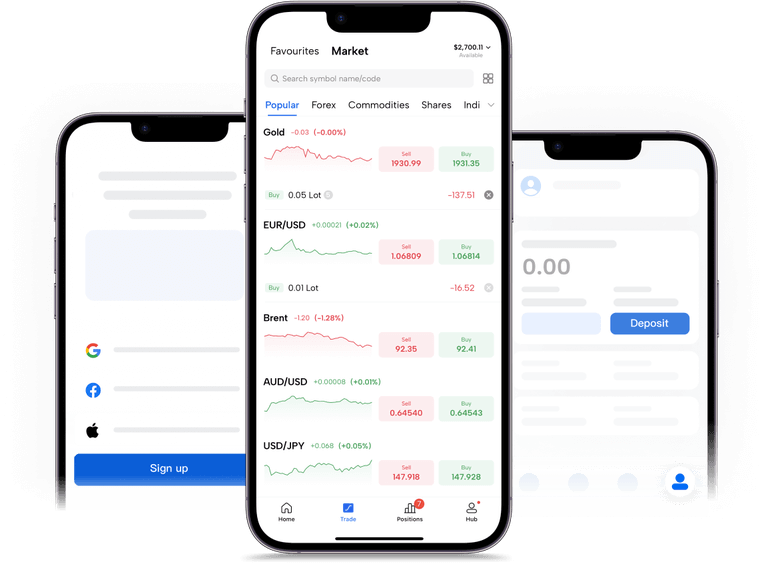
In the UAE, you can trade S&P 500-linked CFDs on platforms like Mitrade. The good thing is that Mitrade provides a demo account loaded with $50,000 in dummy funds, so you can practice trading S&P 500 CFDs before you switch to the live market.. And when you’re ready for the live platform, fund the account and search for “US500” or “SPX,” choose your position size and direction, put in place the risk management plan, and you’ll be set.


3. Options
An S&P 500 option is a contract that lets you buy or sell the index at a fixed price before a specified date, but you are not required to do so when the contract expires.
Pros:
✅It lets you profit from market moves with a defined, limited upfront cost
✅You can use it to hedge an existing portfolio against a market downturn
Cons:
❌Options require more knowledge to use effectively. So, only an individual with technical knowledge about strike prices, expiry dates, and premiums can leverage the instruments.
Conclusion
nvestors often refer to the S&P 500 as the broad market index because it covers about 80% of the US equities market’s value. And for the nearly 70 years it has been operating, the index has compounded at almost 11% annually. This is the same benchmark Warren Buffett says oftentimes beats professional fund managers. As such, one must understand how it works.
Once you understand how it works, you can use the S&P 500 to profit from the growth of the US economy. You can do that through ETFs, CFDs, or options. If you are in the UAE and are not sure where to start, Mitrade’s demo account lets you practice trading the index with $50,000 in dummy funds until you feel ready. Then you can fund a live account and trade S&P 500 CFDs.
FAQs
1. What are other S&P indices?
Beyond the S&P 500, S&P Dow Jones Indices manages several other benchmarks that track different segments of the US market. They include the S&P 100 (the 100 largest companies), the S&P MidCap 400 (mid-sized companies), the S&P SmallCap 600 (smaller companies), and the S&P Composite 1500, which combines all three.
2. Does the S&P 500 pay dividends?
No, the S&P 500 is merely a benchmark and not a product you can invest in. However, you can receive dividends as a fund holder of an S&P 500 ETF.
3. How often do S&P 500 components change?
There is a quarterly rebalance schedule, which means the index committee reviews the basket after every three months. However, the committee only makes changes when necessary, typically after a merger, bankruptcy, or when a company no longer meets the eligibility criteria.
4. What is the current S&P 500 record high?
The current record high is 7,615.66 posted intraday on June 1.
Risk-Free Demo Account
CMA-regulated | 24х5 | T+0 | low spreads. Enjoy limit and stop loss for every trade!
* The content presented above, whether from a third party or not, is considered as general advice only. This article should not be construed as containing investment advice, investment recommendations, an offer of or solicitation for any transactions in financial instruments.


