


Best Gold ETFs in 2026: Compared with Fees, 1-Year Returns
Gold remains a key safe-haven asset in 2026 as inflation, evolving central bank policies, and market uncertainty continue to drive investor demand. While physical gold remains popular in markets such as the UAE and India, owning bullion or jewelry often involves making charges, storage costs, and lower liquidity. Gold ETFs offer a more convenient and cost-effective alternative by providing exposure to gold without physical ownership.
🎯This guide compares the best gold ETFs in 2026, including leading global funds and the best gold ETF in UAE and India, while also exploring alternative ways to gain exposure to gold.
What is a Gold ETF and Why Should You Invest in Gold ETFs?
A Gold ETF (Exchange-Traded Fund) is an investment fund that tracks the price of gold without requiring investors to buy, store, or insure physical bullion. Traded on stock exchanges like ordinary shares, Gold ETFs offer a convenient and cost-effective way to gain exposure to the gold market.
Compared with buying physical gold, Gold ETFs offer several advantages:
✅Lower costs: No making charges, storage, or insurance expenses.
✅High liquidity: Buy or sell shares easily during market hours.
✅Transparent pricing: ETF prices closely track the market price of gold.
✅Portfolio diversification: Gold can help reduce overall portfolio risk during periods of market uncertainty.
✅Convenience: Invest through a brokerage account without handling physical gold.
For investors seeking a simple, liquid, and efficient way to gain exposure to gold, Gold ETFs remain one of the most popular investment options in 2026.
The Best Gold ETFs Globally: Top Picks for Liquidity and Low Cost
Gold ETFs generally fall into two categories: physical gold ETFs and gold miner ETFs.
Physical gold ETFs hold gold bullion and are designed to closely track the price of gold, making them suitable for investors seeking direct exposure with relatively lower volatility. Gold Miner ETFs invest in the shares of companies engaged in gold exploration, mining, and production, offering higher growth potential but greater volatility because their performance depends on both gold prices and company fundamentals.
The following sections compare some of the best gold ETFs available in 2026 based on their expense ratio, assets under management (AUM), one-year return, and dividend yield.
Top Physical Gold ETFs
Physical Gold ETFs invest directly in gold bullion and aim to closely replicate the spot price of gold after management fees. They provide investors with a convenient way to invest in gold without the costs and logistical challenges of owning, storing, or insuring physical bullion.
1. SPDR Gold Shares (GLD)
👥Best for: Investors seeking maximum liquidity.
Launched in 2004, GLD was the first US-listed physically backed gold ETF and remains one of the most actively traded. Its long track record and deep market liquidity make it a benchmark product for institutional and retail investors.
2. iShares Gold Trust (IAU)
👥Best for: Long-term investors seeking lower fees.
Managed by BlackRock, IAU stores allocated gold bullion in secure vaults and is designed as a lower-cost alternative to GLD. It has become a popular core holding for investors building long-term gold exposure.
3.SPDR Gold MiniShares Trust (GLDM)
👥Best for: Cost-conscious investors.
Introduced in 2018, GLDM was designed to provide the same physical gold exposure as GLD while reducing annual investment costs. It is particularly attractive to buy-and-hold investors focused on minimizing fees.
Gold Miner ETFs
1. VanEck Gold Miners ETF (GDX)
👥Best for: Investors seeking diversified exposure to leading global gold mining companies.
GDX tracks the NYSE Arca Gold Miners Index, which includes many of the world's largest gold producers such as Newmont and Agnico Eagle. It is widely used as a benchmark for the global gold mining sector.
2. VanEck Junior Gold Miners ETF (GDXJ)
👥Best for: Investors seeking higher growth potential from junior gold mining companies.
Rather than focusing on major producers, GDXJ invests primarily in small- and mid-cap mining companies. These companies may benefit more during strong gold markets but typically experience greater price volatility.
3. iShares MSCI Global Gold Miners ETF (RING)
👥Best for: Investors seeking diversified global exposure to gold mining companies at a relatively low cost.
RING follows the MSCI ACWI Select Gold Miners Investable Market Index, providing exposure to mining companies across both developed and emerging markets through a single fund.
The Best Gold ETFs in UAE
Although the UAE has few locally listed Gold ETFs, investors can access a wide selection of internationally listed physically backed Gold ETCs through global brokerage platforms. The following products are among the most popular choices, offering direct exposure to physical gold, competitive fees, and strong liquidity.
Note: These ETCs are physically backed by allocated gold bullion and are generally considered suitable for Shariah-conscious investors because they do not use leverage or derivatives. However, they are not formally Shariah-certified. Investors seeking strict Shariah compliance should verify the latest certification or consult a qualified Islamic finance advisor.
1. iShares Physical Gold ETC (SGLN)
👥Best for:Cost-conscious investors seeking exposure to physical gold.
SGLN is physically backed by allocated gold held in secure vaults and is issued under the iShares ETC structure in Europe. It provides investors with direct exposure to gold through a London-listed product.
2. Invesco Physical Gold ETC (SGLD)
👥Best for: Investors looking for a well-established physical gold ETC.
SGLD holds allocated physical gold and is designed to closely follow the spot price of gold. It is commonly used by European and international investors seeking straightforward exposure to bullion.
3. WisdomTree Physical Gold (PHAU)
👥Best for: Long-term investors seeking a trusted physical gold investment.
PHAU is one of Europe's longest-established physically backed gold ETCs and is secured by allocated bullion stored in professional vaults. It is widely used by investors seeking long-term gold exposure.
Best Gold ETFs in India
India has one of the world's largest gold investment markets, making Gold ETFs an increasingly popular alternative to buying physical gold. The following funds are among the leading Gold ETFs in India, selected based on their size, costs, and historical performance.
1. Nippon India ETF Gold BeES
👥Best for:Long-term investors seeking one of India's largest and most established Gold ETFs.
Launched in 2007, Gold BeES was India's first gold ETF and helped make exchange-traded gold investing more accessible. It remains one of the country's most recognized gold investment products.
2. HDFC Gold ETF
👥Best for:Investors seeking low-cost exposure to domestic gold prices through a trusted asset manager.
HDFC Gold ETF is managed by HDFC Asset Management, one of India's largest fund houses. It is designed for investors seeking a straightforward way to include gold as part of a diversified portfolio.
3. SBI Gold ETF
👥Best for:Indian investors seeking direct exposure to physical gold through a highly liquid ETF backed by one of India's largest asset managers.
Managed by SBI Funds Management, the ETF provides investors with access to one of India's largest financial institutions. It is widely used by long-term investors looking to diversify through gold.

Trade XAU/USD with Tight Spreads
How Can You Invest in or Trade the Best Gold ETFs?
Investors can participate in the Gold ETF market through two different approaches, depending on their financial goals and investment style.
Traditional Gold ETFs are ideal for investors seeking long-term portfolio diversification, while Gold ETF CFDs provide greater flexibility for traders looking to capitalize on short-term market movements.
Understanding how each option works can help you choose the approach that best aligns with your objectives and risk tolerance.
1. Traditional Gold ETFs
It offers a simple and convenient way to invest in Gold ETFs without the need to buy, store, or insure physical bullion. By purchasing ETF shares through a brokerage account, investors can gain exposure to either physical gold or gold mining companies, making Gold ETFs a practical choice for long-term investing.
2. Gold ETF CFDs
This way provides an alternative for active traders who want to speculate on Gold ETF price movements without owning ETF shares. Compared with traditional investing, CFDs offer greater flexibility and are better suited to short-term trading opportunities.
Key features of Gold ETF CFDs include:
✅Trade rising and falling markets by taking long or short positions.
✅Leverage to gain larger market exposure with a smaller initial investment.*
✅No ownership of the underlying ETF or physical gold.
✅Suitable for short-term trading and active market opportunities.
⚠️But there is a key point you need to know that leverage increases both potential profits and losses.
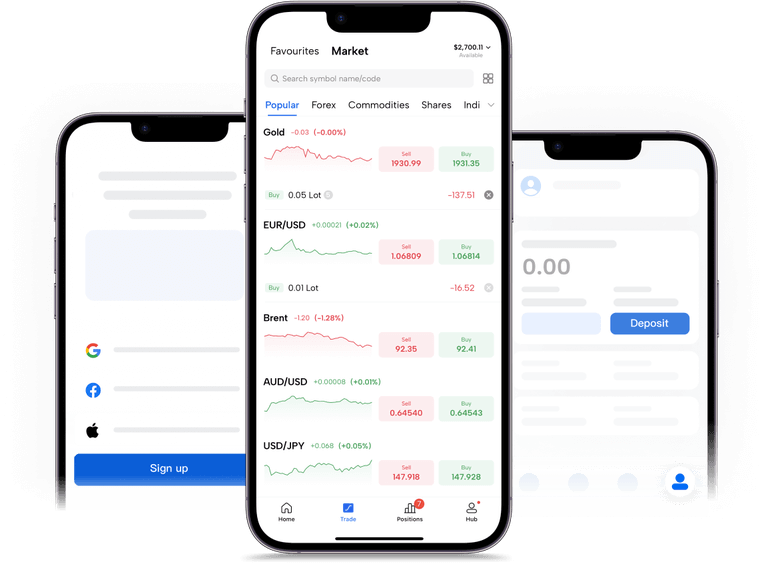
Mitrade provides access to Gold ETF CFDs and other gold-related markets through a single trading platform.
Key advantages include:
✅0 commission on Gold ETF CFD trades.
✅Tight spreads to help reduce trading costs.
✅Low minimum deposit, starting from $50.
✅Two-way trading, allowing traders to potentially profit in both bull and bear markets.
✅Flexible leverage choices (1:1 - 1:200) for more efficient capital utilization.

How Can You Effectively Invest in Gold ETFs?
While Gold ETFs can be valuable portfolio diversifiers, choosing the right investment approach is equally important. Consider these strategies:
1. Invest Regularly Through Dollar-Cost Averaging
Invest a fixed amount at regular intervals instead of trying to time the market. For example, investing $200 in a Gold ETF every month helps reduce the impact of short-term price fluctuations by averaging your purchase price over time.
2. Diversify Your Portfolio
Gold ETFs should be used as part of a diversified portfolio rather than as a standalone investment. A simple approach is to adjust your Gold ETF allocation based on your risk tolerance:
Conservative investors: 15–20% Gold ETFs, with the remaining portfolio invested in bonds and dividend-paying stocks.
Moderate investors: 5–10% Gold ETFs, balanced with equities and fixed-income investments.
Aggressive investors: 3–5% Gold ETFs, while allocating most of the portfolio to growth-oriented stocks and other higher-risk assets.
3. Rebalance Your Portfolio Regularly
Review your portfolio periodically and adjust your Gold ETF allocation when it drifts from your target. For example, if your goal is to keep Gold ETFs at 10% of your portfolio but a rise in gold prices increases the allocation to 15%, consider selling a portion of your Gold ETF holdings and reinvesting the proceeds into other assets to restore your target allocation.
Conclusion
Gold ETFs remain one of the most convenient ways to gain exposure to gold without the costs and complexities of owning physical bullion. Whether you're looking for the best gold ETF globally or exploring the best gold ETF in UAE or India, choosing the right fund depends on factors such as expense ratio, assets under management (AUM), liquidity, and investment objectives.
For long-term investors, physically backed Gold ETFs offer a straightforward way to diversify a portfolio and hedge against inflation and market uncertainty. Those seeking more active opportunities may also consider trading Gold ETF CFDs through platforms like Mitrade, which provide flexibility to trade both rising and falling markets. Before investing, compare different ETFs carefully and ensure they align with your financial goals, risk tolerance, and investment strategy.
FAQs
1. Can I buy US-listed Gold ETFs like GLD or IAU if I reside in the UAE?
Yes. Many UAE investors can buy US-listed Gold ETFs such as GLD and IAU through brokers that provide access to US stock exchanges. Check your broker's availability, fees, and regulatory requirements before investing.
2. Are Gold ETFs in the UAE tax-free?
The UAE does not impose personal capital gains tax on individuals, so Gold ETF investments are generally tax-efficient. However, taxes may still apply in the ETF's home country depending on local regulations.
3. What is the difference between an equity gold fund (Gold Miners ETF) and a physical Gold ETF?
A physical Gold ETF tracks the price of gold by investing in physical bullion, while a Gold Miners ETF invests in mining company stocks. Gold Miners ETFs tend to be more volatile but may offer higher growth potential.

* The content presented above, whether from a third party or not, is considered as general advice only. This article should not be construed as containing investment advice, investment recommendations, an offer of or solicitation for any transactions in financial instruments.


