


Jensen Huang Stepped Away From Nvidia, and That Might Not Be the Company's Biggest Problem
Key Points
As Huang leaves Nvidia, it's losing its visionary leader, which could harm the company's dominance and growth prospects.
There are also concerns about "circular financing" and Nvidia chips ending up in China.
- 10 stocks we like better than Nvidia ›
Jensen Huang's departure from Nvidia (NASDAQ:NVDA), the artificial intelligence (AI) company he founded and led for 33 years, has already impacted Nvidia stock, and the repercussions of his actions are likely to reverberate for some time.
There are already conflicting opinions about whether Huang should have stepped down, with many calling for his reinstatement as CEO. Whether or not his personal actions should impact his professional life could be debatable, but the debacle has been an opportunity for other negative news to come to the surface that could be much more damaging to Nvidia, and ultimately, its shareholders.
Missed AI’s "Act 1"? Act 2 Could Be 15x Bigger. Most investors think they missed the AI boat because they didn't buy Nvidia in 2005. But according to our analysts, we’re only at the end of "Act 1"—the R&D phase. "Act 2" is the global rollout. Continue »
Nvidia has lost its founder-CEO
Even if you agree with Huang's decision to step down, the company is at a new crossroads without its visionary and longtime leader at the helm. Many companies have successfully moved to new CEOs without a hitch, but most of the time, those succession plans were in place for some time before the CEO left.
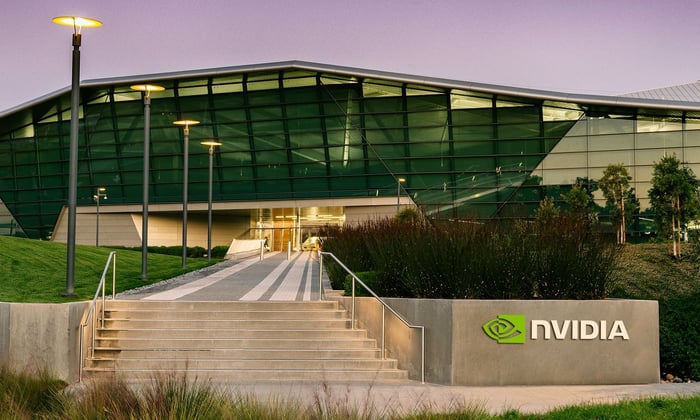
Image source: Nvidia.
Nvidia's lack of a plan means that there may be some volatility while it reorganizes. More acutely, the company now lacks Huang's vision and direction, which his fans believe the company needs to drive the AI revolution.
But there’s more.
Is Nvidia strong-arming buyers?
Investor Michael Burry has likened Nvidia to the mafia and called it a “protection racket,” which refers to organizations that force clients to pay ongoing fees for protective services, with negative consequences for those who refuse. Burry accuses Nvidia of forcing clients to buy Nvidia products in a similar way.
According to The Wall Street Journal, Nvidia was trying to get many smaller companies to buy its chips and was offering financing because it had a deluge of chips to sell, while customers were "running away," according to anonymous people familiar with the matter.
Troubles in China
There has been tension between the U.S. government and Nvidia about what the company can sell to China. Nvidia's graphics processing units (GPU) are the gold standard for AI development, and U.S. government officials didn't want them getting into the hands of Chinese rivals.
Huang lobbied against restrictions, reasoning that without Nvidia's chips, China would work hard on its own to create even better alternatives.
As of July, sales from China represented 7% of Nvidia's revenue, but some analysts estimate that it could be much more than that. Nvidia sells chips to Asian countries like Singapore, and some speculate that shell companies were bringing chips into China or creating data centers for Chinese use.
The Wall Street Journal said that it had seen paperwork showing that Megaspeed — the company where a woman Jensen Huang is alleged to have had an affair with worked — sent $12 billion worth of Nvidia's best chips to China between March 2024 and June 2025. There have been reports of other Nvidia customers sending chips on to China as well. If true, this could cause issues for Nvidia.
What does this mean for shareholders?
What this means for shareholders is that they own stock in a company that may not be presenting its business accurately, which is a big risk.
It’s true that Nvidia has the best chips and lots of happy customers. Amazon (NASDAQ:AMZN) CEO Andy Jassy is always reassuring his own shareholders that Amazon Web Services (AWS) has a strong relationship with Nvidia, because it has the best chips, even though Amazon also makes its own. Space Exploration Technologies (NASDAQ:SPCX) CEO Elon Musk just told his shareholders that the company's new Colossus II data center complex will only have Nvidia's newest chips, because they're the best.
However, as potentially dubious business practices come to light, Nvidia's financials may not be exactly what they seem.
What it looks like from my point of view is that there may be some reassessment of Nvidia as it looks for a new CEO, and possibly an entirely new management structure.
If I owned shares, I wouldn't necessarily sell my Nvidia stock right now, but I would be wary about buying it while investors wait to see how this plays out.
Should you buy stock in Nvidia right now?
Before you buy stock in Nvidia, consider this:
The Motley Fool Stock Advisor analyst team just identified what they believe are the 10 best stocks for investors to buy now… and Nvidia wasn’t one of them. The 10 stocks that made the cut could produce monster returns in the coming years.
Consider when Netflix made this list on December 17, 2004... if you invested $1,000 at the time of our recommendation, you’d have $335,171!* Or when Nvidia made this list on April 15, 2005... if you invested $1,000 at the time of our recommendation, you’d have $1,000,640!*
Now, it’s worth noting Stock Advisor’s total average return is 823% — a market-crushing outperformance compared to 208% for the S&P 500. Don't miss the latest top 10 list, available with Stock Advisor, and join an investing community built by individual investors for individual investors.
See the 10 stocks »
*Stock Advisor returns as of November 16, 2026.
Jennifer Saibil has no position in any of the stocks mentioned. The Motley Fool has positions in and recommends Amazon, Nvidia, and Space Exploration Technologies. The Motley Fool has a disclosure policy.
Recommended Articles


