


Weekly Report: Gold's $4,000 reclaim and Brent's $100 break were right calls — the silver call was wrong

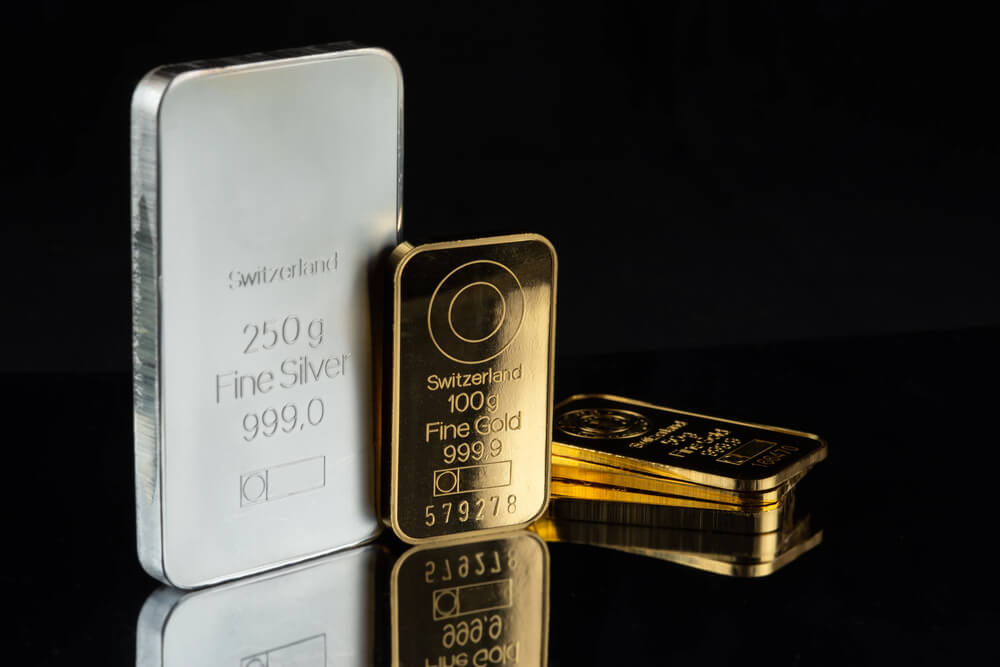
Last week this report made three calls. Gold's reclaim of $4,000 was "not the trend". Brent's supply-premium regime was "over" below $100. And the gold-silver ratio at 78.7 was the tell that silver was still cheap versus gold.
Two of the three paid. Gold fell 4.7% on the week to $3,884.69 and traded at $3,872 on Monday, below $4,000. Brent fell 2.52% to $95.84 and held below $100. The silver call did not: silver fell 5.35% to $49.03, and the ratio rose to 81.1 on Monday instead of falling toward its 2026 average.
Last week's scorecard
| Call (9 November) | What happened | Verdict |
|---|---|---|
| Gold's $4,000 reclaim is not the trend | Gold -4.7% to $3,884.69; $3,852.48 low on 13 November | Hit |
| Brent's supply-premium regime is over below $100 | Brent -2.52% to $95.84; held below $100 | Hit |
| Gold-silver ratio 78.7 means silver is cheap | Ratio 79.2 Friday, 81.1 Monday; silver -5.35% vs gold -4.7% | Miss |
The gold call was not a forecast of the low. It was a statement about the mechanism: a bounce that happens while December hike odds rise is a positioning bounce, not a trend, and the 50- and 100-day averages at $4,197 ~ $4,202 were the confirmation level. Gold never closed above them. By Friday it had given back the entire move and printed $3,852.48, a 13-month low.
Why the silver call missed
The logic was mean reversion: a ratio of 78.7 against a 2020s average near 80 and a 2026 average of 63.8 looked like silver was overdue a catch-up. The mechanism was wrong because of what drove the week.
This was a hawkish repricing, not a growth scare. October PPI came in at +6.5% year on year, December hike odds went to 84.7%, the dollar made a 19-month high at 103.41 and the 10-year closed at 5.154%. In that regime, silver's industrial and risk beta dominates its monetary beta: it falls harder than gold, and the ratio rises. A ratio trade needs a dovish catalyst — falling real yields or a weaker dollar — to work. There wasn't one.
The second lesson is about the threshold itself. A ratio at 78.7 versus a 2020s average of 80 is not "cheap" in a year whose average is 63.8. The market had already repriced the ratio for a higher-rate world; treating 80 as a magnet was reading an old regime's map.
The consensus going into this week
Four things are now treated as settled:
December is fully priced, so gold's downside is limited. The 84.7% is in the price; the argument is that the marginal seller has no new information.
OPEC+ surplus caps Brent below $100. The IEA's 13 November report put Q4 supply near 105 million barrels a day, a surplus of about 2 million, and OPEC+ pumped 41.23 million barrels a day in October, up 2.04 million.
Copper's China demand stays weak. Copper closed at $6.0795, down 2.23%, with iron ore at $91.48 a tonne.
Natural gas's 7.74% week is weather, not a regime. Gas closed at $3.23 while crude fell.
The gas number deserves its own line. Natural gas rose 7.74% to $3.23 while crude fell — a split that is easy to mistake for a commodity regime signal. It is not. Gas and WTI have a 60-day correlation of -0.05, so the two were never a pair that should move together; the move is weather and storage, and the level that matters is 3.15. Above it, the move is noise. Below it, the heating-season bid failed.
Copper and iron ore are the China channel, and they point the same way. Copper closed at $6.0795, down 2.23%, and iron ore at $91.48 a tonne, with Chinese port stocks still building and steel margins thin into a seasonally weak fourth quarter. That is why the copper line at 6.00 is the least controversial item on this week's scorecard.
Which consensus is most fragile
The first one. "Fully priced" is doing a lot of work when 15.3% of the market still prices a 50-basis-point December move and PPI is running at 6.5%. It is also the most crowded: 10 of 13 analysts surveyed last week were bearish, with downside targets at 3,750, 3,500, 3,300 and 3,200. When the bear case is that unanimous, the risk is a squeeze, not a trend.
The physical side supports that caution. Central banks bought 321 tonnes in Q3 and the PBoC has added for 24 straight months; ETF holdings are near 4,256 tonnes. The sellers this month have been futures accounts, not the price-insensitive buyers.
What would change the scorecard
The scorecard changes if two things happen together: gold closes above 3,945 and the ratio falls back below 80. That combination would say the hawkish repricing is over and the silver catch-up trade has finally started — the same trade that missed this week, at a better price. One of the two is not enough. Gold above 3,945 on its own is a bounce inside the range; the ratio back below 80 on its own is a risk-on day, not a regime.
Until then, the burden of proof stays with the bulls. The three bearish pillars — a December hike at 84.7%, a 103 dollar and a 5.154% 10-year — are all still standing, and the one thing that has changed is that gold is now 31% below its January record instead of 27%.
This week's scorecard
| Call | Trigger | Date |
|---|---|---|
| Gold's 3,852 is the line | Weekly close above 3,852 or below it | Nov 20 |
| Brent's 200-day at 93.73 decides | Daily close below 93.73 | Nov 20 |
| Copper tests 6.00 | Daily close below 6.00 | Nov 20 |
| The ratio stays above 80 | Ratio above 82 or back below 80 | Nov 20 |
| Gas holds 3.15 | Daily close below 3.15 | Nov 20 |
The two-way read on gold is unchanged from last week, just at a lower level: holding 3,852 keeps the $3,852 ~ 4,200 range intact and sets up a squeeze toward 3,912 ~ 3,945; a weekly close below 3,852 opens 3,834, then 3,800, and the 3,750 targets that the bearish consensus is already carrying.
If you can only watch one thing
Watch 3,852 on a weekly close. It is the only level this week that is simultaneously the 13-month low, the bottom of the September-November range and the trigger for the crowded short. Everything else — Brent at 93.73, copper at 6.00, gas at 3.15 — is a confirmation, not a decision.
Read more
Before making any trading decisions, it is important to equip yourself with sufficient fundamental knowledge, have a comprehensive understanding of market trends, be aware of risks and hidden costs, carefully consider investment targets, level of experience, risk appetite, and seek professional advice if necessary.
Furthermore, the content of this article is solely the author's personal opinion and does not necessarily constitute investment advice. The content of this article is for reference purposes only, and readers should not use this article as a basis for any investment decisions.
Investors should not rely on this information as a substitute for independent judgment or make decisions solely based on this information. It does not constitute any trading activity and does not guarantee any profits in trading.
If you have any inquiries regarding the data, information, or content related to Mitrade in this article, please contact us via email: insights@mitrade.com. The Mitrade team will carefully review the content to continue improving the quality of the article.


