


Warren Buffett's Top Crash-Survival Strategy Has 98 Years of History Behind It
Key Points
Warren Buffett has been offering investors timeless guidance for years.
Bear markets can be scary, but they can also offer some great buying opportunities.
Focus on your long-term goals and stay invested through bear markets.
- 10 stocks we like better than S&P 500 Index ›
The market hasn't had to deal with an outright stock market crash in a long time. The closest recent comp is probably the COVID-19 pandemic bear that saw the S&P 500 (SNPINDEX: ^GSPC) lose around 34% of its value in just over a month.
The next market crash may or may not come soon. But history has shown that another one will happen eventually. Investors probably won't help themselves by trying to predict the next big decline, but they can prepare mentally by developing a plan for how they will deal with it while market conditions are still good.
Missed Nvidia in 2009? This Rare Signal Is Flashing Again. In 2009, a "Double Down" signal flashed for a little-known chipmaker called Nvidia. For the first time in years, that same "Total Conviction" signal is flashing for a company 1/100th the size of Nvidia. Continue »
When developing such a plan, famed investor Warren Buffett is usually a good person to look to for guidance. Over the years, he has offered multiple bits of advice on just this topic. For example, during the 2008 financial crisis, he wrote that there is one simple rule that guided his trading: "Be fearful when others are greedy and be greedy when others are fearful."
Nearly a century of stock market history strongly suggests Buffett is right.
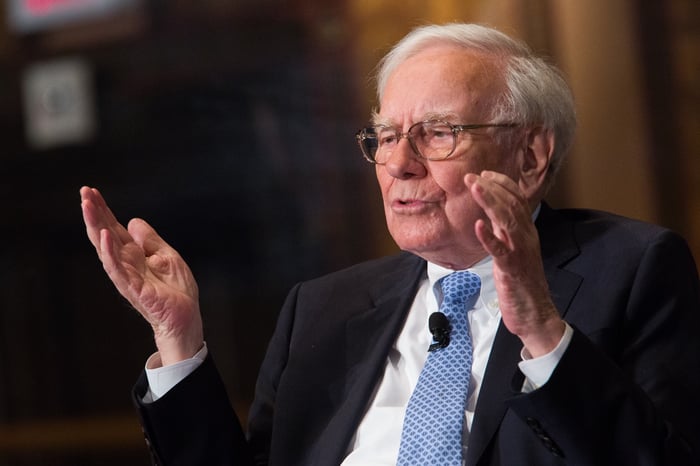
Warren Buffett. Image source: Getty Images.
Bear markets tend to reward patience
Bear markets are understandably uncomfortable, but consider the actual numbers around them:
- There have been 27 bear markets since 1928. On average, they've lasted 9.6 months. The average bull market, however, has lasted 2.7 years, nearly three times as long.
- The average bear market loss is 35%. The average bull market gain is 112%.
- Following the 18 biggest market declines since the Great Depression, the S&P 500 was higher five years later in each case. Annual returns over those five-year periods averaged more than 18%.
- Roughly 42% of the S&P 500's strongest days in the past 20 years occurred during a bear market. Another 36% of the market's best days took place in the first two months of a bull market.
The biggest takeaway from these statistics is that some of the market's best forward returns come during or just following the depths of a bear market. Most investors are looking for reasons to avoid equities after they've dropped by more than 20%. But when things turn, they turn fast. And that's where some of the biggest short-term returns can be had.
How to put Buffett's advice into practice
If you're going to be greedy when others are fearful, you need to keep investing through the downturns.
If you become one of the fearful, there's a good chance that you'll be selling after stocks have fallen. That usually just does two things -- you lock in losses after they've already happened, and you miss out on the gains after the recovery has started.
Crashes are scary, but they can also present some of the best buying opportunities. Focusing on your long-term goals is usually the best course of action.
Should you buy stock in S&P 500 Index right now?
Before you buy stock in S&P 500 Index, consider this:
The Motley Fool Stock Advisor analyst team just identified what they believe are the 10 best stocks for investors to buy now… and S&P 500 Index wasn’t one of them. The 10 stocks that made the cut could produce monster returns in the coming years.
Consider when Netflix made this list on December 17, 2004... if you invested $1,000 at the time of our recommendation, you’d have $383,680!* Or when Nvidia made this list on April 15, 2005... if you invested $1,000 at the time of our recommendation, you’d have $1,382,954!*
Now, it’s worth noting Stock Advisor’s total average return is 937% — a market-crushing outperformance compared to 214% for the S&P 500. Don't miss the latest top 10 list, available with Stock Advisor, and join an investing community built by individual investors for individual investors.
See the 10 stocks »
*Stock Advisor returns as of September 29, 2026.
David Dierking has no position in any of the stocks mentioned. The Motley Fool has no position in any of the stocks mentioned. The Motley Fool has a disclosure policy.
Recommended Articles


