




Best Day Trading Platforms for Australians in 2026: Top Platforms & Features

Trading and investing come with different kinds of people. Some are short-term focused with the goal of making quick profits from market movements, while others focus on long-term investing strategies for stable passive income or future gains. Day trading is one of the most popular strategies among short-term traders and investors in Australia. With day trading, you can find different ways to capitalise on short-term market movements across forex, indices, stocks, commodities, and cryptocurrencies.
However, choosing the best platform for day trading is one of the most important decisions you can make, regardless of your skill set or experience. The Australian market now offers dozens of them, but we’ve curated the best day trading platforms for Australians in 2026 to make it easy for you to decide and start trading quickly.
What Is Day Trading?
Day trading is a short-term trading strategy that involves opening and closing positions within the same trading day. That means every trade you open must be closed within 24 hours or before the end of that day’s trading window, depending on the asset.
The purpose of day trading is to make potential profits on time from intraday price movements instead of waiting for an asset to increase in value for days, weeks, months, or years. These movements may last only minutes or hours, but day traders have the skill to make the most of the moments, which is why speed and timing are extremely important.
Some of the assets day traders commonly trade include:
Forex currency pairs
Stock indices
Individual shares
Commodities
Cryptocurrencies
For day trading to be successful, the market must experience high volatility and have deep liquidity. Highly liquid markets are generally preferred because trades can be executed quickly with minimal slippage. The presence of deep liquidity is why forex, indices, and large-cap stocks remain among the most popular day trading markets globally.
Day trading is also not the same as investing because it relies more on technical analysis than long-term fundamentals. For instance, instead of focusing on multi-year company growth or dividend performance, day traders typically analyse:
Price action
Chart patterns
Technical indicators
Momentum
Intraday volatility
However, while it may seem easy, the fast-paced nature of intraday trading comes with serious discipline and risk management, as you can quickly accumulate losses.
What Makes a Good Day Trading Platform?
The best platform for day trading is designed to provide detailed market analysis, efficient trade execution, mobile compatibility, diverse markets, and low trading fees.
1. Fast Execution Speed
In day trading, prices move every millisecond. That means you can’t afford to use a slow platform that may delay your entries or exits and cause you to miss opportunities or face slippage.
2. Low Trading Fees
Trading costs are equally important because even the cheapest fees will add up in no time for an active trader with multiple daily trades. A platform with tight spreads may save you money, especially when trading in the forex and index markets, where active trading volume tends to be higher.
3. Detailed Market Analysis
The best platforms for day trading also provide the tools required for detailed market analysis. These include charting functionality and other tools for technical analysis to help traders determine the best entry and exit points. These include:
Real-time pricing charts
Multiple chart timeframes
Technical indicators
Drawing tools
Market depth information
4. Wide Market Support
Most day traders move across different markets instead of trading a single asset class. They can trade forex, indices, commodities, stocks, and cryptocurrencies within a day, depending on market volatility and opportunity. As such, the best day trading platforms provide broad market access in one place.
5. Mobile Compatibility
Modern traders often take and monitor positions from their mobile devices, especially when trading throughout the day. A good day trading platform should have a dedicated app with features like real-time alerts, stable execution, and charting.
“Trade with an ASIC-regulated broker. Fast AUD funding via PayID. ”
Quick Comparison Table – Best Platforms for Day Trading in Australia
Best Day Trading Platforms for Australians in 2026
1. Mitrade — Overall Best for CFD Day Trading
Mitrade is no newbie in the Australian day trading space because of its all-around approach to supporting traders across every experience level. The platform offers a blend of accessibility, fast execution, low fees, and Australian-friendly payments to traders, making it a practical broker for everyone.
Also, on Mitrade, day traders can access Contracts for Difference (CFDs) instead of buying or holding the underlying asset behind every market. That means you can trade forex, indices, commodities, stocks, and cryptocurrencies without managing them physically or in a wallet.
Instead, you are trading their price movements, making it possible to profit whether market prices are rising or falling.
The platform also operates on a spread-based pricing model with no traditional commission fees on CFD trades.
For Australians specifically, the platform supports local-friendly payment methods, such as Visa, Mastercard, PayID, EFT, and e-wallets. Mitrade’s Australian roots also make it a great choice for Aussie day traders who can enjoy support from familiar people.

 Enjoy simple and fast trading Flexible leverage options available Follow real-time trading strategies Demo account with $50,000 virtual funds

2. eToro — Best for Social Day Trading
eToro stands out because of its social trading ecosystem. Unlike traditional trading platforms, eToro allows traders to mirror each other’s market movements and potentially profit through its CopyTrader feature. This makes it particularly appealing for beginners learning how active trading works.
The platform also supports stocks, forex, indices, crypto CFDs, and commodities. Its interface is beginner-friendly, with a visually clean layout and simplified execution process.
However, day traders focused heavily on technical analysis may find eToro’s charting tools less advanced. Fees are also slightly higher because it charges spreads, withdrawal fees, and other costs.
3. Plus500 — Best for Simplicity
Plus500 focuses on making CFD trading as straightforward as possible. The platform offers a minimal interface that removes much of the complexity often associated with active trading. This simplicity makes it attractive for beginners who want exposure to fast-moving markets without navigating advanced tools and features.
On Plus500, you’ll also find a range of assets across forex, index CFDs, stock, commodities, and cryptocurrencies. It also has a commission-free structure, with the major costs being spreads.
However, limited advanced charting tools and educational resources are significant limitations.
4. IG Markets — Best for Advanced Trading
IG Markets is one of the most established trading platforms globally and remains highly popular among Australian day traders seeking broad market exposure with an advanced trading focus.
The platform offers access to similar assets as Mitrade and eToro, making IG particularly attractive for traders who diversify strategies across different asset classes.
IG also provides extensive research tools, market analysis, and real-time news integration, helping traders stay informed during fast-moving sessions. However, the platform’s charting and analytical capabilities are strong, making it better suited to experienced day traders.
5. CMC Markets — Best for Technical Analysis
CMC Markets is one of the top Australian trading platforms for traders who rely heavily on charting and technical analysis. Its Next Generation platform includes an extensive range of technical indicators, drawing tools, and market analysis features, among others.
This makes it better suited to traders who spend significant time analysing charts before executing trades.
CMC Markets also offers access to thousands of financial instruments, allowing active traders to diversify strategies across multiple markets. However, while the platform is powerful, it can initially feel overwhelming for beginners.
6. Pepperstone — Best for Professional Traders
Pepperstone is widely regarded as one of the strongest platforms for pro traders who prioritise professional trading tools.
Unlike beginner-focused brokers that offer simplified systems, Pepperstone supports advanced trading tools such as MetaTrader 4, MetaTrader 5, and cTrader. Aussie traders focused heavily on execution quality, low spreads, and advanced trading tools, and will fancy Pepperstone.
However, the platform’s professional focus is a shortfall, as beginners need a steeper learning curve to get familiar.
Best Markets for Day Trading
One of the advantages of day trading is the ability to move between different markets and potentially profit from them. Each market comes with its own volatility, liquidity, and trading opportunities, and here are the common markets Australian day traders frequent:
Forex
The forex market is global and attracts billions of dollars in daily trades. The high liquidity and its nearly 24-hour trading cycle make it a top market for intraday trades. Here, you’ll find major and less popular currency pairs such as:
EUR/USD
GBP/USD
USD/ZAR
USD/TRY
You’ll also typically experience tight spreads and can use economic data and central bank announcements to build out your strategy. Platforms like Mitrade also offer leverage to help you open bigger trades with less money from your capital. However, leverage comes with high risks because the markets move really fast.
Indices
You can also trade indices many times in a day. They are among the most beginner-friendly day trading markets because they provide broad exposure to entire market sections instead of individual companies.
Popular day trading indices include:
For beginners, indices can sometimes feel easier to analyse because broader market sentiment tends to drive movements more consistently than individual stock news. However, they are heavily influenced by economic conditions, interest rates, corporate earnings, and other external factors.
Stocks
Stock day trading focuses on short-term movements in individual company shares on the stock market, like the Australian Securities Exchange (ASX). Usually, stock day traders target stocks with large market capitalisation, strong earnings, and high trading volume.
These include
Apple Inc
Tesla
Microsoft
Commonwealth Bank of Australia
However, individual stocks are generally more volatile than indices because they are heavily influenced by company-specific news and events.
Commodities
Commodities such as gold, silver, and oil remain highly popular among active traders because they react strongly to global economic and geopolitical developments.
With these markets, you can find substantial intraday price movements, making them attractive for experienced day traders. However, they can also become highly unpredictable during periods of global uncertainty.
Cryptocurrencies
Cryptocurrencies have become one of the fastest-growing day trading markets because of their extreme volatility and 24/7 trading opportunities. You can day-trade popular crypto assets, including:
Ethereum (ETH)
Bitcoin Cash (BCH)
Solana (SOL)
Ripple (XRP)
However, cryptocurrencies are also very risky due to aggressive price swings.
How to Start Day Trading in Australia
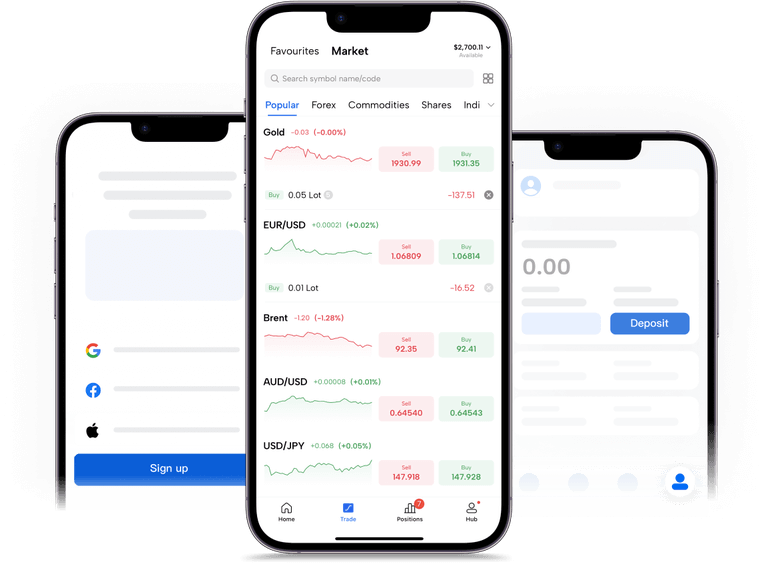
The best platform for day trading in Australia is Mitrade. It features a wide asset range, fast execution, and simplified trading. Here’s how to day-trade using CFDs easily on Mitrade:
Create a Mitrade account and complete identity verification
Deposit funds using any of the supported payment options
Explore the supported stock, forex, crypto, and index CFDs, then choose your preferred option
Analyse the market and decide what position to take
Open a position (go long or short) based on your projection
Remember to take advantage of the demo trading feature on Mitrade to learn the ropes if you are just starting.
1. What is the best platform for day trading in Australia?
Many Australian traders consider Mitrade as the best day trading platform for CFDs because of its beginner-friendly interface, mobile support, broad market access, and fast execution.
2. Is day trading legal in Australia?
Yes, day trading is legal in Australia through regulated brokers and CFD trading platforms.
3. Can beginners start day trading?
Yes, beginners can practise day trading. However, you should learn risk management, trading psychology, and market analysis on a demo account before starting with real capital.
4. What markets are best for day trading?
Forex, indices, stocks, commodities, and cryptocurrencies are popular day trading markets because of their liquidity and volatility.
5. Is day trading risky?
Yes, day trading thrives under volatile market conditions. You can lose money quickly without proper discipline and risk management.
Disclaimer: The content presented above, whether from a third party or not, is considered as general advice only. CFD trading involves significant risk of loss. Past performance does not guarantee future results. This article serves informational purposes only and does not constitute financial advice. Consider your risk tolerance before trading.


