




Oil’s war premium is back — but can traders keep up with the volatility?
Oil markets are once again being pulled higher by the threat of supply disruption in the Middle East. Brent crude has again jumped to US$95 a barrel, its highest level in almost six weeks. The immediate trigger was a further escalation in the conflict around Iran, which has kept the Strait of Hormuz under pressure.
But traders are now facing a second risk: Iran-aligned Houthis have threatened Saudi-linked shipping in the Red Sea, prompting crude tankers to change course near the Bab el-Mandeb Strait.
That leaves oil vulnerable to rapid repricing in either direction. A fresh strike, tanker incident, or evidence that flows are tightening could rebuild the war premium quickly. A credible diplomatic breakthrough or signs that shipping routes are normalising could unwind it just as fast.
For Australian traders, the key is no longer simply whether oil rises or falls. It is whether they can respond when the market rapidly changes its view of the conflict.
Two shipping routes are now shaping the oil market
The Strait of Hormuz has long been one of the oil market’s most important pressure points. It is the main exit route for crude from major Gulf producers, and disruption there can affect a meaningful share of global oil and LNG trade.
The latest concern is that the risk has spread beyond Hormuz. Saudi crude exporters have increasingly relied on Red Sea routes and the Yanbu export terminal to bypass the Gulf. However, Houthi threats around the Bab el-Mandeb Strait have forced some tankers carrying Saudi crude towards China and India to alter course.
Oil traders price the risk that supply will be lost, while refiners and shipping firms adjust routes, insurance cover and delivery schedules. Brent was trading below US$70 earlier this month as the market became more confident that supply routes would recover. It has since returned near US$95 as those assumptions have been challenged again.
Contracts for Difference (CFDs) allow Australian traders to gain exposure to oil-price movements without owning physical crude, buying energy shares, or managing oil futures contracts directly. They also allow traders to take a view on either rising or falling markets.
“Trade Brent Oil with an ASIC-regulated broker. Fast AUD funding via PayID. ”
Why the war premium can disappear as quickly as it returns
A geopolitical risk premium is the extra price traders are prepared to pay because supply looks less certain than usual. That premium can rise when military action intensifies, a tanker is rerouted, or insurers raise the cost of entering a high-risk area. It can also fade when negotiations restart, an export route appears to be functioning, or producers find ways to redirect barrels.
This makes oil particularly difficult to treat as a simple buy-and-hold conflict trade. A stronger-than-expected diplomatic signal could lead traders to reduce their supply-risk positions, especially if it is accompanied by evidence that flows through Hormuz or the Red Sea are improving. Conversely, a prolonged disruption could force refiners to compete for fewer available barrels, pushing the physical market and futures prices higher.
The impact is also broader than crude. Higher oil prices can feed into inflation expectations, transport costs, airline margins and central-bank policy. That means oil may react not only to Middle East headlines, but also to US inventory data, Chinese demand figures, OPEC+ decisions and changes in the US dollar.
This is not a simple long-oil trade
The challenge is not simply reacting to overnight headlines. It is that oil is pricing the probability of supply disruption rather than a confirmed loss of barrels—and that probability can change quickly.
A tanker diversion, fresh strike or threat around Hormuz can lift crude before production is interrupted. But evidence that vessels are moving normally, exporters are finding alternative routes, or diplomacy is gaining traction can remove part of that premium just as fast.
For Australian traders, the decision is not only whether oil could rise further. It is how to gain exposure to a market where the conflict narrative can reverse before the physical supply picture is clear.
Oil shares are an imperfect proxy: Australian producers can benefit from higher crude prices, but hedging, production guidance, costs and wider ASX sentiment can all move their shares independently of oil.
Futures add contract complexity: Direct futures exposure involves expiry dates, rollovers and the gap between prompt and later-dated prices—details that become more important when near-term supply fears intensify.
The market is trading shipping reliability: A rerouted tanker can move prices even without a confirmed production loss, while signs of normal vessel traffic can quickly reduce the risk premium.
A bullish view can be invalidated quickly: A ceasefire proposal, reduced military activity or restored export flows could trigger a sharp reversal in a market positioned for prolonged disruption.
That makes flexibility important. Traders need a way to respond to the direction of the next repricing, rather than relying on a single long-term view that oil must keep rising.
How CFDs can help traders respond to oil volatility
Oil CFDs allow traders to take a position on crude-price movements without owning physical oil, buying energy shares or managing expiring futures contracts.
That is particularly relevant when the key question is whether the market will add to or unwind the war premium. A trader expecting disruption to worsen can take a long position, while one expecting shipping flows or diplomacy to improve can take a short position.
Go long or short on oil: Traders can take a long view if supply risks are building, or a short view if the market begins to price in de-escalation and more reliable shipping flows.
Trade oil directly: CFDs provide exposure to crude-price movements themselves, rather than to the separate operational and company-specific risks attached to energy stocks.
Set risk controls before the next headline: Pending orders, stop-losses and take-profit levels can be set in advance, helping traders define an approach before a tanker report or military update moves the market.
Use leverage with care: Retail leverage of up to 10:1 is available on oil CFDs under ASIC rules. It lowers the upfront margin requirement, but can magnify losses as well as gains.
The next move will depend on whether concerns around Hormuz and the Red Sea begin to restrict actual supply—or whether the market regains confidence that barrels can keep moving.
“Trade Brent Oil with an ASIC-regulated broker. Fast AUD funding via PayID. ”
What could force oil to reprice again?
Oil is likely to remain highly sensitive to developments that change the perceived reliability of Middle East exports. The key is whether the risk spreads into material supply disruption, or begins to fade.
Traffic through Hormuz and Bab el-Mandeb: Sustained vessel flows could ease immediate supply fears. More diversions, delays or attacks would keep pressure on near-term crude prices.
Saudi Arabia’s alternative export routes: Saudi crude can be redirected through the Red Sea, but pressure on both Hormuz and Bab el-Mandeb would make that workaround less reliable.
Diplomacy versus escalation: A credible ceasefire proposal or negotiations could quickly unwind part of the conflict premium. Further strikes or retaliation would likely rebuild it.
OPEC+ supply decisions: Additional output or emergency supply measures could cap the rally, while limited spare capacity would reinforce concerns about tighter physical markets.
US inventories and demand data: Large stock builds or weak Chinese activity data could limit gains if traders become more concerned about consumption than supply disruption.
Oil is now trading on the reliability of physical flows as much as outright production. That leaves the market exposed to further sharp reversals as each new development changes how much risk traders believe is still priced in.
Trade oil CFDs with Mitrade
For traders following the conflict-driven moves in oil, Mitrade offers a practical way to stay prepared.
AUD-based accounts, helping Australian traders keep account balances, margin and profit or loss in Australian dollars.
0% commission trading, with trading costs incorporated into the spread.
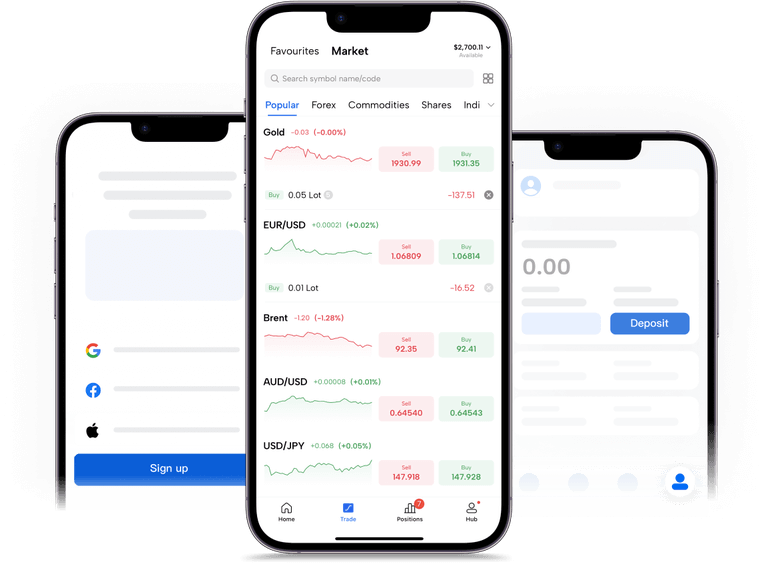
Mobile access for monitoring global markets when away from a desk.
A free $50,000 demo account for testing an oil-trading strategy before risking real capital.
ASIC regulation, with retail client funds held in segregated trust accounts.
CFDs are complex instruments and carry a high risk of losing money rapidly due to leverage. Traders should ensure they understand how CFDs work and consider whether they can afford to take the high risk of losing their money.
Start trading oil CFDs in three simple steps
Getting set up to follow the next oil move only takes a few minutes.
Open an account: Register manually via the Mitrade homepage, or use the fast sign-up process by linking your existing Google or Facebook credentials.
Fund the account: Deposit your initial margin using secure Australian payment methods, including POLi or Visa/Mastercard.
Trade oil CFDs: Search for the preferred oil market, analyse the price action, set risk controls and place a long or short trade.
Oil’s war premium can change quickly. Open your Mitrade account today and be ready to respond when the next Middle East headline moves the market.


1. Can traders still trade oil if prices start falling?
Yes. Oil CFDs allow traders to take a short position if they expect easing tensions, improving tanker flows or weaker demand to push prices lower. However, a short position can lose money if oil rises, and leverage magnifies both gains and losses.
2. Why are the Strait of Hormuz and Bab el-Mandeb so important?
They are both major shipping chokepoints. Hormuz is central to Gulf oil exports, while Bab el-Mandeb links the Red Sea with the Gulf of Aden and routes towards Asia. Pressure on both routes makes it harder for producers to redirect barrels when one path is disrupted.
3. Do oil-company shares always rise when crude rises?
No. Higher oil prices can support producers’ revenue, but energy shares are also affected by production volumes, hedging, costs, debt, company guidance and broader equity-market sentiment. They may not track the crude price closely during a volatile period.
4. What should oil traders watch most closely now?
The most immediate catalysts are tanker movements, reports of supply disruption, military escalation, ceasefire talks, OPEC+ announcements and weekly US inventory data. In the current environment, each can quickly change the market’s view of the conflict premium.
Disclaimer: The content presented above, whether from a third party or not, is considered as general advice only. CFD trading involves significant risk of loss. Past performance does not guarantee future results. This article serves informational purposes only and does not constitute financial advice. Consider your risk tolerance before trading.


