




Europe’s Energy Shock Is Changing the ECB Outlook — What Does It Mean for EUR/USD?

The latest jump in oil prices is putting Europe’s energy vulnerability back at the centre of global currency markets.
Brent crude has climbed more than 20% since the Middle East conflict reignited, with renewed threats to shipping through the Strait of Hormuz keeping traders focused on potential supply disruptions. Europe is particularly exposed: higher energy import costs pushed the eurozone into a €7.8 billion trade deficit in May, reversing a €15 billion surplus a year earlier.
That would normally be a clear negative for the euro. More expensive oil and gas raise costs for households and businesses, weaken consumer spending, and make Europe’s already modest growth outlook even more fragile.
However, higher energy prices are also keeping eurozone inflation above the European Central Bank’s 2% target. Markets are now pricing in a much more hawkish ECB path than they were only weeks ago, while softer US inflation has weakened expectations for further Federal Reserve tightening.
The result is a genuine tug-of-war for EUR/USD. Europe’s energy bill is rising, but so are expectations for European interest rates. Meanwhile, the US dollar’s usual safe-haven support has been offset by falling Treasury yields and a more cautious Fed outlook.
For Australian traders, that combination can create sharp two-way moves as each new oil headline, inflation release, or central-bank comment shifts the balance again.
Why EUR/USD is back in focus
Rising oil prices normally put Europe at a disadvantage because the region imports much of its energy. Yet the inflation created by those higher costs is also making an ECB rate rise more likely, while softer US inflation has taken some support away from the dollar.
The key question is no longer simply whether higher oil prices are good or bad for the euro. It is which effect traders decide matters more: the pressure on Europe’s economy, or the prospect of a more restrictive ECB.
Mitrade’s Contracts for Difference (CFDs) give Australian traders a way to respond to either outcome without needing to exchange Australian dollars into euros or US dollars and purchase either currency outright.
“Trade EURUSD with an ASIC-regulated broker. Fast AUD funding via PayID. ”
Why Europe’s energy problem matters again
Europe has reduced its reliance on Russian gas since the 2022 energy crisis, but it still imports much of the oil and liquefied natural gas needed to run its economy.
That makes the region especially sensitive when a conflict threatens major energy routes.
A sustained rise in oil and gas prices affects Europe in several ways. Households pay more at the petrol pump and through higher utility bills. Manufacturers face higher input costs. Governments may come under pressure to provide energy support. And more money flows overseas to pay for imported fuel.
The May trade figures show how quickly this can affect the eurozone’s external position. Imports rose much faster than exports as energy costs climbed, turning a sizeable surplus into a deficit.
For EUR/USD traders, this matters because currencies often respond to changes in a country or region’s growth outlook, trade position and expected interest rates.
The complication is that these forces are now pointing in different directions.
Higher energy costs are an economic headwind for Europe. Yet the same costs can keep inflation elevated, making it harder for the ECB to cut rates or potentially requiring it to raise rates further.
That policy tension is why EUR/USD has not simply collapsed as oil prices rose.
The ECB and Fed are pulling the pair in opposite directions
Currency markets are heavily influenced by the relative outlook for interest rates. When markets expect US rates to stay higher than European rates, the US dollar often receives support. Higher yields can attract capital into US bonds and dollar-based assets.
That relationship has become less straightforward. The Federal Reserve is facing signs that US inflation is cooling. Lower Treasury yields have pushed the dollar index near a one-month low as traders reduce expectations for further rate hikes.
At the same time, the ECB is dealing with a renewed inflation problem. Eurozone inflation eased to 2.8% in June but remains above target, while the latest oil and gas rally threatens to make the path back to 2% slower and more difficult.
The ECB is widely expected to leave its deposit rate unchanged at 2.25% at its July meeting. But traders are increasingly looking beyond that decision to whether policymakers signal greater concern about energy-driven inflation and the risk of second-round price pressures.
This leaves EUR/USD highly sensitive to changes in the expected gap between European and US interest rates.
A hawkish ECB message, or another jump in oil prices, could support the euro if traders focus on the prospect of higher European yields. A weaker European growth outlook, renewed risk aversion, or a recovery in US Treasury yields could quickly push the pair the other way.
Why trading EUR/USD during an energy shock is not straightforward
EUR/USD is one of the world’s most closely watched currency pairs, but that does not mean the current setup is simple.
The market is reacting to several fast-moving forces at once, and they do not always produce the same result.
One headline can move several markets at once: News from the Middle East can send oil higher, lift inflation expectations, drive money into safe-haven assets and alter interest-rate forecasts within minutes. EUR/USD may reverse quickly as traders decide which factor matters most.
Europe and the US react differently to higher oil: The United States is more insulated from imported-energy shocks than Europe, but it is not immune. A move that initially hurts the euro could later weaken the US dollar if higher petrol prices revive US inflation concerns.
Key updates often arrive overnight: European market hours overlap with the Australian evening, while major US inflation data and Federal Reserve commentary can move EUR/USD during the local night.
Currency conversion is not the same as trading: Converting Australian dollars into euros or US dollars is not the same as taking a position on EUR/USD. It creates exposure to EUR/AUD or USD/AUD instead, offers no simple way to respond if EUR/USD falls, and can involve conversion costs each time funds move between currencies.
These are the conditions where preparation matters. Traders need to know which events they are watching, where they would reconsider their view, and how much they are prepared to risk if volatility suddenly increases.
How Mitrade helps traders respond to the EUR/USD story
Mitrade CFDs give traders exposure to movements in EUR/USD without needing to buy or hold either currency.
That can be particularly useful when the market is being driven by rapidly changing energy and central-bank expectations.
Trade both directions: Traders can take a long position if they expect a more hawkish ECB and a softer US dollar to lift EUR/USD, or a short position if they believe Europe’s energy costs and weaker growth outlook will weigh on the pair.
Stay prepared for overnight developments: EUR/USD trades around the clock during the trading week. Pending orders, stop-losses, and take-profit levels can be set in advance, helping traders manage positions when European or US news breaks outside Australian hours.
Use risk-management tools: Energy-war headlines can create sudden volatility. Mitrade allows traders to define their risk parameters before opening a position, rather than relying on a decision made after the market has already moved.
No separate currency conversion step: Australian traders can fund an AUD-denominated Mitrade account without first converting funds into euros or US dollars to trade EUR/USD. Margin requirements and profit or loss are displayed in the account currency.
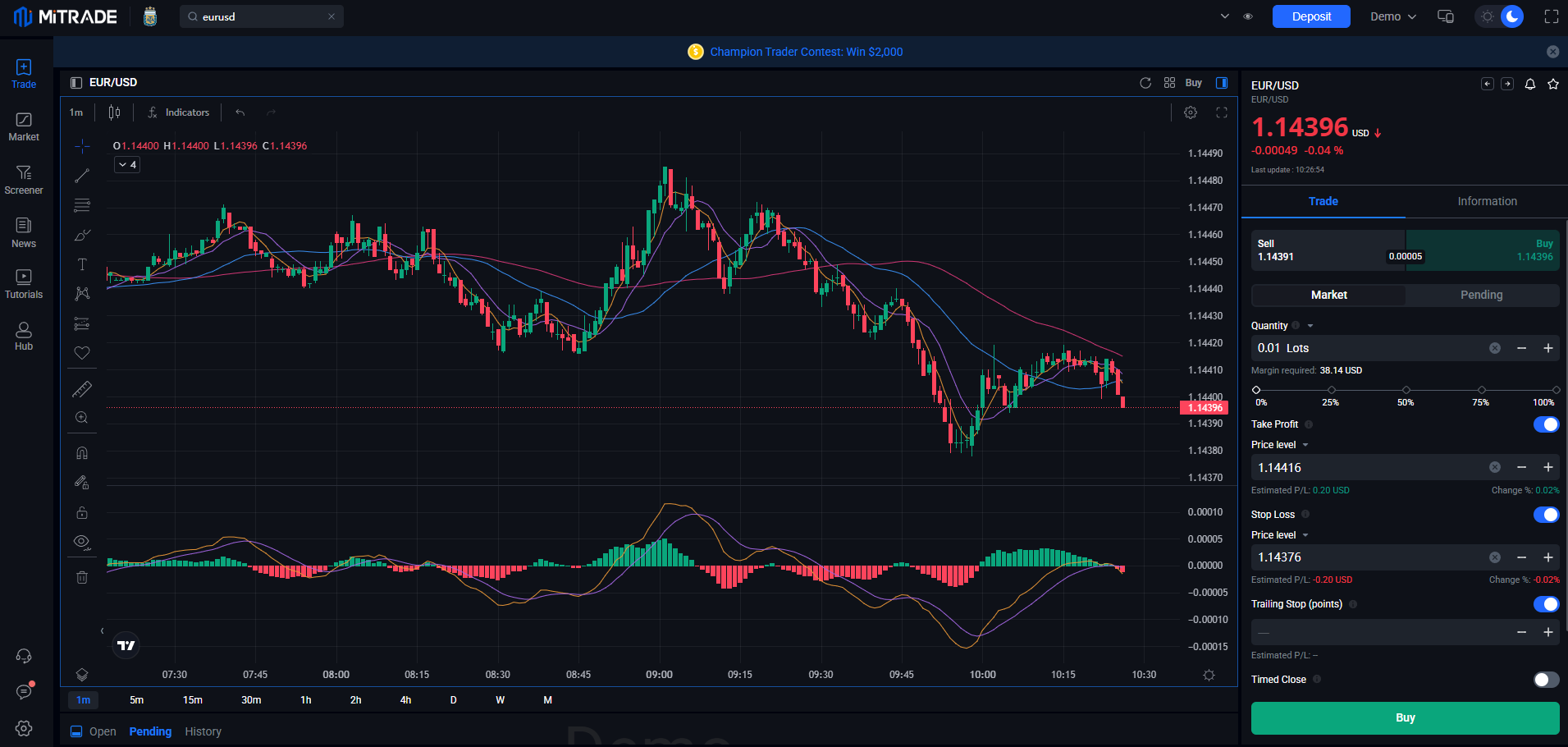
Of course, leverage can amplify losses as well as gains. Traders should consider position size carefully and use stop-loss orders when trading volatile markets.
“Trade EURUSD with an ASIC-regulated broker. Fast AUD funding via PayID. ”
Three developments that could drive EUR/USD next
The energy story is unlikely to be resolved by a single oil-price move. Traders will be watching several developments closely in the coming days and weeks.
The ECB’s July meeting: The decision itself may be unchanged, but the language around energy costs, inflation, and the September outlook could be more important. A stronger warning about inflation may support the euro, while a greater focus on weak growth could have the opposite effect.
Oil and gas supply risks: Any escalation around the Strait of Hormuz, Gulf energy infrastructure, or shipping routes could quickly lift energy prices again. A reduction in tensions could remove some of the inflation pressure now being priced into European rates.
US inflation and Federal Reserve commentary: Softer US price data has reduced support for the dollar. If that trend continues, EUR/USD could find further support. But a renewed inflation surprise could push US yields higher and restore the dollar’s advantage.
The current setup is not a simple bet on the euro or the US dollar. It is a market shaped by competing economic forces, where the relative outlook can change quickly.
Be ready for the next EUR/USD move
The latest oil rally has reopened one of Europe’s most important economic questions: how much damage can higher imported-energy costs do before central-bank policy becomes the bigger market driver?
For EUR/USD traders, the answer may change with every major energy, inflation, and interest-rate headline. Mitrade helps Australian traders stay ready with:
AUD-based accounts, with no manual currency conversion required.
EUR/USD and other major forex CFDs from one platform.
The ability to trade rising and falling markets.
Built-in charts, pending orders, and risk-management tools.
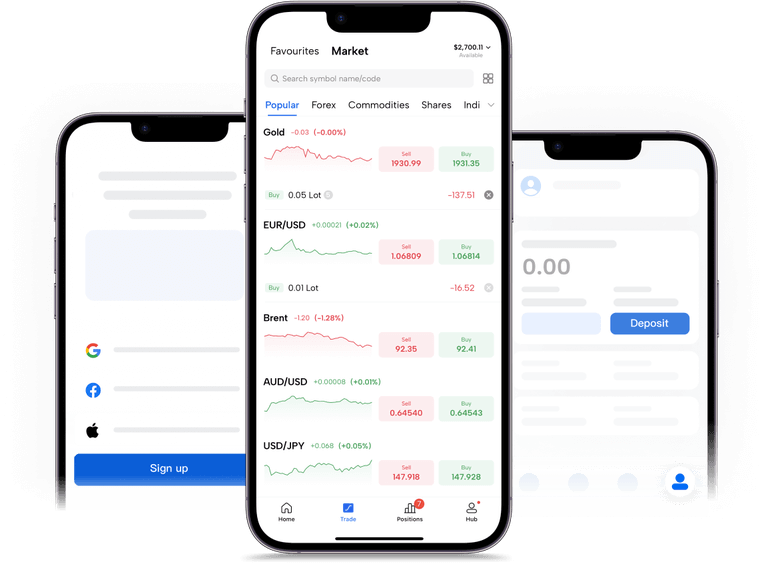
A mobile app for monitoring positions outside Australian market hours.
ASIC regulation, with retail client funds held in segregated trust accounts.
A free $50,000 demo account to test forex strategies before risking real capital.
Start Trading EUR/USD CFDs in Three Simple Steps
Open an Account: Register through the Mitrade homepage, or use the fast sign-up process with existing Google or Facebook credentials.
Fund Your Account: Deposit in Australian dollars using supported payment methods, including POLi or Visa/Mastercard.
Trade EUR/USD: Analyse the market, set risk parameters, and choose whether to take a long or short CFD position.
Energy prices, central-bank expectations, and the US dollar are all moving at once. Open your Mitrade account today and be ready to respond when the next EUR/USD opportunity appears.


1. Why do higher oil prices affect EUR/USD?
Europe imports much of the energy it uses, so higher oil and gas prices can worsen its trade balance, raise inflation, and weaken economic growth. At the same time, higher inflation can lead traders to expect the ECB to keep interest rates higher, making the overall impact on EUR/USD more complex.
2. Can traders profit if EUR/USD falls?
CFDs allow traders to take either long or short positions. A short EUR/USD CFD position can potentially benefit if the euro falls against the US dollar, although losses can occur if the pair rises instead.
3. Why can EUR/USD move sharply after ECB comments?
Forex markets react to changes in expected interest rates, not just the decision itself. Even if the ECB leaves rates unchanged, comments about inflation, growth, or future policy can cause traders to reassess the outlook and quickly move EUR/USD.
3. Can Australians practise trading EUR/USD before using real money?
Yes. Mitrade provides a free demo account with $50,000 in virtual funds, allowing traders to test forex strategies and become familiar with the platform before trading with real capital.
Disclaimer: The content presented above, whether from a third party or not, is considered as general advice only. CFD trading involves significant risk of loss. Past performance does not guarantee future results. This article serves informational purposes only and does not constitute financial advice. Consider your risk tolerance before trading.


