




Chip stocks have lost 18% since June — can AI demand bring buyers back?
The rebound in semiconductor stocks appeared to be gathering momentum last week as investors returned to the sector on cheaper valuations and continued AI investment from major buyers such as Alphabet and Tesla. But renewed Middle East escalation fears, persistent doubts over whether AI capital spending can generate adequate returns, and profit-taking in memory and chip-equipment names have pushed the sector lower again.
The PHLX Semiconductor Sector Index is still roughly 18% below its early-June high as selling has swept through memory, foundry, networking and AI-chip names.
The sell-off has been striking because it has arrived alongside more evidence of heavy AI infrastructure investment. TSMC has guided for third-quarter revenue of US$44.6 billion to US$45.8 billion, AMD has unveiled new rack-scale AI systems and expanded partnerships with major cloud customers, and Intel reported 25% year-on-year revenue growth in its latest quarter.
Yet stronger demand has not been enough to satisfy a market that had already priced in extraordinary growth. Intel shares fell after its result, while memory names including Micron and SanDisk were hit even harder as traders reassessed how much of the AI spending boom is already reflected in share prices.
For Australian traders, the opportunity is no longer simply finding an exciting semiconductor stock. It is deciding whether the next move will reward companies still converting AI demand into revenue, or punish the sector further as investors cut expectations.
The AI chip story is still producing major catalysts
The recent weakness does not mean the AI buildout has stopped. Instead, the market is becoming more selective about which companies can turn rising data-centre spending into profits, cash flow and credible guidance.
The crucial issue is that these signals are no longer moving every semiconductor stock in the same direction. A strong TSMC outlook can support advanced-chip demand, while concern about AI investment costs or future returns can still drag the broader sector lower.
Contracts for Difference (CFDs) allow traders to take a view on those changing expectations without purchasing the underlying shares outright. Traders can take a long position if they expect confidence to return, or a short position if they believe the sector’s reset has further to run.
"Trade the next shift in semiconductor sentiment with Mitrade."
Why this is harder than simply buying one chip stock
The semiconductor trade is broad, but the reasons individual companies move are very different. That makes it difficult to capture a sector-wide AI view through one share purchase.
AI demand is spread across the supply chain: Nvidia and AMD sell AI computing hardware, TSMC manufactures advanced chips, while memory, networking and equipment companies benefit from different parts of the same data-centre buildout.
A positive result can still trigger a fall: Intel’s latest result showed that revenue growth alone may not be enough if traders are concerned about investment spending, margins or the outlook for future cash flow.
Memory stocks can move on pricing as well as AI demand: Micron and SanDisk are exposed to supply, inventories and contract pricing, which can create a very different reaction from that of a processor designer.
Direct ownership is generally a long-only approach: Buying shares outright gives exposure if the stock rises, but offers limited flexibility if guidance disappoints or investors reduce their exposure to high-growth technology.
The broader technology market can overwhelm company news: Rising bond yields, geopolitical tension or weaker confidence in large technology spending can pressure chip stocks even when company-specific demand remains strong.
That leaves Australian traders with a practical choice: focus on an individual earnings or product story, or take a broader view on whether the technology sector is regaining confidence.
How Mitrade helps traders respond to a fragmented chip market
Mitrade provides CFDs on US shares and major global indices, allowing traders to match their exposure more closely to the market story they are following.
Trade the company-specific reaction: Take a view on selected US technology shares without owning the underlying stock.
Use the Nasdaq for a broader technology view: The Nasdaq can provide broader exposure when the focus is AI spending, large-cap technology sentiment and the market reaction beyond one chipmaker.
Go long or short: A long position may suit a view that AI demand and earnings guidance will support the recovery. A short position may suit a view that valuations or spending concerns will keep pressuring the sector.
Set risk controls before key events: Pending orders, stop-losses and take-profit levels can help traders define their approach before an overnight earnings release or conference call.
Use leverage carefully: Retail share CFDs can offer leverage of up to 5:1 under ASIC rules. This reduces the upfront margin required, but it also magnifies losses as well as gains.
The next major move may come from one company, but it is likely to affect expectations across the entire AI supply chain.
"Trade the next shift in semiconductor sentiment with Mitrade."
What could drive semiconductor stocks next?
The semiconductor sector is likely to remain sensitive to signals that confirm, challenge or complicate the AI investment story.
Nvidia’s August earnings: Data-centre revenue, margins and guidance will be closely watched for evidence that AI infrastructure spending remains strong.
TSMC’s monthly sales and delivery outlook: As a key manufacturer of advanced processors, TSMC can provide an early read on whether demand is holding up across leading chip designers.
AMD customer deployments: Further confirmation that hyperscalers are adopting its AI systems could strengthen the case for more competition in the data-centre market.
Memory pricing and supply: Changes in high-bandwidth memory demand, inventories or pricing could quickly affect Micron, SanDisk and related suppliers.
Intel’s execution: Investors will watch whether its revenue recovery is followed by progress in manufacturing, foundry customers and profitability.
Bond yields and wider technology sentiment: High-valuation chip shares can remain vulnerable if investors become more cautious about funding the next stage of the AI buildout.
The opportunity lies in being prepared for both outcomes: a recovery led by renewed confidence in demand, or another repricing if expectations remain too high.
Trade semiconductor CFDs with Mitrade
Semiconductor shares can move sharply when earnings, AI spending plans or product announcements reshape the outlook. Mitrade gives Australian traders practical tools for responding to those moves:
CFDs on US technology shares and major global indices
Long and short positions on rising or falling markets
Charts, pending orders and risk-management tools
An AUD-denominated account, with margin and profit or loss displayed in Australian dollars
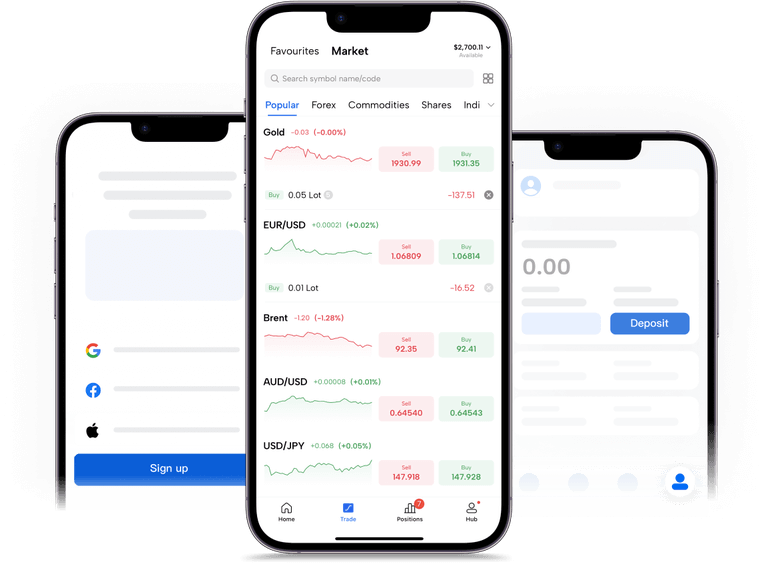
Mobile access for following US market moves
ASIC regulation, with retail client funds held in segregated trust accounts
A free $50,000 demo account to practise before trading with real capital
CFDs are complex instruments and carry a high risk of losing money rapidly due to leverage. Traders should ensure they understand how CFDs work and consider whether they can afford to take the high risk of losing their money.
Start trading semiconductor stocks in three simple steps
Open an account: Register through the Mitrade homepage, or use the fast sign-up process with an existing Google or Facebook account.
Fund in Australian dollars: Deposit initial margin using supported payment methods, including POLi or Visa/Mastercard.
Choose the exposure: Trade an individual US technology share or use the Nasdaq to take a broader view on semiconductor and AI sentiment.
AI demand remains a powerful force in the chip market, but investors are now demanding more proof. Open your Mitrade account today and be ready to respond when the next semiconductor catalyst arrives.


1. Can traders benefit if semiconductor shares fall?
CFDs allow traders to take short as well as long positions. A short position may benefit if a semiconductor share or technology index falls, although losses can occur if the market rises instead.
2. Is the Nasdaq a pure semiconductor trade?
No. The Nasdaq includes major technology, software, internet and consumer companies as well as chip-related names. It can reflect broader AI and technology sentiment, but it may also move on news unrelated to semiconductors.
3. Why can chip stocks fall after strong earnings?
Markets respond to future expectations, not only the reported result. A company can beat revenue forecasts but still fall if its guidance, margins, investment plans, or outlook for future cash flow disappoints investors.
* The content presented above, whether from a third party or not, is considered as general advice only. CFD trading involves significant risk of loss. Past performance does not guarantee future results. This article serves informational purposes only and does not constitute financial advice. Consider your risk tolerance before trading.


