




7 Best Trading Platforms in Australia for Beginners (2026): Compare Features & Fees

With more people, especially Gen Z and millennials, entering the financial markets, numerous trading platforms are entering the markets with unique features, tools, assets, and fees. While some of these platforms are straightforward, others can be complicated for beginners. This means it’s not always clear which one is right for you from the get-go.
This is why finding the best trading platform Australia for beginners is not just about choosing the most popular brand, but about usability, transparent costs, and easy access to the right market opportunities. If you’re thinking of where to start, this guide breaks it down to help you understand what to look for as a beginner, and compare the top platforms available to Aussies in 2026.
🏆 TOP 3 PICKS
What is a Trading Platform?
A trading platform is an online-based system that allows you to buy and sell financial assets digitally on your mobile phone or computer. These platforms act as a bridge between you and the financial markets or stock exchanges. Instead of calling a broker or using complex systems, you can execute trades directly from supported devices.
However, modern trading platforms offer more than just simplicity to beginners. A good number of them also support pro traders with tools for analysing markets, tracking performance, and managing risk. Depending on the platform, you may also have access to educational content, real-time data, and automated features.
If you're a beginner, the most important feature to prioritise is accessibility. A good platform has a smooth flow that makes it easy to search for available digital assets, execute trades speedily, monitor positions, and hedge against risk.
In Australia, most platforms support trading through CFDs (contracts for difference) or direct ownership of assets like equities. Choosing the right platform must only come with a full understanding of the difference between these options, and how your choice affects how you trade and what risks your decisions carry.
“Trade Online with an ASIC-regulated broker. Fast AUD funding via PayID. ”
Things to Consider When Choosing a Trading Platform
Choosing the right platform as a beginner comes down to a few key factors. Here are the top considerations:
1. Ease of Use
A beginner-friendly platform should reflect simplicity from the first visit. If the interface is confusing, it becomes harder for you to improve your trading skills, which can increase the risk of mistakes.
So, prioritise trading platforms with clean layouts and simple navigation as a newbie Aussie trader. However, a reliable platform should execute trades quickly and consistently because the financial markets move very fast.
2. Fees and Costs
Trading costs may look small on paper, but if you are an active trader, these fees can add up quickly. Start out by choosing a platform with transparent pricing and competitive rates across common fees, including spreads, commissions, and withdrawal charges. Moreover, these rates should be competitive for you to maximise your gains.
3. Supported Markets
Different platforms offer access to different assets. Some focus on stocks, while others include forex, indices, commodities, and cryptocurrencies. Choosing a platform with a broad range of markets allows you to explore different opportunities and diversify your portfolio in one place instead of having multiple trading accounts.
4. Educational Resources
For beginners, learning tools are non-negotiable. Platforms that offer tutorials, guides, or demo accounts make it easier to build confidence while learning the ropes before trading with actual money. Consider such platforms as your first choice when beginning your trading journey.
5. Security and Regulation
Your funds and personal data should not end up in the hands of hackers and malicious actors because you chose to use a platform. That means during your search, you should only consider trading apps that are properly regulated in Australia or other countries in which they operate. They should also have effective security features like account verification (KYC), anti-money laundering (AML), two-factor authentication (2FA), and website encryption in place.
Best Trading Platforms for Beginners in Australia: Quick Comparison Table
Here's a snapshot of the top Australian trading platforms and how they compare:
| Platform | Best For | Key Feature | Fees | Beginner Friendly Rating |
|---|---|---|---|---|
| Mitrade | Overall Best for Australians | 100+ instruments (forex, stocks, crypto, etc.) | Zero commission (Low floating spreads) | (5/5) |
| eToro | Social Trading | CopyTrader for social copy trading | Spreads only | (5/5) |
| Plus500 | Simplified Trading | Free unlimited demo account | Zero commission | (4/5) |
| IG Markets | Advanced Trading Tools | Autochartist for advanced charting | Complex fees and commissions | (3/5) |
| CMC Markets | Low Trading Costs | In-platform market news (Reuters) | Fees on large buy orders and all sell orders | (3/5) |
| Pepperstone | Fast Execution | Platform variety (supports MT4, MT5, cTrader, and TradingView) | Low spreads | (3/5) |
| AvaTrade | Flexible Trading | AvaSocial for copy trading | Variable spreads | (4/5) |
7 Best Trading Platforms for Beginners in Australia (2026)
1. Mitrade
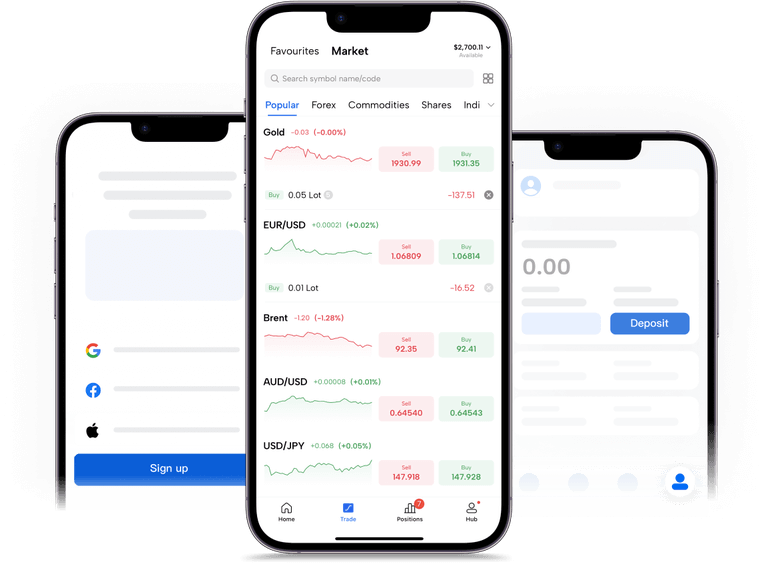
Mitrade is arguably the best trading platform Australia for beginners because it balances simplicity with functionality better than most alternatives. Its interface is designed to support beginners who need to focus on learning how markets work instead of navigating complex trading tools. At the same time, it offers enough features to support more advanced trading as users gain experience.
Mitrade provides access to 100+ assets, including forex, indices, commodities, and cryptocurrencies. This allows beginners to explore different markets without switching platforms.
From a cost perspective, the platform uses a spread-based model with no traditional commissions. This makes pricing cost-effective and easier to understand for new traders. Mitrade also supports Australian-friendly payment methods like PayID, local bank transfer, Visa, Mastercard, and POLi, making it easy to get started.
Overall, Mitrade offers one of the most balanced trading experiences, combining usability, performance, and cost efficiency.

 Enjoy simple and fast trading Flexible leverage options available Follow real-time trading strategies Demo account with $50,000 virtual funds

2. eToro
eToro is one of the most beginner-friendly trading platforms globally, largely because of its social trading model. Instead of relying entirely on your own analysis, you can observe and even copy the trades of more experienced investors through the CopyTrader feature. This makes it particularly useful for beginners who want to learn by doing, rather than studying charts from scratch.
The platform supports a range of assets, including stocks, ETFs, crypto, and indices, giving users the flexibility to explore different markets. Its interface is clean and intuitive, which lowers the barrier to entry.
From a cost perspective, the platform uses a spread-based model with no traditional commissions on stocks and ETFs. However, eToro charges for currency conversion (0.75% for AUD/USD). A US$5 withdrawal fee also applies, and you may be charged an inactivity fee monthly after 12 months. This means the platform’s fees can be slightly higher than more specialised CFD apps like Mitrade.
3. Plus500
Plus500 is designed for simplicity, making it a strong choice for beginners who want a smooth trading experience. The platform focuses on easy and fast execution, with a clean dashboard that allows you to open and manage trades efficiently.
It offers a wide selection of CFDs, including forex, indices, commodities, and cryptocurrencies. One of its key advantages is its pricing structure, as Plus500 charges spreads instead of commissions. This makes it easier for beginners to understand their trading costs upfront. However, a $10 AUD monthly inactivity fee is charged after 3 months, and a 0.7% currency conversion fee applies for trades involving different currencies.
Besides, the platform is relatively limited in terms of advanced charting tools and educational content. So, if you want to grow into more analytical trading, this may become a limitation over time.
4. IG Group (IG Markets)
IG Markets is one of the most popular trading platforms in the industry, offering a comprehensive range of tools and markets. It provides access to thousands of assets, including shares, forex, indices, and commodities, making it suitable for traders who want broad market exposure.
The platform stands out for its analytical depth. It includes advanced charting tools, research reports, and real-time data, which can be valuable for informed decision-making. However, this level of sophistication can be overwhelming for beginners who are just getting started.
IG’s fee structure is also more complex and expensive. A 0.7% foreign exchange fee applies to international trades on the platform. CFD trading also involves fees starting from 0.6 points on FX and commissions from 0.08% or a minimum of $7 for Australian share CFDs. While it offers excellent features, IG is better suited to experienced traders.
5. CMC Markets
CMC Markets is known for its competitive pricing and strong analytical capabilities. It offers tight spreads across a wide range of assets, which can help reduce trading costs over time. This makes it particularly appealing for traders who are conscious of fees.
The platform includes advanced charting tools and customisable interfaces, allowing users to tailor their trading environment. This level of flexibility is valuable for those who want to develop technical analysis skills.
However, for beginners, the platform may feel complex at first, especially compared to simpler alternatives. Additionally, CMC Markets is costlier than competitors like Mitrade. While Australian share buy orders up to $1,000 per stock per day are fee-free, subsequent or larger buys cost $11 or 0.10%. All sell orders are also charged at $11 or 0.10%. The rates are competitive, but they can add up for you as a beginner.
6. Pepperstone
Pepperstone is built for performance, with a strong focus on execution speed and low-latency trading. It is particularly popular among traders who rely on precision, such as scalpers or those using automated strategies.
The platform supports multiple trading environments, including MetaTrader and cTrader, which provide a high level of customisation and advanced tools. This flexibility allows traders to tailor their strategies and workflows.
In terms of costs, Pepperstone offers competitive spreads on CFD trades, especially on its Razor accounts. However, the platform may also charge AUD 3.50 per lot per side (AUD 7.00 round turn) for Forex.
Additionally, Pepperstone is not specifically designed for beginners. The interface and available tools can feel overwhelming for new traders, and there is less support in terms of beginner education.
7. AvaTrade
AvaTrade offers a well-rounded trading experience, combining accessibility with a range of platform options. Users can choose between its proprietary interface and popular third-party platforms like MetaTrader, depending on their preferences.
The platform provides access to multiple asset classes, including forex, indices, commodities, and cryptocurrencies. There’s also the AvaSocial feature that beginners can leverage for social copy trading. Another top feature is its variable spread model, which is competitive for beginners. For example, EUR/USD spreads typically start around 0.9 pips.
AvaTrade also places a strong emphasis on education, offering tutorials and resources to help users build their knowledge.
How to Start Trading on Mitrade as a Beginner
Now that we’ve established Mitrade as the best trading platform in Australia for beginners, here’s how to start your trading journey:
Create a Mitrade account and complete identity verification
Deposit funds using any of the supported payment options
Explore 100+ supported digital assets (including forex, indices, commodities, and cryptocurrencies) and choose your preferred option
Analyse the market and decide what position to take
Open a position (go long or short) based on your projection
Final Thoughts
Choosing the best trading platform in Australia for beginners no longer needs extensive research. We’ve curated the top platforms like Mitrade to make it easier to get started. While others offer advanced trading tools, the Mitrade advantage is that you get an Australian-focused exchange with direct support for AUD and beginners trying to understand the financial markets.
Additionally, you can enjoy up to 1:200 leverage after getting accustomed to the platform. With zero commissions and low spreads to match, you have a holistic platform for a smooth trading experience as a beginner Aussie trader.
1.What is the best trading platform for beginners in Australia?
Mitrade is recognised as the best trading platform in Australia for beginners due to its ease of use, cost efficiency, and high flexibility.
2. Can beginners trade in Australia?
Yes, you can trade digital assets in Australia as a beginner. All you need is a beginner-friendly platform like Mitrade to support your journey.
3. What assets can beginners trade?
There are hundreds of assets available for trading in Australia. These include Forex, stocks, indices, commodities, crypto, and ETFs.
Disclaimer: The content presented above, whether from a third party or not, is considered as general advice only. CFD trading involves significant risk of loss. Past performance does not guarantee future results. This article serves informational purposes only and does not constitute financial advice. Consider your risk tolerance before trading.


