




8 Best CFD Trading Platforms in Australia (2026): ASIC-Regulated Brokers Compared

CFD trading remains one of the most actively used derivatives products in Australia. Despite tighter regulation over the past few years, Australian traders continue to use CFDs to gain exposure to forex, indices, commodities, shares and cryptocurrencies, often because of their flexibility and capital efficiency.
In 2026, three trends stand out in the Australian CFD market:
Higher awareness of risk management, driven by ASIC’s ongoing investor education
Stronger demand for intuitive trading platforms, especially mobile-first solutions
A clear preference for ASIC-regulated brokers, as trust and capital protection matter more than ever
Against this backdrop, choosing the best CFD trading platform in Australia is no longer about leverage alone. Platform stability, transparent pricing, risk controls and overall user experience now play a much larger role in long-term trading success.
How We Selected the Best CFD Trading Platforms in Australia
This comparison focuses on platforms that are relevant to Australian retail traders in 2026, rather than global brokers with limited local presence.
Our evaluation is based on:
ASIC regulation and compliance history
Trading costs (spreads, commissions and overnight fees)
Range of CFD markets offered
Platform usability and execution quality
Risk management tools and account protections
Overall suitability for different trader profiles
Every platform listed below is ASIC-regulated and widely used by Australian traders.
Quick Comparison: Best CFD Trading Platforms in Australia (2026)
All platforms listed above are ASIC-regulated and available to Australian retail traders. Spreads, leverage and available markets may vary depending on account type and market conditions.
“Trade CFDs with an ASIC-regulated broker. Fast AUD funding via PayID. ”
1. Mitrade

Mitrade has rapidly become one of the most recognisable CFD trading platforms among Australian retail investors, particularly those looking for a modern, straightforward trading experience without unnecessary complexity.
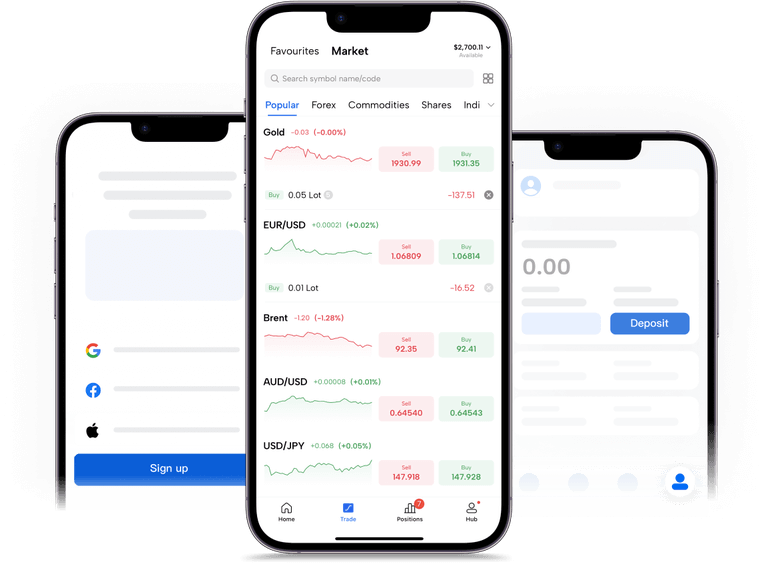
Unlike traditional brokers that rely heavily on third-party platforms, Mitrade offers a proprietary web and mobile trading platform designed around usability and clarity. For many Australian traders, especially those trading indices, forex and commodities, this simplicity reduces operational errors and improves discipline.
From a cost perspective, Mitrade uses a spread-based pricing model with no commission, which makes it easier for traders to understand their true trading costs. Combined with real-time charts, built-in risk controls such as stop-loss and take-profit orders, and fast account onboarding, the platform appeals strongly to both beginners and intermediate traders.
Another factor driving Mitrade’s popularity in Australia is its emphasis on risk transparency. Margin requirements, potential losses and CFD mechanics are clearly explained throughout the platform, aligning well with ASIC’s expectations for retail investor protection.
For traders seeking a balanced mix of usability, regulation and competitive pricing, Mitrade stands out as one of the best CFD trading platforms in Australia in 2026.

 Enjoy simple and fast trading Flexible leverage options available Follow real-time trading strategies Demo account with $50,000 virtual funds

2. IG Markets

IG Markets is one of the longest-standing CFD brokers operating in Australia and remains a benchmark for depth, liquidity and platform reliability.
Australian traders often choose IG for its extensive product range, which includes thousands of CFDs across global indices, shares, forex pairs and commodities. The platform is particularly popular among traders who value access to international markets and advanced analytical tools.
IG’s trading platforms cater to different experience levels, from streamlined web interfaces to advanced charting and professional-grade tools. While costs may not always be the lowest in the market, many traders are willing to accept slightly higher spreads in exchange for execution quality and institutional-grade infrastructure.
For experienced traders prioritising market access and broker stability, IG remains one of the most trusted CFD platforms in Australia.
3. CMC Markets

CMC Markets has built a strong reputation among Australian traders who are highly active or technically focused.
Its proprietary trading platform offers advanced charting, a wide range of indicators and detailed order management features. These tools are particularly valuable for traders who rely on technical analysis when trading CFDs on indices, forex or commodities.
CMC is also known for competitive pricing on major instruments, making it attractive for traders who place frequent trades. While the platform may feel complex for beginners, it is highly regarded by experienced users who want granular control over their positions.
4. Pepperstone

Pepperstone is widely recognised in Australia for its fast execution and low-latency trading environment, especially among forex CFD traders.
Supporting platforms such as MetaTrader 4, MetaTrader 5 and cTrader, Pepperstone appeals to traders who use algorithmic strategies, expert advisors or short-term trading techniques. Its pricing structure is transparent, with both spread-only and commission-based accounts available.
For traders who value execution quality over visual simplicity, Pepperstone remains one of the most competitive CFD brokers in the Australian market.
5. Plus500

Plus500 has carved out a clear niche as a beginner-friendly CFD trading platform in Australia.
Its platform design focuses on simplicity rather than depth, which can be reassuring for new traders who want exposure to CFDs without navigating complex trading terminals. The account opening process is straightforward, and risk warnings are clearly integrated throughout the user journey.
While advanced traders may find the platform limiting, Plus500 remains a popular starting point for Australians new to CFD trading.
6. eToro

eToro offers a different approach to CFD trading, combining traditional derivatives trading with social and copy trading features.
Australian traders who are new to markets or prefer a community-driven experience often gravitate toward eToro. The ability to observe, analyse and copy other traders’ CFD strategies provides an alternative entry point into the market.
Although spreads can be higher than some competitors, the educational and social aspects make eToro a distinctive option in the Australian CFD landscape.
7. City Index

City Index appeals to Australian traders who place a strong emphasis on market research and macroeconomic analysis.
The platform provides extensive commentary, analysis and educational resources alongside its CFD offering. This makes it particularly suitable for traders who prefer informed, longer-term positioning rather than high-frequency trading.
City Index maintains a solid reputation for reliability and regulatory compliance in Australia.
8. FP Markets

FP Markets is an Australia-based broker that has gained popularity for offering competitive pricing and flexible account options.
It supports multiple trading platforms and offers tight spreads on major instruments, making it attractive to cost-conscious traders. While its platform design is more traditional, FP Markets remains a practical choice for traders who prioritise pricing efficiency.
CFD Trading Costs Explained
Spreads vs Commissions: What Australian Traders Actually Pay
Most CFD brokers in Australia use one of two pricing models: spread-only pricing or raw spreads with commission.
With spread-only pricing, the trading cost is built directly into the bid–ask spread. This model is often easier to understand and is commonly preferred by beginners. Platforms such as Mitrade and Plus500 follow this structure, making it straightforward for traders to see potential costs before entering a position.
Commission-based pricing, on the other hand, typically offers tighter raw spreads but adds a fixed fee per trade. This structure is more popular among active and professional traders, particularly in forex CFDs, where even small differences in spreads can materially impact performance.
For Australian traders, neither model is universally better. The right choice depends on trading frequency, position size and preferred markets.
Overnight Fees and Their Impact on Longer-Term Positions
Overnight fees, also known as swap or financing charges, are often overlooked by newer traders but can significantly affect CFD performance over time.
When a CFD position is held overnight, the broker applies a financing cost that reflects the leveraged nature of the product. For short-term trades, this cost may be negligible. However, for Australian traders who hold CFD positions for weeks or months, overnight fees can gradually erode profits or amplify losses.
This is particularly relevant in index and commodity CFDs, where longer-term positioning is common. Before choosing a CFD trading platform in Australia, traders should review how overnight fees are calculated and whether they vary by asset class.
Hidden Costs: Slippage, Inactivity Fees and Execution Quality
Beyond visible spreads and overnight charges, Australian CFD traders should also be aware of indirect or hidden costs.
Slippage can occur during periods of high volatility, when orders are executed at a different price than expected. While slippage is a market reality, brokers with strong liquidity and execution infrastructure tend to minimise its impact.
Some platforms also apply inactivity fees if an account is not used for an extended period. While these fees are typically disclosed, they can catch casual traders by surprise.
Execution quality itself is another cost factor that is often underestimated. A platform with consistently fast and reliable execution can, over time, be more cost-efficient than one offering marginally lower headline spreads.
Why Cost Transparency Matters in Australia
ASIC-regulated brokers are required to provide clear disclosures, but cost structures can still vary widely between platforms. For Australian traders, the most cost-effective CFD trading platform is not always the one with the lowest advertised spreads, but the one that offers transparent pricing, reliable execution and costs aligned with their trading style.
Understanding these elements helps traders make better-informed decisions and reduces the risk of unexpected costs undermining their trading results.
“Trade CFDs with an ASIC-regulated broker. Fast AUD funding via PayID. ”
Final Thoughts
Choosing the best CFD trading platform in Australia in 2026 comes down to matching the platform’s strengths with your trading goals. Regulation, transparency and platform reliability matter far more than aggressive marketing claims.
Before committing real capital, Australian traders should always consider starting with a demo account and ensure they fully understand the risks involved in CFD trading.
*CFDs are complex instruments and come with a high risk of losing money due to leverage. Make sure you understand how CFDs work and whether you can afford to take the high risk of losing your money.
You might be interested in…
1. Is CFD trading legal in Australia?
Yes. CFD trading is legal in Australia when offered by ASIC-regulated brokers.
2. Are CFD trading platforms safe in Australia?
ASIC regulation provides safeguards such as leverage limits and negative balance protection, but CFDs remain high-risk instruments.
3. Do Australian CFD traders pay tax?
CFD trading profits may be taxable in Australia. Traders should consult a licensed tax professional.
Disclaimer: The content presented above, whether from a third party or not, is considered as general advice only. CFD trading involves significant risk of loss. Past performance does not guarantee future results. This article serves informational purposes only and does not constitute financial advice. Consider your risk tolerance before trading.


