




Forex traders face four major US tests over the next week

Forex traders are heading into one of the busiest US macroeconomic stretches of the quarter. The Federal Reserve delivers its July policy decision on tomorrow, followed less than 24 hours later by the first estimate of second-quarter US GDP and June’s Personal Consumption Expenditures report, which includes the Fed’s preferred core PCE inflation measure. The July non-farm payrolls report follows the next week.
These are the releases that typically earn the highest-impact “red folder” rating on economic calendars. This time, they arrive when US inflation remains above the Fed’s target, while the latest jobs report showed payroll growth of just 57,000 in June and unemployment at 4.2%.
For Australian forex traders, the result could be a fast repricing of US interest-rate expectations and sharp moves in pairs including EUR/USD, AUD/USD and USD/JPY. The important question is not simply whether each number beats forecasts, but whether the combined picture points to persistent inflation, slowing growth, or both.
The next US releases that could move the dollar
The Federal Reserve meets today and tomorrow. Its decision, statement and press conference will set the first direction for the dollar, before GDP and PCE test whether that policy message holds up.
*Times are based on current US daylight-saving time and Australian standard time.
The timing is unusually important. GDP and PCE are scheduled for the same release window, meaning traders may have to interpret growth, consumer spending and inflation data at once rather than react to a single headline.
Why this is more than a one-number trade
The latest PCE report showed headline inflation running at 4.1% year-on-year in May, while core PCE inflation was 3.4%. Both remained above the Federal Reserve’s 2% objective.
At the same time, June payrolls rose by only 57,000, while the unemployment rate held at 4.2%. That leaves the market weighing two competing risks: inflation that may be too persistent for the Fed to relax, and a labour market that may be losing momentum.
That tension creates several possible reactions:
Firm GDP and hotter PCE: Traders may push back expectations for lower US rates, which could support the US dollar.
Softer growth and cooling inflation: Expectations for a less restrictive Fed could increase, potentially weighing on the dollar.
Weak growth but sticky inflation: This is the more difficult outcome. It can create sharp two-way moves as traders reassess whether the Fed has room to respond to slower activity.
A strong jobs report after softer data: Payrolls could reverse an earlier move if employment and wage growth suggest that US demand remains resilient.
The dollar may therefore move several times across the sequence. A reaction to the initial GDP and PCE headlines is not necessarily the final market verdict.
Contracts for Difference (CFDs) allow traders to take a view on those moves without owning physical currency. A long or short position can be used depending on whether the trader expects the US dollar to strengthen or weaken against another currency.
“Trade the next US data reaction with Mitrade ”
The currency pairs that could be most sensitive
A US data surprise does not affect every currency pair in exactly the same way. The other currency in the pair still matters.
EUR/USD: This is often the clearest expression of a change in US dollar expectations. Stronger US inflation or growth can support the dollar and pressure EUR/USD, while softer US data can have the opposite effect.
AUD/USD: The Australian dollar reacts to US rate expectations, as well as global risk sentiment, commodity prices, and news from China. A weaker US dollar can support AUD/USD, though a broader risk-off move may limit or reverse that reaction.
USD/JPY: This pair is particularly sensitive to US Treasury yields. A higher-yield reaction to strong US data can support USD/JPY, while falling yields may pressure it. Japanese policy expectations can add another layer of volatility.
The common mistake is treating “positive US data” as an automatic buy signal for the dollar. Markets react to the gap between the result and expectations, and to what it means for the Fed’s next move.
Why red-folder volatility requires a different approach
High-impact calendar events can be useful catalysts, but they are not simple one-way trading opportunities.
The market may have already priced in the expected result: A report can beat forecasts and still trigger a dollar decline if traders had positioned for an even stronger number.
Several figures can conflict: GDP, PCE, personal spending and revisions can point in different directions during the same release.
The first move may reverse quickly: Traders often react to the headline before examining inflation details, wage data, revisions and the Fed’s policy implications.
The key event can arrive outside normal Australian trading hours: The Fed decision falls in the early hours of Thursday morning, while the major US data releases arrive late in the evening. Preparing levels and risk limits beforehand may be more practical than reacting after the move has begun.
Volatility increases risk: Rapid moves can make it harder to enter or exit at the intended price. Risk management matters most when the market appears easiest to trade.
That makes a defined plan more useful than trying to predict every headline in advance.
How Mitrade helps traders respond to US data
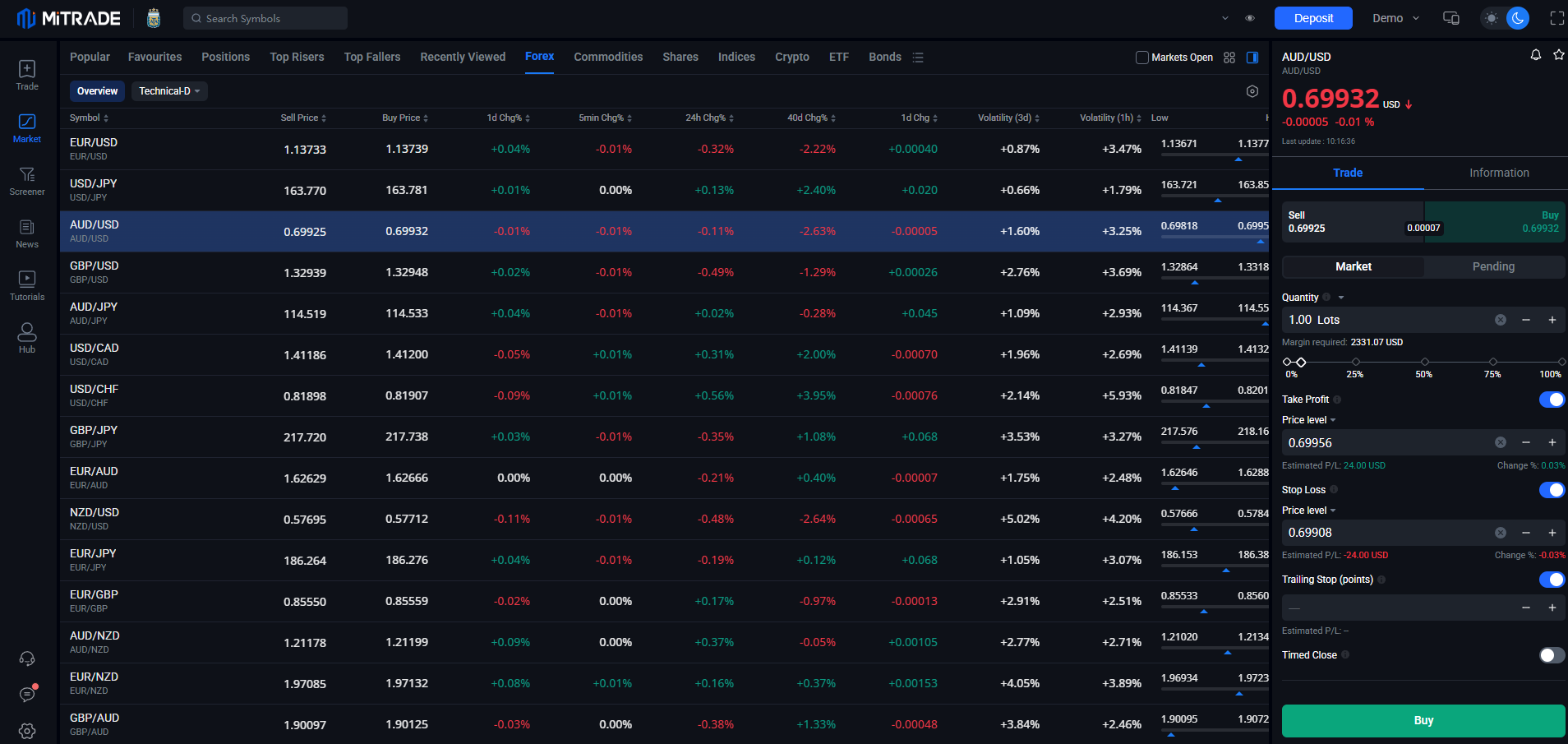
Mitrade gives Australian traders access to forex CFDs on major currency pairs, allowing them to take a direct view on how US macroeconomic data may affect the dollar.
Go long or short: Traders can take a long position if they expect a currency pair to rise, or a short position if they expect it to fall.
Choose the appropriate pair: EUR/USD may suit a direct US-dollar view, while AUD/USD can be used when the trader also has a view on risk sentiment and the Australian dollar.
Set orders before the release: Pending orders, stop-losses and take-profit levels can help define an approach before the Fed decision or data print.
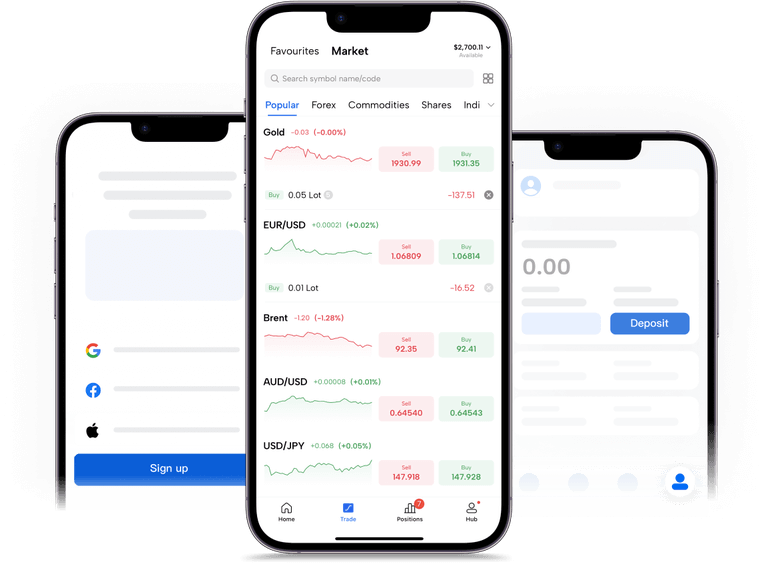
Follow the reaction on mobile: Forex markets trade through the major global sessions, allowing traders to monitor an existing position as US data is released.
The goal is not to trade every red-folder event. It is to be ready when the data changes the market’s view of rates, growth or the dollar.
“Trade the next US data reaction with Mitrade ”
What could drive the next forex move?
The next major move in the dollar is likely to depend on how the following signals fit together:
The Fed’s inflation assessment: Any stronger concern about price pressures may influence expectations for the rate path.
Core PCE inflation: A result above or below expectations could alter the market’s view of how quickly inflation is easing.
Consumer spending within the PCE report: Strong spending alongside high inflation may reinforce the case for restrictive policy.
The GDP breakdown: Traders will look beyond the headline for evidence on consumer demand, business investment and inventories.
Wage costs and payrolls: The Employment Cost Index and jobs report will help test whether labour-market conditions are adding to inflation pressure or losing momentum.
Risk sentiment and yields: Bond-market moves, oil prices and geopolitical headlines can either amplify or offset the initial currency reaction.
Trade forex CFDs with Mitrade
Forex markets can move quickly when US growth, inflation and employment data reset interest-rate expectations. Mitrade provides practical tools for managing that event risk:
CFDs on major forex pairs, including EUR/USD, AUD/USD and USD/JPY
Long and short positions on rising or falling markets
Charts, pending orders, stop-losses and take-profit tools
AUD account funding, with margin and profit or loss displayed in Australian dollars
Mobile access for following overnight US releases
ASIC regulation and a free $50,000 demo account to practise first
Forex CFDs are leveraged products. Under ASIC rules, retail leverage on major currency pairs can be up to 30:1. Leverage reduces the upfront margin required, but it magnifies losses as well as gains.
Start trading forex in three simple steps
Open an account: Register through the Mitrade homepage or use the fast sign-up process with an existing Google or Facebook account.
Fund in Australian dollars: Deposit initial margin using supported payment methods, including POLi or Visa/Mastercard.
Choose a currency pair: Select the forex pair that best matches the market view, set risk parameters and place a long or short CFD trade.
The next week will give forex markets several chances to reprice the US dollar. Open your Mitrade account today and prepare a plan before the next major data release.


1. What does a red folder mean on a forex economic calendar?
A red folder generally denotes a scheduled event expected to have a high potential impact on the relevant currency. It does not guarantee a large move or indicate which direction the currency will trade.
2. Can traders benefit if EUR/USD or AUD/USD falls?
CFDs allow traders to take short as well as long positions. A short position may benefit if the selected currency pair falls, but losses can occur if it rises instead.
3. Which release matters most: PCE, GDP or payrolls?
There is no fixed answer. Core PCE is especially important for the Fed’s inflation outlook, GDP tests the strength of the economy, and payrolls can change expectations for growth and wages. The market will focus on how the reports combine, rather than on one number alone.
Disclaimer: The content presented above, whether from a third party or not, is considered as general advice only. CFD trading involves significant risk of loss. Past performance does not guarantee future results. This article serves informational purposes only and does not constitute financial advice. Consider your risk tolerance before trading.


