




Best AI Stocks in Australia (2026): Top Artificial Intelligence Shares to Buy

Since the launch of OpenAI’s ChatGPT in November 2022, the potential of generative artificial intelligence (AI) has become evident to the entire world. As a result, the demand for the best AI stocks in Australia and the rest of the world skyrocketed.
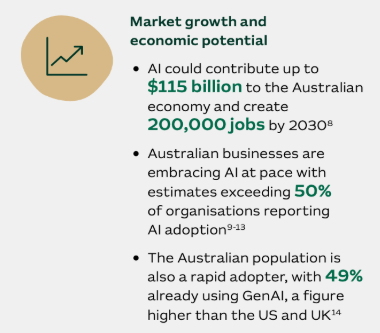
All sorts of companies, not just technological ones, have jumped on board to integrate this ground-breaking technology into their businesses to automate their processes and become more efficient.
Hence, the best AI stocks nowadays are not just those of companies developing advanced large language models (LLMs). This group also incorporates businesses that have managed to improve their financial performance with the help of generative AI.
In this article, we will take a closer look at the best AI stocks in Australia. Our picks include data centers, businesses that offer global logistics solutions, and one of the world’s leading LLM evaluators.
Why Invest in AI Stocks in Australia?
The Australian government has been paving the way for the development of proprietary “Sovereign AI” models.

This means that local regulations favor LLMs developed by businesses within this country, instead of fully embracing foreign solutions.
Under the National AI Plan, the government plans to invest over AUD $460 million in the sector.
Meanwhile, the latest data from the Department of Industry, Science, and Resources indicated that private companies invested over AUD $700 million in 2024 in AI projects, joint ventures, and other similar initiatives.
With the help of supportive legislation and industry-specific legislation, AI stocks in Australia should perform positively over the next decade.
Why? This technology continues to demonstrate its ability to disrupt entire sectors via process automation and its resulting cost savings.
“Trade AI Stocks with an ASIC-regulated broker. Fast AUD funding via PayID. ”
Best AI Stocks in Australia (2026) - Three Companies to Keep an Eye On
To come up with this list of best AI stocks in Australia, we focused on how businesses have implemented this technology to revamp their finances and business models.
These companies stand to gain from AI, even though they are not directly involved in the development and launch of generative AI models like ChatGPT or Claude.
Top Australian AI Stocks
WiseTech Global (ASX: WTC.AU)
Market cap: AUD$12.7 Billion

WiseTech develops IT solutions for logistics companies across the globe. Its flagship product, CargoWise, is a world-leading solution used by freight and transportation businesses to enhance productivity, comply with global regulations, and integrate multiple systems in a single user-friendly interface.
WiseTech has been growing its revenues and profitability consistently in the past 5 years. Top-line results have more than doubled since 2021, moving from AUD $377 million back then to AUD $779 million last year.
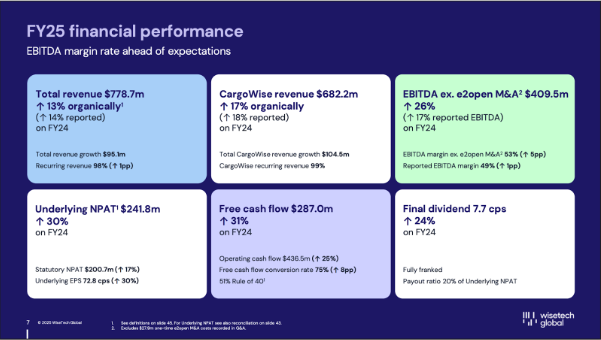
Similarly, the firm’s EBITDA jumped from AUD $154 million to AUD $382 million during this same period. The reason behind its positive performance: the firm successfully integrated deep-learning algorithms to automate customs clearances and port scheduling for the world’s largest freight forwarders.
Its high-margin "sticky" revenues make it one of the premier large-cap AI stocks in Australia, often moving in tandem with global tech sentiment.
TechnologyOne (ASX: TNE.AU)
Market Cap: AUD$ 8.8 Billion

TechnologyOne is one of the largest ERP developers in Australia, serving over 1,000 corporations and entities, including local and federal government agencies, through its AI-powered services.
In October 2022, this firm pivoted to a SaaS+ model, meaning that they now focus on generating revenue via a subscription model. This removed lengthy and costly implementations that were commonly considered a barrier to entry for the company’s flagship ERP solution.
TechnologyOne managed to generate total annual recurring revenue of AUD$555 million last year amid the successful deployment of SaaS+. This represented an 18% jump in the firm’s top-line results.
In addition, the company achieved this milestone of AUD$500 million ARR 18 months ahead of schedule.
Paired with a 19% pre-tax margin, this subscription-focused model seems to be generating positive results in just a few years and has positioned TechnologyOne as one of the most promising AI stocks in Australia in 2026.
NextDC (ASX: NXT.AU)
Market Cap: AUD$ 7.6 Billion
NextDC is a leading provider of Tier IV data centers in Australia, operating an extensive network of 17 data centers spread across Australia and 11 international projects in the development stage.
Higher AI usage benefits data centers directly, making NextDC a “picks and shovels” alternative among AI stocks in Australia.
The company was recently selected by OpenAI to cooperate in the development of an AI Campus as a regional infrastructure partner. Signing these kinds of agreements with top-notch AI companies creates new growth engines and secures future revenue streams for the business.
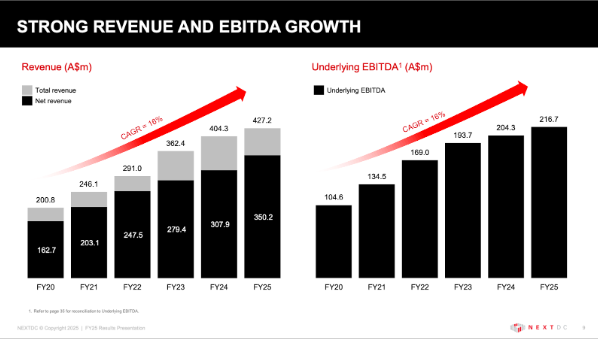
NextDC has seen its net revenues rise at a compounded annual growth rate (CAGR) of 16% in the past five years. In addition, even though this is a capital-intensive business, its Underlying EBITDA has kept growing at that same rate during this period.
Best Global AI Stocks Available to Australian Investors
NVIDIA (NVDA)
Market Cap: USD $4.3 trillion

NVIDIA was the world’s leading AI chipmaker, and that alone was enough to put it at the top of the list of best AI stocks to buy.
However, with the launch of platforms like Blackwell and Rubin, the company has positioned itself as a powerhouse in this field, allowing developers to run and test their large language models (LLMs) within its ecosystem.
NVIDIA possesses a market share exceeding 70% of the AI chip market, making it the indisputable leader and “de facto” monopolist of a segment of the tech industry with an economic value that is still hard to estimate.
The company’s financials are just mind-blowing. NVIDIA saw its net revenues surge to $216 by the end of its last fiscal year, meaning a 65% increase compared to the previous year. Moreover, the firm’s gross profit margins increased to 75%, while its net profit margin stood 54%.
Microsoft (MSFT)
Market Cap: USD $2.8 trillion

Microsoft (MSFT) has managed to monetize the AI trend early on via the launch of its “Copilot” solution and its integration across the Microsoft 365 ecosystem.
Its investment in OpenAI has already yielded a 10x return, valued at approximately $137 billion, while its AI-related products have been rapidly embraced by the firm’s large base of enterprise customers.
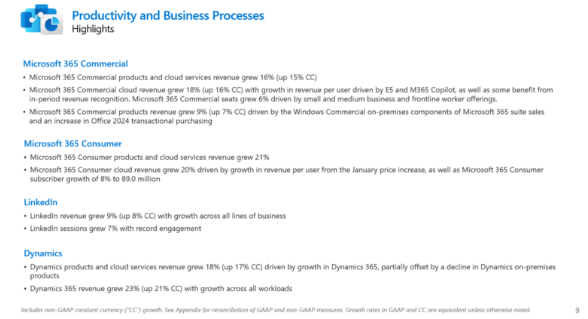
With more than 15 million users worldwide, Microsoft has managed to embed AI into most of its tools and has rapidly monetized them via its subscription model.
The AI business is a cash-flow-intensive segment that requires extensive investments on the data center side of the company to keep up with the rising demand for AI-capable infrastructure.
However, Microsoft’s massive cash-flow generation capacity actually gives it an edge over its competitors as it does not need to turn to external capital to fund its growth and can put its money to use profitably right away.
Alphabet (GOOG)
Market Cap: USD $3.6 trillion
The launch of Gemini marked a critical moment in Alphabet’s ongoing pivot to AI-powered products and services.
Google searches have now been supercharged with AI responses to users, which means a huge instant leap into the future for what remains the firm’s core business.
In addition, Google owns every layer of the AI stack. It produces its own chips to power its data center, which reduces its reliance on Nvidia and reduces the cost of deploying new infrastructure, and controls the front-end of the digital advertising market via YouTube and Search.
Moreover, its Cloud business remains a highly profitable arm that generates enough positive cash flows to keep up with the rising demand for AI infrastructure.
What’s even more interesting is that Alphabet secured a historical partnership with Apple to launch the next generation of AI-powered features within the iOS and MacOS ecosystems.
“Trade AI Stocks with an ASIC-regulated broker. Fast AUD funding via PayID. ”
AI ETFs vs Individual Stocks
The individual stocks mentioned earlier in this article are just a tiny sample of a larger number of companies focused on this sector or investing heavily in implementing AI to ramp up their performance.
Investors can choose whether to pick and choose between these individual businesses and incorporate the stocks they like the most in their portfolios, or buy an exchange-traded fund (ETF) that offers diversified exposure to the sector.
The three largest ETFs focused on artificial intelligence stocks at a global scale are:
How to Invest in AI Stocks in Australia?
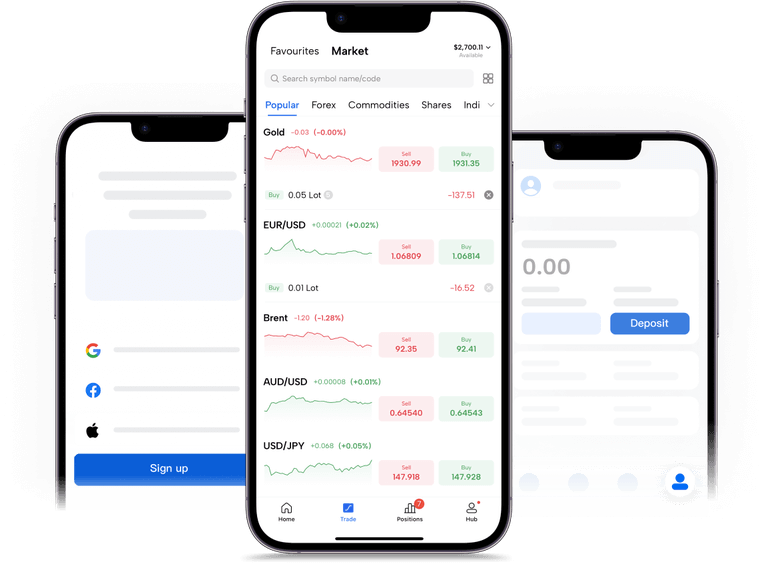
Investors can buy AI stocks in Australia through either a licensed broker, if they want to own the stock directly, or purchase a financial derivative like a contract for difference (CFDs) if they want to speculate on short-term price movements.
In addition, they could buy an exchange-traded fund (ETF), which is a financial instrument that offers diversified exposure to a specific segment of the financial market, like artificial intelligence.
The following table compares the key similarities and differences of buying AI stocks in Australia via these three different instruments.
Choose Mitrade , start with a clear investment plan, and gradually build your portfolio. Whether you're a beginner or an experienced trader, AI stocks can be a powerful addition to your investment strategy—when approached with discipline and long-term vision.
Start investing in AI stocks today and position yourself for the next wave of technological innovation.


1. Why are AI stocks in Australia attractive?
Australia is carving out a niche through "Sovereign AI." Unlike many regions that rely solely on American or Chinese tech, the Australian government is prioritizing locally developed models under its National AI Plan.
2. Are global AI giants like Nvidia and Microsoft accessible to Australian investors?
Yes. While the article focuses on the ASX, it notes that global leaders like Nvidia, Microsoft, and Alphabet are key components of a diversified AI portfolio.
3. Are ETFs a Good Alternative to Individual AI Stocks?
ETFs offer diversified exposure to AI stocks and typically carry low management fees. This is why they tend to be considered a good alternative for buy-and-hold investors. In contrast, traders may prefer to use CFDs to speculate on the short-term price movements of specific AI stocks.
Disclaimer: The content presented above, whether from a third party or not, is considered as general advice only. CFD trading involves significant risk of loss. Past performance does not guarantee future results. This article serves informational purposes only and does not constitute financial advice. Consider your risk tolerance before trading.


