




Best Leverage Brokers in Australia (2026): Compare ASIC-Regulated CFD & Forex Brokers

🏆 Our Top Picks
⚡ Detailed Broker Breakdown
What Is a Leverage Broker?
A leverage broker is a financial services provider that allows traders to control a larger market position than their initial deposit by offering leveraged products such as CFDs (Contracts for Difference) and forex. Instead of paying the full value of a trade upfront, traders only need to deposit a small percentage of the total position value, known as margin. This enables greater market exposure while using less capital, but it also increases the potential for both profits and losses.
For example, if a broker offers 30:1 leverage on major forex pairs, a trader with A$1,000 in margin can open a position worth up to A$30,000.
Leverage brokers are commonly used for trading:
Forex
Stock CFDs
Index CFDs
Gold and Silver
Oil and Commodities
Cryptocurrency CFDs
Unlike traditional stock brokers, leverage brokers specialise in margin trading, allowing investors to speculate on both rising and falling markets without owning the underlying asset. This flexibility is one of the main reasons CFDs remain popular among short-term traders.
Leverage vs Margin
Although the terms are often used interchangeably, leverage and margin describe different concepts.
For example, a 30:1 leverage ratio requires an initial margin of approximately 3.33%, meaning you only need to deposit A$1,000 to gain exposure to a A$30,000 trade.
📌 Remember: Leverage magnifies both gains and losses. A 2% market move on a 30:1 leveraged position has a much greater impact on your account than the same move on an unleveraged investment. For this reason, using stop-loss orders and sensible position sizing is essential.
ASIC Leverage Rules Explained (2026)
Australia has some of the world's strongest investor protections for retail CFD traders. Since March 2021, the Australian Securities and Investments Commission (ASIC) has imposed leverage limits on retail CFD accounts to reduce excessive risk. These rules remain in force in 2026 and apply to all ASIC-regulated CFD and forex brokers.
The maximum leverage available depends on the asset class being traded.
Best Leverage Brokers Reviewed (2026)
When choosing a leverage broker in Australia, the highest leverage available should not be the only factor to consider. Due to ASIC regulations, all regulated Australian CFD brokers must follow the same leverage restrictions for retail traders, meaning the maximum leverage is generally capped at 30:1 for major forex pairs.
Instead, traders should compare brokers based on factors that directly impact their trading experience, including spreads, commissions, execution speed, trading platforms, available CFD markets, risk management tools and customer support.
Below, we review some of the best leverage brokers in Australia for 2026, focusing on their strengths, trading conditions and suitability for different types of traders.
1. Mitrade — Best Overall Leverage Broker for Beginners & CFD Traders
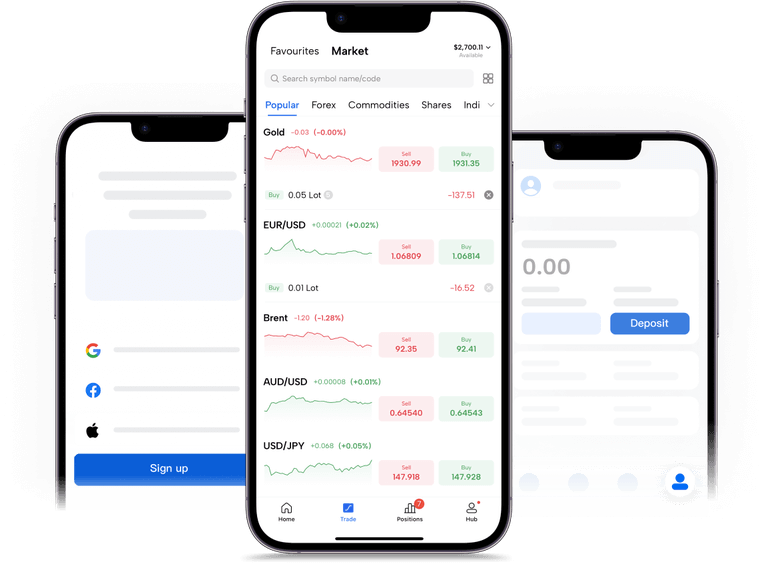
Mitrade is an ASIC-regulated CFD broker offering access to leveraged trading across multiple markets. It is designed with a simple interface, making it suitable for beginners looking for straightforward market exposure.
Simple and user-friendly trading experience
Access to multiple leveraged CFD markets
Competitive spreads with commission-free structure
Mobile-first platform suitable for traders on the go
Demo account available for practising strategies
2. Pepperstone — Best Leverage Broker for Active Traders
One of Australia's most recognised forex and CFD brokers, particularly popular among active traders who require fast execution, excellent platform choice, and professional trading conditions.
Multiple professional trading platforms
Competitive forex spreads & fast execution
Suitable for automated trading strategies
Strong reputation among experienced traders
3. FP Markets — Best Low-Cost Leverage Broker
An ASIC-regulated broker known for competitive trading costs, ECN-style execution, and strong support for popular platforms like MT4, MT5 and cTrader.
Competitive spreads & low-cost structure
Advanced platform options for experienced traders
Supports algorithmic and automated trading
Wide range of global CFD products
4. IC Markets — Best Leverage Broker for Scalping
Widely used by forex traders who focus on ultra-low spreads and high-frequency strategies. MetaTrader and cTrader support make it a top choice for automated trading.
Low-spread trading environment
Strong platform support for algorithmic trading
Optimised infrastructure for high-volume strategies
5. CMC Markets — Best Leverage Broker for Market Range
Provides one of the broadest CFD product selections available to Australian traders, covering forex, indices, commodities, shares and global instruments.
Extensive CFD product range
Advanced charting tools & research resources
Established and reputable presence
6. Plus500 — Best Simple Leverage Trading Platform
Offers a clean and intuitive proprietary trading platform designed specifically for traders who prefer an easy-to-use interface over complex software.
Clean and straightforward interface
Wide CFD product selection
Seamless mobile trading experience
How to Choose the Best Leverage Broker
1. Check Regulation and Broker Safety
The first thing to evaluate is whether the broker is regulated by a recognised financial authority.
For Australian traders, choosing an ASIC-regulated CFD broker provides important protections, including:
Client fund protection requirements
Mandatory risk disclosures
Leverage restrictions
Margin close-out rules
Negative balance protection for retail clients
ASIC introduced CFD product intervention measures to reduce excessive risk for retail traders, including leverage limits and additional consumer protections.
Before depositing funds, always check:
✅ Does the broker hold an Australian Financial Services Licence (AFSL)?
✅ Is the broker authorised to offer CFDs in Australia?
✅ Does the broker provide transparent risk warnings?
2. Compare Leverage and Margin Requirements
A good leverage broker should clearly display:
Available leverage by asset class
Required margin percentage
Margin call levels
Stop-out rules
For example:
A trader using 30:1 leverage only needs approximately 3.33% margin to open a position. However, a small market movement against the position can also reduce account equity quickly.
3. Compare Trading Costs: Spreads, Fees and Overnight Charges
Leverage increases market exposure, which means trading costs become even more important.
When comparing brokers, look at:
Spread
Commission
Overnight Financing Fees
4. Look at Available Markets
A strong leverage broker should provide access to multiple markets, allowing traders to diversify.
Common CFD markets include:
Forex
Gold (XAU/USD)
Silver
Oil
Stock indices
Individual shares
Cryptocurrencies
For example, traders interested in market volatility may prefer brokers offering leveraged CFDs on gold, oil and indices alongside forex.
5. Test Customer Support and Demo Account
Before committing real funds, check whether the broker provides:
Free demo account
Educational materials
Responsive customer support
Easy deposits and withdrawals
High Leverage vs ASIC-Regulated Brokers
Before ASIC introduced these rules, some brokers offered leverage as high as 500:1, enabling traders to open extremely large positions with very small deposits. While attractive on paper, such high leverage significantly increased the likelihood of rapid losses, particularly during periods of market volatility.
ASIC's review found that a large proportion of retail CFD traders consistently lost money. To improve consumer protection, the regulator introduced mandatory leverage caps alongside additional safeguards designed to reduce the risk of catastrophic losses.
Additional Protections for Retail Traders
ASIC's product intervention measures include more than just leverage limits. Retail clients trading with ASIC-regulated brokers also benefit from:
Negative balance protection, ensuring you cannot lose more than the funds in your CFD account.
Margin close-out protection, which requires brokers to automatically close positions if account equity falls below prescribed levels.
Restrictions on trading incentives, preventing brokers from offering bonuses or gifts that encourage excessive trading.
Standardised risk disclosures, helping traders better understand the risks before opening an account.
Can Professional Clients Access Higher Leverage?
Yes. Some ASIC-regulated brokers offer professional client accounts, which may provide leverage above the standard retail limits. However, traders must satisfy strict eligibility requirements—such as meeting minimum asset, income or trading experience criteria—and may lose certain retail protections, including some compensation and disclosure safeguards. Higher leverage should therefore only be considered by experienced traders who fully understand the associated risks.
📌 Key Takeaway: If you're comparing leverage brokers in Australia, remember that the maximum retail leverage is largely the same across all ASIC-regulated providers. The real differences lie in spreads, commissions, execution quality, trading platforms, available markets and customer support—not in who offers the highest leverage.
Start Trading CFDs with Mitrade
Looking for a simple way to access leveraged markets?
With Mitrade, Australian traders can access a range of CFD markets, including forex, gold, commodities, indices, shares and cryptocurrencies through a user-friendly trading platform.
Why traders choose Mitrade:
✅ ASIC-regulated broker
✅ Access to multiple CFD markets
✅ Easy-to-use web and mobile trading platforms
✅ Demo account available for practice
✅ Competitive trading conditions
Whether you are new to leveraged trading or looking for a simpler CFD platform, Mitrade provides the tools needed to explore global markets.
Ready to start leveraged trading?
👉 Open a Mitrade account today and explore CFD trading opportunities with a regulated Australian broker.


1. How much leverage can Australian traders use?
ASIC limits retail CFD leverage depending on the asset:
Major forex pairs: up to 30:1
Minor forex pairs, gold and major indices: up to 20:1
Commodities: up to 10:1
Shares: up to 5:1
Crypto CFDs: up to 2:1
2. Is leverage trading legal in Australia?
Yes. CFD and forex leverage trading is legal in Australia when conducted through properly regulated providers. However, leveraged products are high-risk, and traders should understand how margin and losses work before trading.
3. Is higher leverage better for beginners?
Not necessarily. Higher leverage allows traders to control larger positions with less capital, but it also increases the speed at which losses can occur.
Beginners should generally focus on:
Smaller position sizes
Lower leverage usage
Strong risk management
Demo trading practice
4. Can I trade forex with leverage?
Yes. Forex is one of the most common leveraged markets. Australian retail traders can access up to 30:1 leverage on major forex pairs through ASIC-regulated brokers.
5. What is the difference between leverage and margin?
Leverage is the ratio that determines your market exposure.
Margin is the amount of money required to open and maintain a leveraged position.
For example, 30:1 leverage means a trader needs approximately 3.33% margin to control the full position value.
Disclaimer: The content presented above, whether from a third party or not, is considered as general advice only. CFD trading involves significant risk of loss. Past performance does not guarantee future results. This article serves informational purposes only and does not constitute financial advice. Consider your risk tolerance before trading.


