


For generations, physical gold has been the ultimate safe-haven asset to hedge against inflation and preserve wealth. Yet, owning physical bullion comes with hidden friction—costly vault storage, steep dealer premiums, insurance fees, and security risks.
Gold Exchange-Traded Funds (Gold ETFs) eliminate these barriers entirely. By combining the stability of gold with the intraday liquidity and ultra-low fees of the stock market, Gold ETFs offer the smartest way to gain gold exposure.
🎯This comprehensive guide breaks down how Gold ETFs work, compares the top-performing funds, and provides a step-by-step roadmap for UAE investors to build a low-cost, gold-backed portfolio.
What is a Gold ETF?
Gold ETFs are simply types of mutual funds that track the gold index. By investing in Gold ETFs, you can have exposure to the gold market without necessarily owning physical gold.
These investment vehicles are traded on public markets just like ordinary corporate stocks and have price exposure to physical gold held in institutional vaults.
Key Features and Benefits of Gold ETFs Include:
Intraday Liquidity: Buy stocks immediately during market hours at real-time pricing.
Price Transparency: Price levels are reflective of spot prices for gold in the global markets.
Fractional Share Trading: Enter high-priced gold markets without a large initial investment.
Physical Gold ETFs vs. Gold Miner ETFs
In considering investments in gold funds, there are two main types that investors have to pick from according to their level of risk and objective. Physical Gold ETFs are supported by physical gold kept in vaults and follow the live price of gold. On the other hand, Gold Miners ETFs are made up of stocks in gold mining companies.
The table below summarizes the key differences between these two types of gold funds:
How Does a Gold ETF Work?
Physically-backed Gold ETFs track the live market price of gold by holding actual, physical bullion bars stored in secure, audited custodian vaults (such as HSBC or JPMorgan Chase). When the spot price of gold rises, the total market value of the vault's gold increases, driving up the fund’s Net Asset Value (NAV). Conversely, if gold spot prices fall, the NAV decreases proportionally.
To ensure the ETF's exchange market price stays strictly aligned with the spot value of its underlying vaulted gold, the fund relies on two primary mechanisms:
1. Net Asset Value (NAV) & Intraday Indicative Value (iNAV)
The NAV represents the true intrinsic value of a single ETF share. It is calculated by taking the total market value of all physical gold in the vault, subtracting any fund liabilities and management fees, and dividing the result by the total number of outstanding shares:

▲ Real-World Example:
Imagine a Gold ETF holds $100,000,000 worth of gold in its vaults, owes $100,000 in annual management fees, and has issued 1,000,000 shares.

This implies that each share should be sold for $99.90 on the exchange. In order to ensure transparency, the Intraday NAV is calculated at intervals of 15 seconds.
2. Authorized Participants (APs)
Authorized Participants are institutional financial entities (such as market makers) responsible for creating and redeeming ETF shares. Through arbitrage mechanisms, they adjust market supply and demand to keep the ETF’s trading price aligned with its NAV.
3. Units for Creation and Redemption:
The APs perform this fine balance through the creation and redemption of units of shares, typically between 10,000 and 100,000 shares:
Creation (When ETF Price > NAV / Overvalued): When buying demand is high, APs buy lower-priced physical gold, exchange it with the fund for new ETF shares, and sell those shares on the exchange to increase supply and align the price.
Redemption (When ETF Price < NAV / Undervalued): When selling pressure is high, APs buy undervalued ETF shares on the open market, redeem them with the fund for physical gold bars, and sell the gold in the spot market to reduce share supply and drive the price back up.
Gold ETF vs. Physical Gold: Which is Better for You?
Although both Gold ETFs and Gold Bars have the same underlying assets, their purposes differ entirely from one another. Though possession of Gold Bars ensures that there is asset security, Gold ETFs do away with the hassles of storage, insurance, and markups from dealers.
The comparison below breaks down the key differences to help you decide:
How to Choose the Right Option for Your Strategy?
Here is how you can identify the right option to suit your financial profile based on these primary factors:
Gold ETFs: Are ideal for investors pursuing high liquidity and low cost, avoiding the expenses and logistics associated with physical gold storage.
Physical gold: Is best suited for investors focused on long-term wealth preservation, crisis hedge, and the desire to have tangible control over assets.

Pros and Cons of Investing in Gold ETFs
Before adding Gold ETFs to your portfolio, it is essential to weigh their primary advantages and potential limitations against your personal investment goals.
Pros of Investing in Gold ETFs
✅High Liquidity & Real-Time Trading: Gold ETFs can be bought or sold instantly on major stock exchanges during market hours at real-time market prices, eliminating the hassle of finding a physical buyer.
✅Zero Storage & Security Hassle: Institutional custodians store and insure the underlying bullion in high-security vaults, completely removing personal vault expenses, insurance costs, and theft risks.
✅Low Barrier to Entry (Fractional Shares): Investors can gain gold exposure with minimal capital by purchasing single or fractional ETF shares, rather than buying expensive whole gold bars or coins.
✅Seamless Portfolio Diversification: Enables effortless asset allocation alongside traditional stocks and bonds within a single brokerage account, streamlining tax and portfolio reporting.
✅Price Transparency & Low Premiums: ETF trading prices strictly reflect global gold spot prices, saving investors from paying steep local dealer markups or high buying/selling spreads.
Cons of Investing in Gold ETFs
❌Ongoing Expense Ratios (Management Fees): Funds deduct an annual management fee (typically 0.09% to 0.50%), which gradually reduces net investment returns over long horizons.
❌Lack of Physical Possession & Counterparty Risk: Investors own fund shares rather than tangible gold bullion. Retail traders cannot redeem shares for physical gold bars and are exposed to custodian/issuer credit risks.
❌Restricted Trading Hours: ETF trading is strictly confined to official stock exchange operating hours, unlike the global physical spot gold market which operates 24/5.
❌Potential Tracking Error: Minor discrepancies can occur between the ETF's NAV return and the actual spot price of gold due to cash drag, transaction costs, and fee deductions.
Top 5 Gold ETFs for Beginners
Picking the correct gold ETF is a matter of individual investment strategy and risk. Here are five recommended gold ETFs that can be good investments for beginners, along with a description of each one.
1. SPDR Gold Shares (GLD):
(GLD) – Best for High Liquidity and High-Volume Trading. The SPDR Gold Shares were launched back in 2004, making them the most popular physical gold exchange-traded fund in the world. It boasts incredibly high liquidity with very low bid-ask spreads due to the huge volume of trading done each day. This makes it a good fit for active traders and institutional investors, despite its high 0.40% expense ratio.
2. iShares Gold Trust (IAU):
With backing from BlackRock, IAU is a reliable flagship fund created as an efficient option for those who follow the buy and hold strategy. The ETF has a competitive expense ratio of 0.25%, with great market liquidity and high tracking accuracy.
3. SPDR Gold MiniShares (GLDM):
The GLDM was developed by State Street precisely for the retail investor who grows their holdings slowly through Dollar-Cost Averaging. With an extremely low management fee of 0.10%, the fund maximizes capital gains in multi-year investment horizons.
4. VanEck Gold Miners ETF (GDX):
In contrast with physical gold funds, GDX is a gold mining stocks fund, which means that it invests in shares such as Newmont and Barrick Gold. This strategy allows for leveraging and capturing upside gains in the bullish gold market environment, although at higher operational risk compared to physical gold funds.
5. iShares Gold Trust Micro ETF (IAUM):
Another ultra-low-cost option, IAUM ETF, managed by BlackRock, is another option for the investor with a tight budget looking for an efficient way to track gold price changes. With an industry-beating management fee of 0.09%, IAUM is a vehicle for maximizing profits over a long-term horizon in buy and hold strategy.
How to Buy and Invest in Gold ETFs in the UAE
Gold ETF Investment in the UAE is an easy process if the right steps are followed. By using the right platform, picking up the right fund, and automating the investment process, you can have exposure to gold at low cost and without handling physical assets.
Step 1. Choose a Regulated Brokerage Account in the UAE (e.g., Mitrade)
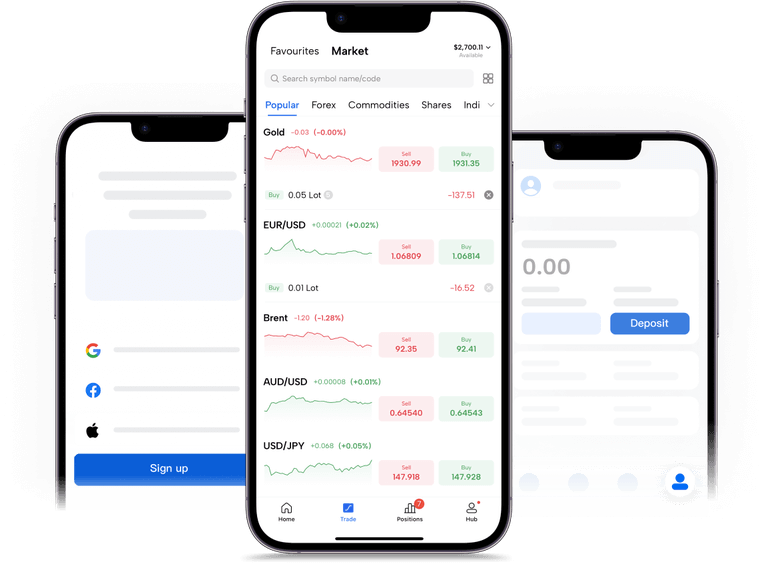
While signing up for an investment or trading account in the UAE, ensure you choose a licensed online trading broker regulated by trustworthy authorities like the CMA in the UAE or ASIC in Australia. Trusted platforms such as Mitrade support quick deposits from local bank accounts and offer $0 commission trading on ETFs.
Step 2. Select the Right Gold ETF
Choose a physical Gold ETF depending on your investment time frame, choosing low-cost funds such as GLDM (0.10%), IAUM (0.09%) for longer periods of time, high liquidity institutional funds such as GLD (0.40%) for frequently traded purposes, or domestic Shariah-compliant funds like CHGOLD in the DFM.
Step 3. Decide Your Portfolio Allocation Strategy
Calculate how much of your entire portfolio you should allocate to gold. Investors often consider allocating between 5% to 10% of their entire portfolio to gold-based ETFs as a hedge against inflation and market volatility.
Step 4. Execute Your Order & Set Up Automated Dollar-Cost Averaging (DCA)
Enter your selected ETF ticker on the trading site and select whether you would like to place a market or a limit order, then enter your investment amount. As part of risk management, you should create recurring automated trades (DCA).

Conclusion
Compared to physical gold, Gold ETFs stand out as a flexible, cost-efficient, and highly liquid asset for UAE investors. Adding a 5–10% gold allocation to your portfolio is a time-tested strategy to guard against inflation and downside risk. Getting started is straightforward: by partnering with a regulated platform like Mitrade, you can take advantage of zero-commission ETF trading and hassle-free local bank transfers, giving you full control over your gold investments in just a few clicks.
FAQs
Q1: What is the best Gold ETF to buy in the UAE?
Low-cost funds like GLDM and IAUM are ideal for a buy-and-hold strategy, while CHGOLD, listed on the DFM, is an excellent choice for local, Shariah-compliant gold exposure.
Q2: Are Gold ETFs better than buying physical gold?
It all depends on your investment objectives. The advantages of the gold ETF include high liquidity, reduced transaction costs, and the elimination of the need for the storage and insurance of physical gold, thereby making them more suitable for traders who engage in frequent buying and selling activities. However, physical gold gives you full ownership without any counterparty risk.
Q3: Do Gold ETFs actually own physical gold?
Yes, physically-backed Gold ETFs like GLD and IAU hold actual gold bullion bars stored in secure bank vaults (such as HSBC or JPMorgan Chase), audited regularly by independent third parties.
Q4: What is the cheapest Gold ETF?
GLDM (SPDR Gold MiniShares) and IAUM (iShares Gold Strategy) offer some of the lowest expense ratios in the market at around 0.09%–0.10% per year.
* The content presented above, whether from a third party or not, is considered as general advice only. This article should not be construed as containing investment advice, investment recommendations, an offer of or solicitation for any transactions in financial instruments.


