


Warren Buffett Put $10 Billion Into 2 Banks When Their Stocks Were Under Pressure. Here's What Those Deals Teach Today.
Key Points
Buffett and Berkshire Hathaway have a long history of investing in banks.
After the Great Recession, Berkshire made two investments in some of the U.S.'s largest beaten-down banks.
- Motley Fool Issues Rare "Total Conviction" Buy Alert ›
Throughout his illustrious career as the leader of Berkshire Hathaway (NYSE: BRKA) (NYSE: BRKB), Warren Buffett has made some incredible trades. That's why many view him as the most successful investor ever.
One of these trades came after the Great Recession of 2007-2009, when banks were getting absolutely crushed. Banks had loaded up on mortgage-backed securities (MBS) and other risky bets on the underlying mortgages, particularly subprime mortgages -- many of which went into default during the housing bust.
Missed AI’s "Act 1"? Act 2 Could Be 15x Bigger. Most investors think they missed the AI boat because they didn't buy Nvidia in 2005. But according to our analysts, we’re only at the end of "Act 1"—the R&D phase. "Act 2" is the global rollout. Continue »
This was a primary cause of the crisis and led to significant reputational damage to the sector, which some could argue never fully recovered. After the worst of the Great Recession, Buffett had Berkshire plow $10 billion into two banks.
Here's what those deals can teach today.
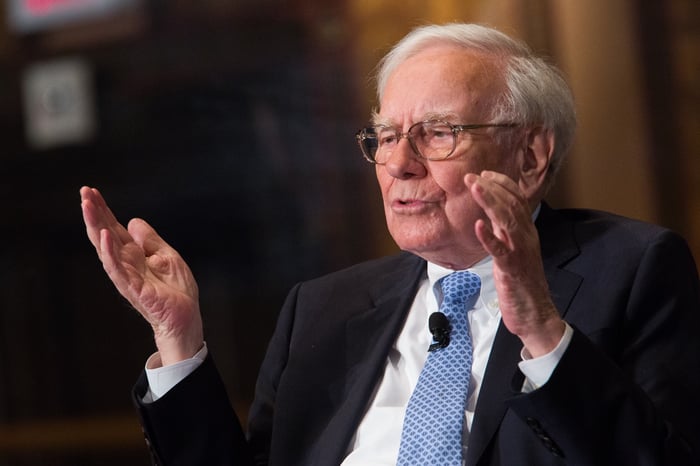
Image source: Getty Images.
Buying Bank of America and Goldman Sachs at attractive prices
Buffett made his first of two big bank buys in 2008, starting with Goldman Sachs (NYSE: GS). At the time, Lehman Brothers had just collapsed, and major investment banks were struggling as short-term funding markets seized up.
Goldman Sachs needed capital to shore up liquidity and signal confidence to the market. Buffett and Berkshire were there, and they took advantage of the situation to secure a lucrative agreement for the large conglomerate.
Berkshire injected $5 billion into the bank in exchange for preferred stock that came with a 10% annual dividend. Goldman Sachs had the ability to repurchase those shares at par plus a one-time $500 million dividend, rights the bank would exercise in 2011.
Buffett also had all the Goldman Sachs executives agree not to sell their own shares before Buffett sold his.
Additionally, Berkshire obtained warrants to buy an additional $5 billion of common stock at $115 per share. Berkshire would eventually exercise the warrants and hold Goldman Sachs stock until selling most of it during the depths of the pandemic.
After its success with Goldman Sachs, Berkshire invested in Bank of America (NYSE: BAC) in a similar deal in 2011. Three years after the start of the crash, banks were in a slightly better position, although their stocks were still struggling.
This time, Buffett approached Bank of America Chief Executive Officer Brian Moynihan. When he first got the longtime head of Bank of America on the phone, Moynihan told Buffett the bank didn't need capital.
Buffett replied: "I know, that's why I'm calling." Bank of America would eventually agree to the deal, largely because a capital infusion from Buffett would signal confidence to the market.
Berkshire would inject $5 billion into Bank of America in exchange for preferred shares with a 6% annual dividend that could be redeemed at a 5% premium. It would also get warrants granting it the right to purchase 700 million common shares at an exercise price of $7.14 per share. Berkshire eventually exercised the warrants and today holds more than $24.4 billion of Bank of America stock, which is the fifth-largest holding in Berkshire's portfolio.
With Bank of America stock now trading for more than $50, Berkshire has made an absolute killing on the shares it acquired through the warrants.
What investors can learn
There are several key takeaways from Berkshire's Great Recession bank bets.
The first, which I think will eventually be relevant in today's market, is to have cash on hand in case of crashes. Although it's nearly impossible to predict when they will happen, if you can put cash to work when they do, there is a very good chance you will make money.
The second is to never completely write off a sector. Chances are there will be at least a few good opportunities even if a sector has been left for dead, such as banking after the Great Recession.
In the case of Goldman Sachs, Buffett and Berkshire were able to set incredible terms, to the point that they were almost certain to make a good return. Although the average investor won't be able to do what Berkshire did, they can certainly find stocks trading at such good prices that the risk-reward proposition is tremendously favorable.
When Buffett invested in Bank of America, investors seemingly didn't care that the bank was well capitalized. Buffett looked past the noise, focused on the numbers, and was well rewarded. Investors who do the work can typically find similar opportunities.
Missed Nvidia in 2009? This Rare Signal Is Flashing Again
In 2009, a "Double Down" signal flashed for a little-known chipmaker called Nvidia. If you’d invested $5,000 then, you’d be sitting on $2,742,263 today.*
Now, for the first time in years, that same "Total Conviction" signal is flashing for a company 1/100th the size of Nvidia. It’s a key player in the $1.8 trillion space race, and with the stock recently sitting 20% off its highs, the window to get in early is closing fast.
Continue »
*Stock Advisor returns as of October 26, 2026.
Bank of America is an advertising partner of Motley Fool Money. Bram Berkowitz has no position in any of the stocks mentioned. The Motley Fool has positions in and recommends Berkshire Hathaway and Goldman Sachs Group. The Motley Fool has a disclosure policy.
Recommended Articles


