


Oversupply vs. Demand Yet to Peak? Fundamental Dispute Becomes Focus, WTI Crude Plunges 4% Nearing Pre-War Low
TradingKey - As the U.S. and Iran announced a memorandum of understanding, the two major crude oil futures fell further, nearing pre-conflict levels. Market focus shifted to vessel transit through the Strait of Hormuz following the signing of the U.S.-Iran agreement.
A U.S.-led naval coalition issued an advisory to shipping companies stating that the threat level for vessels transiting the Strait of Hormuz has been downgraded, though shippers should remain vigilant against the risk of attacks during transit.
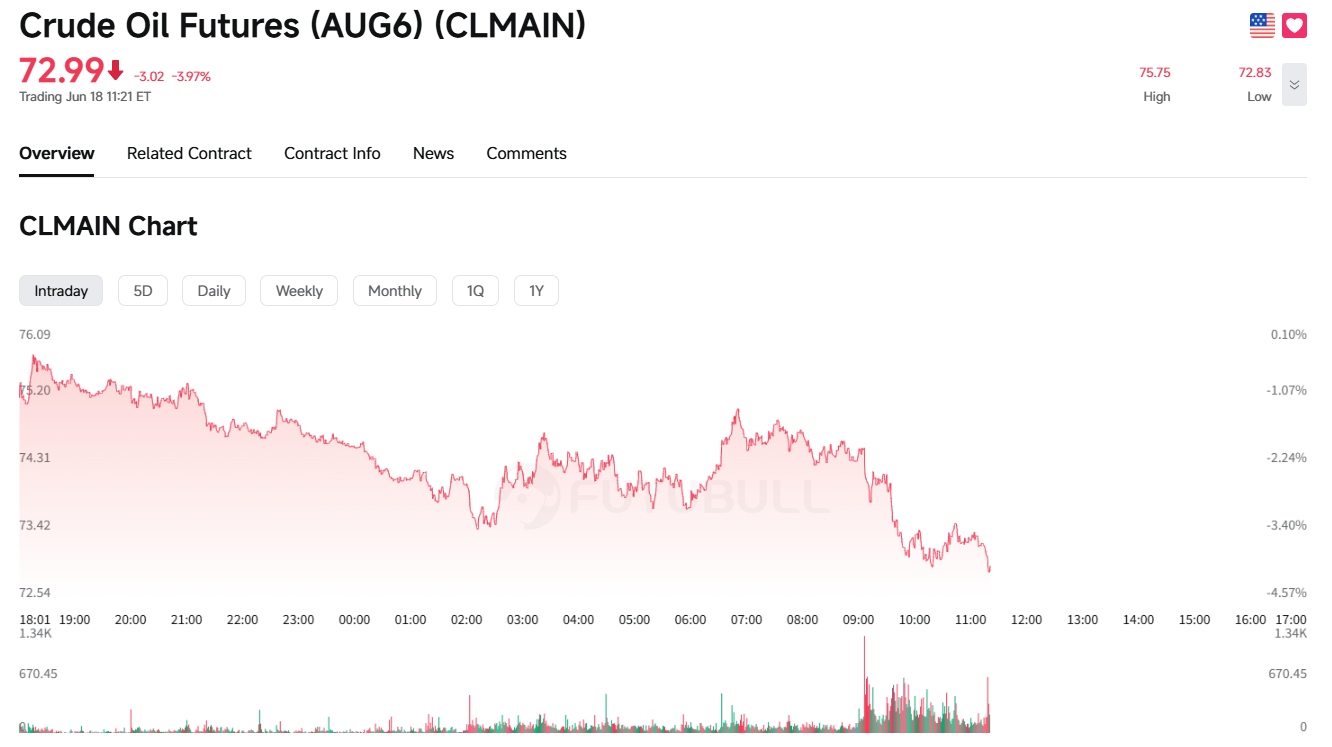
As of press time, both major crude oil futures were under pressure, with WTI crude futures falling about 4% to $72.99 and Brent crude futures down 3.54% to $76.73.
[Source: FutuBull]
According to a report by Ritterbusch & Associates, the current market is caught between a bearish wave driven by the reopening of the strait and fundamental support from extremely tight supply, a tug-of-war that is highly likely to persist into next week. The firm further noted that there is a lag in the recovery of crude supply, and even by August or later, capacity may not return to 50%-60% of pre-war levels, while the need to replenish previously depleted inventories will bring a significant boost in demand.
Meanwhile, the International Energy Agency (IEA) stated that as long as the memorandum of understanding is implemented, oil production and exports in the Gulf region will gradually recover. Once the U.S. lifts its blockade on Iran, Iranian oil exports could fully resume immediately.
In its latest monthly oil market report, the agency significantly downgraded its 2026 global oil demand forecast, lowering this year's demand growth projection to a year-on-year decrease of 1.1 million barrels per day (bpd), a further cut of 700,000 bpd compared to May's forecast. The report specifically noted that a year-on-year plunge of 5 million bpd in global oil deliveries in the second quarter of 2026 was the primary reason for this major downward revision.
It also warned that with Middle East tensions expected to ease, the market could face a significant oversupply, while reminding market participants that a full recovery on the supply side cannot be achieved overnight.
Yet in stark contrast to this bearish demand forecast, OPEC sent a completely different and clear signal: oil demand is far from peaking, and long-term growth forecasts continue to be revised upward.
In its '2026 World Oil Outlook,' the cartel maintained its projection of strong global oil demand growth over the next four years while slightly raising its long-term demand forecast. The organization stated that the global policy environment is increasingly shifting toward supporting oil consumption, with absolutely no signs of demand peaking.
The report noted that countries' growing focus on energy security and costs has altered the trajectory of global energy policies, adjustments that are expected to support oil demand over the medium to long term. In the long run, OPEC expects global oil demand to reach 124 million bpd by 2050, 1.1 million bpd higher than last year's forecast, reiterating once again that oil demand will not reach a peak, at least for the foreseeable future.
Recommended Articles


