


US Cocoa Futures (COCOA-F) Is up 2.05% on Oct 12: Here Is Why
US Cocoa Futures (COCOA-F) is up 2.05% at Oct 12 05:05(ET), now at $5783.5, with a 7-day down of 1.13%.
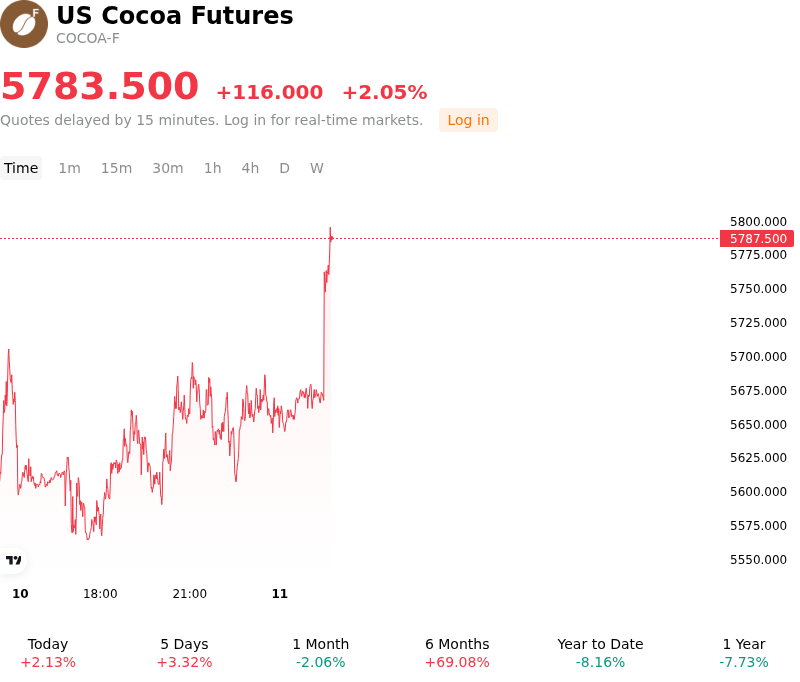
What is driving US Cocoa Futures (COCOA-F)’s stock price up today?
Cocoa futures traded higher as renewed supply concerns in West Africa re-emerged alongside logistical delays at the start of the 2026/27 main harvest season. Field surveys across Ivory Coast and Ghana continue to highlight structural production challenges, including lower pod counts, aging cocoa plantations, and elevated disease pressure resulting from excessive cloud cover and moisture. Operational bottlenecks have exacerbated short-term availability, as recent heavy rainfall in primary Ivorian growing regions damaged rural road infrastructure, delaying bean transportation to port terminals.
Supply risk premiums were further supported by intensifying weather hazards and policy disparities between key producing nations. Ongoing projections of a strengthening El Niño pattern threaten mid-to-long term yield potential across West Africa over the broader crop year. Concurrently, a substantial divergence in farmgate prices between Ivory Coast and Ghana has heightened fears of cross-border bean flows and informal trade shifts, introducing commercial friction into regional supply chains and complicating origination forecasts for international merchants.
From a market balance perspective, the advance reflects a repricing of near-term deliverable supply against structural yield vulnerabilities. Although elevated port stocks and consumer price sensitivity present medium-term headwinds to grinding demand, immediate tightness in West African port arrivals and persistent climate risks have triggered short-covering and technical buying. Institutional investors continue to monitor upcoming third-quarter grindings data to assess whether global processing activity remains resilient enough to absorb elevated commodity costs.
Technical Analysis of US Cocoa Futures (COCOA-F)
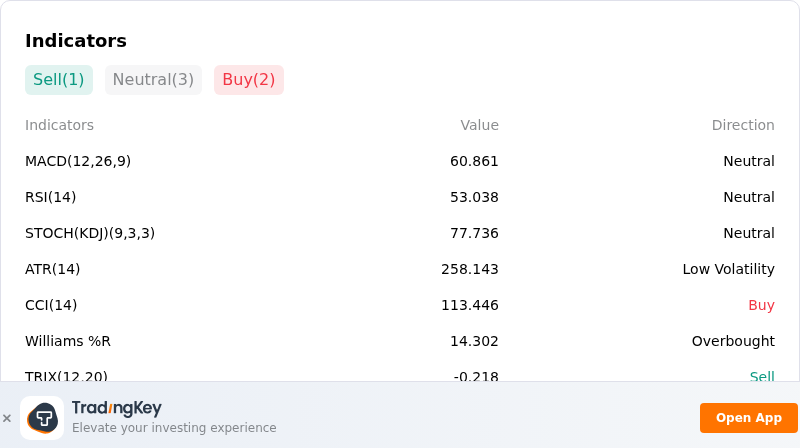
Technically, US Cocoa Futures (COCOA-F) shows a MACD (12,26,9) value of 60.861, indicating a neutral signal. The RSI at 53.038 suggests neutral condition and the Williams %R at 14.302 suggests overbought condition. Please monitor closely.
More details about US Cocoa Futures (COCOA-F)
Recent Events and Risks:
- ICE Exchange Inventory Builds: Exchange-monitored cocoa inventories tracked by ICE have steadily accumulated, reaching a multi-year high above 3.55 million bags, easing spot tightness and applying persistent intraday pressure on front-month futures contracts.
- Grinder Margin Strain and Deteriorating End-User Demand: Major cocoa processors and chocolate manufacturers are reporting expanding demand destruction; global processor Cargill recently cited quarterly mark-to-market cocoa losses due to cost pass-through resistance, while major confectioners have downgraded organic growth guidance following soft retail sentiment.
- Elevated West African Port Deliveries: Ivory Coast port arrival volumes have shown strong physical availability, with cumulative shipments reaching 2.18 million metric tons—up nearly 20% year-over-year—complemented by lower Ivorian farmgate prices that encourage local trade participants to liquidate bean stocks into export channels.
- Liquidity Compression and Margin Capital Stress: Intraday price movements are being exacerbated by restricted market depth and sustained high exchange margin requirements, leaving cocoa futures susceptible to aggressive long-unwinding cycles and macro-driven risk-off selling.
Recommended Articles


