




ASIC Regulation Explained: How to Check a Broker’s Licence in Australia (2026)
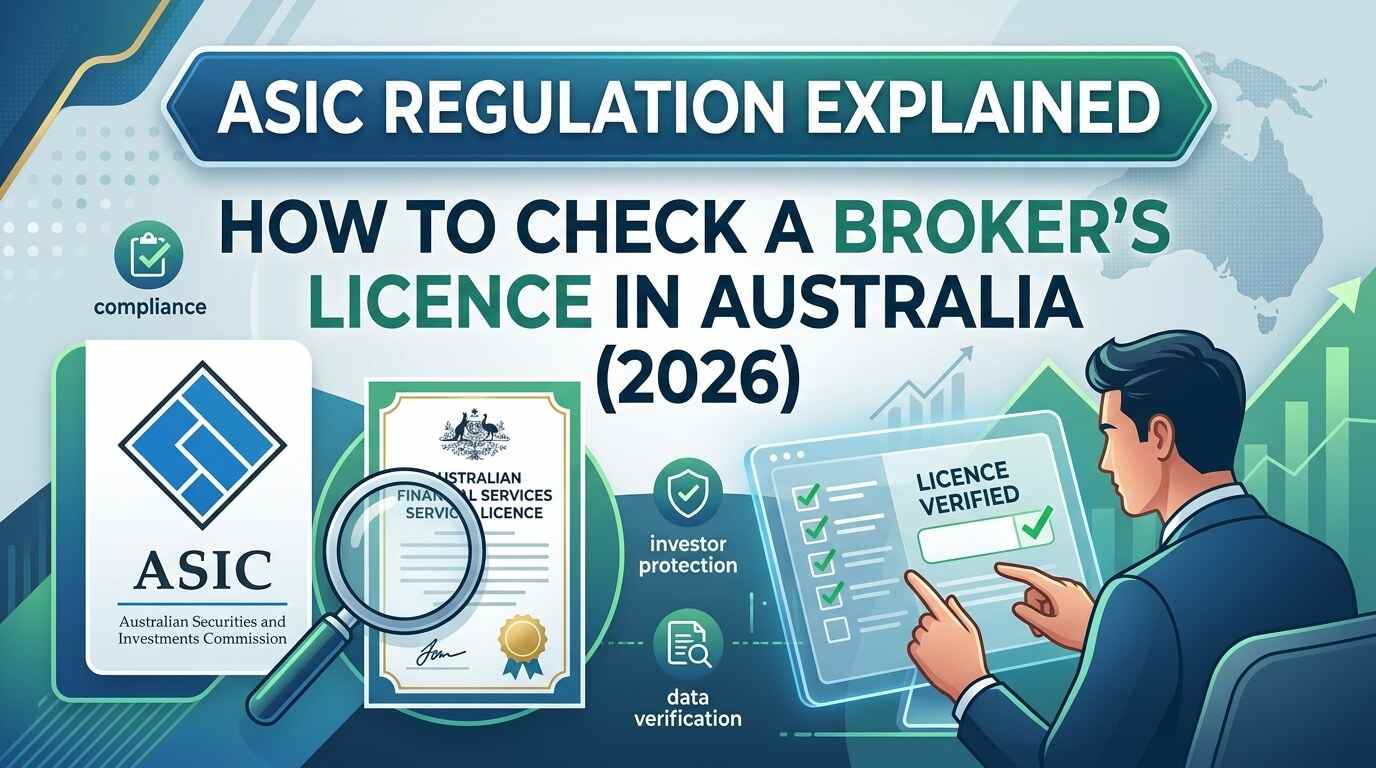
Choosing an ASIC-regulated broker is an important first step for Australians considering forex or CFD trading. However, seeing an ASIC logo or Australian Financial Services Licence (AFSL) number on a broker’s website is not enough. Traders should verify the legal entity behind their account, check its authorised financial services and understand which consumer protections apply.
The Australian Securities and Investments Commission (ASIC) regulates financial services and markets in Australia. Its rules are particularly relevant to retail CFD traders, who can face substantial losses when trading leveraged products.
This guide explains what ASIC regulation means, how to check a broker’s licence, what protections apply to Australian retail CFD traders and what to compare before opening a trading account.
Key Takeaways
ASIC is Australia’s financial markets regulator. It oversees financial services providers and maintains registers that help consumers verify licensing and authorisation.
An AFSL is not a guarantee against losses. A licence indicates regulatory authorisation for specified activities, subject to its conditions.
Verify the legal entity, not just the brand. International brokers may operate through multiple companies with different regulatory arrangements.
Retail CFD protections include leverage limits, margin close-out arrangements and negative balance protection, subject to the applicable rules and client classification.
Check the latest regulatory information. On 12 October 2026, ASIC proposed extending and amending its CFD product intervention order, including provisions for certain digital-asset-settled CFDs. The proposal is not yet an enacted extension.
What Is ASIC?
ASIC stands for the Australian Securities and Investments Commission. It is Australia’s national corporate, markets, financial services and consumer credit regulator.
ASIC administers and enforces relevant Australian laws, including the Corporations Act 2001. Its responsibilities include supervising financial services providers, overseeing market conduct, maintaining public registers and taking action where laws have been breached.
For people choosing an online forex or CFD broker, ASIC regulation matters because financial services providers operating in Australia generally need the appropriate authorisation to provide the relevant services.
What is an Australian Financial Services Licence (AFSL)?
An Australian Financial Services Licence is an authorisation issued under Australia's financial services regulatory framework.
A business providing financial services may need an AFSL unless an applicable exemption or other legal arrangement applies. The licence specifies the financial services the licensee is authorised to provide and may contain conditions.
For traders, three details are particularly important:
Licence status: Is the licence current, suspended or otherwise subject to restrictions?
Authorised services: Does the authorisation cover the financial products or services being offered?
Legal entity: Is the company named in your account agreement the same entity you verified on ASIC's register?
An AFSL number alone does not establish that every product, service or trading activity promoted under a brand is authorised.
Why Choose an ASIC-Regulated Broker?
Choosing an appropriately authorised provider can help Australian traders access the regulatory framework designed for local financial services customers.
However, regulation should be treated as one part of broker selection rather than a promise that trading will be profitable or that a provider cannot fail.
Regulatory oversight
ASIC maintains public registers and supervises financial services providers. Checking a broker's entry can help establish whether the company is licensed and what conditions apply.
Retail CFD protections
ASIC's CFD product intervention order introduced key safeguards for eligible retail clients, including leverage restrictions, margin close-out arrangements, negative balance protection and restrictions on certain inducements.
These measures are intended to address specific risks associated with leveraged trading. They do not eliminate the possibility of losing money.
Clearer complaint pathways
If you have a complaint about an Australian financial services provider, you may be able to use the provider's internal dispute resolution process and, where eligible, the Australian Financial Complaints Authority (AFCA).
* Eligibility and available remedies depend on the circumstances, the entity involved and the applicable rules.
Greater transparency around the provider
ASIC's registers can show information such as a licensee's legal name, licence number, status, registered website details where available and licence conditions.
These details help traders distinguish a regulated provider from a website that merely claims to be associated with one.
How to Check Whether a Broker Is ASIC-Regulated
Before depositing money, verify the broker directly through ASIC rather than relying solely on its website or advertising.
Step 1: Find the broker's legal entity
Open the broker's website and locate its legal disclosures, Financial Services Guide (FSG), Product Disclosure Statement (PDS) and client agreement.
Record the full company name and AFSL number. Do not assume that the brand name is the same as the legal entity holding the licence.
Step 2: Open ASIC's Professional Registers Search
Visit the official ASIC Professional Registers Search.
Search by the company's legal name or licence number. ASIC's register can be used to identify Australian Financial Services licensees and review relevant licensing information.
Step 3: Confirm the licence status
Check that the result matches the entity named in the broker's legal documents.
Review the licence status and any conditions or restrictions shown in the register. If the company has several registrations, make sure you are viewing the relevant AFS licence entry.
Step 4: Check the authorised services
Do not stop at finding a matching licence number.
Review the available authorisation details to establish whether the entity is authorised for the financial services and products relevant to the account you intend to open.
If the scope of authorisation is unclear, contact the provider or seek independent professional advice.
Step 5: Verify the website domain
ASIC has introduced the publication of AFS licensees' website addresses on its Professional Registers Search to help consumers identify impersonation scams.
Where a website address is listed, compare it with the site you are visiting. Be cautious if the domain differs, the legal entity does not match, or the company pressures you to transfer money urgently.
A scammer may copy the name and licence details of a legitimate business. A genuine licence number does not prove that an unrelated website belongs to that licensee.
Step 6: Read the account documents before depositing
Confirm the contracting entity, client classification, fees, withdrawal conditions and complaint procedures.
Keep copies of the relevant legal documents and check that the information presented during account opening is consistent with the provider's public disclosures.
Official resource: ASIC Professional Registers Search.
What ASIC's CFD Rules Mean for Australian Retail Traders
Contracts for difference (CFDs) are leveraged derivatives that allow traders to speculate on price movements without owning the underlying asset.
For example, a share CFD tracks the price of a share, while a gold CFD tracks the price of gold under the contract's terms. A trader may take a long position if they expect the price to rise or a short position if they expect it to fall.
CFDs are traded over the counter rather than on a licensed exchange. The customer enters into a contract with the CFD issuer, so the issuer's pricing, terms and ability to meet its obligations matter.
Retail CFD leverage limits
ASIC's product intervention order sets maximum leverage ratios for eligible retail CFD clients:
These are regulatory maximums, not recommended leverage levels. A provider may apply lower leverage, and the applicable category depends on the product and regulatory definitions.
For example, 30:1 leverage means that a $1,000 margin could support a position worth up to $30,000 under the relevant conditions. It does not mean the trader's risk is limited to $1,000 by leverage alone.
Margin close-out protection
ASIC's rules require CFD issuers to apply standardised margin close-out arrangements to eligible retail accounts.
These arrangements are intended to close out one or more positions before losses exceed the prescribed threshold. Positions may therefore be closed automatically when available equity falls below the applicable margin requirement.
Traders should understand how their provider calculates margin, monitors account equity and handles fast-moving markets.
Negative balance protection
Eligible retail CFD clients receive negative balance protection under the applicable Australian rules. This limits their liability for CFD trading losses to the funds in the relevant CFD trading account.
This protection does not prevent the loss of the entire account balance. It also should not be assumed to apply to every type of account or client classification.
Restrictions on certain trading incentives
ASIC's CFD product intervention order prohibits certain inducements to encourage retail clients to trade CFDs.
When evaluating a broker, be cautious about promotions that encourage excessive trading or imply that bonuses remove the risks of leveraged products.
Always check the offer's terms and the provider's applicable regulatory obligations.
Latest ASIC CFD Regulatory Update: October 2026
On 12 October 2026, ASIC announced a consultation on proposed changes to its CFD product intervention order.
The proposal includes extending the order for a further ten years, subject to approval, and updating the definition of CFDs to cover certain contracts settled through digital assets. It also proposes clarifications concerning initial margin requirements and other aspects of the order.
ASIC invited feedback by 5 pm AEDT on 9 November 2026. As of 14 October 2026, these changes remain proposals rather than an already-effective extension.
The current order commenced on 29 March 2021 and is scheduled to expire on 23 May 2027 unless extended or otherwise changed.
The update matters because the regulator is seeking to maintain protections as financial products evolve. Traders should distinguish the existing rules from proposed amendments when assessing a broker's compliance.
ASIC also reported that Australian retail investors lost more than A$458 million trading CFDs over a 12-month period, including A$73 million in fees. The figure underlines why licensing, costs and risk controls deserve attention before account funding.
Read the official ASIC announcement on proposed CFD protection changes.
How to Compare ASIC-Regulated CFD Brokers
Regulatory status is a starting point, not the only factor to consider. Once you have verified a provider's licence and legal entity, compare the trading conditions that affect your costs and experience.
Avoid ranking providers solely by their advertised leverage or minimum deposit. A low entry requirement does not necessarily mean a lower overall trading cost, and competitive spreads do not remove market risk.
For Australian traders, it is also important to distinguish CFD trading from buying the underlying asset. A share CFD does not confer share ownership, and a gold CFD does not mean you own or store physical gold.
Is Mitrade an ASIC-Regulated Broker?
Yes, Mitrade operates in Australia under strictly regulated financial standards, making it a prominent broker for traders evaluating local CFD platforms.
Regulatory Verification
Mitrade Holding Ltd holds an Australian Financial Services Licence (AFSL No. 398528), regulated directly by the Australian Securities and Investments Commission (ASIC). To ensure complete security, traders can independently verify Mitrade’s current register status, authorized financial services, and legal entity disclosures via the official ASIC Register.
Key Factors to Evaluate When Choosing Mitrade
When reviewing Mitrade for your trading strategy, consider these essential account highlights and performance metrics:
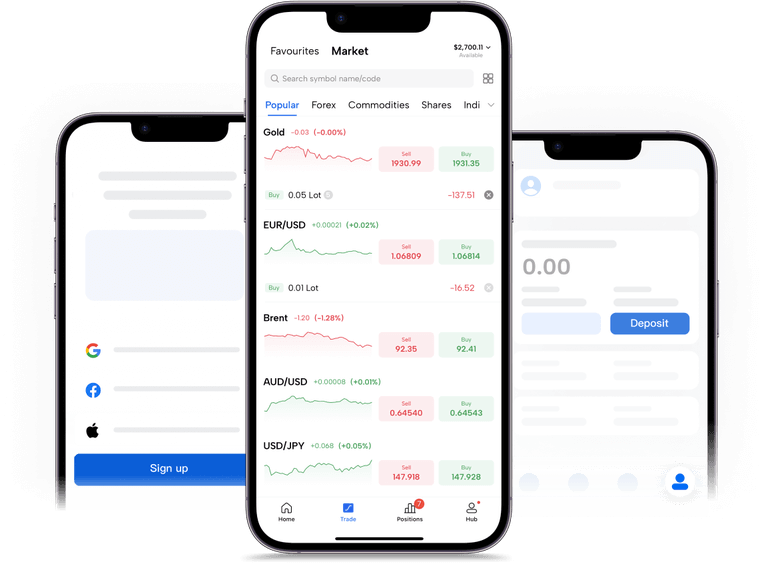
Comprehensive Market Access: Trade 400+ OTC financial instruments, including Forex, Gold, Commodities, Global Indices, Shares, and Crypto CFDs from a single account.
Transparent Trading Costs: Enjoy 0% commission on standard trades, competitive dynamic spreads, and clear, transparent overnight financing (swap) rates.
Seamless Local Funding: Fast AUD deposit and withdrawal channels with low minimum deposit options, supporting instant Bank Transfers, Credit/Debit Cards, and popular e-wallets.
Intuitive Platform & Tools: Access robust web and mobile platforms equipped with real-time charting, technical indicators, economic calendars, and integrated sentiment analysis.
Regulatory Risk Controls: Take advantage of retail trader protections under ASIC guidelines, including capped leverage limits, automated margin close-out, and mandatory Negative Balance Protection.
Explore Mitrade's Australian CFD platform


Common Mistakes to Avoid When Checking a Broker's Licence
Even careful traders can overlook important details when reviewing a broker's regulatory status.
Checking only the brand name. A group may operate through several companies. The licence of one entity does not automatically apply to every company using the same brand.
Assuming an AFSL guarantees safety. Regulation provides oversight and specific protections, but it does not guarantee profits or eliminate counterparty risk.
Ignoring client classification. Retail and wholesale clients may receive different protections. Do not assume retail CFD safeguards apply if you qualify for or elect wholesale treatment.
Overlooking fees. Spreads, commissions, overnight financing and other charges can materially affect trading results.
Trusting a copied licence number. Check the official register and compare the listed website with the domain you intend to use.
Confusing a proposal with an existing rule. Regulatory consultations can signal future changes, but a proposal should not be presented as an effective legal requirement before it takes effect.
You might be interested in…
1. What is an ASIC licence?
The term “ASIC licence” commonly refers to an Australian Financial Services Licence or another relevant authorisation overseen by ASIC. The exact licence and permissions depend on the financial services being provided.
2. How do I check whether a forex broker is ASIC-regulated?
Search the broker's legal entity or AFSL number in ASIC's Professional Registers Search. Confirm the licence status, authorised services and any conditions. Compare the official website information with the domain you plan to use.
3. What leverage can Australian retail CFD traders use?
The maximum depends on the underlying asset class. Under the current retail CFD framework, the caps range from 30:1 for major currency pairs to 2:1 for crypto-assets. Individual providers may impose lower limits.
4. What changed in ASIC's October 2026 CFD announcement?
ASIC proposed extending its CFD product intervention order for a further ten years and updating the rules to address certain digital-asset-settled CFDs, among other changes. The proposal remains subject to consultation and approval; it should not be treated as an already-effective extension.
Disclaimer: The content presented above, whether from a third party or not, is considered as general advice only. CFD trading involves significant risk of loss. Past performance does not guarantee future results. This article serves informational purposes only and does not constitute financial advice. Consider your risk tolerance before trading.


