



Nvidia has spent the AI boom convincing investors that its technology is almost impossible to replace. Now the company has to prove the same thing about its founder.
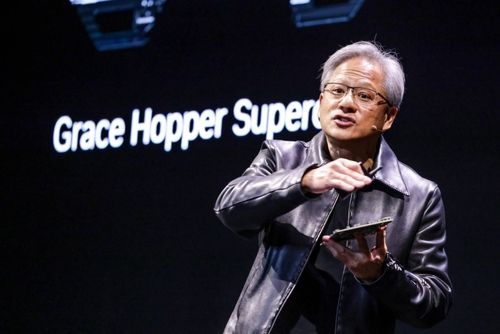
Jensen Huang has resigned as Nvidia’s chief executive with immediate effect after 33 years in charge, leaving Chief Financial Officer Colette Kress as interim CEO while the board searches for a permanent successor. Nvidia shares initially fell as much as 14% before recovering part of the loss as investors tried to separate the leadership shock from the strength of the underlying business.
The departure comes after several days of scrutiny over Huang’s personal conduct and an independent board investigation into national-security concerns linked to reports that he may have been targeted by a foreign intelligence effort. Nvidia has said it has no reason to believe company secrets or US national security were compromised.
For traders, however, the more important question now sits inside the business itself. Huang was not merely Nvidia’s public face. He shaped product strategy, customer relationships, the CUDA ecosystem and the company’s push from gaming chips into the centre of the AI economy.
NVDA now faces the biggest succession test in its history, while NAS100 traders need to consider how much founder risk was embedded in one of the index’s most influential stocks.
Nvidia has lost much more than a conventional CEO
Huang’s influence reached across nearly every part of Nvidia’s business. He was deeply involved in product development, customer relationships, long-term technology strategy and the culture that turned Nvidia from a graphics-chip specialist into the dominant supplier of AI accelerators.
That makes the succession challenge different from replacing a conventional corporate executive. Nvidia’s product roadmap spans GPUs, networking, software, data-centre systems, robotics and future computing platforms, while its largest customers include hyperscalers committing tens of billions of dollars to AI infrastructure.
Huang also played an unusually visible role in maintaining those relationships. His direct contact with major cloud providers, chip manufacturers and governments helped give Nvidia influence well beyond the specifications of individual products.
Investors now need to decide how much of that strength belongs to Huang personally and how much has become embedded across Nvidia’s engineering teams, customer contracts and software ecosystem.
The answer will determine how quickly the market becomes comfortable assigning Nvidia the same valuation without him.
CUDA gives Nvidia a moat that survives its founder
Nvidia enters this leadership transition from a much stronger position than most founder-led companies would.
CUDA, the software platform developers use to build applications around Nvidia GPUs, has become deeply embedded across AI development. Customers do not merely buy Nvidia chips; they build software, models and infrastructure around an ecosystem developed over many years.
Replacing that combination of hardware and software is far more difficult than switching between suppliers of a conventional commodity chip.
Nvidia also has established relationships across major cloud providers and AI developers, while demand for accelerated computing remains enormous. Hyperscalers are still building new data centres and ordering increasingly powerful AI systems, giving the company substantial contracted and expected demand independent of who sits in the CEO’s office.
Those advantages help explain why Nvidia shares recovered much of their initial plunge after Huang’s departure was announced. Investors appear to be questioning the company’s future leadership rather than assuming its existing business suddenly becomes less valuable.
The next CEO therefore inherits a formidable platform rather than a turnaround problem.
The bigger risk is what Nvidia builds next
Nvidia’s existing business may be difficult to disrupt quickly, but the company’s valuation also assumes it will continue identifying the next major computing opportunity before competitors do.
That is where Huang may be harder to replace.
The company has repeatedly moved early into new markets, from gaming graphics to cryptocurrency computing, data centres, generative AI and robotics. Huang’s ability to make large strategic bets before the revenue became obvious has been central to that record.
AMD and Broadcom both rose after his resignation, showing that investors immediately began reassessing the competitive landscape. Nvidia’s current advantage remains large, but competitors may see a leadership transition as an opportunity to win customers, engineering talent or greater influence with major cloud providers.
The new CEO will therefore need to do more than preserve GPU market share. Nvidia still has to manage the transition between chip generations, expand networking and software revenue and identify where AI computing moves after the current data-centre boom.
Execution over the next several years may ultimately determine whether Huang built a company that can keep reinventing itself without him.
Colette Kress offers continuity while the search begins
Interim CEO Colette Kress brings more than a decade of senior leadership at Nvidia and deep knowledge of its finances, customers and growth strategy. She joined the company as CFO in 2013 and has managed its finances through the extraordinary expansion of gaming, data-centre and AI revenue.
Her appointment reduces the risk of an immediate operational vacuum, particularly with Nvidia preparing to report quarterly earnings shortly.
The larger question is whether Kress becomes a long-term candidate or whether the board chooses a technology-focused leader capable of taking over more of Huang’s strategic responsibilities.
Potential internal and former Nvidia executives with deep technical experience are likely to attract attention because the company’s competitive position depends heavily on engineering and product execution. An external appointment could bring a fresh direction but also increase uncertainty around culture and strategy.
The board’s decision may therefore become a major share-price catalyst in its own right. Investors are likely to reward a successor viewed as capable of preserving both Nvidia’s engineering culture and relationships with major AI customers, while a prolonged or contentious search could keep a leadership discount embedded in the stock.
Earnings have suddenly become more important
Nvidia’s upcoming quarterly results were already expected to test the strength of the AI spending boom. Huang’s resignation has raised the stakes considerably.
Investors will still focus on data-centre revenue, demand for new accelerators, margins and forward guidance, but the earnings call will now also provide the first major opportunity to assess whether customers or suppliers have reacted to the leadership transition.
Strong results would help shift attention back towards the fundamentals. If demand remains robust and management confirms that the product roadmap and major customer commitments are unchanged, the market may become more confident that Nvidia’s competitive position extends beyond Huang.
Weak guidance would create a much more difficult interpretation. Investors would have to decide whether slower growth reflects the broader AI cycle or whether leadership disruption is beginning to affect execution.
The timing therefore gives Nvidia little room for uncertainty. The company needs to demonstrate that the transition at the top has not changed what customers are buying or when the next generation of products will arrive.
Nvidia’s leadership crisis reaches far beyond one stock
Nvidia is large enough that its movements influence NAS100 directly, but its importance to the AI trade goes further than index weighting.
The company sits at the centre of an investment cycle linking Microsoft, Meta, Amazon, Alphabet, CoreWeave and other major buyers of AI infrastructure. Those businesses are spending enormous amounts because they expect demand for computing capacity to remain strong, while Nvidia has been the most visible beneficiary.
A sustained decline in confidence around Nvidia could therefore pressure semiconductor stocks and the wider AI complex even if demand remains healthy.
The market reaction so far has been more nuanced. AMD and Broadcom gained as investors considered whether the leadership transition could create competitive openings, showing that money can rotate within the AI trade rather than leaving technology altogether.
For NAS100 traders, that distinction is useful. Nvidia weakness does not automatically mean the entire AI theme is breaking down, but the index can still face significant pressure if one of its most important companies remains volatile.
What should NVDA and NAS100 traders watch next?
Nvidia earnings: Data-centre growth and guidance will show whether the leadership crisis has affected underlying demand.
CEO succession: A credible permanent appointment could remove some of the leadership discount now affecting the shares.
Customer commentary: Any sign that major cloud companies are changing commitments or delaying orders would carry more weight than speculation around the resignation itself.
Product roadmap: Nvidia needs to show that future GPU, networking and AI-platform launches remain on schedule.
AMD and Broadcom: Continued relative strength could indicate investors believe competitors can capture some of Nvidia’s opportunity.
NAS100 breadth: A broader technology rally despite Nvidia weakness would suggest the index can absorb the shock more easily.
Trading Nvidia and NAS100 with Mitrade
Huang’s departure has created two related trading setups. NVDA now carries company-specific leadership risk alongside the existing questions around AI demand, valuation and semiconductor competition. NAS100 provides broader exposure to the technology sector, allowing traders to take a view on whether Nvidia’s problems remain isolated or begin weighing on the wider AI trade.
Eligible Australian clients can use Mitrade CFDs to take long or short positions on available US shares and indices. A trader expecting Nvidia to stabilise after strong earnings could take a bullish view, while concerns about succession, product execution or further selling could support a bearish position. NAS100 offers a broader alternative if the market view is about technology sentiment rather than Nvidia alone.
Stop-loss and take-profit orders can help define exit levels, while pending orders allow positions to open when selected prices are reached. Leadership announcements and earnings can produce sharp price gaps, so leverage and position sizing remain important.
Mitrade is regulated in Australia by ASIC. Share and index CFDs are leveraged products, so both potential gains and losses can be magnified.
Start trading Nvidia or NAS100 in three steps
You might be interested in…
1. Can Nvidia remain dominant without Jensen Huang?
Nvidia still owns major competitive advantages through CUDA, its AI hardware portfolio and established customer relationships. The larger uncertainty is whether future leadership can maintain the same pace of product development and strategic expansion.
2. Why did AMD and Broadcom rise after Huang resigned?
Investors may see Nvidia’s leadership transition as an opportunity for competitors to win customers or market share, even though Nvidia remains the dominant AI accelerator supplier.
3. Could Nvidia’s CEO change affect NAS100?
Yes. Nvidia carries substantial index weight and influences sentiment across semiconductors and the wider AI trade, so large moves in the stock can affect NAS100 even when other technology companies remain strong.
4. What is the most important near-term test for Nvidia?
The upcoming earnings report will show whether AI demand, margins and guidance remain intact while investors assess the leadership transition.
Disclaimer: The content presented above, whether from a third party or not, is considered as general advice only. CFD trading involves significant risk of loss. Past performance does not guarantee future results. This article serves informational purposes only and does not constitute financial advice. Consider your risk tolerance before trading.


