




Best App to Buy Shares in Australia with Low Fees: Top 7 Trading Apps in 2026

Mobile investing has rapidly changed the way Australians participate in the stock market. A decade ago, buying shares often required a traditional broker or complex desktop software. Today, a share trading app allows investors to buy and sell stocks, monitor portfolios, and access global markets directly from their smartphones.
For both beginners and experienced investors, choosing the best app to buy shares in Australia can make a significant difference. The right platform can help reduce trading costs, provide access to international markets, and offer tools that support better investment decisions.
In this guide, we compare the top trading apps available to Australian investors in 2026, explain how to choose the right platform, and walk through the process of buying shares using a mobile trading app.
What Is a Share Trading App?
A share trading app is a mobile application that allows investors to buy and sell stocks directly from their smartphones or tablets. These apps connect users to financial markets and provide tools for tracking prices, analyzing charts, and executing trades in real time.
In the past, investors often needed to call a broker or use complex desktop trading platforms to buy shares. Today, modern trading apps have simplified the process, making it possible to invest in stocks with just a few taps on a mobile device.
Most share trading apps are offered by online brokers and provide access to both domestic and international stock markets. Many platforms also include additional features such as portfolio tracking, market news, and research tools to help users make informed investment decisions.
What You Can Trade in a Stock Trading App
A good trading app usually offers access to multiple asset classes, allowing investors to diversify their portfolios. Common assets available on share trading apps include:
Australian Shares (ASX Stocks)
Investors can buy shares of companies listed on the Australian Securities Exchange (ASX), including well-known firms in sectors such as banking, mining, and healthcare.
US Stocks
Many trading apps also provide access to major U.S. exchanges such as the New York Stock Exchange and NASDAQ. This allows Australian investors to buy shares in global companies across technology, consumer, and industrial sectors.
Exchange-Traded Funds (ETFs)
ETFs are investment funds that track a basket of assets, such as stock indices or sectors. They are popular among investors seeking diversification and long-term investment opportunities.
Index Funds
Some platforms offer index-based investment options that track the performance of major stock market indices.
Contracts for Difference (CFDs)
Certain brokers provide share CFDs, which allow traders to speculate on the price movements of stocks without owning the underlying asset.
Having access to multiple asset classes through a single app allows investors to build diversified portfolios and manage their investments more efficiently.
Who Uses Share Trading Apps?
Share trading apps are used by a wide range of investors with different goals and experience levels.
Beginner investors often use trading apps because of their simple interface and educational resources. Many platforms are designed to help new investors learn the basics of stock investing.
Long-term investors use trading apps to build portfolios of stocks and ETFs for wealth accumulation over time.
Active traders rely on mobile trading apps to monitor markets throughout the day and take advantage of short-term price movements.
Mobile-first investors prefer trading apps because they provide instant access to financial markets anytime and anywhere.
As mobile technology continues to evolve, trading apps are becoming one of the most popular ways for Australians to participate in the stock market.
“Trade shares with an ASIC-regulated broker. Fast AUD funding via PayID. ”
Best Apps to Buy Shares in Australia (Top 7 in 2026)
Choosing the best app to buy shares in Australia can significantly improve your investing experience. A good trading app should offer low fees, strong security, access to global markets, and an easy-to-use mobile interface.
Below is a comparison of some of the top share trading apps available to Australian investors in 2026.
Trading Apps Comparison Table
| App | Regulation | Min Deposit | Stock Markets | Trading Fees | Best For |
|---|---|---|---|---|---|
| Mitrade | ASIC, CIMA | $100 | US shares, CFDs | $0 commission Low spreads | Beginners & CFD traders |
| eToro | ASIC, FCA, CySEC | $100 | US, EU, ETFs | $0 commission on stocks* | Social trading |
| Stake | ASIC | $0 | US stocks, ASX | Low brokerage | US stock investing |
| SelfWealth | ASIC | $0 | ASX, US stocks | Flat fee per trade | Long-term investors |
| IG | ASIC, FCA | $250 | Global stocks, CFDs | Competitive spreads | Advanced traders |
| CMC Markets | ASIC, FCA | $0 | ASX, US stocks | Low brokerage | Active traders |
| CommSec | ASIC | $0 | ASX, global markets | Standard brokerage | Traditional investors |
1 Mitrade
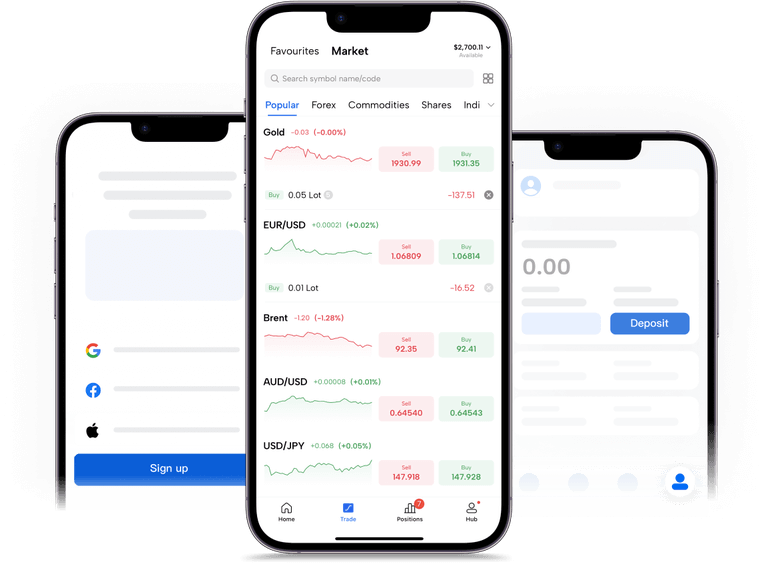
Mitrade is a popular mobile trading platform that provides access to a wide range of financial markets, including share CFDs. The platform is designed to be beginner-friendly, with a clean interface and built-in tools for market analysis.
Mitrade offers access to global stocks through CFDs, allowing traders to speculate on price movements without owning the underlying shares. The platform also includes advanced charting tools and risk management features.
Key features include:
Simple mobile trading interface
Low minimum deposit, $0 commission
Risk management tools such as stop-loss and take-profit orders

 Enjoy simple and fast trading Flexible leverage options available Follow real-time trading strategies Demo account with $50,000 virtual funds

2 eToro
eToro is widely known for its social trading features, which allow users to follow and copy the strategies of experienced investors.
The platform offers commission-free stock trading for many markets and supports a wide range of assets including stocks, ETFs, and cryptocurrencies. Its intuitive mobile app makes it easy for beginners to start investing.
Key advantages include:
Copy trading functionality
Commission-free stock trading in many regions
Access to global markets
3 Stake
Stake is an Australian trading platform that focuses primarily on U.S. stock investing. The app provides access to thousands of companies listed on major U.S. exchanges.
Stake has become popular among Australian investors because it offers a simple mobile interface and relatively low trading costs for international stocks.
Key benefits include:
Easy access to U.S. markets
Low brokerage fees
Beginner-friendly app design
4 SelfWealth
SelfWealth is an Australian online broker that offers flat-fee stock trading for both ASX and U.S. shares.
The platform focuses on long-term investors who want transparent pricing and reliable market access. SelfWealth also provides portfolio performance insights that allow users to compare their returns with other investors.
5 IG
IG is a globally recognized trading provider offering access to thousands of markets, including stocks, indices, commodities, and forex.
The platform offers both share trading and CFD trading, making it suitable for traders who want access to a wide range of financial instruments. IG’s mobile trading app includes advanced analysis tools and research features.
6 CMC Markets
CMC Markets provides a powerful trading platform with advanced charting capabilities and detailed market data.
The broker offers competitive pricing for share trading and is particularly popular among active traders who rely on technical analysis.
CMC Markets’ mobile app also supports a wide range of research tools that help investors track market developments.
7 CommSec
CommSec is one of Australia’s most well-known stockbrokers and is part of the Commonwealth Bank group.
The platform offers access to ASX shares as well as international markets. While trading fees may be higher than some newer platforms, CommSec is often preferred by investors who value strong brand recognition and traditional brokerage services.
Best Shares to Buy in Australia for Beginners
For investors who are new to the stock market, choosing the right shares can feel overwhelming. Many beginners start by focusing on well-established companies, diversified ETFs, or dividend-paying stocks that provide more stability compared to highly speculative assets.
Below are several categories of shares that are commonly considered by beginner investors in Australia.
Blue-Chip ASX Stocks
Blue-chip stocks are shares of large, well-established companies with strong financial performance and a long history in the market. These companies often have stable earnings and are leaders in their industries.
Examples of sectors that typically include blue-chip companies in Australia include:
Major banks
Mining and resource companies
Telecommunications firms
Consumer staples companies
Blue-chip stocks are often attractive to beginners because they tend to be less volatile than smaller companies and may provide consistent dividend payments.
Dividend Stocks
Dividend stocks are companies that regularly distribute a portion of their profits to shareholders. Many Australian investors value dividend-paying stocks because they can generate passive income in addition to capital growth.
Dividend-paying companies are often found in industries such as:
Banking
Utilities
Telecommunications
Infrastructure
For long-term investors, reinvesting dividends can also help compound portfolio growth over time.
Exchange-Traded Funds (ETFs)
ETFs are one of the most popular investment choices for beginners. An ETF tracks a basket of assets, such as a stock market index or a specific sector.
Instead of investing in a single company, investors gain exposure to many stocks at once, which helps reduce risk through diversification.
Common ETF strategies include:
Index-tracking ETFs
Global equity ETFs
Sector-based ETFs
Because ETFs are diversified and easy to trade, many beginner investors use them as a core component of their investment portfolios.
Share Trading Apps vs Traditional Brokers
Before the rise of mobile trading apps, most investors relied on traditional brokerage firms to buy and sell shares. Today, many investors prefer trading apps because they offer greater convenience and lower costs.
The table below highlights some key differences between the two options.
Advantages of Trading Apps
Share trading apps have become popular because they provide:
Lower trading costs
Easy access to financial markets
Real-time portfolio monitoring
Convenient mobile trading
These features make it easier for beginner investors to start building an investment portfolio.
Advantages of Traditional Brokers
Traditional brokers may still appeal to certain investors who prefer more personalized services. Some brokerage firms provide:
Professional financial advice
In-depth market research
Portfolio management services
These services can be valuable for investors with complex financial needs or large portfolios.
Overall, share trading apps offer a convenient and cost-effective solution for most retail investors, while traditional brokers may be better suited for those seeking personalized advisory services.
“Trade shares with an ASIC-regulated broker. Fast AUD funding via PayID. ”
How to Buy Shares in Australia Using a Trading App
Buying shares through a trading app is a straightforward process that usually takes only a few minutes to set up.
Step 1 – Choose a Trading App
First, compare different platforms and select a trading app that offers low fees, strong regulation, and access to the markets you want to invest in.
Many investors also consider factors such as user experience and available research tools.
Step 2 – Open and Verify Your Account
Once you select a platform, you will need to create an account and complete identity verification.
This process usually requires providing personal information and uploading identification documents in order to comply with financial regulations.
Step 3 – Deposit Funds
After your account is approved, you can fund it using methods such as:
Bank transfer
Debit or credit card
Online payment services
Some trading apps allow investors to start with relatively small deposits.
Step 4 – Search for Stocks
Most trading apps provide a search function that allows users to quickly find companies listed on major stock exchanges.
You can search by company name, ticker symbol, or sector.
Step 5 – Place Your First Trade
Once you have selected a stock, you can place a buy order through the app.
You will typically choose the number of shares you want to purchase and confirm the order. After the trade is executed, the shares will appear in your portfolio where you can monitor their performance over time.
By choosing a reliable trading app and following these steps, Australian investors can easily begin building a diversified portfolio of shares and ETFs directly from their mobile devices.
You might be interested in…
1. Can beginners use share trading apps?
Yes. Many trading apps are designed for beginners and include educational resources and simple interfaces.
2. How much money do you need to start buying shares in Australia?
Some trading apps allow investors to start with relatively small deposits, although the required investment depends on the share price and brokerage fees.
3. Are trading apps safe to use?
Trading apps provided by regulated brokers are generally considered safe, provided investors choose platforms regulated by reputable financial authorities.
Disclaimer: The content presented above, whether from a third party or not, is considered as general advice only. CFD trading involves significant risk of loss. Past performance does not guarantee future results. This article serves informational purposes only and does not constitute financial advice. Consider your risk tolerance before trading.


