





Traders have an alias for the AUD/USD pair. They tag it “the Aussie.” This pair shows how many US dollars you can get for every one Australian dollar. It's also making the most traded currency pairs in the world.
You can trade the Aussie for most of the day, from Monday through to Saturday morning. That seems like more than enough time. But just so you know, the price of this currency pair drifts suddenly for most of its reading hours. The real action? Embedded in a select few windows.
So, what windows are these? That's what this guide aims to answer. It ranks the best three windows in Sydney time. It'll also point you towards what can make the AUD/USD jump, dates to be on the lookout for, and how you can trade the pair on Mitrade.
First Things First, What Makes the Aussie Move?
If you want to trade, the best time to go about it is when there's something pushing the price. Four things impact the Aussie's movement. They include:
Australia’s Interest Rate: The agency that sets this is the Reserve Bank of Australia. Back on 3 November 2025, the RBA increased rates to 4.85%. Higher rates help the Australian dollar, but that's not the case every time.
The US Dollar: This is the second half of the currency pair. Strong news from the United States can raise the US dollar while making the Australian dollar lose its value a bit.
China: China is Australia's biggest iron ore customer. So, when good news breaks in China, the Aussie tends to rise.
The Market’s Mood: When traders want to take risks, they buy the Aussie in large amounts. But when they get a tad conservative, they do the reverse and sell.
News about the four metrics above break at select times. And these times shape the best windows you can trade in.
The Three Best Times to Trade AUDUSD, Ranked
#1 Midnight to 4:00 AM: London and New York Together
This timeline is the busiest run in the market. This is because the two biggest trading cities globally are still active. During this period, money changes hands more than any other day of the day.
For the Aussie, this timeframe holds the biggest moves of any trading day. Big reports across the US land at around 12:30 AM, which is within this window. Trading costs are usually at their lowest, because many traders are actively buying and selling.
The catch? Most of Australia is sleeping at this point.
#2 11:00 AM to 3:00 PM: The Home Window
This window is Australia’s. Tokyo opens its markets at 11:00 AM, and that's when local AU news begins to flow in like clockwork:
11:30 AM: Reports about jobs and prices in Australia come out.
12:30 PM: Key reports from out of China break.
2:30 PM: The RBA shares the decisions behind its rates. This is usually done on meeting days only.
There's no other window on this list that gives you as much Australian news. The best part is that it allows you to make chart decisions during your lunch break.
#3 7:00 PM to 10:00 PM: The London Open
London wakes up when it's 7:00 PM in Sydney. At this point, a fresh set of traders come in, and it's when the Aussie takes its end-of-day direction. This window is great, especially if you prefer to trade after dinner.
“Trade AUDUSD with an ASIC-regulated broker. Fast AUD funding via PayID. ”
Summer and Winter: The Times the Three Windows Fall Into
Summer times, as listed above, run from the start of November to the middle of March. This is the period where clocks in Sydney, New York, and London stay unchanged.
But things change in winter; during this time, the two overseas windows hit two hours earlier in Sydney. The local window remains, because Australian news follows Sydney's clock.
Winter times in this context starts early April and ends in early October. But there are two gaps to note: mid-March to early April and early October to Early November. During these weeks, the first window starts at 11:00 PM in Sydney, while the London open commences at 6:00 PM.
From the above table, you can see that winter is of great help. The first window begins at 10:00 PM. So, you can catch and trade during its first half and still get around six to seven hours of sleep without qualms.
What Window is Perfect for Your Day?
The best window isn't the one on paper. It's the one that matches your routine:
You're a 9-5 Worker: The London open makes the most sense for you. At this point, you're most likely at home, have taken dinner, and fully awake to trade.
You're Free at Lunch: The home window is a fit. 11:30 AM news reports can impact the Aussie's movement in seconds.
You're a Night Owl: If you're awake during the night and early hours of the day, the London and New York window should fit your needs. You can start trading at 1:00 AM, the time that witnesses the break of US reports and the biggest trading crowd.
You're a Trading Newbie: Trade during a quiet hour like the mid-morning. Slow prices mean you can learn price direction without swift moves confusing you.
Just select one window and stick to it for a while. If it doesn't give you the results you wanted, you can change to another until you find the right spot.
Circle These Dates on Your Calendar
Some days are more important than others. Here are those that matter for the Aussie, in Sydney summer:
RBA Rate Decisions: These decisions are made on Tuesdays at 2:30 PM, eight times yearly. The next rate decision is expected on 8 December 2026. Read this guide to trading RBA decisions so you can know what to expect.
Australian Job Report: Breaks once each month and shows Australia's employment and unemployment rate, usually on the third Thursday at 11:30 AM.
Australian Price Report: Comes out once a month and highlights the prices of goods and services across several Australian capital cities, usually on the final Wednesday at 11:30 AM.
China Factory Reports: Near the start and end of every month, at around 12:30 PM. These reports cover factory production surveys and real-time output.
US Jobs Report: This report covers metrics like net changes and unemployment rates across the United States comes out once monthly. It lands at 12:30 AM on the first Saturday of the month in Sydney.
US Rate Decisions: Eight times a year, on a Thursday at 6:00 AM in Sydney. The Federal Reserve, which is the central bank in the United States, makes the call.
You really don't need to cram all these dates. Using the free economic calendar, you can find reports and know when each is due.
TIP FOR BEGINNERS: The Aussie can leap in either direction when a big report breaks. This leap can go the reverse way about a minute later. As such, it'll be best to wait for a few minutes for the dust to settle before you place trades.
When You Should Avoid the Aussie
Good timing also speaks to knowing when staying out of the market is the right action to take. Here are windows you should steer clear of the Aussie:
8:00 AM to 10:00 AM in Summer: New York has closed and Asia is still picking up. Since few people trade at these points, trading costs increase.
Early on Monday: Trading didn't take place during the weekend. The price that market ended with on Saturday can be far off from the figure that opens the market on Monday.
Friday Night into Saturday: This when many traders start packing things up for the weekend. Moves can be all over the place at this timeline, and you won't be able to make trades until the market opens on Monday.
Big Holidays: On holidays like Christmas or any other observed in the United States, the market doesn't witness too much activity and tends to get jumpy.
Trading AUDUSD on Mitrade: A Simple Sum
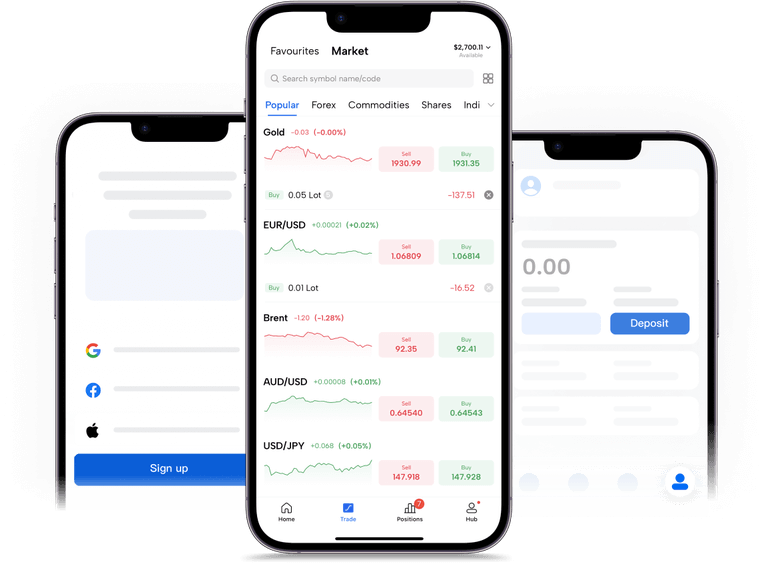
Mitrade lets you trade AUD/USD as a contract for difference (CFD). Dollar swapping isn't required. Just trade on where you think the price will move to next.
Here's how the sums work. Let's say the Aussie is at 0.6800. This means you can use one Australian dollar to buy 68 US cents.
You believe that the Aussie's value will go up. As such, you buy a trade with 1,000 Australian dollars. At 0.6800, they're worth US$680.
The Aussie's value rises to 0.6850. So, your 1,000 Australian Dollars are now valued at US$685. If you close the trade now, the extra $5 is yours to keep.
But what if the currency you bought drops to 0.6750? At this point, they're only worth US$675. Close the trade at this point and you've lost US$5.
Traders count moves taken during trades in little steps known as “pips.” A 0.6800 to 0.6850 move represents 50 pips. On this trade size, 10 pips are worth 10 US cents.
Moving on, if you believe that the Aussie will fall, you can sell it. When you think the reverse will happen, you can buy it. It's that straightforward.
Mitrade's Costs and Rules
The Cost: Mitrade won't ask you to pay for commission. The charge you pay for is the spread. This metric represents the gap between an asset’s buying and selling price. If you hold a trade overnight, you'd need to pay a swap. This Mitrade fees page shows all the costs you need to know about.
The Hours: You can trade the AUD/USD pair on Mitrade every day and night on weekdays (Monday to Friday). With this setup, you can make trades during all three trading windows.
The Safety Net: A stop-loss order on your trade will automatically close your trade if the currency pair’s price moves too far in the wrong direction. Make sure you set this feature on all trades to avoid losing more than you expected.
The Rule Maker: Mitrade is regulated by the Australian Securities and Investments Commission (ASIC). This means that Mitrade is legit and constantly monitored as it offers financial services to traders across Australia.
There's something else you need to know. And it's leverage. With leverage in the picture, small cash can hold a much bigger trade. ASIC lets regular traders trade up to 30 times their cash on pairs such as AUD/USD. This means you can hold a $3,000 trade with just $100. While this can pave the way for bigger wins, it can also lead to bigger losses.
Want to get the ball rolling at Mitrade? Open a free account and use the demo account that gives you $50,000 of virtual cash to learn the ropes without losing real cash. For next steps, read our guide on how to trade forex in Australia.


Final Thoughts
The best time to trade the AUD/USD pair is when there are many traders in the market. In summer, Sydney time, that’s midnight to 4:00 AM for big moves, or 11:00 AM to 3:00 PM if you want to use AU-related news to your advantage.
Just pick a window that suits your day and trading needs and stick with it. And no matter how sure you are of price direction, always use a stop-loss order to avoid seismic losses. For what the future holds for this currency pair, read our AUD/USD forecast now.
You might be interested in…
1. What is the best time to trade AUD/USD in Australia?
It depends on your schedule and needs. But just so you know, the business time starts at midnight and ends at 4:00 AM, Sydney summer. Daytime traders can consider the 11:00 AM to 3:00 PM window.
2. Can I trade AUD/USD at any time?
Nearly. The market runs day and night, Monday to Friday. The weekend is the only time it shuts down.
3. What time does the RBA share its rate decision?
The RBA shares rate decisions on Tuesdays, 2:30 PM Sydney time. This happens only eight times a year.
Disclaimer: The content presented above, whether from a third party or not, is considered as general advice only. CFD trading involves significant risk of loss. Past performance does not guarantee future results. This article serves informational purposes only and does not constitute financial advice. Consider your risk tolerance before trading.


