



Top 10 Australian Forex Brokers in 2026: Regulation, Fees and Trading Platforms

Updated
coverImg
Source: DepositPhotos

By 2026, Australia has firmly established itself as one of the most tightly regulated retail forex and CFD markets in the world. The Australian dollar remains highly sensitive to global interest rate differentials, commodity cycles, and geopolitical risk, which means many local traders actively participate in forex not only for speculation, but also for portfolio hedging.

At the same time, ASIC’s regulatory framework has reshaped how brokers operate. High leverage is no longer a selling point. Instead, traders increasingly focus on platform reliability, cost transparency, execution quality, and risk controls. Choosing a forex broker in Australia today is less about chasing features, and more about finding a setup that matches how you actually trade.

This article compares ten widely used Australian forex brokers in 2026. They are presented to help traders understand practical differences — not to rank or recommend.

Top 10 Australian Forex Brokers in 2026 — Quick Overview

The brokers listed below are commonly used by Australian retail traders and operate under ASIC regulation. They are presented for comparison purposes only.

Broker

ASIC Regulated

Platform Type

Fee Model

Trading Focus

Typical User Profile

Mitrade

Yes

Proprietary app & web

Spread-only

Forex & CFD trading

Retail and tactical traders

IG Markets

Yes

Proprietary platform

Spread / commission

Multi-asset forex trading

Research-driven traders

Pepperstone

Yes

Multi-platform access

Tight spreads + commission

Execution-focused forex

Active traders

CMC Markets

Yes

Proprietary platform

Transparent spreads

Technical forex trading

Chart-focused traders

eToro

Yes

Web-based platform

Variable spreads

Social & copy trading

Beginners

Saxo Markets

Yes

Institutional-grade platform

Tiered pricing

Advanced forex strategies

Professional traders

Axi

Yes

Standard trading platforms

Competitive spreads

Core forex trading

Simplicity-focused traders

FP Markets

Yes

Multi-platform access

Low spreads

Cost-efficient forex

Price-sensitive traders

Eightcap

Yes

Multi-platform access

Variable spreads

Forex & crypto CFDs

Diversification seekers

ThinkMarkets

Yes

Balanced retail platform

Competitive spreads

General forex trading

Retail traders

How Forex Trading Is Regulated in Australia

Role of ASIC (Australian Securities and Investments Commission)

All forex and CFD brokers operating legally in Australia must hold an Australian Financial Services Licence (AFSL) issued by ASIC. ASIC oversees:

  • Broker conduct and disclosure standards

  • Client money segregation

  • Risk warnings and leverage limits

  • Ongoing compliance and reporting

This regulatory framework is designed to protect retail traders from excessive risk and misleading practices.

ASIC Leverage Limits for Retail Clients

As of 2026, ASIC leverage rules remain a cornerstone of retail investor protection:

  • Major forex pairs (e.g. AUD/USD, EUR/USD): 30:1

  • Minor forex pairs and gold: 20:1

  • Other commodities and non-major indices: 10:1

  • Cryptocurrency CFDs: 2:1

These limits significantly reduce the probability of catastrophic losses and encourage disciplined risk management.

Why Regulation Should Be the First Filter

Australian traders should treat ASIC regulation as a non-negotiable requirement. Offshore brokers offering higher leverage often fall outside Australian legal protections, exposing traders to counterparty and withdrawal risks.

Open a Trading Account

     Trade Forex CFDs with an ASIC-regulated broker. Fast AUD funding via PayID. ”  

Top 10 Australian Forex Brokers in 2026 (Detailed Profiles)

1. Mitrade – App-Based CFD Trading with Integrated Risk Controls

Mitrade focuses on a simplified, app-centric trading experience, designed for retail traders who value clarity and built-in risk management.

Category

Details

Regulation

ASIC regulated

Platform

Proprietary mobile & web-based trading platform

Fee Structure

Spread-only pricing, no commission

Market Access

Forex, indices, commodities, CFDs

Strengths

Clean interface, integrated stop-loss tools, straightforward execution

Limitations

Limited advanced customisation

Best Suited For

Retail traders, tactical CFD trading, AUD and commodity hedging

Best suited for: Active retail traders, hedging-focused strategies, and those responding to AUD and commodity volatility.

Trade Forex & Commodities with Flexible CFDs 

Trade forex and commodity CFDs to respond to AUD swings and global market shifts with greater precision.

* CFDs are complex instruments and come with a high risk of losing money.  

bannerBg

2. IG Markets – Research-Driven Trading for Multi-Asset Investors

IG Markets is one of the most established names in the Australian forex space, known for market research depth and platform stability.

Category

Details

Regulation

ASIC regulated

Platform

Proprietary IG trading platform

Fee Structure

Spreads with optional commissions

Market Access

Extensive forex and multi-asset CFDs

Strengths

Strong research, reliable execution, long industry track record

Limitations

Platform complexity for new traders

Best Suited For

Research-driven and position traders

Best suited for: Traders who rely on analysis and longer-term positioning.

3. Pepperstone – Execution-Focused Broker for Active Traders

Pepperstone is commonly associated with execution-focused trading, making it popular among traders who value low latency over platform simplicity.

Category

Details

Regulation

ASIC regulated

Platform

Multiple platform options

Fee Structure

Tight spreads, commission-based accounts available

Market Access

Forex and CFD products

Strengths

Execution speed, competitive pricing

Limitations

Requires experience to use effectively

Best Suited For

Active and short-term traders

Best suited for: Experienced and short-term traders

4. CMC Markets – Advanced Charting and Platform Depth.

CMC Markets offers a proprietary platform with extensive charting and analytical tools.

Category

Details

Regulation

ASIC regulated

Platform

Proprietary CMC platform

Fee Structure

Transparent spread pricing

Market Access

Broad CFD coverage

Strengths

Advanced charting and analysis tools

Limitations

Steep learning curve

Best Suited For

Technical traders

Best suited for: Traders who prefer detailed technical analysis.

5. eToro – Social and Copy Trading Focus

eToro differentiates itself through social and copy trading features.

Category

Details

Regulation

ASIC regulated

Platform

Web-based social trading platform

Fee Structure

Variable spreads

Market Access

Forex, CFDs, multi-asset exposure

Strengths

Copy trading and social features

Limitations

Less flexibility for manual strategies

Best Suited For

Beginners and learning-oriented traders

Best suited for: Beginners and learning-oriented traders.

6. Saxo Markets – Institutional-Grade Tools for Advanced Traders

Saxo Markets delivers a professional trading environment with institutional-level analytics.

Category

Details

Regulation

ASIC regulated

Platform

Institutional-grade trading platform

Fee Structure

Tiered pricing

Market Access

Global forex and CFD markets

Strengths

Advanced analytics, professional tools

Limitations

Higher capital expectations

Best Suited For

Advanced and high-net-worth traders

Best suited for: High-net-worth and advanced traders.

7. Axi – Straightforward Forex & CFD Offering

Axi offers a no-frills trading environment focused on core forex and CFDs.

Category

Details

Regulation

ASIC regulated

Platform

Standard trading platforms

Fee Structure

Competitive spreads

Market Access

Core forex and CFDs

Strengths

Straightforward offering

Limitations

Limited advanced features

Best Suited For

Core forex traders

Best suited for: Traders who prefer simplicity.

8. FP Markets – Broad Market Access with Competitive Pricing

FP Markets provides access to a wide range of markets with competitive spreads.

Category

Details

Regulation

ASIC regulated

Platform

Multi-platform access

Fee Structure

Low spreads, commission options

Market Access

Wide CFD selection

Strengths

Cost efficiency, market breadth

Limitations

Platform choice may overwhelm beginners

Best Suited For

Cost-conscious traders

Best suited for: Traders seeking variety with cost efficiency.

9. Eightcap – Forex & CFD Trading with Crypto Exposure

Eightcap combines forex trading with access to cryptocurrency CFDs.

Category

Details

Regulation

ASIC regulated

Platform

Multi-platform trading

Fee Structure

Variable spreads

Market Access

Forex and crypto CFDs

Strengths

Asset diversity

Limitations

Volatility management required

Best Suited For

Diversification-focused traders

Best suited for: Traders seeking diversified CFD exposure.

10. ThinkMarkets – Balanced Platform for Retail Traders

ThinkMarkets offers a balanced approach between usability and depth.

Category

Details

Regulation

ASIC regulated

Platform

Balanced retail platform

Fee Structure

Competitive spreads

Market Access

Forex and CFD products

Strengths

Accessibility and stability

Limitations

Fewer specialised tools

Best Suited For

General retail traders

Best suited for: General retail traders.

How Trading Style Shapes Broker Suitability in 2026

In practice, most dissatisfaction with forex brokers does not come from fees or regulation, but from a mismatch between trading behaviour and platform design. Traders who operate tactically, reacting to AUD volatility   or commodity-linked currencies, often prefer platforms with integrated risk tools and fast execution. Longer-term traders tend to value research depth and platform stability. Beginners benefit from clarity and structure rather than choice overload.

Understanding this alignment matters far more than chasing marginal cost differences.

Risk Awareness Remains Central

Even under ASIC oversight, forex and CFD trading involves leverage and market risk. No platform eliminates losses. Tools such as stop-loss orders, position sizing, and disciplined exposure management remain essential in 2026, particularly during periods of heightened global volatility.
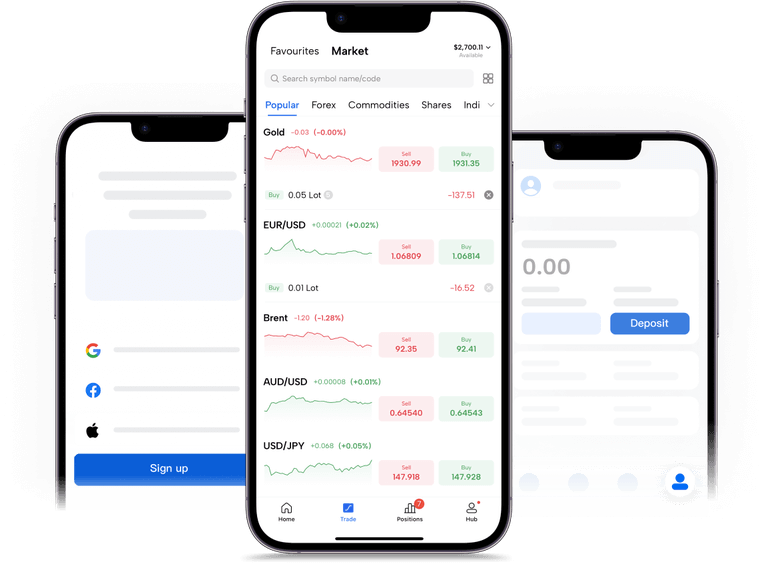
Start Trading in 3 Simple Steps
1
Open an Account
2
Fund Your Account
3
Trade Forex CFDs
bannerBg


FAQ

1. Is forex trading legal in Australia?

Yes, when conducted through ASIC-regulated brokers.

2. Do Australian brokers offer negative balance protection?

Most ASIC-regulated brokers do.

3. Are CFDs suitable for beginners?

Only with proper education and risk controls.

* The content presented above, whether from a third party or not, is considered as general advice only.  This article should not be construed as containing investment advice, investment recommendations, an offer of or solicitation for any transactions in financial instruments.

goTop
quote
Related Articles
placeholder
7 Best Gold Trading Platform Australia in 2026: Beginner & Pro Trader PicksLooking for the best gold trading platform in Australia? Compare 7 ASIC-regulated brokers for 2026, with tight XAUUSD spreads, fast execution, and secure AUD deposits. Ideal for beginners and professional CFD traders.
Author  MitradeInsights
Feb 02, Mon
Looking for the best gold trading platform in Australia? Compare 7 ASIC-regulated brokers for 2026, with tight XAUUSD spreads, fast execution, and secure AUD deposits. Ideal for beginners and professional CFD traders.
placeholder
Negative Balance Protection Explained: Your Safeguard Feature in CFD TradingNegative Balance Protection is a vital safeguard in CFD trading that prevents traders from losing more than their deposited funds during extreme market volatility. This article explains what negative balance protection is, why it matters, and how it works in practice, using real-world trading scenarios to illustrate its value. It also explores whether this protection is always available, how it fits into a broader risk-management toolkit, and how Mitrade reinforces trader security through responsible trading safeguards and client-first policies.
Author  Rachel WeissInsights
Jan 13, Tue
Negative Balance Protection is a vital safeguard in CFD trading that prevents traders from losing more than their deposited funds during extreme market volatility. This article explains what negative balance protection is, why it matters, and how it works in practice, using real-world trading scenarios to illustrate its value. It also explores whether this protection is always available, how it fits into a broader risk-management toolkit, and how Mitrade reinforces trader security through responsible trading safeguards and client-first policies.
placeholder
7 Best Forex Trading App in Australia: A 2026 Guide for TradersLooking for the best forex trading app in Australia? This 2026 guide compares 7 popular FX trading apps, covering fees, features, regulation, and who each app is best suited for.
Author  MitradeInsights
Feb 05, Thu
Looking for the best forex trading app in Australia? This 2026 guide compares 7 popular FX trading apps, covering fees, features, regulation, and who each app is best suited for.
placeholder
How Supply and Demand Shape Commodity Prices: A CFD Trader's GuideThis article explains how supply and demand fundamentals drive commodity prices and why this dynamic is essential for CFD traders to understand. It breaks down the core mechanics of supply and demand in commodity markets and highlights five key ways these forces influence global prices. The guide also shows how traders can apply supply-demand analysis when trading commodity CFDs, alongside practical risk management considerations. By focusing on fundamental drivers and future market outlooks, the article helps traders better interpret price movements and make more informed trading decisions.
Author  Rachel WeissInsights
Jan 21, Wed
This article explains how supply and demand fundamentals drive commodity prices and why this dynamic is essential for CFD traders to understand. It breaks down the core mechanics of supply and demand in commodity markets and highlights five key ways these forces influence global prices. The guide also shows how traders can apply supply-demand analysis when trading commodity CFDs, alongside practical risk management considerations. By focusing on fundamental drivers and future market outlooks, the article helps traders better interpret price movements and make more informed trading decisions.
placeholder
What Every Beginner Needs To Know About CFD TradingThis article is maninly about the introduction of CFD trading, its markets, trading for beginners and step-by-step guide to CFD trading.
Author  Rachel WeissInsights
Jan 12, Mon
This article is maninly about the introduction of CFD trading, its markets, trading for beginners and step-by-step guide to CFD trading.
Real-time Quote