




Trading Gold Forex in Australia: Complete Beginner’s Guide to XAU/USD (2026)

Gold has always held a special place in global markets—but in recent years, it has also become one of the most actively traded assets in the forex world.
For Australian traders, trading gold forex (XAU/USD) offers a unique opportunity: access to a highly liquid, volatile market that reacts directly to global economic trends. Whether you're looking to hedge against inflation or capture short-term price movements, gold trading through CFDs has become increasingly accessible.
What Is Gold Trading in Forex?
Gold trading in the forex market refers to buying and selling gold against a currency—most commonly the US dollar, represented as XAU/USD.
XAU = Gold (measured in ounces)
USD = US Dollar
So when you trade XAU/USD, you are essentially speculating on whether the price of gold will rise or fall relative to the US dollar.
How Gold Trading Works in Forex
Unlike traditional gold investing (like buying physical gold bars or coins), forex gold trading is typically done through CFDs (Contracts for Difference). This means:
You don’t own the physical gold
You trade based on price movements
You can profit in both rising and falling markets
For example:
If you believe gold prices will rise → you buy (go long)
If you believe gold prices will fall → you sell (go short)
This flexibility is one of the main reasons why gold is extremely popular among online traders.
Key Characteristics of Gold Trading
Gold behaves differently from typical currency pairs, which is why it attracts both beginners and experienced traders:
1. Safe-Haven Asset
Gold is often seen as a “safe haven.” During times of economic uncertainty, investors tend to move money into gold, pushing prices higher.
2. High Liquidity
XAU/USD is one of the most actively traded assets in the world. This means:
Tight spreads
Fast execution
Plenty of trading opportunities
3. Strong Volatility
Gold prices can move significantly within a short period. While this creates opportunities for profit, it also increases risk—making proper risk management essential.
For most Australian beginners, gold CFDs offer the easiest entry point due to low capital requirements and user-friendly platforms.
“Trade gold CFDs with an ASIC-regulated broker. Fast AUD funding via PayID. ”
Why Trade Gold in Australia?
Gold trading has become increasingly popular among Australian traders—and for good reason. Australia offers a unique combination of market access, economic relevance, and regulatory protection.
1. Access to Global Markets 24/5
Gold is traded almost 24 hours a day, five days a week. This is ideal for Australian traders because:
You can trade after work hours
You can access both London and New York sessions
There are opportunities across different time zones
This flexibility makes gold trading suitable for both part-time and full-time traders.
2. Strong Connection Between Gold and the Australian Dollar (AUD)
Australia is one of the world’s largest gold producers. Because of this:
The AUD often correlates with gold prices
When gold rises, the AUD may strengthen
This gives Australian traders a unique macro advantage
Understanding this relationship can help traders make more informed decisions, especially when analyzing both XAU/USD and AUD pairs together.
3. Easy Access Through CFD Trading Platforms
Australian traders can easily access gold trading through regulated online platforms. These platforms offer:
Low minimum deposits
Leverage (to amplify positions)
Real-time charts and technical tools
Demo accounts for practice
This lowers the barrier to entry significantly compared to traditional investing.
4. Strong Regulatory Environment (ASIC Oversight)
One major advantage of trading in Australia is regulation. Brokers operating in Australia are typically regulated by the Australian Securities and Investments Commission (ASIC).
This provides:
Greater transparency
Client fund protection rules
Strict compliance standards
For beginners, trading with an ASIC-regulated broker adds an important layer of trust and security.
5. Growing Popularity of Gold Trading in 2026
With increasing global uncertainty (inflation, interest rates, geopolitical tensions), more Australian investors are turning to gold as:
A hedge against inflation
A diversification tool
A short-term trading opportunity
As a result, gold forex trading is no longer just for professionals—it’s becoming a mainstream strategy among retail traders in Australia.
“Trade gold CFDs with an ASIC-regulated broker. Fast AUD funding via PayID. ”
What Moves Gold Prices?
To trade gold successfully, you need to understand what actually drives the price of XAU/USD. Unlike stocks, gold doesn’t depend on company earnings—it reacts to global macroeconomic forces.
Here are the key factors every trader should watch:
1. US Dollar Strength (Inverse Relationship)
Gold and the US dollar typically move in opposite directions:
When the USD strengthens → gold prices often fall
When the USD weakens → gold prices tend to rise
Why? Because gold is priced in USD globally. A stronger dollar makes gold more expensive for international buyers, reducing demand.
👉 This is why many traders monitor the US Dollar Index (DXY) alongside XAU/USD.
2. Interest Rates & Central Banks
Interest rates—especially those set by the **Federal Reserve—have a major impact on gold:
Higher interest rates → gold becomes less attractive (no yield)
Lower interest rates → gold becomes more attractive
When central banks signal rate cuts, gold often rallies. When they tighten policy, gold may decline.
3. Inflation & Economic Uncertainty
Gold is widely used as a hedge against inflation.
Rising inflation → investors buy gold to preserve value
Economic slowdown or recession fears → demand for gold increases
This is why gold often performs well during uncertain economic periods.
4. Geopolitical Events
Gold reacts strongly to global instability, such as:
Wars or military conflicts
Political crises
Financial market shocks
During these events, investors move capital into “safe” assets like gold—causing sudden price spikes.
5. Market Sentiment & Risk Appetite
Gold is closely tied to overall market sentiment:
When investors feel confident (risk-on) → gold may fall
When fear increases (risk-off) → gold usually rises
This makes gold a powerful tool for traders looking to capitalize on shifts in global sentiment.
Why Volatility = Opportunity
Gold is known for its sharp price movements. For traders, this means:
More entry and exit opportunities
Potential for quick profits
But also higher risk if not managed properly
Understanding these drivers allows you to anticipate movements instead of reacting late—a key step toward becoming consistently profitable.
Best Time to Trade Gold in Australia (AEST Guide)
Timing is critical when trading gold. While the market is open nearly 24 hours a day, not all hours are equally profitable.
For Australian traders, knowing when volatility and liquidity peak can significantly improve results.
Global Gold Trading Sessions
Gold trading follows the major forex sessions:
1. Asian Session (Tokyo)
Lower volatility
Slower price movements
Suitable for beginners or range trading
2. London Session (High Activity)
Strong increase in volatility
Institutional traders enter the market
Breakouts often occur
3. New York Session (Peak Liquidity)
Highest trading volume
Major economic news releases (US data)
Strong trends and reversals
Best Trading Hours in AEST
Here’s how these sessions translate into Australian time:
Asian Session: ~9:00 AM – 6:00 PM (AEST)
London Session: ~5:00 PM – 2:00 AM (AEST)
New York Session: ~10:00 PM – 7:00 AM (AEST)
The Most Profitable Time Windows
For most traders, the best opportunities occur during session overlaps:
London–New York Overlap (🔥 Best Time)
Around 10:00 PM – 2:00 AM (AEST)
Highest volatility and liquidity
Ideal for breakout and trend strategies
London Open (Strong Momentum)
Around 5:00 PM – 8:00 PM (AEST)
Good for early trend entries
When Should Beginners Trade?
If you're just starting out:
Focus on London session (clearer trends)
Avoid trading during low-volatility periods
Stay cautious during major news events (can cause sudden spikes)
Pro Tip: Combine Timing with Strategy
The best traders don’t just trade anytime—they match strategy + timing:
Breakout strategy → London open
News trading → New York session
Scalping → high liquidity periods
Mastering timing can dramatically improve your win rate. Instead of overtrading all day, focus on high-probability hours when the market is most active.

Trade XAU/USD with Tight Spreads
Gold Forex vs Other Assets (Comparison Table)
One of the most common questions beginners ask is: “Should I trade gold or something else?” The answer depends on your goals, risk tolerance, and trading style.
Let’s break down how gold compares to other popular trading assets.
How to Start Trading Gold Forex
Ok, the theory is already clear—now let’s move into practice. If you want to start trading today, here’s a simple 3-step guide you can follow step by step:
Step 1: Choose the Right and Safe Platform
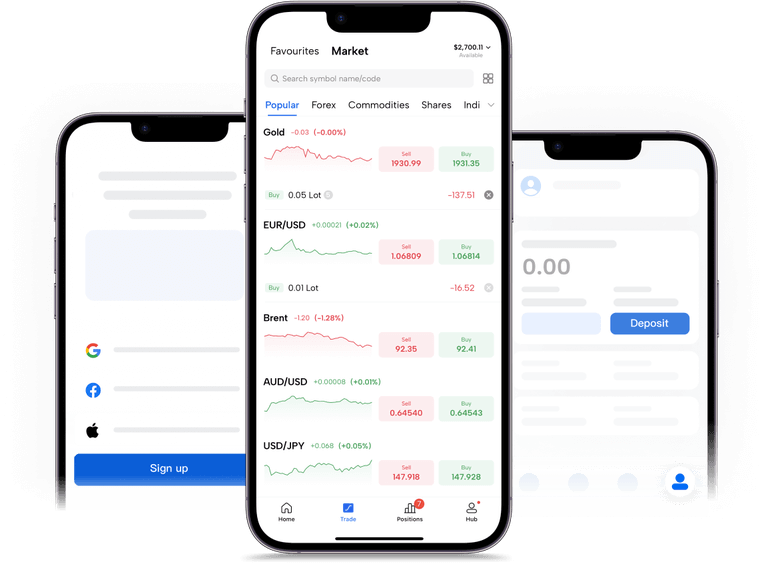
For beginners, choosing a broker is like choosing a weapon—if it’s reliable and easy to use, you’ve already won half the battle. One platform worth trying is Mitrade, especially for those who are just getting started.
Why consider Mitrade? (no hype, just facts):
Extremely user-friendly:
Forget those dark, confusing platforms full of flashing numbers. Mitrade’s app is clean, easy on the eyes, with clear Buy/Sell buttons and simple charts.All-in-one tools:
Access economic news, an Economic Calendar, and daily analysis directly within the app.Low costs:
0% commission: no extra fees per trade
Low spreads: competitive pricing helps you recover costs faster
Reliable and regulated:
The platform is regulated by the
Australian Securities and Investments Commission (ASIC), providing a strong level of security for your funds.Easy deposits and withdrawals:
Supports convenient payment methods with fast processing—no need to wait days for your funds.
Step 2: Practice with a Demo Account
Don’t deposit real money yet. Most platforms (including Mitrade) offer a free demo account with up to $50,000 in virtual funds so you can practice risk-free.
Here’s what you should test:
Try Buy/Sell orders:
Understand how profits and losses move in real timeTest Stop Loss:
Make sure your trades close automatically when the market moves against youUse indicators:
Experiment with RSI, MACD, and draw trendlines
Pro tip:
Treat your demo account like real money. Don’t click randomly—analyze before entering trades. This helps you avoid building bad habits when you switch to a live account.
Step 3: Move to a Live Account and Manage Risk
Once you feel confident (for example, after consistent demo profits for 2 weeks), you can start trading with real money.
Start small:
Even $50–$100 is enough to beginFollow strict money management rules:
Don’t overtrade:
Beginners should start with 0.01 lot (minimum size)Risk per trade:
Never risk more than 1–2% of your capital per trade
Example:
If you have $100, your maximum loss per trade should be $1–$2Cut losses early:
If the trade hits your risk limit, exit immediately
👉 Download a trading platform, open a demo account, and test it yourself.
You might be surprised by how dynamic—and potentially profitable—this market can be.


1.What does XAU/USD mean in forex?
XAU/USD represents the price of one ounce of gold in US dollars.
2. Is gold trading good for beginners?
Yes, due to its clear trends and strong liquidity, but proper risk management is essential.
3. How much money do I need to trade gold?
Many CFD platforms allow you to start with a relatively small deposit, often under $100.
Disclaimer: The content presented above, whether from a third party or not, is considered as general advice only. CFD trading involves significant risk of loss. Past performance does not guarantee future results. This article serves informational purposes only and does not constitute financial advice. Consider your risk tolerance before trading.


