




CFD Trading and Australian Tax: A Practical Guide to ATO Rules (2026)
Understanding tax obligations as an Australian CFD trader often involves interpreting complex terminology and strict guidelines. For Australian residents, the rules governing Contracts for Difference (CFDs) differ significantly from those applied to traditional investing.
CFDs are typically treated as revenue accounts because they are derivative contracts entered into with the intention of making a profit rather than as long-term investments.
Many new market participants assume they will calculate standard ATO trading capital gains on their CFD profits. However, the ATO treats derivative contracts entirely differently from physical shares. This guide outlines exactly how the ATO assesses CFD gains and losses, ensuring traders can structure their reporting accurately before executing trades.
CFD vs Traditional Shares: Key Tax Differences
Before examining specific ATO rulings, the table below outlines the fundamental tax differences between trading CFDs and holding traditional equities.
How the ATO Treats CFD Gains and Losses
A frequent point of confusion for new traders is exactly how profits are classified. When buying and holding physical shares, investors typically operate on a capital account, where standard capital gains rules apply.
However, CFDs are derivative instruments. Because CFDs are derivative contracts typically entered into with the intention of profit-making, the ATO generally assesses CFD trading as a revenue-generating activity under taxation ruling TR 2005/15.
For the annual tax return, this creates two specific outcomes:
Profits are classified as ordinary income and are taxed at the individual's marginal tax rate. They are not assessed as capital gains.
Losses are generally deductible against other income, subject to the Non-Commercial Loss rules where applicable.
Understanding this distinction early prevents reporting mistakes later. Because CFD profits are ordinary income, they do not qualify for the 50% CGT discount, regardless of how long a position remains open.
“Trade CFDs with an ASIC-regulated broker. Fast AUD funding via PayID. ”
Carrying on a Business vs. Profit-Making Undertaking
While traditional share buyers focus on the "Trader vs. Investor" classification, CFD traders face a slightly different assessment. The ATO examines trading habits to determine if an individual is "carrying on a business of trading" or simply engaging in a "profit-making undertaking."
If classified as carrying on a business and experiencing a net loss for the financial year, a trader must pass the ATO’s Non-Commercial Loss rules before offsetting that loss against a primary salary or wage.
To determine if trading activity constitutes a business, the ATO evaluates several specific criteria:
Volume and Frequency: Does the trader execute a high number of trades regularly and systematically, or are market interventions sporadic?
Profit Motive: Is there a clear, documented intention to generate a profit over the long term, rather than trading for recreation?
Business-Like Setup: Does the individual operate with a structured routine? This includes maintaining a dedicated trading setup, executing a defined risk management strategy, and keeping strict, professional financial records.
Capital Allocation: Has a significant amount of capital been deployed specifically to sustain an ongoing trading operation?
If the activity does not meet the threshold of a business, the ATO classifies it as a profit-making undertaking. In this scenario, profits remain ordinary income, but deductions are claimed under a different section of the tax code, meaning the Non-Commercial Loss rules do not apply.
Calculating and Reporting CFD Taxes
Whether an individual trades full-time or manages a few positions after work, reporting CFD taxes correctly ensures regulatory compliance while allowing traders to claim eligible deductions.
Income
If a trader operates as a profit-making undertaking (rather than a business), they report their net CFD trading profits in the Other Income section of their tax return. This applies uniformly across all asset classes; for example, calculating the tax on forex trading in Australia requires the same revenue account rules as trading equity indices or commodities.
If the ATO classifies the activity as carrying on a business of trading, profits are reported under the Business Income section. In both scenarios, net gains are taxed at the individual's marginal income tax rate.
Deductions
A distinct feature of trading on a revenue account is the ability to claim direct trading expenses. Eligible deductions that can reduce taxable income include:
Platform and Data Fees: Costs associated with live market data feeds, charting software, or specialised trading tools.
Home Office Expenses: A percentage of internet, electricity, and hardware costs directly proportional to trading activity.
Borrowing Costs: Interest incurred on funds specifically borrowed to finance the trading account margin.
Dividends and Imputation Credits
When holding traditional shares, investors often receive dividends alongside imputation (franking) credits, which can be used to offset their broader tax liability. However, because CFD traders do not take physical ownership of the underlying asset, they are not eligible to receive franking credits.
Instead, trading platforms process these events via cash adjustments. If an individual holds a long CFD position on a stock or index before the ex-dividend date, a cash adjustment is credited to their account. Conversely, if the trader holds a short position, the dividend value is deducted from their account.
For reporting purposes, these cash adjustments are simply factored into the trader's net profit or loss for the financial year and assessed as ordinary income, rather than being separated and reported as traditional dividend income.
Practical Insight: Traders should review platform subscriptions and home office setups before June 30. Pre-paying for annual data subscriptions or trading tools before the financial year ends can legitimately bring forward deductions for the current tax period, subject to standard ATO prepaid expense rules.
“Trade CFDs with an ASIC-regulated broker. Fast AUD funding via PayID. ”
Record Keeping for Australian CFD Traders
Accurate record-keeping is a strict legal requirement. The ATO mandates that traders maintain clear evidence of financial activity to substantiate all income and deduction claims.
When trading CFDs, individuals must retain the following specific documentation:
Daily Trade Statements and Execution Tickets: Records showing the opening price, closing price, execution date, and volume of every position.
Overnight Funding Charges: Detailed logs of the daily swap fees incurred for holding leveraged positions open past the daily rollover point.
Bank Statements: Complete records of all deposits and withdrawals between a personal bank account and the brokerage account.
By law, these financial records must be kept for a minimum of five years from the date the tax return is lodged.
Practical Insight: Relying on manual spreadsheets to track thousands of individual trades is inefficient and prone to error. Active traders should choose a platform that automates administration. Mitrade users can download comprehensive, EOFY-ready statements directly from the platform dashboard, ensuring all overnight fees and execution tickets are accurately formatted for their accountant.
Why Mitrade is Built for the Organised Australian Trader
Tax reporting shouldn’t take more time than analysing the trades themselves. For Australian traders, the chosen trading platform directly determines the complexity of the administrative workload at the end of the financial year.
Mitrade provides specific tools and structures designed to make this process highly efficient:
Integrated Reporting: Exporting and manually formatting thousands of individual execution records requires significant administrative hours. Mitrade’s proprietary platform provides automated, consolidated reporting. Traders can generate clear account statements detailing net profit, total losses, and daily swap fees. This delivers exact, accountant-ready data and eliminates manual data entry during tax time.
Transparent Cost Structure: Calculating deductions becomes highly complicated when investors must account for distinct commission charges on every individual transaction. Mitrade operates on a strict 0% commission model, meaning execution costs are incorporated entirely within the bid-ask spread. Because these costs are already reflected in the final trade outcome, traders bypass the need to calculate individual ticket fees for their tax returns.
Strict Regulatory Compliance: Australian residents require absolute certainty regarding the security of their capital. Mitrade operates under strict ASIC regulation (AFSL 398528). All retail client funds are held securely in segregated trust accounts. This legal requirement ensures trading capital is protected and maintained entirely separate from the broker's operational finances.
Practical Insight: Administration should be organised early. By trading on a regulated platform with integrated financial reporting, market participants reduce the risk of ATO compliance errors and can significantly lower accounting fees at the end of the financial year.
“Trade CFDs with an ASIC-regulated broker. Fast AUD funding via PayID. ”
Start Trading in 3 Simple Steps
Navigating the markets requires a platform that prioritises efficient execution and clear administration. You can set up your Mitrade account and begin executing your CFD strategy in three straightforward steps:
Open an Account: Register manually via the Mitrade homepage, or use the fast sign-up process by linking your existing Google or Facebook credentials.
Fund Your Account: Deposit your initial margin using fast, secure Australian payment methods, including POLi or Visa/Mastercard. Mitrade processes these deposits without charging internal funding fees.
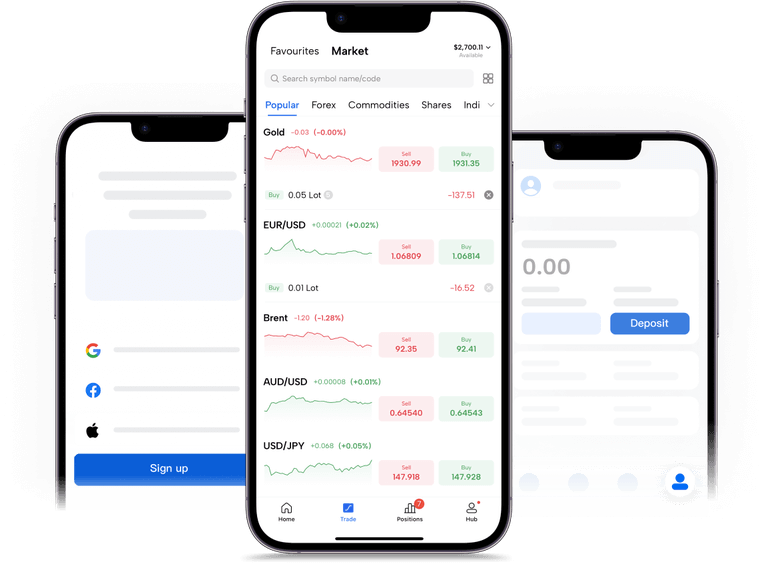
Trade CFDs: Access the proprietary WebTrader or mobile app. Analyse your preferred market, set your stop-loss and take-profit risk controls, and execute your position.
Disclaimer: This guide provides general information based on current ATO rulings (such as TR 2005/15) as of 2026. Taxation laws are complex and subject to change. Always consult a registered Australian tax agent or accountant to discuss how these rules apply to your specific personal or business circumstances.


1. Do traders pay ATO trading capital gains on CFDs?
No. Because CFD profits are typically treated as ordinary income rather than capital gains, they do not qualify for the 50% CGT discount. The ATO assesses CFD profits as ordinary income, which is taxed at the individual's standard marginal rate.
2. Are CFD losses tax-deductible in Australia?
Yes, but the method depends on the trader's classification. If operating as a "profit-making undertaking," losses are generally deductible against other ordinary income. If the ATO classifies the activity as "carrying on a business," losses are subject to the Non-Commercial Loss rules and must pass specific tests before they can be offset against a primary salary or wage.
3. Does the tax on forex trading in Australia differ from other CFD assets?
No. The ATO applies the same revenue account rules regardless of the asset class. Whether trading forex pairs, equity indices, or commodities, the tax treatment is dictated by the CFD structure, not the underlying market.
4. Does Mitrade withhold taxes on behalf of clients?
No. Like all Australian CFD providers, Mitrade does not withhold tax on trading profits. Clients receive gross returns, and it is entirely the individual's responsibility to report net gains or losses to the ATO accurately at the end of the financial year.
Disclaimer: The content presented above, whether from a third party or not, is considered as general advice only. CFD trading involves significant risk of loss. Past performance does not guarantee future results. This article serves informational purposes only and does not constitute financial advice. Consider your risk tolerance before trading.


