




Mitrade Fees Australia 2026: Spreads, Withdrawal & Trading Costs

Understanding trading costs is an important step before opening a CFD trading account. Whether you trade forex, gold, indices or share CFDs, knowing how spreads, overnight funding and withdrawal fees work can help you make more informed decisions.
Mitrade offers commission-free CFD trading in Australia, with no account opening fees, no deposit fees charged by Mitrade and no inactivity fees for Australian accounts. The main trading costs are variable spreads and potential overnight funding charges. Australian residents also receive four free withdrawals per calendar month.
However, commission-free trading does not mean that trading is completely free. Spreads, overnight funding, currency conversion effects and third-party payment charges can affect your overall costs.
This guide explains Mitrade fees in Australia for 2026, including how charges are calculated, what Australian traders should know about withdrawals, and how to check trading costs before placing an order.
Mitrade Fees at a Glance: 2026 Australia Fee Summary
Here is a breakdown of the main Mitrade trading fees and account charges for Australian clients.
Key takeaway: Mitrade's standard CFD pricing model does not charge a separate trading commission. However, traders should consider the spread, overnight funding and any applicable payment-related charges when calculating their total trading costs.
Does Mitrade Charge Trading Commissions?
Mitrade does not charge a separate commission on standard CFD trades in Australia. Instead, its trading costs are primarily incorporated into the buy-sell spread.
This differs from some commission-based trading models, where traders may pay a separate fee each time they open or close a position.
For example, when trading an AUD/USD CFD, the platform displays two prices:
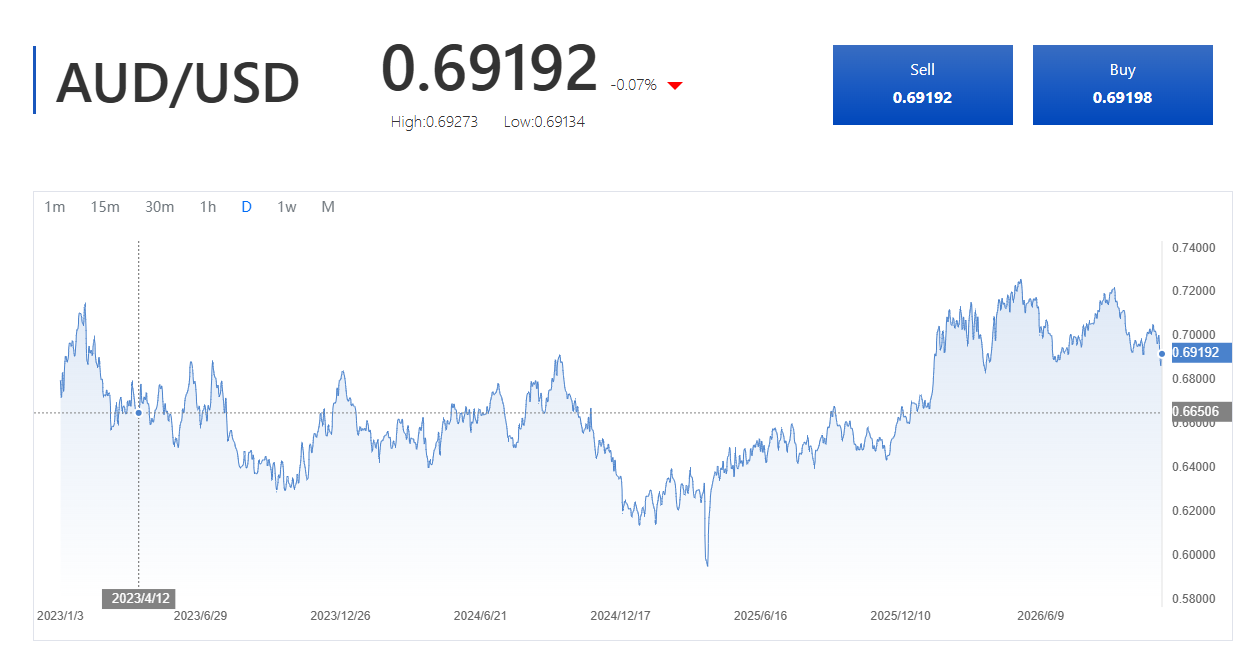
Bid price: The price at which you can sell.
Ask price: The price at which you can buy.
The difference between these prices is called the spread.
When you open a position, the spread represents an immediate trading cost based on the difference between the buy and sell quotes.
Mitrade Spreads Explained: How Much Does Trading Cost?
The spread is one of the most important components of Mitrade's CFD trading fees.
Mitrade uses variable spreads, meaning the difference between the bid and ask prices can change depending on market conditions.
Spreads may be affected by:
Market liquidity and trading volume.
Economic announcements, such as US inflation and employment reports.
Central bank interest rate decisions.
Market volatility and geopolitical developments.
The trading session and underlying instrument.
During highly volatile periods, spreads may widen, increasing the cost of opening or closing a position.
How Are Mitrade Spreads Calculated?
For forex CFDs, spreads are commonly expressed in pips.
Forex spread cost = Spread in pips × Pip value × Position size in lots
For example, assume the following AUD/USD trade:
Calculation:
0.6 pips × US$10 = US$6
This means the initial spread cost for the illustrative AUD/USD position would be approximately US$6.
* The example assumes a position of 100,000 AUD, a USD-denominated quote and no additional trading charges. It does not represent a guaranteed or live Mitrade spread.
How to check live Mitrade spreads: Open the Mitrade trading platform, select an instrument and review its current buy and sell prices before placing a trade.
Mitrade Overnight Funding Fees: How Do They Work?
Overnight funding is another important component of Mitrade trading costs, particularly for traders who keep leveraged CFD positions open for more than one trading session.
An overnight funding charge or credit may apply when a position remains open beyond the relevant daily settlement time.
The amount depends on several factors, including:
The underlying financial instrument.
Whether the position is long or short.
The applicable funding rate.
The contract value or borrowed amount.
Interest rate differentials and market conditions.
The number of applicable funding periods.
Mitrade's Australian Product Disclosure Statement explains that overnight funding may be calculated using either the contract value or the borrowed amount, depending on the underlying instrument.
Funding may be debited from or credited to the trading account, depending on the relevant position and rate.
How to Calculate Overnight Funding Fees
For a product where the funding rate is applied to the full contract value, a simplified estimate is:
Overnight funding = Contract value × Applicable daily funding rate × Number of funding periods
For example, assume a trader holds a gold CFD position with the following characteristics:
Estimated funding cost:
US$40,000 × 0.01% × 3 = US$12
In this hypothetical example, the estimated funding cost would be US$12.
* This is an educational calculation only. Actual funding rates, funding periods and calculation bases vary by product. Some positions may receive a funding credit rather than incur a charge. Weekend or holiday funding adjustments may also affect the amount.
How to Avoid Unexpected Overnight Charges
Before opening a leveraged CFD position, traders should:
Check the instrument's current overnight funding rate.
Review whether the rate differs for long and short positions.
Understand the settlement and rollover rules.
Consider how long they intend to hold the position.
Include possible funding charges in their risk and cost calculations.
Closing a position before the relevant settlement time may avoid an overnight funding charge for that trading session, although the trade will still be exposed to spreads, price movements and other applicable costs.
Mitrade Deposit and Withdrawal Fees in Australia
Deposits and withdrawals are important considerations when choosing a CFD trading platform.
Mitrade aims to keep funding costs straightforward for Australian clients, although some fees depend on the payment method and withdrawal frequency.
Does Mitrade Charge Deposit Fees?
Mitrade generally does not charge its own deposit fee for Australian trading accounts.
Available funding methods may include supported bank transfers, cards and local payment services, depending on the account and payment availability.
However, external charges may apply, including:
International bank transfer fees.
Intermediary bank charges.
Card issuer fees.
Foreign currency conversion costs.
These charges are determined by the relevant third-party financial institution or payment provider rather than necessarily being imposed by Mitrade.
Traders should review the payment details and any displayed charges before confirming a deposit.
Does Mitrade Charge Withdrawal Fees in Australia?
Australian residents receive four free withdrawals per calendar month. Each additional withdrawal request incurs a fee of A$5.
This policy is set out in Section 14.4 of Mitrade Australia's Product Disclosure Statement.
The free withdrawal allowance resets each calendar month under the stated policy.
Does Mitrade Charge Inactivity or Dormancy Fees?
No. Mitrade Australia does not charge an inactivity or dormancy fee on Australian accounts under its applicable AU account policy.
This means Australian clients are not charged a periodic inactivity fee simply because they have stopped placing trades.
For example, an Australian trader who has no open positions and does not trade for several months will not incur a Mitrade AU dormancy charge solely because of that inactivity.
This is particularly relevant for occasional traders who may only participate in the market when specific trading opportunities arise.
* It is important to distinguish Mitrade Australia from other regional Mitrade entities, as account policies and fee structures may differ between jurisdictions.
Australian traders should refer to the terms applicable to Mitrade Global Pty Limited, rather than assuming that fees published for another region apply to their accounts.
How Much Does It Cost to Trade on Mitrade? Three Examples
To understand Mitrade fees more clearly, consider three hypothetical CFD trading scenarios.
These examples focus on spread costs and do not include profits, losses, slippage, currency conversion or overnight funding unless explicitly stated.
Example 1: Trading AUD/USD CFDs
Assume a trader opens a 100,000 AUD position in AUD/USD.
The estimated spread cost is US$6.
If the position is closed before the relevant overnight settlement time, no overnight funding applies for that session under the standard funding rules.
The actual trading result will still depend on entry and exit prices.
Example 2: Trading Gold CFDs (XAU/USD)
Gold is widely followed by Australian CFD traders because of its sensitivity to US interest rates, the US dollar and geopolitical developments.
Assume the following hypothetical gold CFD trade:
Calculation:
100 ounces × US$0.50 = US$50
The estimated spread cost is US$50.
If the position remains open overnight, an additional funding charge or credit may apply.
The assumed spread and position size are illustrative and must not be treated as live Mitrade trading conditions.
Example 3: Trading NAS100 Index CFDs
The NAS100 CFD provides exposure to movements in an index associated with major Nasdaq-listed non-financial companies, without purchasing the underlying shares.
Assume a hypothetical position with the following contract characteristics:
Calculation:
2 contracts × 2 points × US$1 = US$4
This is an illustrative calculation based on the stated hypothetical contract specifications.
Actual NAS100 CFD contract sizes, point values and spreads must be checked on the Mitrade platform.
* Important: All figures above are hypothetical educational examples, not live quotes or a comparison of equally sized risk exposures.
How to Check Mitrade Fees Before Placing a Trade
One of the most useful ways to understand trading costs is to review the information available for the specific instrument before opening a position.
Step 1: Open the Mitrade Trading Platform
Log in to your Mitrade account or access the available demo trading environment.
Step 2: Select Your Preferred Instrument
Choose the market you want to trade, such as:
AUD/USD for forex trading.
XAU/USD for gold trading.
NAS100 for index trading.
USOIL for crude oil trading.
A supported share CFD.
Step 3: Review the Bid and Ask Prices
Check the current buy and sell quotes and calculate the spread.
Remember that spreads may change as market conditions change.
Step 4: Check Contract Specifications
Review the available product information, including contract size, minimum position size, trading hours and margin requirements.
Step 5: Review Overnight Funding Rates
If you intend to hold the position beyond the settlement time, check the current long and short funding rates and applicable rollover conditions.
Step 6: Estimate Your Total Trading Cost
Consider the spread, potential overnight funding and any currency conversion effects.
You should also assess the potential loss on the position and the impact of leverage.
How to Start Trading CFDs on Mitrade in Australia
Once you understand how Mitrade fees work, you can explore the platform and decide whether CFD trading is appropriate for your circumstances.
1. Create a Mitrade Account
Visit the Mitrade trading platform and begin the account registration process.
2. Complete the Required Verification
Provide the necessary identity and account information and complete any applicable suitability assessment.
3. Explore the Demo Account
Use the available demo trading environment to familiarise yourself with the platform, order types, spreads and position management tools.
4. Review the Trading Conditions
Before opening a live trade, check the relevant contract specifications, margin requirements and funding rates.
5. Fund Your Account and Place a Trade
If your account is approved and you decide to proceed, use an available funding method and review the order details before confirming a position.
Remember that leveraged CFD trading carries substantial risk. A relatively small market movement can produce a significant gain or loss compared with the margin deposited.
Explore Mitrade's trading platform and review current trading costs before placing your first live CFD trade.
Ready to Trade Global Markets?
Start with a free $50,000 demo account or open a live account today.
Create Free Account NowCFDs are leveraged products and carry a high level of risk. Consider whether CFD trading is appropriate for you and read the relevant Product Disclosure Statement before trading.
1. Does Mitrade charge trading commissions?
Mitrade does not charge commissions on most CFD products. Instead, trading costs are generally incorporated into the bid-ask spread. However, some products or account types may have different pricing structures, so traders should always check the latest Product Disclosure Statement (PDS) and trading specifications before opening a position.
2. Does Mitrade charge overnight financing fees?
Yes. If you hold a leveraged CFD position overnight, an overnight financing (swap) charge may apply. The amount depends on the product traded, position size, leverage, and prevailing interest rates.
3. Does Mitrade charge deposit fees?
Mitrade generally does not charge fees for deposits. However, your bank, credit card provider, or payment service provider may apply their own transaction fees.
4. Are there any hidden fees when trading CFDs with Mitrade?
Mitrade aims to provide transparent pricing. The main trading costs typically include spreads and, where applicable, overnight financing charges. Mitrade does not charge any hidden fees, and we endeavour to include all details of our fees and charges as clearly as possible. If you have any questions, please feel free to contact our customer service team for more detail.
5. How are CFD trading costs calculated?
The total cost of a CFD trade may include:
Spread
Overnight financing (if positions are held overnight)
Currency conversion (if applicable)
Market-specific adjustments
The exact cost depends on the asset, position size, and holding period.
6. Does Mitrade offer fixed or variable spreads?
Mitrade generally offers variable spreads that reflect current market conditions. During periods of increased volatility or reduced liquidity, spreads may widen.
7. What is the difference between spread and commission?
A spread is the difference between the buying and selling price of an asset, while a commission is a separate fee charged per trade. Many CFD brokers, including Mitrade for most products, incorporate trading costs into the spread rather than charging a separate commission.
8. Can I check trading costs before placing a trade?
Yes. Mitrade displays the current bid and ask prices before you execute a trade, allowing you to review the spread and estimated costs before confirming your order.
9. Can I practise CFD trading without paying fees?
Yes. Mitrade offers a free demo account that allows you to practise trading with virtual funds under real market conditions, helping you become familiar with the platform before trading with real money.
Disclaimer: The content presented above, whether from a third party or not, is considered as general advice only. CFD trading involves significant risk of loss. Past performance does not guarantee future results. This article serves informational purposes only and does not constitute financial advice. Consider your risk tolerance before trading.


