


A Bear Market Is Coming Eventually. Here's How I'm Preparing My Investments.
Key Points
Investors are likely to come out of a bear market in better shape by thinking about how to handle it now instead of later.
Preparing a plan for various situations can help you respond to market conditions calmly instead of reactively.
Don't move your portfolio to just cash, and position yourself to pick up cheaper stock shares.
- These 10 stocks could mint the next wave of millionaires ›
Investors haven't had to deal with much market turmoil over the past several years. The last real "shock" was the 2022 bear market. But even that was a relatively orderly decline, followed by the artificial intelligence (AI) bull market.
There was the COVID-19 pandemic crash in the S&P 500 (SNPINDEX: ^GSPC). But that reversed within months when the government injected a multi-trillion stimulus package into the economy. There was a mini-bear market in late 2018 that took 20% off the S&P 500. That was completely recovered by spring 2019.
Missed AI’s "Act 1"? Act 2 Could Be 15x Bigger. Most investors think they missed the AI boat because they didn't buy Nvidia in 2005. But according to our analysts, we’re only at the end of "Act 1"—the R&D phase. "Act 2" is the global rollout. Continue »
You could argue that you'd have to go all the way back to the financial crisis nearly two decades ago to find the last really face-ripping bear market. The next big bear market is coming. Eventually. It could happen in a year. It might not come for the next 10 years. But history has shown us that the bill usually comes due in time.
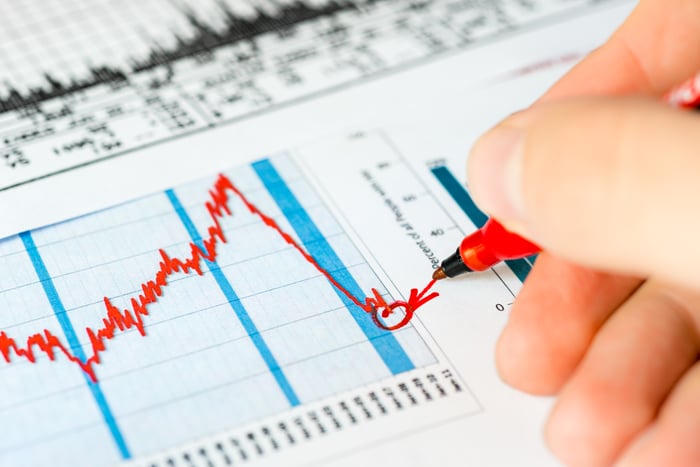
Image source: Getty Images.
You could try to predict when the next bear market will arrive and sell ahead of it. But that requires your prediction to actually be correct, and to accurately assess when and how the markets will react. And let's not forget that market timing almost never works in investors' favor.
Here are four simple things you can do now to prepare yourself before it happens.
1. Don't move your portfolio entirely to cash
When the markets turn ugly, many investors think in black and white. They believe they should either stay invested or exit the market altogether.
In reality, changes to your portfolio should involve tweaks, not 180-degree turns. For instance, you can shift some of your money from a tech ETF to a low-volatility ETF (exchange-traded fund). Or from a growth ETF to a dividend ETF. Those kinds of changes allow you to become a little more defensive while maintaining your long-term asset allocation.
But an aggressive move to cash can result in locking in losses after they've occurred and missing out on gains after the recovery has begun. It typically does more harm than good.
2. Make sure you can emotionally handle a 20%-plus decline
The S&P 500 is testing all-time highs, making now a good time to think about how you'll feel about a bear market. Investors often react emotionally as it's happening, but thinking about it beforehand might give a better sense of how you really feel.
But you have to be honest with yourself. How would you really feel if your 401(k) lost $100,000? People are usually fine with risk when stocks are going up. Only when they're dropping do they get a feel for their true risk tolerance.
If the idea of big losses makes you queasy, no worries. Make the appropriate shifts now before anything happens.
3. Don't position yourself to be a forced seller
Bear markets usually happen alongside recessions or economic slowdowns. A slowdown could mean your job is at risk while your portfolio loses value. The last thing you want is to be forced to sell from your long-term portfolio because you need to pay next month's bills.
If you haven't already, build up an emergency savings account that's invested in Treasury bills or another low-risk option. Build your safety cushion now so you don't get double whammied later.
4. Keep buying when stocks get cheaper
Legendary investor Warren Buffett views market corrections as opportunities, not reasons to panic. For decades, he's taken opportunities to pick up shares of quality businesses at discounted prices, which has greatly benefited his portfolio and that of his former company.
If your financial situation is still the same in a bear market, keep pushing forward with your automatic investment plans into 401(k)s and other accounts. You'll end up buying more shares of your investments than you'd be able to otherwise, and that could translate into better long-term returns down the road.
Where to invest $1,000 right now
When our analyst team has a stock tip, it can pay to listen. After all, Stock Advisor’s total average return is 936%* — a market-crushing outperformance compared to 213% for the S&P 500.
They just revealed what they believe are the 10 best stocks for investors to buy right now, available when you join Stock Advisor.
See the stocks »
*Stock Advisor returns as of September 26, 2026.
David Dierking has no position in any of the stocks mentioned. The Motley Fool has no position in any of the stocks mentioned. The Motley Fool has a disclosure policy.
Recommended Articles


