


SK Hynix Union Rejects Wage Agreement as Majority Votes No; Shares Fall Nearly 5%
TradingKey - On August 25, according to Reuters, union members at South Korea's SK Hynix rejected a tentative wage agreement previously reached with management by an extremely narrow margin on Tuesday, adding renewed uncertainty to labor negotiations at the major global memory chipmaker. Following the announcement, SK Hynix's stock price fell nearly 5% in intraday trading today, significantly underperforming the KOSPI Index, which dropped by about 2% over the same period, bringing labor negotiations back into the market spotlight.
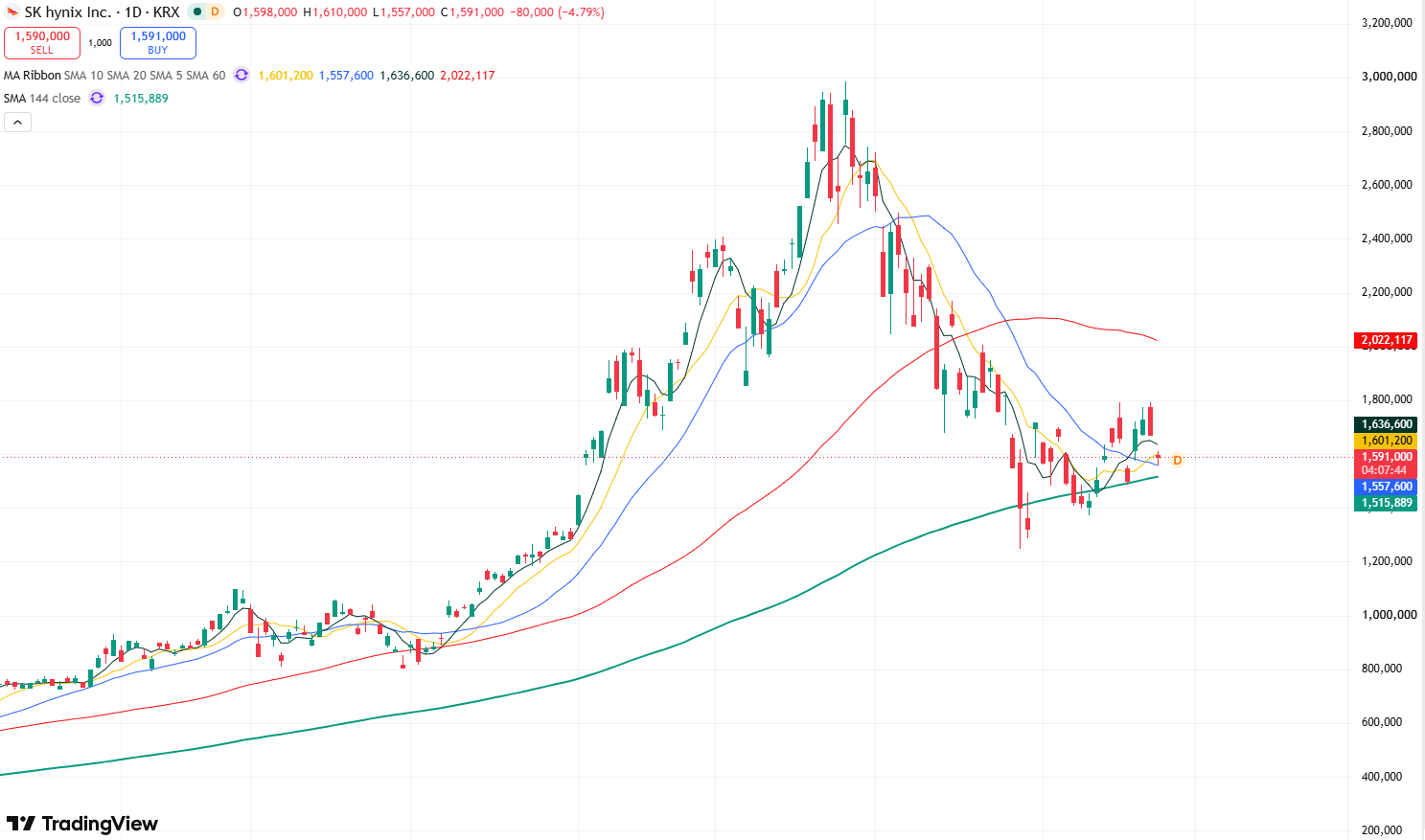
SK Hynix daily stock price chart, Source: TradingView
According to the voting results, a total of 15,045 union members voted, with 50.08% (7,535 members) voting against and 49.92% (7,510 members) voting in favor, a difference of just 25 votes. Overall voter turnout reached 93.81%. As the votes against exceeded half, the tentative agreement reached after about two months of labor-management negotiations failed to pass, and both sides are expected to restart negotiations.
The rejected agreement included a 6.3% increase in base pay, but what truly sparked controversy among employees was the payout structure of the profit-sharing bonus. Under the tentative agreement, SK Hynix planned to pay 40% of the bonus in cash and the remaining 60% in company stock, with a portion of the shares available for immediate sale and the rest subject to deferred distribution.
Driven by the AI boom that has significantly boosted demand for memory chips such as HBM, SK Hynix's profits have surged in recent years, expanding employee bonuses accordingly. The company previously pledged to allocate 10% of its annual operating profit to employee bonuses. Based on earlier estimates, the average bonus for SK Hynix employees in 2026 could reach approximately 779 million won (around $547,000).
However, shifting the majority of the bonus from cash to company stock raised concerns among some employees about share price volatility risks. Although SK Hynix shares have logged substantial cumulative gains this year, volatility has increased noticeably after reaching a high in June. Consequently, some employees hope to continue receiving a higher proportion of cash bonuses rather than tying more of their personal income to the company's stock price.
Currently, SK Hynix and the union are expected to renegotiate the bonus payout structure, with the cash-to-stock ratio likely becoming the key focus in the next round of negotiations. Against the backdrop of sustained strong demand for AI memory, along with significant simultaneous growth in company earnings and employee bonuses, how to strike a balance among employee compensation, capacity expansion investments, cash reserves, and shareholder returns will remain an important issue for SK Hynix.
Recommended Articles


