


OpenAI, Microsoft copyright fights become a test of AI's business model
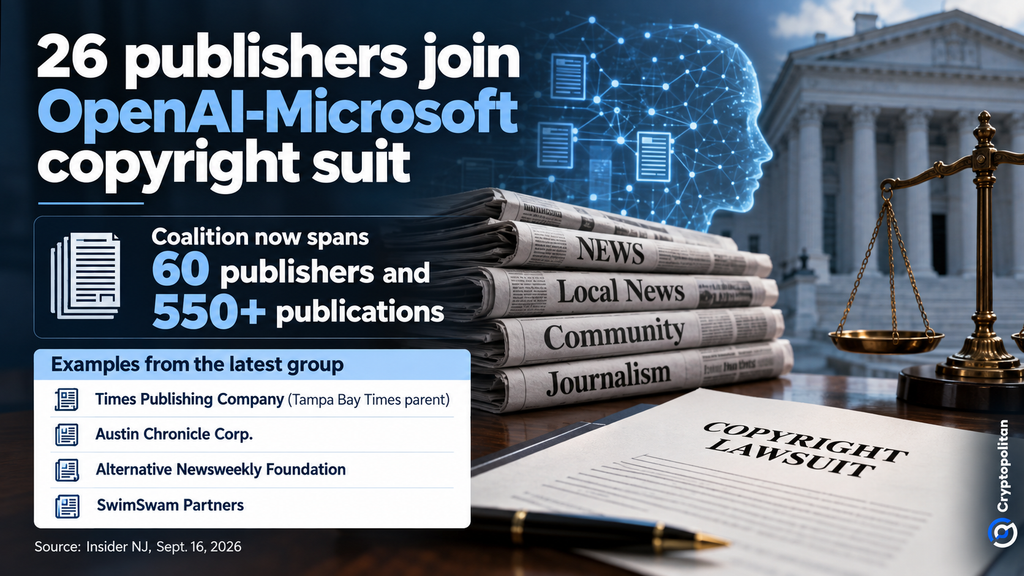
An additional 26 publishers became parties to the lawsuit against OpenAI and Microsoft on Wednesday, bringing the total number of publishers that have joined the coalition to over 550, making this a large-scale case determining how generative AI companies get and pay for content that they use to create their products.
The essential question at the core of the case is a fundamental issue that could change the rules of the game in the field of AI operations: what is considered fair use when it comes to utilizing copyright-protected material in training large language models? The answer could affect licensing costs, access to quality training data and, ultimately, which companies can afford to compete.
A coalition that keeps growing
According to the law firm Platkin LLP, it now represents 60 publishers in the litigation. Those in the latest group include Times Publishing Company, parent of the Tampa Bay Times; Austin Chronicle Corp.; Alternative Newsweekly Foundation; and SwimSwam Partners.
The publishers accuse OpenAI and Microsoft of using their work without their consent or any financial compensation to develop profit-making AI products and of having deleted copyright data, including the names of the authors and the copyright notices. Platkin believes that the emergence of this coalition indicates that publishers are starting to view these actions as a threat not only to copyright protections, but also to the economics of journalism itself.
“The scale of this coalition should be a wake-up call.” — Matt Platkin, partner at Platkin LLP
That issue is now being amplified in a larger group of cases. The Richner Communications case has been combined with OpenAI litigation into a larger group of lawsuits while other publishers are also filing lawsuits separately. For instance, The Seattle Times and Newsday sued OpenAI and Microsoft on charges of usage of content from their websites including paid content for ChatGPT, Microsoft Copilot, and Bing AI products.
Why September 4 matters
September 4 saw competing requests for a summary judgment in the case of In re OpenAI, Inc. Copyright Infringement Litigation. The owners of the copyright allege that the copying carried out for the purpose of creating their models cannot be classified as fair use and has negative repercussions for existing and possible future markets. In turn, OpenAI and Microsoft state that training processes must be interpreted as transformative since models are taught to recognize patterns as opposed to acquiring information from the original work, according to the Center for AI and Digital Policy.
Now, the same fair-use issue is attracting opinion from outside parties. U.S. District Judge Sidney H. Stein, who is presiding over the cases in the Southern District of New York, invited amicus briefs to be submitted by October 16. The U.S. Justice Department had already spoken up on September 2, expressing its support for a wide interpretation of the term fair use in the context of AI training, and warning that compulsory licensing could create obstacles for smaller companies.
Not every ruling is going against AI
The legal picture is still mixed. On September 16, OpenAI and Microsoft won part of the GitHub Copilot developer case, with the appeals court rejecting one copyright-management-information theory while leaving other claims alive.
The U.S. Copyright Office says fair use in AI training is fact-specific and can depend on what material was used, how it was obtained, why it was copied and its effect on copyright markets. A ruling favoring AI companies on training would not necessarily settle disputes over pirated or improperly sourced material.
What licensing would cost
The Copyright Office favors letting voluntary licensing markets develop before Congress considers compulsory licensing, while acknowledging that licensing material at AI-training scale could bring substantial financial and logistical burdens.
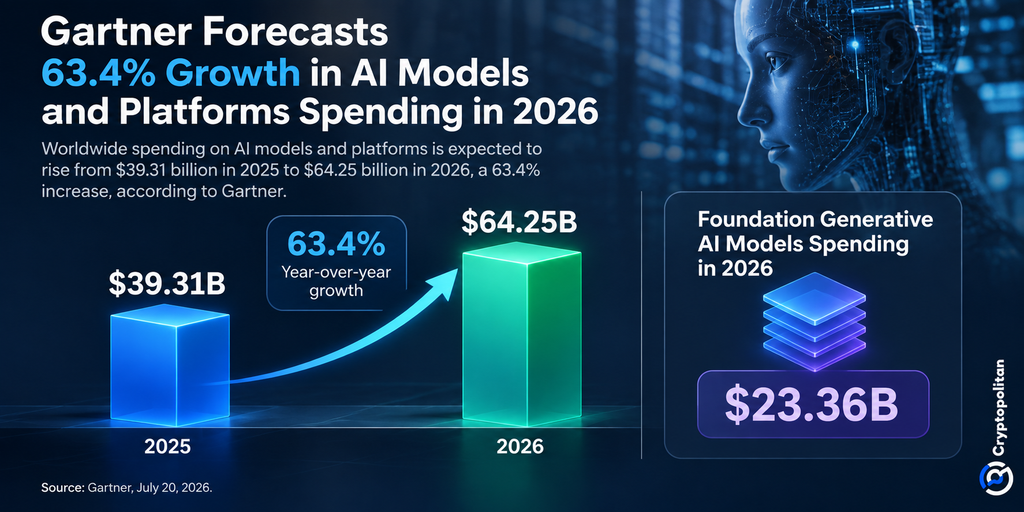
That is where Gartner’s forecast becomes relevant. Worldwide spending on AI models and platforms is expected to climb from $39.31 billion in 2025 to $64.25 billion in 2026, a 63.4% jump. Foundation generative AI models alone are forecast at $23.36 billion. Any shift toward paid access to training material would therefore hit a fast-growing market where data costs could become a much bigger part of the bill.
Those costs may not hit everyone equally. The OECD says AI markets remain dynamic but warns that concentrated access to data, computing power, and cloud infrastructure can strengthen incumbents. Copyrighted training data could become another costly input that larger developers are better equipped to absorb.
The issue is also becoming global. In Europe, the EU’s general-purpose AI code provides a framework for meeting AI Act copyright obligations.
The challenge is balancing stronger compensation for creators with the risk of making model development more expensive. How courts draw that line will help determine not only how AI companies source training data, but whether those costs widen or narrow the field of companies able to build the next generation of models.
The smartest crypto minds already read our newsletter. Want in? Join them.
Recommended Articles


