


Musk Backs Micron Memory Pricing, Criticizes Rivals for Overcharging: What It Means for MU Stock
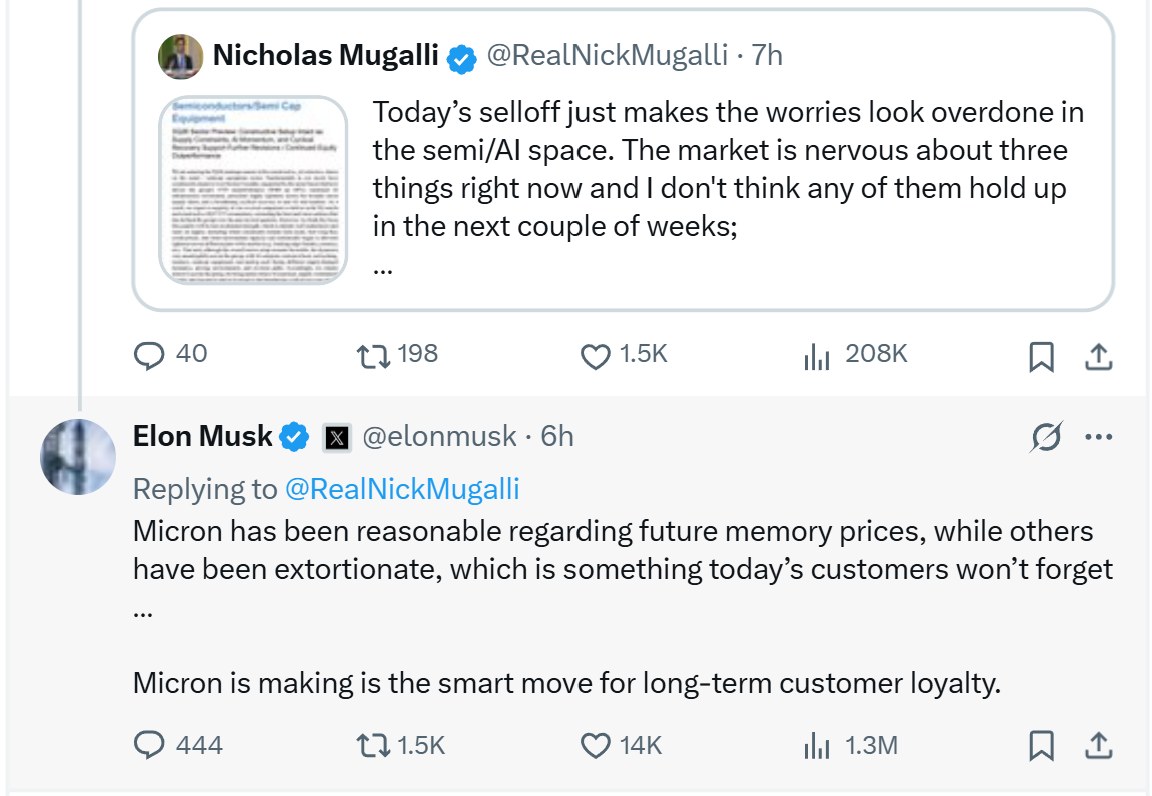
TradingKey - On October 13 ET, Tesla (TSLA) and SpaceX (SPCX) CEO Elon Musk stated on X that Micron (MU)'s handling of future memory prices is relatively reasonable, while quotes from some suppliers are excessively high.
Musk did not name specific manufacturers, but his comments drew market attention to Micron, SK Hynix (SKHY), and Samsung Electronics' pricing strategies.
[Source: X]
Why Does Pricing Differ Among Three Manufacturers?
Micron Technology, SK Hynix, and Samsung Electronics all produce DRAM and HBM, but the three companies differ in product mix, customer portfolio, capacity allocation, and long-term contracts. Actual transaction prices also vary depending on product specifications, purchase volumes, and contract terms.
SK Hynix expanded its HBM business layout early on and has entered the supply chains of major AI chipmakers. Amid tight HBM supply, prices for high-end products are generally better supported.
Samsung Electronics has a larger overall memory business, with product lines covering conventional DRAM, HBM, and consumer-grade memory, enabling it to adjust capacity based on market demand.
Micron's overall business scale is smaller than those of Samsung and SK Hynix, but it has continued to expand its HBM and server memory businesses in recent years, locking in a portion of demand through long-term supply agreements.
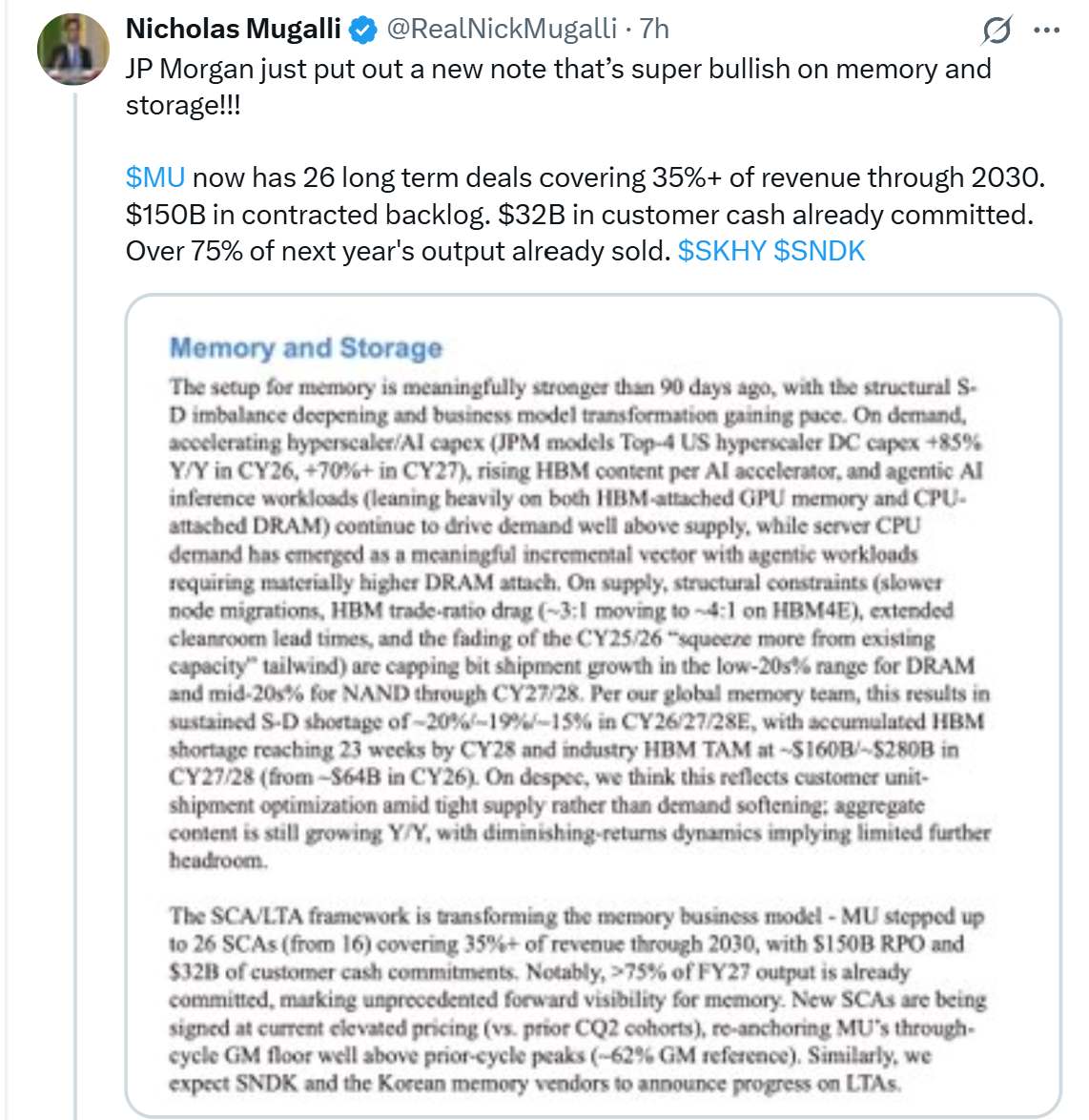
A recent report from JPMorgan remains bullish on the outlook for the memory and storage industry. Micron has currently signed 26 long-term supply agreements with customers, covering more than 35% of the company's projected revenue through 2030, with remaining performance obligations of approximately $150 billion.
The company also disclosed that over 75% of its 2027 capacity has already been committed by customers, with some agreements extending through 2031. Long-term contracts help enhance order visibility, but specific selling prices still depend on product type, purchase volume, and contract terms.
AI Demand Continues to Push Up Memory Procurement Costs
Market data citing JPMorgan noted that AI server buildout will continue to drive up demand for HBM and server DRAM, and tight memory market supply could persist until 2028.
If demand growth outpaces new capacity, HBM and server memory prices may continue to find support; if supply release outpaces demand growth, customers' bargaining power will strengthen, and manufacturers' profit margins may come under pressure.
Tesla is also adjusting the memory configurations of its AI chips. Musk previously disclosed that the LPDDR5 capacity for the AI5 chip was adjusted from the originally planned 144GB to 96GB, while the LPDDR6 capacity for the AI6 chip was adjusted from 216GB to 144GB.
What Does It Mean for MU Stock Price?
Elon Musk's comments have drawn further market attention to Micron's customer contracts and pricing levels, but they cannot be directly equated to new orders or earnings improvements. MU's subsequent performance will mainly depend on HBM shipments, memory average selling prices, capacity utilization rates, and gross margins.
If AI customers continue to expand procurement and Micron can maintain a high capacity booking rate, earnings expectations may find support.
If Samsung and SK Hynix expand supply, ChangXin Memory Technologies advances its 4F² DRAM technology, or customers begin to push down procurement prices, Micron's profit margins and stock price could come under pressure.
Therefore, investors should focus on the execution of Micron's long-term contracts, shipments and pricing of HBM products, as well as whether oversupply emerges in the traditional DRAM market.
Recommended Articles


