


Warren Buffett's Favorite Valuation Indicator Blew Past the Level He Warned Was "Playing With Fire." Here Are 3 Stocks Still Cheap Enough to Buy.
Key Points
Enterprise Products Partners benefits from the driving force behind the stock market boom.
The timing for buying JPMorgan Chase could be ideal with interest rates rising.
Pfizer's patent cliff is more than baked into its share price.
- 10 stocks we like better than Pfizer ›
What's the best valuation metric for the stock market? Warren Buffett weighed in with his answer years ago.
The legendary investor wrote in a 2001 Fortune article that the ratio of total market capitalization to gross national product (GNP), which is now typically replaced by gross domestic product (GDP), is "probably the best single measure of where valuations stand at any given moment." This ratio became so associated with him that it was nicknamed the "Buffett indicator."
Missed Nvidia in 2009? This Rare Signal Is Flashing Again. In 2009, a "Double Down" signal flashed for a little-known chipmaker called Nvidia. For the first time in years, that same "Total Conviction" signal is flashing for a company 1/100th the size of Nvidia. Continue »
Buffett also warned 25 years ago that when this ratio approaches 200% (as it did in late 1999 and early 2000), investors are "playing with fire." And that brings us to today, with the Buffett indicator at 235.8%, slightly below its record high set in September 2026.
The "Oracle of Omaha" hasn't held back from expressing his view that many stocks are priced unreasonably in the current market. However, that doesn't mean that all stocks are too hot to touch. Here are three stocks still cheap enough to buy.
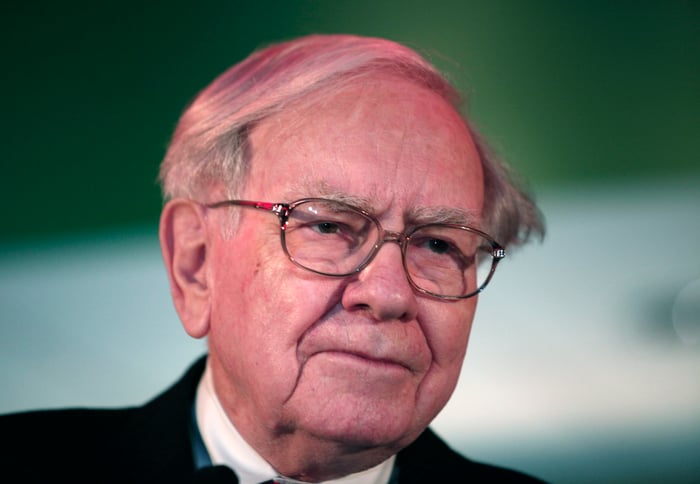
Warren Buffett. Image source: Getty Images.
1. Enterprise Products Partners LP
One reason the stock market is so expensive relative to historical levels is that valuations of artificial intelligence (AI) stocks have skyrocketed. Is it possible to find a stock that benefits from the AI boom yet is attractively priced? Yep. Check out Enterprise Products Partners LP (NYSE: EPD).
This limited partnership (LP) owns more than 50,000 miles of pipeline that transport hydrocarbons, including natural gas and natural gas liquids (NGLs). The demand for these fuels has risen because they're a great fit for powering AI data centers. Unsurprisingly, Enterprise Products Partners' earnings jumped 28% year over year in its latest quarter to a record high.
But the pipeline stock trades at a reasonable level. Enterprise's forward price-to-earnings ratio is 11.9. The LP's unit price is only 8.4 times trailing 12-month adjusted cash flow from operations (CFFO).
Even better, Enterprise Products Partners offers an especially juicy distribution yield of over 6%. The midstream leader has increased its distribution for 27 consecutive years.
2. JPMorgan Chase
JPMorgan Chase (NYSE: JPM) was once part of Buffett's Berkshire Hathaway (NYSE: BRKA) (NYSE: BRKB) portfolio. However, Buffett soured on bank stocks a few years ago and eventually fully exited his position in JPMorgan Chase in 2020.
I wouldn't be shocked if Buffett's successor, Greg Abel, reconsidered buying JPMorgan Chase in the not-too-distant future, though. The financial services giant trades at 13.5 times forward earnings, making its valuation much more attractive than most large-cap stocks.
Sure, JPMorgan Chase is more expensive than some of its peers. However, this premium is well deserved given the company's underlying business strength. JPMorgan has a fortress balance sheet and diversified cash flow.
The timing for buying this stock could be ideal. Interest rates are rising. When that happens, JPMorgan Chase's net investment income moves in tandem.
3. Pfizer
Pfizer (NYSE: PFE) looks especially cheap. The big pharma stock's forward earnings multiple is a low 9.7, roughly half the healthcare sector's average valuation.
Granted, Pfizer is cheap for a reason. The company faces a daunting patent cliff over the next couple of years, with blockbuster drugs including Eliquis, Ibrance, and Xtando losing patent exclusivity.
However, I think Pfizer's challenges are more than baked into its share price. Importantly, the company expects to achieve a high-single-digit compound annual revenue growth rate after the worst of its patent cliff is over in 2028.
Investors will get paid handsomely to wait for the resurgence, too. Pfizer's forward dividend yield tops 6.3%. Management remains firmly committed to maintaining the dividend at current levels despite the patent headwinds.
Should you buy stock in Pfizer right now?
Before you buy stock in Pfizer, consider this:
The Motley Fool Stock Advisor analyst team just identified what they believe are the 10 best stocks for investors to buy now… and Pfizer wasn’t one of them. The 10 stocks that made the cut could produce monster returns in the coming years.
Consider when Netflix made this list on December 17, 2004... if you invested $1,000 at the time of our recommendation, you’d have $364,023!* Or when Nvidia made this list on April 15, 2005... if you invested $1,000 at the time of our recommendation, you’d have $1,467,933!*
Now, it’s worth noting Stock Advisor’s total average return is 948% — a market-crushing outperformance compared to 214% for the S&P 500. Don't miss the latest top 10 list, available with Stock Advisor, and join an investing community built by individual investors for individual investors.
See the 10 stocks »
*Stock Advisor returns as of October 7, 2026.
JPMorgan Chase is an advertising partner of Motley Fool Money. Keith Speights has positions in Berkshire Hathaway, Enterprise Products Partners, and Pfizer. The Motley Fool has positions in and recommends Berkshire Hathaway, JPMorgan Chase, and Pfizer. The Motley Fool recommends Enterprise Products Partners. The Motley Fool has a disclosure policy.
Recommended Articles


