


Greg Abel Deployed $10 Billion Into Alphabet's Private Placement, Building a $38 Billion Stake That's Now Berkshire Hathaway's Third-Largest Holding. Is Alphabet Becoming Berkshire's New Apple?
Key Points
Berkshire Hathaway, now under the leadership of CEO Greg Abel, has kept adding to its large position in Alphabet, Google's parent company.
Alphabet lacks some attributes of traditional "Buffett investments" like Coca-Cola and American Express.
Abel's recognition of how Berkshire's subsidiaries are benefiting from AI may be increasing his confidence that Alphabet's AI capex will pay off.
- 10 stocks we like better than Alphabet ›
Back in June, Berkshire Hathaway (NYSE: BRKA) (NYSE: BRKB) upped the ante on its investment in Google parent Alphabet (NASDAQ: GOOG) (NASDAQ: GOOGL), purchasing an additional $10 billion worth of shares directly from the company. This private-placement purchase, coupled with additional open-market stock buys, increased the conglomerate's position in the tech giant by $17 billion to around $36.6 billion during the second quarter.
Today, it's the third-largest position in Berkshire Hathaway's stock portfolio, and the rapid growth of that stake may lead retail investors to wonder: Is the Omaha-based holding company, until recently run by Warren Buffett, aiming for a repeat of its extremely successful investment in Apple (NASDAQ: AAPL), or is the "angle" here something else completely?
Missed AI’s "Act 1"? Act 2 Could Be 15x Bigger. Most investors think they missed the AI boat because they didn't buy Nvidia in 2005. But according to our analysts, we’re only at the end of "Act 1"—the R&D phase. "Act 2" is the global rollout. Continue »
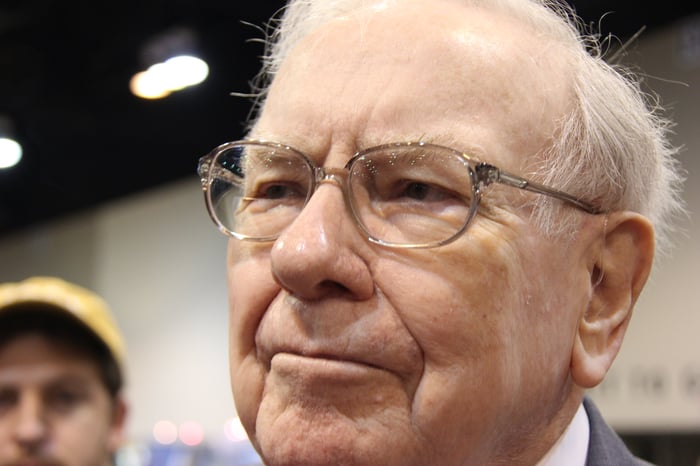
Image source: The Motley Fool
Berkshire, "Magnificent Seven" investing, and what makes Alphabet different
Given that both Apple and Alphabet are "Magnificent Seven" stocks, not to mention major AI stocks, it's not surprising that many onlookers are comparing Berkshire's new Alphabet investment to its 2010s investment in Apple. However, this investment isn't completely "Apple 2.0" for Berkshire.
For one thing, the way Berkshire accumulated its Alphabet position differs from how it built up its Apple position. Yes, like with Apple, Berkshire has built up much of its Alphabet stake through open-market purchases. However, Berkshire never made a direct equity investment in Apple.
In fact, its $10 billion private placement investment in Alphabet looks more similar to its past direct investments in well-known companies such as industrial conglomerate General Electric. Sure, unlike the GE deal and similar deals, it wasn't as if Berkshire purchased preferred stock from Alphabet, receiving warrants as an additional "sweetener" for its investment.
Still, Berkshire's purchase of both Class A and C common Alphabet shares did come at a discount to both stocks' then-trading prices. Also similar to past deals, in addition to obtaining capital, the issuer got Berkshire's "seal of approval." Alphabet may not be struggling financially like GE was when it sought capital from Berkshire, but with the market growing more concerned about its massive AI infrastructure spending, getting literal "buy-in" from Berkshire did help to bolster public sentiment toward Alphabet shares.
Differing approaches to tech
Beyond the mechanics of the transaction, Berkshire's big move into Alphabet arguably differs from its move into Apple in terms of intent. In July, the "Oracle of Omaha" himself clarified that while he "initiated" the investment, Abel was the "decider" for subsequent investment decisions.
And the two men may be approaching this investment differently. Buffett may have found Alphabet appealing in the same way he found Apple appealing, based on criteria like balance sheet strength, competitive moat, and valuation.
However, based on Abel's recent comments in a CNBC interview, his decisions to buy more of the stock may have been driven by how he's seen AI impact Berkshire's operating businesses. That understanding of how the tech is benefiting the conglomerate's subsidiaries is apparently bolstering his confidence that Alphabet's AI infrastructure investments will pay off in a big way.
In that light, we can consider Berkshire's Alphabet investment not just different from its Apple investment, but a significant departure from Buffett's longstanding "buy wonderful companies at fair prices" approach. So if you're considering an investment in Alphabet based in part on the premise that it is now a Buffett stock, keep in mind that Alphabet may not be one of them in the same way that Coca-Cola, American Express, or even Apple are.
Should you buy stock in Alphabet right now?
Before you buy stock in Alphabet, consider this:
The Motley Fool Stock Advisor analyst team just identified what they believe are the 10 best stocks for investors to buy now… and Alphabet wasn’t one of them. The 10 stocks that made the cut could produce monster returns in the coming years.
Consider when Netflix made this list on December 17, 2004... if you invested $1,000 at the time of our recommendation, you’d have $383,680!* Or when Nvidia made this list on April 15, 2005... if you invested $1,000 at the time of our recommendation, you’d have $1,382,954!*
Now, it’s worth noting Stock Advisor’s total average return is 937% — a market-crushing outperformance compared to 214% for the S&P 500. Don't miss the latest top 10 list, available with Stock Advisor, and join an investing community built by individual investors for individual investors.
See the 10 stocks »
*Stock Advisor returns as of September 27, 2026.
Thomas Niel has no position in any of the stocks mentioned. The Motley Fool has positions in and recommends Alphabet, Apple, Berkshire Hathaway, and GE Aerospace. The Motley Fool has a disclosure policy.
Recommended Articles


