


Meta Connect 2026 New Product Roundup: Muse Integrated Into AI Glasses, Can It Drive Meta Revenue Growth?
TradingKey - Meta (META) unveiled Ray-Ban Meta Audio, third-generation Ray-Ban Meta, and Meta VR Glasses at the Connect 2026 event held from September 23 to 24, and upgraded Meta Ray-Ban Display. The company also announced introducing its personal AI agent Muse into AI glasses, expanding its product scope from smartphones and social apps to wearable devices.
For investors, the key focus of this conference is whether Meta can expand revenue beyond advertising through hardware sales, Muse subscriptions, and digital content, while controlling Reality Labs losses and AI infrastructure spending.
What New Products Were Unveiled at Meta Connect?
Meta is integrating Muse into its AI glasses, allowing users to manage schedules and handle daily tasks via voice in the future. Muse itself can send emails, book services, fill out forms, and shop, requiring user confirmation before executing sensitive operations such as sending emails and making payments.

[Source: Meta Official Website]
Ray-Ban Meta Audio is Meta's first audio glasses, featuring no camera, a weight of 43 grams, and up to 12 hours of battery life on a single charge, with the charging case providing an additional 48 hours. Starting at $349, the product will ship on October 13.
The third-generation Ray-Ban Meta features a 12-megapixel camera, supports 3K video recording, offers up to 9 hours of battery life, and starts at $449. Meta also launched Adventurer and LISA co-branded models starting at $249, planning to offer over 100 glasses configurations across three brands—Ray-Ban, Oakley, and Meta—by the end of the year.
Meta Ray-Ban Display adds cycling and public transit navigation, as well as Hologram digital avatar calls. Navigation features will launch first in the U.S. and Canada in late September, while Hologram is planned for early testing on WhatsApp in the U.S. this fall. The product has entered Canada and the U.K., and will go on sale in France, Italy, and Germany on October 13.
What Are the Main Features of Meta VR Glasses?
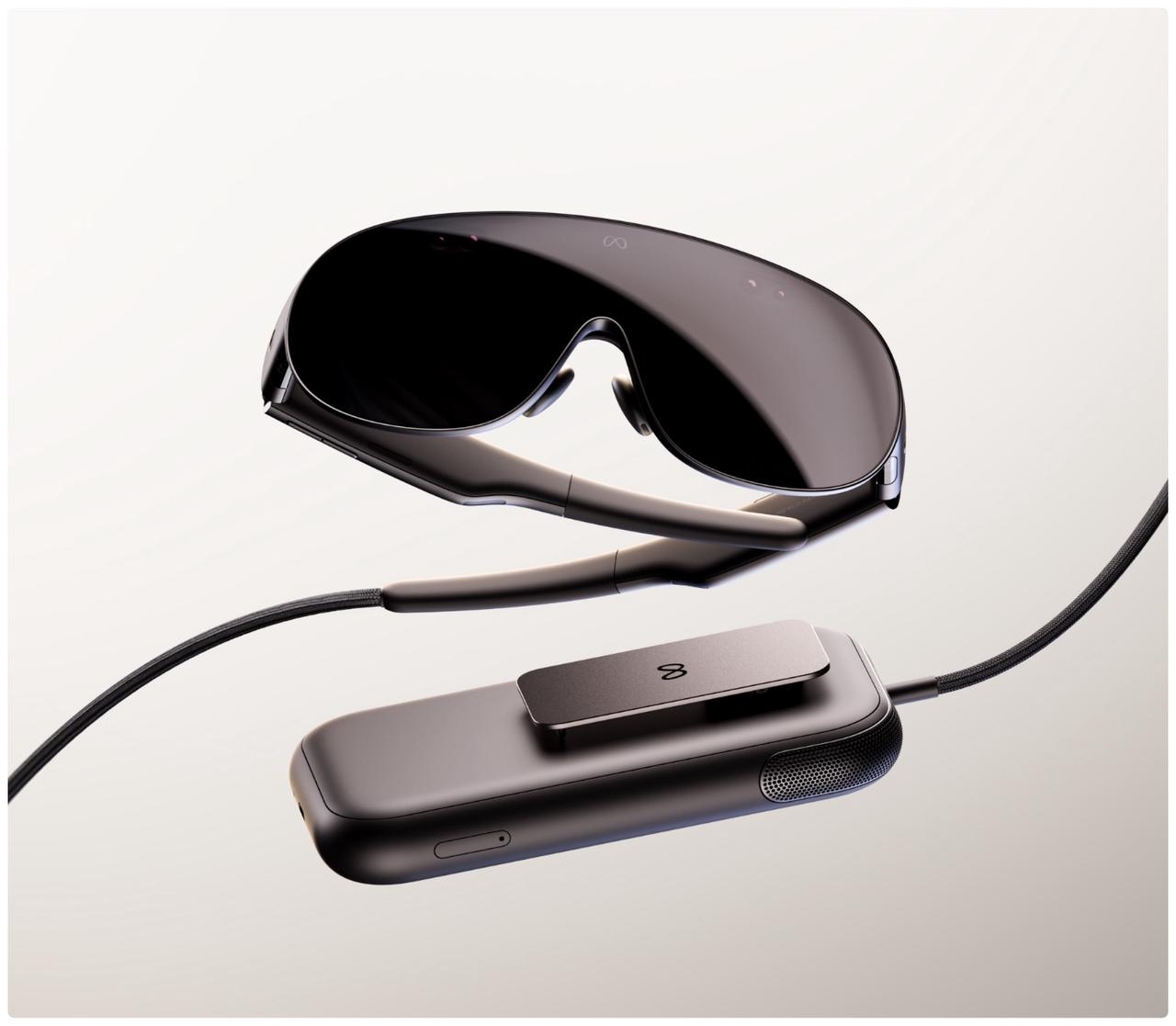
[Meta VR Glasses, Source: Meta Official Website]
The Meta VR Glasses weigh approximately 100 grams. The device adopts a split design that separates the glasses from an external computing module. The glasses feature Micro-OLED panels and a 5K Infinite Display, supporting eye tracking, hand gesture controls, Dolby Vision, and Dolby Atmos.
The device covers movies and TV, live sports, productivity, and gaming. Users can create a multi-screen private workspace and turn any flat surface into a virtual keyboard and trackpad. Over 75 games will support hand gesture controls at launch, with hundreds more streamable via Xbox Cloud Gaming.
Meta has partnered with organizations including ESPN, MLB, NBC Sports, TNT Sports, and the UFC, with plans to deliver over 100 immersive U.S. sporting events annually. The Meta VR Glasses are scheduled to launch in spring 2027, priced at $1,299.99.
Meta Connect 2026 further clarified the company's product roadmap: Muse handles task execution, AI glasses serve as the portal for daily interactions, and VR devices cover movies and TV, sports, productivity, and gaming.
Can Integrating Muse into AI Glasses Drive Meta's Revenue Growth?
Integrating Muse into AI glasses will add a hands-free access entry, which is expected to increase usage frequency and enhance the product appeal of Meta's smart glasses. Muse currently offers a free version, a $20-a-month Power plan, and a $100-a-month Maximum plan. Official subscription channels include the Muse website and mobile app, while whether a separate fee will be required on the glasses side has not yet been announced.
In the short term, this feature is unlikely to significantly alter Meta's revenue structure. The company has not disclosed Muse's active users, paying users, or subscription revenue, nor has it separately released AI glasses sales figures and gross margins. In the second quarter of 2026, Meta's revenue was $60.801 billion, of which advertising revenue was $59.363 billion, accounting for approximately 97.6%.
Medium-term revenue potential depends on whether Muse can increase glasses sales, drive user subscriptions, and expand shopping and payment services. PayPal already supports Muse in completing shopping and checkout, while Shopify announced integration with Muse and Shop Pay. Amazon, on the other hand, restricts Muse from shopping on behalf of users on its platform; the degree of openness of third-party platforms will impact transaction coverage.
Integrating Muse into AI glasses is expected to boost subscription revenue and promote hardware sales, but its actual contribution remains to be verified. Monthly active users, paying conversion rates, AI glasses sales volume, hardware gross margins, and merchant coverage will serve as the main metrics to judge whether it can form a new source of growth.
What Are Meta Investors Watching Next?
Meta expects 2026 capital expenditures to be between $130 billion and $145 billion, including principal payments on finance leases. Second-quarter capital expenditures reached $31.08 billion, while free cash flow fell to $784 million, showing that data center and AI infrastructure buildouts have significantly increased cash outflows.
Reality Labs recorded an operating loss of approximately $4.62 billion in the second quarter. Whether sales of AI glasses, paid subscribers for Muse, and Meta VR Glasses pre-order volume can drive revenue growth in the segment and narrow losses will be key focal points in future financial reports.
Meta's core revenue still comes from advertising. If Muse, AI glasses, and VR devices can increase revenue from subscriptions, hardware, and digital content, it will reduce the company's reliance on its advertising business; however, if user retention and sales fall below expectations, high capital expenditures and Reality Labs losses will continue to constrain improvements in profit and cash flow.
Recommended Articles


