


These 2 Companies Are Quietly Powering the AI Boom. No, It's Not Nvidia or Palantir.
Key Points
AI's next bottleneck could be electricity.
Constellation Energy owns valuable power infrastructure.
Bloom Energy is tackling the electricity problem in a very different way.
- 10 stocks we like better than Constellation Energy ›
For the past few years, investors have been searching for the biggest winners from the artificial intelligence (AI) revolution.
Nvidia has been the obvious answer. Palantir Technologies has emerged as another favorite. Microsoft, Alphabet, Amazon, and Meta Platforms are spending hundreds of billions of dollars building the infrastructure needed to make AI more powerful and more widely available.
Missed AI’s "Act 1"? Act 2 Could Be 15x Bigger. Most investors think they missed the AI boat because they didn't buy Nvidia in 2005. But according to our analysts, we’re only at the end of "Act 1"—the R&D phase. "Act 2" is the global rollout. Continue »
But there is a problem hiding underneath all that spending. AI needs electricity. A lot of it. And getting enough power to the next generation of data centers could become one of the biggest challenges of the AI boom.
That creates an interesting opportunity for investors. Two companies are attacking this problem from very different directions: Constellation Energy (NASDAQ: CEG) and Bloom Energy (NYSE: BE). One owns the power-generating infrastructure. The other sells equipment that allows customers to generate power on-site.
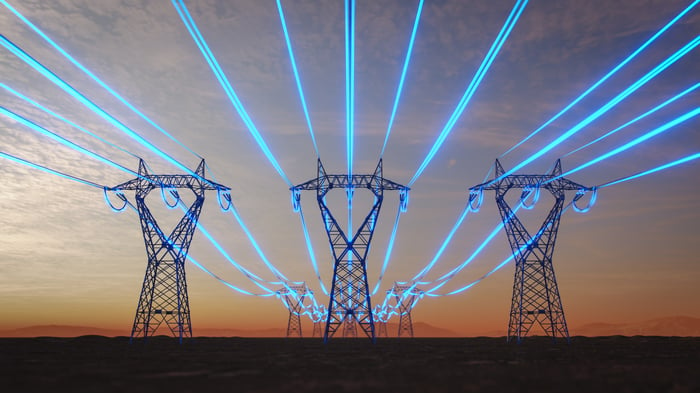
Image source: Getty Images.
AI's next bottleneck is not tech-related, but something else
Investors have spent years worrying about whether there will be enough AI chips or memory. Now, another constraint is becoming increasingly apparent: whether there will be enough electricity to run them.
AI data centers are enormous power consumers. As companies build larger facilities and deploy increasingly powerful computing systems, their electricity requirements can reach hundreds of megawatts.
The problem isn't simply generating more electricity. It's getting that electricity to the right place at the right time. Building new power plants and transmission infrastructure can take years. Meanwhile, demand from data centers is arriving now. This suggests that the AI infrastructure race could increasingly become a race to secure power.
And this is where Constellation Energy and Bloom Energy become interesting.
Constellation Energy: Owns the power infrastructures
Constellation Energy is the more traditional of the two businesses.
It owns and operates a massive portfolio of electricity-generating assets, with nuclear power at its core. Constellation Energy has about 55 gigawatts of generating capacity across nuclear, natural gas, geothermal, hydro, wind, and solar. It is also the largest nuclear energy company in the U.S.
Its investment proposition is relatively straightforward. If electricity becomes more valuable, owning large-scale generation assets should become more valuable, too.
That doesn't mean Constellation Energy has spare electricity sitting around waiting for AI data centers. Much of its existing generation is already committed through contracts or sold into power markets. The opportunity is that a tighter power market can create new commercial opportunities.
For instance, Constellation Energy is already signing long-term agreements with customers seeking reliable generation. In its latest quarter, it announced another 920 megawatts of long-term power purchase agreements for clean, reliable generation, with an average duration of 15 to 20 years.
In other words, Constellation Energy is betting that owning scarce, reliable generation will become increasingly valuable as electricity demand grows. That means whether it signs long-term agreements with AI data centers or not, electricity demand is growing and, hence, becoming more valuable.
Bloom Energy: Bring the power to the customers
Unlike Constellation Energy, Bloom Energy takes a completely different approach.
It doesn't primarily sell electricity. It sells solid-oxide fuel cell systems -- electrochemical conversion devices -- that allow customers to generate electricity on-site.
That distinction matters. Imagine an AI data center that has secured land, buildings, and billions of dollars of computing equipment, but the local grid cannot provide enough power quickly enough. Waiting for a new transmission connection could delay the project.
Bloom Energy's proposition is simple: Generate some of that electricity on-site instead. It doesn't replace the grid. Rather, it can provide another source of power when grid capacity, transmission, or connection timelines become constraints.
And the business is growing rapidly. Bloom Energy generated $1.1 billion of revenue in the second quarter of 2026, up 166% from a year earlier. That is remarkable growth for a company that was once a niche fuel-cell story. Better still, the company says major U.S. hyperscalers and more than a dozen AI labs, neoclouds, and data-center operators have validated its power systems for AI applications.
In short, the sky seems to be the limit for the company.
What does it mean for investors?
It's always exciting to look for the next AI company that could deliver outstanding investment returns. But sometimes the best ideas could be right under our noses.
In this case, both Constellation Energy and Bloom Energy are well-positioned to benefit from the AI infrastructure race. After all, what's the point of having all the latest chips and technology if we cannot get enough electricity to power them?
Interestingly, the biggest bottleneck in the AI industry may not be the tech, but the electricity.
Should you buy stock in Constellation Energy right now?
Before you buy stock in Constellation Energy, consider this:
The Motley Fool Stock Advisor analyst team just identified what they believe are the 10 best stocks for investors to buy now… and Constellation Energy wasn’t one of them. The 10 stocks that made the cut could produce monster returns in the coming years.
Consider when Netflix made this list on December 17, 2004... if you invested $1,000 at the time of our recommendation, you’d have $395,625!* Or when Nvidia made this list on April 15, 2005... if you invested $1,000 at the time of our recommendation, you’d have $1,397,147!*
Now, it’s worth noting Stock Advisor’s total average return is 951% — a market-crushing outperformance compared to 214% for the S&P 500. Don't miss the latest top 10 list, available with Stock Advisor, and join an investing community built by individual investors for individual investors.
See the 10 stocks »
*Stock Advisor returns as of September 22, 2026.
Lawrence Nga has no position in any of the stocks mentioned. The Motley Fool has positions in and recommends Alphabet, Amazon, Bloom Energy, Constellation Energy, Meta Platforms, Microsoft, Nvidia, and Palantir Technologies. The Motley Fool has a disclosure policy.
Recommended Articles


