


Bulls Rout. Bitcoin Slumps Over 16% in a Week to Hit Bottom, Cryptocurrency Market Faces "Serial Liquidations"
TradingKey - During the Asian trading session on June 5, Bitcoin extended its recent slump, falling more than 3.5% within 24 hours. It briefly broke below $62,000, hitting a low of $61,100, bringing its cumulative decline over the past three weeks to approximately 26% since the recent high of $82,500 on May 6. As of press time, Bitcoin was trading at $62,688, with a weekly decline exceeding 16%, on track for its largest weekly drop since November 2022.
The sell-off has triggered massive forced liquidations. Since the start of the week, nearly $4 billion in bullish bets on crypto trades have been wiped out, with Bitcoin bearing the brunt of the losses. Over the past 24 hours, cryptocurrency exchanges recorded $594 million in long liquidations, with over 250,000 investors forced to close their positions.
Escalating market panic has spread to crypto-related U.S. equities. At the close of overnight trading, for the sessions of June 2 and 3 (ET), Coinbase (COIN.US) fell by a combined total of over 10%, while MicroStrategy (MSTR.US) plunged by more than 15% across the two days.
Meanwhile, capital is migrating en masse toward AI-concept stocks and major U.S. IPOs, further siphoning off risk appetite from the cryptocurrency market.
Citi analysts pointed out that the divergence between Bitcoin and record-setting tech stocks is deepening. The latest CFTC data indicates that institutions are systematically reducing their exposure to crypto assets, with hedge funds having slashed their holdings in U.S. spot Bitcoin ETFs by 39% in the first quarter. Market sentiment is expected to remain sluggish in the near term.
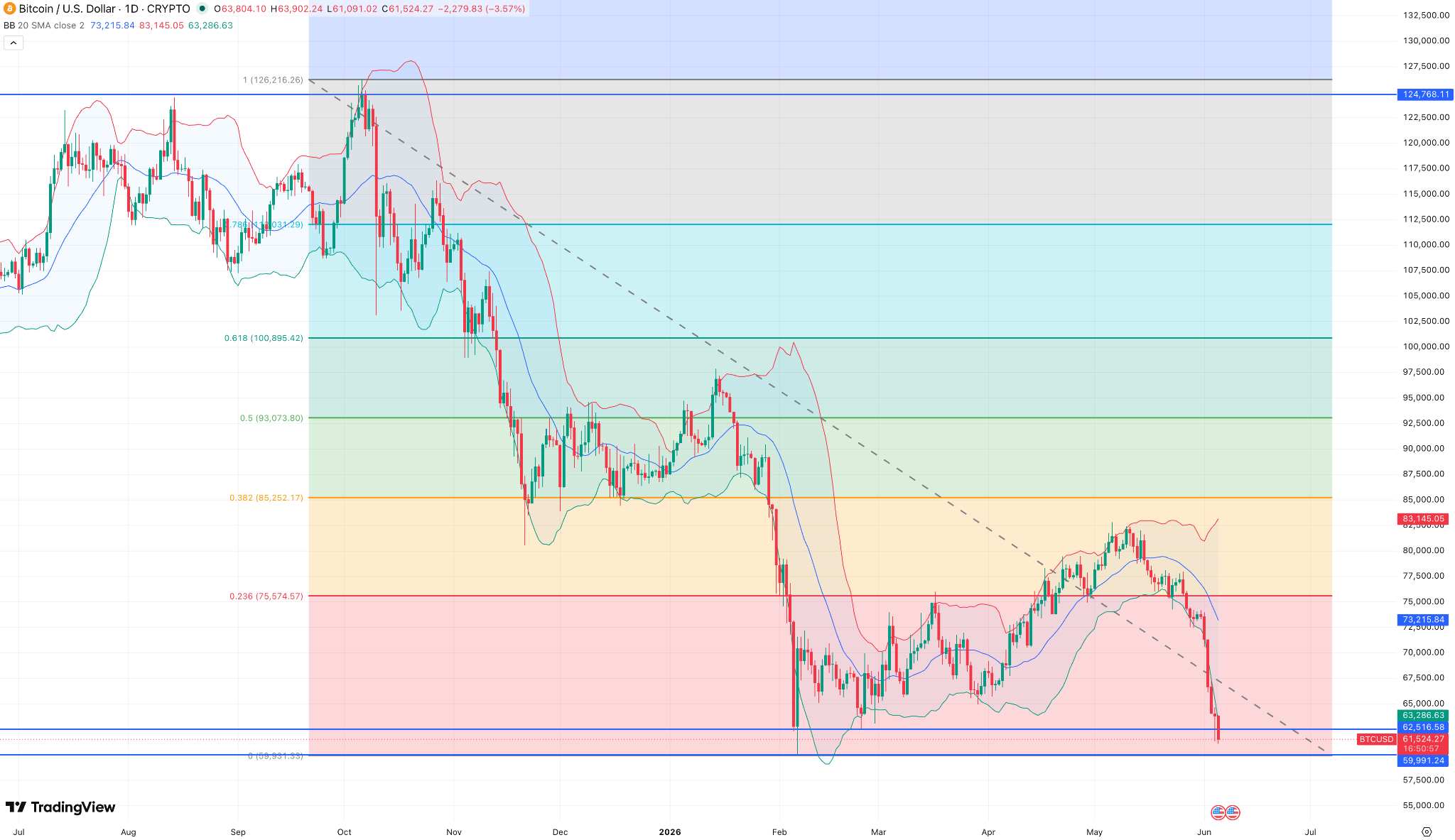
From a technical standpoint, the $62,000 to $61,500 range serves as a critical support zone. If it is breached effectively, the next target will be the $60,000 psychological level.
With the non-farm payrolls report on the horizon, a higher-than-expected rise in the unemployment rate could weaken the dollar and create room for a short-term rebound. Conversely, if employment data shows resilience, it will reinforce the pricing logic of front-loaded interest rate risks, and the pressure test for the crypto market will continue.
Recommended Articles


