




Nvidia faces its biggest earnings test yet — why Silicon Valley billionaires want Jensen Huang back

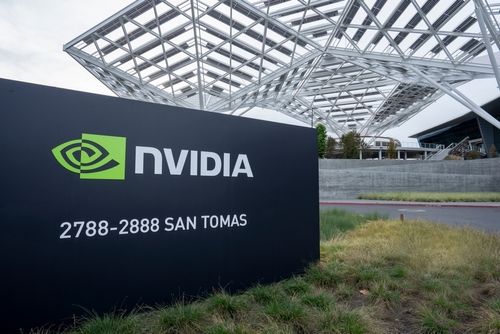
Nvidia reports earnings on November 17 under circumstances that would have been almost impossible to imagine a week ago. Jensen Huang is gone after 33 years as CEO, Colette Kress is running the company on an interim basis and some of Silicon Valley’s biggest names are already campaigning to bring its founder back.
More than 178,000 people have backed calls for Huang’s return, with Elon Musk, Epic Games CEO Tim Sweeney and other technology figures supporting the effort. Washington is taking a more cautious view, while Nvidia’s board continues its search for a permanent successor and has shown no indication that Huang is about to be reinstated.
The market has already delivered its own verdict on the uncertainty. Nvidia initially plunged as much as 14% following Huang’s resignation before retail traders rushed into the sell-off, helping the stock recover much of the early loss. Professional investors have been more selective, with attention shifting toward other AI beneficiaries as portfolio managers reassess how much exposure they want concentrated in Nvidia ahead of earnings.
Read How to Buy NVIDIA Stock in Australia →
Tuesday evening’s report (Wednesday morning for Aussies) therefore brings together three questions that normally would not appear in the same earnings call: can Nvidia still deliver extraordinary AI growth, can it operate effectively without Huang and are investors still prepared to make the stock the centre of the AI trade?
Nvidia has to show that the business is bigger than Huang
Huang’s influence reached far beyond the normal responsibilities of a chief executive. He helped set engineering priorities, shaped the product roadmap, maintained relationships with major cloud companies and positioned Nvidia at the centre of the AI infrastructure boom long before generative AI became a mainstream investment theme.
Nvidia nevertheless enters the transition with formidable advantages already built into the company. CUDA remains deeply embedded across AI development, hyperscalers have committed enormous amounts of capital to Nvidia-based infrastructure and the company has established positions across GPUs, networking, software and accelerated computing.
Earnings can help investors judge how much of that advantage is institutional rather than dependent on Huang personally. Strong demand, stable margins and confident guidance would make the leadership transition easier to absorb, while signs of hesitation from customers or management would give investors another reason to question the premium still attached to the shares.
Retail traders are buying the dip at a record pace
The reaction to Huang’s departure exposed a striking divide in how investors are treating Nvidia. Individual traders bought about $111 million of Nvidia shares during the first 30 minutes of Thursday trading, the largest opening retail inflow recorded for the stock and roughly 40 times the usual pace.
Buy orders on one major retail platform approached 395,000 by midday, almost five times the number of sell orders. Nvidia still finished the session down more than 4%, but the buying helped turn what had been a near-14% opening collapse into a much smaller loss.
Retail investors have repeatedly been rewarded for buying Nvidia weakness throughout the AI boom, and many appear to be treating the leadership shock as another opportunity rather than evidence that the underlying growth story has changed.
The scale of the buying also raises the stakes for earnings. Retail traders have effectively made a large bet that Nvidia’s fundamentals can overpower the governance crisis, creating the potential for an even sharper reaction if Q3 numbers either confirm or challenge that view.
Professional capital is becoming more selective about AI
The wider market response has looked different from the retail rush into Nvidia itself. Nvidia is down roughly 30% from its October peak, while portfolio managers have been reassessing concentrated AI exposure and asking which companies still offer the best combination of growth, valuation and execution.
Capital has not simply abandoned AI. AMD rose almost 6% during the initial Nvidia sell-off, while CoreWeave has rebounded sharply after results showed strong cloud demand and a huge backlog. Broadcom has also attracted attention as investors look toward custom AI silicon and networking rather than relying entirely on Nvidia’s GPU dominance.
The rotation suggests investors may be separating their view of artificial intelligence from their view of Nvidia. Strong AI spending can still benefit semiconductor competitors, cloud infrastructure providers and companies supplying networking or memory even while Nvidia deals with succession uncertainty.
The results could reverse that rotation if Nvidia delivers another strong quarter and reassures investors on leadership and products. A weaker report could accelerate it, leaving the AI trade alive but with more capital moving toward companies carrying less company-specific risk.
The numbers still have to justify extraordinary expectations
Nvidia reported $96.2 billion of revenue in the previous quarter, including $89 billion from Data Center, and guided toward approximately $108 billion for the third quarter. Expectations have since moved to around $109 billion, leaving little room for an ordinary result.
Investors are increasingly looking beyond headline revenue because hyperscalers are spending hundreds of billions of dollars on AI infrastructure and the market wants evidence that those budgets remain sustainable. Microsoft, Amazon, Meta, Alphabet, CoreWeave and other large buyers need Nvidia hardware, but concerns around financing costs, power availability and returns on data-centre investment have become much harder to ignore.
Strong Data Center growth and another robust outlook would support the argument that recent Nvidia weakness reflects leadership and valuation concerns rather than deteriorating demand. Softer guidance would be more damaging because it would arrive just as investors are already reconsidering the amount of AI risk in their portfolios.
Nvidia’s next product cycle cannot afford disruption
Vera Rubin gives investors a practical way to judge whether Nvidia’s engineering machine continues operating normally without Huang. The platform is expected to follow Blackwell and needs to maintain Nvidia’s pattern of pushing customers toward increasingly powerful and expensive generations of AI hardware.
Confirmation that Rubin remains on schedule would support the view that Nvidia’s product execution is embedded across its engineering organisation. Any delays or changes to customer expectations would attract greater scrutiny than usual because the leadership transition has already raised questions about strategic continuity.
The permanent CEO will inherit a dominant existing business, but Nvidia’s valuation assumes the company can keep extending that lead rather than merely defending it. Maintaining the pace of innovation is therefore likely to matter more over time than preserving every aspect of Huang’s management style.
Silicon Valley’s campaign adds another layer to earnings
The effort to bring Huang back reflects how strongly some technology leaders associate him with Nvidia’s role in the wider US AI ecosystem. Supporters argue that losing a technically focused founder during an intense global race for computing leadership introduces unnecessary execution risk.
Washington has placed greater emphasis on governance, export controls and national-security concerns, creating a different set of pressures around the succession process. Nvidia’s board must therefore balance the commercial argument for continuity against the governance issues that led to Huang’s departure.
Earnings will not resolve that debate, but strong operating results could reduce its immediate importance to the share price. Investors tend to tolerate corporate uncertainty much more easily when revenue, margins and guidance keep exceeding expectations.
NAS100 traders need to watch where the AI money goes
Nvidia carries enough weight to influence NAS100 directly, but its earnings also affect expectations across the entire AI spending chain. Strong demand can support Broadcom, AMD, Micron and cloud companies while reassuring Microsoft, Amazon and Meta investors that enormous infrastructure budgets still have economic justification.
A disappointing report could produce the opposite reaction, particularly after portfolio managers have already started examining how much AI exposure sits inside supposedly diversified holdings. Nvidia’s problems could then move from a company-specific leadership issue into a broader reassessment of semiconductor and technology valuations.
NAS100 therefore offers traders a way to express a broader view on the earnings reaction. Nvidia provides concentrated exposure to its results and succession drama, while NAS100 captures the possibility that the report changes sentiment across AI and mega-cap technology more generally.
What traders need to hear from Nvidia
Revenue and guidance: Strong headline numbers need to be accompanied by an outlook that shows demand remains robust.
Data-centre growth: Continued expansion would confirm that hyperscaler spending remains intact.
Gross margins: Stable profitability would help show that new product ramps are not diluting returns.
Vera Rubin: Confirmation that development remains on schedule would reduce execution concerns.
Customer commitments: Investors need reassurance that leadership turmoil has not affected major orders or relationships.
Succession: Any clarity around the permanent CEO search could influence how much leadership risk remains priced into the shares.
China: Export restrictions remain an important constraint on Nvidia’s long-term addressable market.
Earnings could decide who was right to buy the dip
Retail traders have already made their position unusually clear by buying aggressively into Nvidia’s leadership shock, while larger investors are taking a more selective approach to AI exposure.
Strong earnings could reward that dip-buying and draw capital back toward Nvidia, particularly if management reassures investors on Rubin, demand and the succession process. Weak guidance would create a much tougher setup because traders would then be dealing with slowing expectations at the same time the company searches for a leader capable of replacing one of technology’s most influential founders.
The result will also show if Nvidia can regain its position as the market’s preferred AI trade or if the current rotation toward other semiconductor and infrastructure companies has further to run.
Trading Nvidia and NAS100 with Mitrade
Eligible Australian clients can use Mitrade CFDs to trade both the company-specific reaction in Nvidia and the broader technology response through NAS100.
Nvidia offers more concentrated exposure to earnings, product guidance and succession risk, while NAS100 provides broader exposure if traders expect the results to move semiconductor, cloud and mega-cap technology stocks together. Traders can take a long position if they expect prices to rise or a short position if they expect further weakness.
Stop-loss and take-profit orders can help define exit levels, while pending orders allow positions to open when selected prices are reached. Earnings and leadership announcements can cause sharp price gaps, making leverage and position sizing particularly important.
Mitrade is regulated in Australia by ASIC. Share and index CFDs are leveraged products, so both potential gains and losses can be magnified.
Start trading in three steps
You might be interested in…
1. Why are technology leaders calling for Jensen Huang to return?
Supporters argue that Huang’s influence extended across Nvidia’s technology strategy, customers, suppliers and culture, making him unusually difficult to replace during a critical period for AI development.
2. Can Nvidia continue growing without Huang?
Nvidia retains major competitive advantages through CUDA, its hardware portfolio, engineering teams and customer relationships. The larger uncertainty is whether new leadership can maintain the same pace of innovation and strategic expansion over time.
3. Why could Nvidia earnings move NAS100?
Nvidia carries substantial index weight and also acts as a read on AI spending across cloud providers, semiconductor companies and infrastructure suppliers. A major change in Nvidia’s outlook can therefore affect sentiment across several NAS100 constituents.
Disclaimer: The content presented above, whether from a third party or not, is considered as general advice only. CFD trading involves significant risk of loss. Past performance does not guarantee future results. This article serves informational purposes only and does not constitute financial advice. Consider your risk tolerance before trading.


