




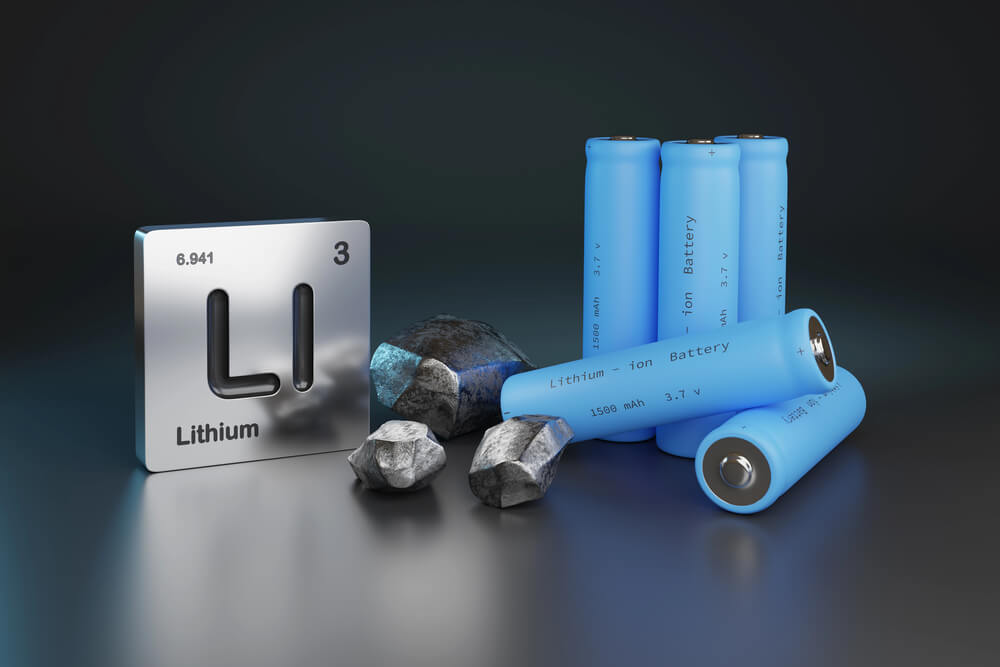
Lithium is one of the world’s most-traded commodities that have surged in demand as the global energy sector has been growing in recent years. With lithium being a key raw material for rechargeable batteries used in electric vehicles (EVs), energy grids, consumer electronics, smartphones, and other products, the demand for battery storage from Australian lithium companies is surging.
As such, many Australian investors are paying attention to ASX lithium stocks, betting on the companies’ potential to scale as demand for batteries and electronic vehicles increase. This guide looks at the top six ASX-listed companies operating in the lithium market, including what they do, their outlook, and factors that could influence their ASX lithium share prices in 2027.
What Are Lithium Stocks?
A lithium stock is a share of a publicly traded company that confers partial ownership on investors. These companies are exposed to the lithium industry and listed on stock exchanges like the Australian Securities Exchange (ASX).
Since you can't buy physical lithium and sell for profits, investing in a lithium stock means you're buying a piece of the business connected to the metal.
Types of Lithium Stocks
The lithium sector has different players across the supply chain, meaning companies do different things. The major players include:
Lithium miners: These are companies involved in the extraction of raw lithium from their natural sources such as hard rocks and salt water brines. An example is spodumene in Australia.
Lithium processors: These companies refine raw lithium from miners into chemicals for batteries such as lithium hydroxide and lithium carbonate.
Battery and EV manufacturers: Companies that use processed lithium raw materials to build lithium-ion batteries for EVs like BYD and Tesla.
Lithium ETFs: These are lithium-focused companies with their shares in Exchange-traded funds (ETFs), which hold multiple lithium stocks in an investment basket. A popular example is the Global X Lithium & Battery Tech ETF (LIT).
How to Invest in Lithium Stocks in Australia
Australian investors who want to gain exposure to lithium companies on the ASX can do do so through the following ways:
Buy Lithium Shares Directly
This is one of the easiest ways to buy ASX lithium stocks as an Australian. Typically, you need an account with a stockbroker that can access the ASX.
Using this brokerage platform, you can search for a Lithium-focused company using its ticker, check its share price, and buy the asset. This makes you a direct shareholder, meaning you can potentially profit when the stock price increases. You may also qualify for dividends, depending on the company.
However, before completing the purchase, understand the company's core details such as financial reports, valuation and production stage to be sure before investing.
Invest in Lithium ETFs
Another viable way to gain exposure to Lithium in Australia is through ETFs. This option is best suited to investors who prefer broader exposure to multiple ASX lithium stocks at once. For instance, an ETF can hold different companies across lithium mining, processing, or battery production.
That means rather then concentrating all your investment in one stock, you can spread your risk across multiple assets for better portfolio balance.
Trade Lithium Share CFDs
Investors or active traders who aren't interested in holding actual lithium shares in their portfolios can trade their price movements using commodity CFDs (contracts for difference).
This derivative trading model allows you to trade when the market prices are up or down. That way, you can build flexibility into your trading strategy and not only focus on buying individual stocks.
How to Trade ASX Lithium Stocks and ETFs on Mitrade
Mitrade is one of Australia’s most reputable CFD trading platforms offering access to ASX lithium stocks. The ASIC-regulated brokerage supports diverse markets to choose from and offers a beginner-friendly platform with a demo trading account for practicing.
Open an account: Visit the Mitrade website and register a free account.
Complete verification: Provide the information and identity documents required to activate a live account.
Review the trading conditions: Search for lithium stocks and check the quoted prices, spread, leverage, margin requirements and overnight financing terms.
Practise if needed: Use the Mitrade demo trading account to learn how the platform works before committing real funds.
Plan your trade: Consider your entry price, position size, risk management strategy, and exit conditions and then place an order.
“Trade ASX Stocks with an ASIC-regulated broker. Fast AUD funding via PayID. ”
6 ASX Lithium Stocks to Track in 2027
1. PLS Group (ASX: PLS)
Industry focus: Established lithium production and expansion
PLS Group is one of Australia's established lithium producers. Formerly known as Pilbara Minerals, the company operates the Pilgangoora lithium operation in Western Australia and is also advancing its Colina project in Brazil.
Its Pilgangoora operation produces spodumene concentrate, which is sold into the lithium supply chain for further processing. This gives PLS direct exposure to changes in spodumene prices and demand from battery material manufacturers.
The company's FY2026 results highlighted the scale of its operations. Production increased 17% to 879,500 tonnes of spodumene concentrate, while sales rose 17% to 891,600 tonnes. PLS also reported a cash balance of A$2.29 billion at the end of the financial year.
With growth plans, including the P2000 expansion at Pilgangoora and development work on Colina, alongside the restart of previously idled processing capacity, PLS has a promising outlook.
2. Mineral Resources (ASX: MIN)
Industry focus: Diversified mining and lithium production
Mineral Resources is a diversified mining and mining services group with exposure to lithium and iron ore. Its lithium interests include Wodgina, Mt Marion and Bald Hill in Western Australia.
This diversified business model makes Mineral Resources different from a pure-play lithium producer. Its earnings are influenced not only by lithium prices and production but also by iron ore operations, mining services and other business activities.
Wodgina is operated through a joint venture with Albemarle, while Mt Marion also has joint-venture ownership. These arrangements mean investors need to distinguish between the total production of a project and the share attributable to Mineral Resources.
3. IGO Limited (ASX: IGO)
Industry focus: Lithium joint-venture exposure and battery materials
IGO Limited provides lithium exposure through its interest in the Greenbushes mine in Western Australia, one of the world's significant hard-rock lithium operations.
IGO has a 24.99% effective interest in Greenbushes through its joint venture with Tianqi Lithium. The operation produces spodumene concentrate, which is supplied to the global lithium processing industry.
The company is not just a conventional lithium miner. Its wider business and investment interests mean its financial results should be assessed across its different assets and activities. The performance of Greenbushes is nevertheless important when evaluating its exposure to battery materials.
The joint-venture structure also means that investors should not attribute all of Greenbushes' production or earnings to IGO.
4. Liontown Limited (ASX: LTR)
Industry focus: Kathleen Valley production and ramp-up
Liontown Limited is a lithium producer operating the Kathleen Valley project in Western Australia's Northern Goldfields. The company was previously known as Liontown Resources and is now listed under the name Liontown Limited.
Kathleen Valley is a hard-rock lithium operation designed to produce spodumene concentrate for the global battery materials market. Its development and production ramp-up have made it an important company for investors following Australia's lithium sector.
Liontown's production performance, operating efficiency and ability to manage costs are important considerations. Mining operations can take time to reach stable production, and the financial results during a ramp-up period may differ from those of a fully established operation.
The company also needs to manage capital expenditure and maintain reliable relationships with customers and other project partners.
5. Elevra Lithium (ASX: ELV)
Industry focus: North American lithium production and project development
Elevra Lithium is a lithium company with operations and development interests in North America. It was formed through the combination of Sayona Mining and Piedmont Lithium, bringing together assets in Canada and the United States.
Its portfolio includes North American Lithium (NAL) in Quebec, alongside the Moblan project in Quebec and Carolina Lithium in the United States. This gives the company exposure to both existing production and longer-term project development.
NAL is crucial to its operating profile. Its production performance and ability to supply customers can influence revenue, operating costs and cash flow. Meanwhile, development projects offer potential growth but require further investment, approvals and execution.
Nonetheless, Elevra's North American focus also places it within a market where governments and manufacturers are seeking to strengthen regional battery supply chains.
6. Core Lithium (ASX: CXO)
Industry focus: Finniss mine restart and production recovery
Core Lithium is an Australian lithium company best known for its Finniss project, located near Darwin in the Northern Territory.
Finniss is a hard-rock lithium project that produces spodumene concentrate. The operation was placed into care and maintenance during a period of weaker lithium prices, highlighting how quickly changing commodity conditions can affect mining economics.
Core Lithium has since moved towards restarting the operation. Its September 2026 announcement of first concentrate production marked an important step in the restart process, with the company targeting its first shipment in the December 2026 quarter.
A successful restart could allow Core Lithium to benefit from improved market conditions. However, restarting a mine involves operational and financial challenges, and initial production does not necessarily mean the operation has reached sustainable commercial output.
What Are the Risks of Investing in Lithium Stocks?
Lithium stocks are in high demand by the battery materials market, but their share prices can be impacted by the following:
Volatile commodity prices: Lithium, copper, and other commodities can experience price swings that could make their values or investors’ projections fall. Low prices could also impact companies’ revenues and investors’ dividends.
Oversupply of raw materials: As lithium companies open new mines and expand their capacities, oversupply could cause a fall in lithium prices.
Concentration risks: Investing in several lithium companies does not necessarily provide broad diversification if they all depend on the same commodity price cycle.
Operational risks: Equipment failures, labour shortages, processing problems and unexpected geological conditions can affect production and operating costs.
Regulatory changes: Mining projects require approvals and must meet environmental and community obligations. Changes in regulations or disputes over land and water use can affect project timelines.
Final Thoughts
ASX lithium stocks offer Australian investors a unique asset class prominent in the battery materials and EV space. PLS Group, Mineral Resources, IGO and Liontown offer exposure to established mining operations, while Elevra combines production with development projects. Core Lithium is working through a mine restart, and other competitors offer exposure to projects at different stages of development.
If you want to invest in lithium stocks in Australia, You can gain exposure by purchasing shares directly, using ETFs or trading CFDs on Mitrade. However, before investing, compare production costs, financial strength, project progress, customer agreements and company valuations to ensure a lithium stock fits your investment strategy.

 Enjoy simple and fast trading Flexible leverage options available Follow real-time trading strategies Demo account with $50,000 virtual funds


You might be interested in…
1. What are the best ASX lithium stocks to watch in 2027?
Some top-rated ASX-listed lithium companies with potential include PLS Group (PLS), Mineral Resources (MIN), IGO Limited (IGO), Liontown Limited (LTR), Elevra Lithium (ELV), and Core Lithium (CXO). They offer different services across the lithium supply chain, so investors should compare their financial positions, projects and production outlooks rather than relying on their inclusion in a stock list.
2. Which ASX lithium companies are currently producing lithium?
PLS Group, Mineral Resources, IGO and Liontown have exposure to established lithium production. Elevra also operates North American Lithium in Canada. Core Lithium has been progressing the restart of its Finniss operation, while other companies are advancing development projects. Production status can change, so check the latest company announcements to make informed decisions before investing.
3. What affects the price of ASX lithium shares?
ASX lithium share prices are influenced by global lithium prices, supply and demand, EV and battery storage growth, production costs, project development, company earnings and investor sentiment. A company's financial position and ability to deliver its production or expansion targets can also affect its valuation. The company-specific details are readily available in their periodic financial reports.
Disclaimer: The content presented above, whether from a third party or not, is considered as general advice only. CFD trading involves significant risk of loss. Past performance does not guarantee future results. This article serves informational purposes only and does not constitute financial advice. Consider your risk tolerance before trading.


