




Fed Interest Rate Decision 2026: Powell Is Out, Warsh Is In, and Markets Are Repricing Everything
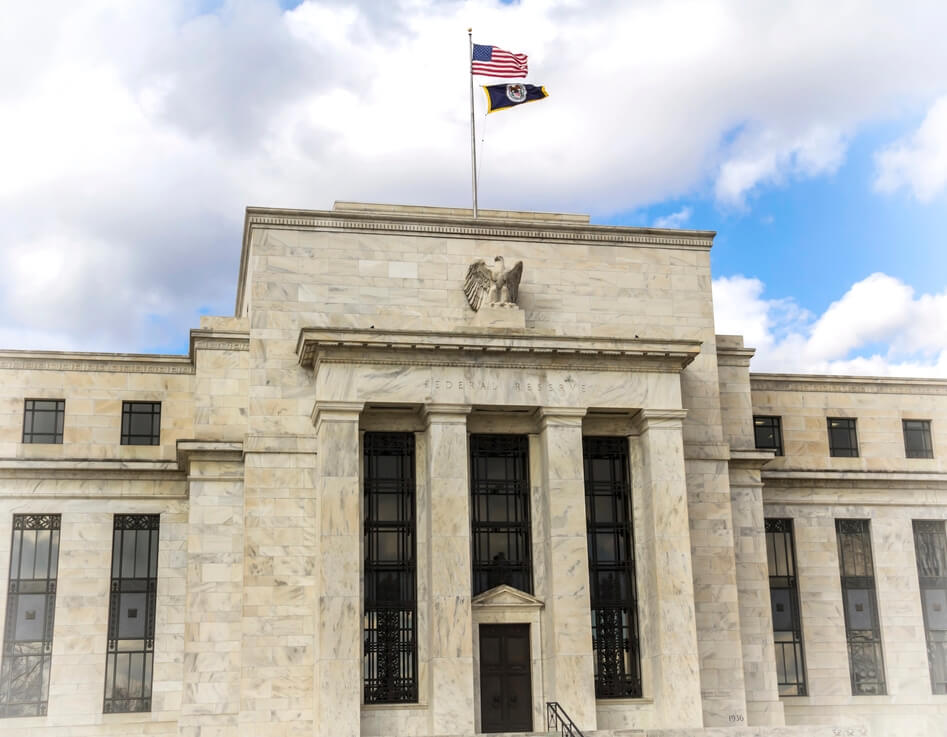
Gold dropped 11.4% in a single trading session. The US dollar rallied. Rate cut expectations collapsed. All of that happened on January 30, 2026, the day Donald Trump announced Kevin Warsh as his nominee to replace Jerome Powell as Federal Reserve Chair.
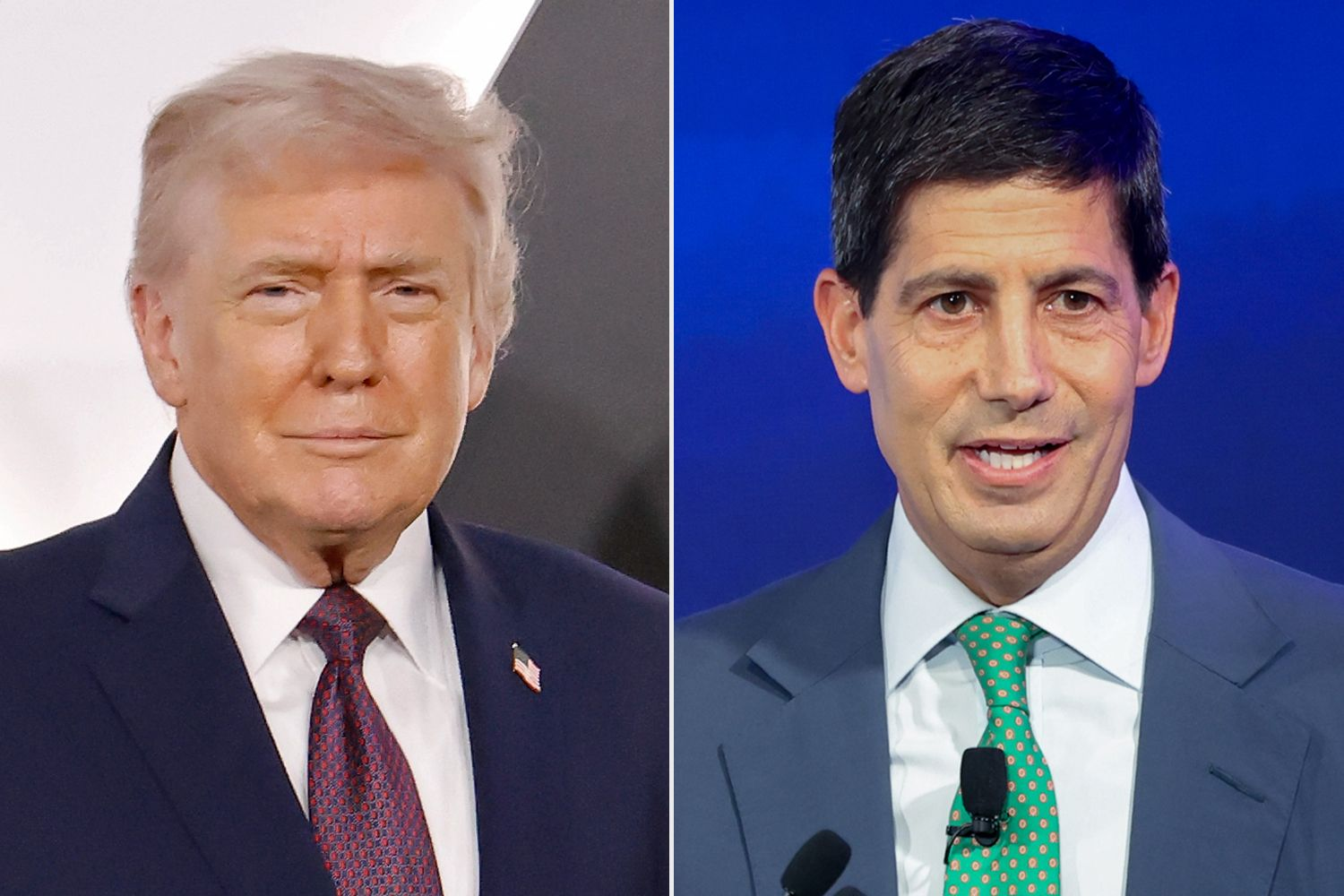
Source: People.com
From a record peak of $5,594 an ounce, gold plunged to settle at $4,745 as markets scrambled to price in what a Warsh-led Fed means for interest rates, the dollar, and inflation policy. That single day reaction tells you everything you need to know about how significant this transition is. The market did not wait for Warsh to take a single vote. It repriced the entire rate path the moment his name was confirmed.
This article covers who Warsh actually is, where the Fed rate stands today, what the June 16 to 17 meeting is likely to deliver, and how all of this flows through to the US dollar and gold.
Where the Fed Rate Actually Stands Today
The Federal Reserve's target federal funds rate currently sits at 3.50% to 3.75%, unchanged across three consecutive FOMC meetings in January, March, and April 2026.
The Fed began lowering rates in late 2025, however the timing of any further cuts in 2026 will depend on how the economy evolves, especially regarding inflation and growth. Those cuts have effectively been put on ice.
Persistent inflation pressures including recent energy-driven upside risks to PCE readings, combined with a resilient labour market showing unemployment near 4.4%, have kept policymakers in wait-and-see mode since the last cut in late 2025. The March 2026 Summary of Economic Projections reinforced this stance by lifting 2026 core inflation forecasts to 2.7%.
The next decision arrives on June 16 to 17, 2026. Kevin Warsh chairs that meeting. The futures market indicated virtually no chance of a rate cut at the next meeting in June, and less than a 10% chance of a rate cut at some point this year. Chances of a rate hike before year end have even started to creep into pricing for the first time since 2023.
Who Is Kevin Warsh and Why Did Markets React So Violently
Warsh is a former Fed Governor who served from 2006 to 2011. He is known for three things that matter to traders: his hawkish views on inflation, his criticism of quantitative easing, and his desire to shrink the Fed's balance sheet.
Warsh has a clear reputation in the market as a relatively hawkish candidate, widely viewed as placing a greater emphasis on inflation control than Powell and being more cautious about balance sheet expansion. Markets perceived him as the type of chair who might cut rates but would not ease policy lightly.
But the picture is not that simple. A deeper reading into Warsh reveals that he is not the hawk many think he is, and is in fact likely to move the Fed in lock step with the President's low-interest-rate desires. Morgan Stanley chief economist Seth Carpenter argued that the transition to Warsh as Fed Chair will not change the Fed's reaction function materially, particularly in the near term, emphasising that monetary policy is decided by committee vote, not the Chair alone, and any shift would be minor.
So the market's January 30 selloff in gold may have been an overreaction to a label. What Warsh actually does will matter far more than what he has historically said.
What the June 16 to 17 Meeting Actually Means
The June meeting is Warsh's first as Chair and it comes with a full Summary of Economic Projections and dot plot. The four SEP meetings are the highest-impact for markets because they include the Summary of Economic Projections and dot plot, giving the clearest signal on the Fed's rate path. This makes June 16 to 17 the most important Fed event of the year so far.
Market-implied odds for the June 16 to 17 FOMC meeting reflect broad trader consensus that the Federal Reserve will hold the federal funds rate steady at the current 3.50% to 3.75% target range. The rate decision itself is priced in. What traders are actually watching is the dot plot, Warsh's press conference tone, and whether the new projections push the first cut of 2026 into 2027 or leave a window open for September.
J.P. Morgan forecasts that the Fed will likely continue holding rates steady for the rest of 2026, before hiking 25 basis points in the third quarter of 2027 if inflation does not cooperate. That is a significant shift from where markets were pricing the Fed just six months ago, and it has direct consequences for the dollar and for gold.
What This Means for the US Dollar
The relationship between Fed policy and the US dollar is direct. Higher rates or fewer cuts mean a stronger dollar. More cuts or a dovish shift mean a weaker one.
The US dollar index climbed on the Warsh nomination as ING FX strategist Francesco Pesole noted: “the dollar had been waiting for a catalyst for a recovery, and the news that Kevin Warsh was likely to be the new Fed Chair nominee offered exactly that.” A Warsh-led Fed that holds rates higher for longer structurally supports the dollar against currencies from countries cutting rates, including the euro and the yen.
For AUD/USD specifically, the Fed and RBA rate differential now dominates direction. The RBA has hiked to 4.35% while the Fed holds at 3.50% to 3.75%. That gap currently favours AUD. But if the Fed is forced to hike in 2027 while the RBA pauses, the differential narrows and AUD faces significant headwinds. Traders who track the economic calendar around FOMC decisions are watching Warsh's June press conference closely for any signal that a 2027 hike is being actively considered rather than just theorised.
“Trade US dollar index with an ASIC-regulated broker. Fast AUD funding via PayID. ”
What This Means for Gold
Gold is where the Warsh story gets most interesting, and where the market's initial reaction may have been most wrong.
Gold's price suddenly ran out of momentum on January 30, 2026, following a tremendous rally where it roughly doubled over 12 months. The logic was simple: Warsh is hawkish, hawkish means higher rates, higher rates mean a stronger dollar, a stronger dollar means a weaker gold price. That chain of reasoning drove an 11% intraday crash.
But there is a counter-argument that is gaining traction among institutional analysts. Market expectations are for two additional 25-basis-point cuts this year, starting in June or July, according to David Einhorn of Greenlight Capital, who anticipates the Federal Reserve will cut more than twice in 2026. If that were to happen, it would undoubtedly be good for gold. According to UBS analysts, a further decline in real US rates will help support investor demand for gold.
The Middle East conflict adds a layer that no Fed Chair controls. When oil stays above $100, inflation pressures mount, real yields stay suppressed, and gold historically performs well even in hawkish rate environments when geopolitical risk remains elevated. Gold prices have since recovered significantly from the January selloff, trading around $4,700, while the US dollar index has climbed further above 98 amid US-Iran conflict escalation.
The short version is this. If Warsh turns out to be as hawkish as his reputation suggests and the Fed holds through 2027, gold faces pressure from a stronger dollar and rising real yields. If he turns out to be more aligned with the President's preference for lower rates, the January crash was the buying opportunity of the year.
“Trade Gold with an ASIC-regulated broker. Fast AUD funding via PayID. ”
How Traders Are Positioning Around the Fed Story on Mitrade
Rather than listing ways to access the market generically, here is exactly which instruments experienced traders are using to position around the Fed rate story right now and why each one connects directly to the Warsh decision.
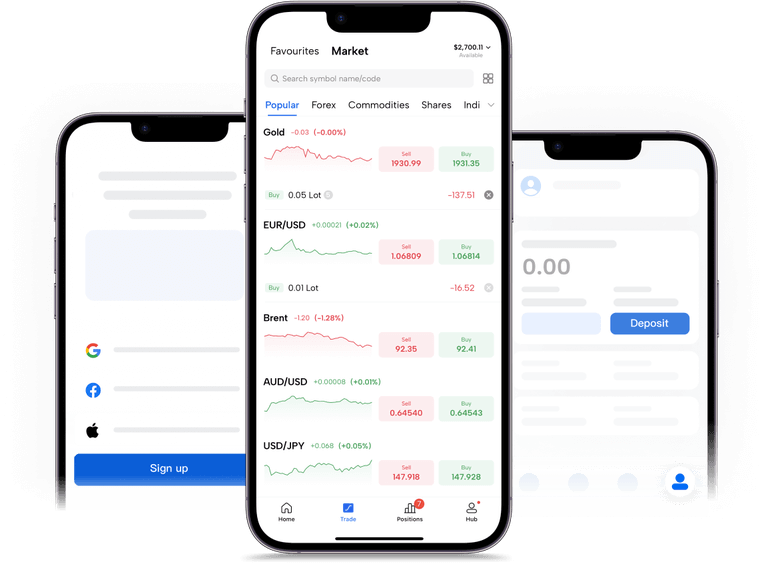
Gold (XAU/USD) is the primary instrument for trading the Warsh effect. Gold reacts immediately to any shift in Fed rate expectations, real yield direction, or dollar strength. Traders who believe Warsh delivers a dovish surprise at the June 16 meeting can go long gold as a CFD on Mitrade. Traders who believe the dot plot signals a longer hold or a potential 2027 hike can go short. Either direction is accessible from the same account with the same zero-commission structure.
AUD/USD is the second instrument directly connected to this story. The RBA versus Fed rate differential is the dominant driver of the pair right now. A hawkish Fed that holds longer narrows that differential and pressures AUD lower. A dovish surprise widens it and pushes AUD higher. Traders watching the June 16 press conference for Warsh's tone on the rate path can position AUD/USD in either direction within seconds of the statement dropping.
The economic calendar built into the Mitrade platform flags the June 16 to 17 FOMC decision as a high-impact event with the exact release time in Australian Eastern time. You do not need a separate tool. The decision, updated projections, and Warsh's press conference are all marked on the same screen as your open positions.
Mitrade is regulated by ASIC under licence AFSL 398528 and offers gold, AUD/USD, and every other instrument connected to the Fed story from a single account with zero commission. A free demo account loaded with $50,000 in virtual funds lets you practise positioning around the June 16 meeting before committing real capital.


1. What is the current Fed interest rate in 2026?
The target federal funds rate currently sits at 3.50% to 3.75% as of the April 28-29, 2026 FOMC meeting, where the Federal Reserve left rates unchanged for the third consecutive meeting. The Fed has been on hold since its last cut in late 2025, with elevated inflation and a resilient labour market removing the urgency for further easing.
2. Who is Kevin Warsh and why did his appointment move markets?
Kevin Warsh is a former Fed Governor known for his hawkish views on inflation and his criticism of quantitative easing. His nomination as Fed Chair by President Trump on January 30, 2026, triggered an 11% single-day crash in gold and a rally in the US dollar as markets repriced the rate cut timeline to reflect a potentially more hawkish policy stance under new leadership.
3. Will the Fed cut rates in 2026?
Futures markets indicate less than a 10% chance of a rate cut at any point in 2026 based on current pricing, with chances of a rate hike before year end rising to 3.5% after the April meeting. J.P. Morgan forecasts the Fed will hold through 2026 before potentially hiking 25 basis points in the third quarter of 2027 if inflation does not cooperate.
4. Why does the Fed rate decision affect gold prices?
Gold has no yield of its own. When the Fed holds rates high, alternative assets like bonds become more attractive relative to gold, which pressures the price lower. When the Fed cuts rates, real yields fall and gold becomes more attractive as a store of value. The US dollar also moves with rate expectations and since gold is priced in dollars, a stronger dollar makes gold more expensive for buyers outside the US and typically suppresses demand.
5. When is the next Fed interest rate decision?
The next FOMC meeting is scheduled for June 16 to 17, 2026, and will be Kevin Warsh's first as Fed Chair. It is a Summary of Economic Projections meeting, meaning traders will receive the updated dot plot and economic forecasts alongside the rate decision. The statement and press conference are released at 2:00pm Eastern time on June 17, which translates to 4:00am AEST on June 18.
Disclaimer: The content presented above, whether from a third party or not, is considered as general advice only. CFD trading involves significant risk of loss. Past performance does not guarantee future results. This article serves informational purposes only and does not constitute financial advice. Consider your risk tolerance before trading.


