




Gold Price Forecast After US Nonfarm Payrolls: Gold Bounces Back Above $4,100—Buy Now or Wait?

After suffering its sharpest selloff in months and briefly falling below the psychologically important US$4,000 level earlier this week, gold has staged an impressive comeback.
As of Friday, July 3, spot gold (XAU/USD) is trading back above US$4,100, recovering more than 3% from its recent lows after the latest US June Nonfarm Payrolls (NFP) report showed a much weaker labour market than expected. The US economy added only 57,000 jobs in June, roughly half of economists' forecasts, prompting investors to scale back expectations for further Federal Reserve rate hikes. The resulting decline in the US dollar and Treasury yields has provided fresh support for gold prices.
For Australian investors, the rebound raises an important question: Is this the start of a new bullish trend, or simply a short-term relief rally after June's heavy selloff?
In this article, we'll examine today's gold price action, explain why the NFP report triggered a sharp reversal, analyse the key technical levels to watch, and discuss whether now is a good opportunity to buy gold or trade Gold CFDs.
Gold Price Today
Gold extended Thursday's strong rally during Friday's Asian trading session, with spot gold (XAU/USD) climbing above US$4,170 after recovering from this week's plunge below US$4,000. The rebound marks gold's strongest recovery since late June and puts the precious metal on track for its first weekly gain in five weeks.
The main catalyst was Thursday's weaker-than-expected US labour market report. According to the US Bureau of Labor Statistics, the economy created just 57,000 new jobs in June, well below the market consensus of around 110,000. The disappointing data reduced expectations that the Federal Reserve would continue raising interest rates later this year, pushing the US dollar lower and increasing demand for non-yielding assets such as gold.
The rebound is particularly significant because it follows one of gold's worst monthly declines in years. During June, persistent expectations of higher US interest rates, stronger Treasury yields and profit-taking after gold's record highs drove prices below the key US$4,000 support level. However, buyers quickly returned after the NFP surprise, suggesting that investors continue to view gold as an attractive hedge whenever expectations for tighter monetary policy begin to fade.
From a technical perspective, reclaiming the US$4,100 level improves short-term sentiment, but bulls still need to overcome resistance around US$4,180–4,200 before confirming a broader trend reversal. Failure to break this zone could see gold consolidate or retest support near US$4,050 and US$4,000 in the coming sessions.
Why Did Gold Rebound After Falling Below $4,000?
Gold's sharp rebound above US$4,100 was driven by a combination of macroeconomic and market positioning factors, ending a week of intense selling pressure.
The biggest catalyst was the release of the June US Nonfarm Payrolls (NFP) report, which showed the labour market is cooling faster than investors had anticipated. The weaker employment data immediately reduced expectations for additional Federal Reserve rate hikes, sending the US dollar lower and boosting demand for non-yielding assets such as gold. Spot gold surged more than 2% after the report and extended its gains during Friday's Asian session.
Several factors contributed to the rebound:
1. Weaker US Dollar Increased Gold's Appeal
Because gold is priced in US dollars, a weaker dollar makes bullion less expensive for overseas buyers. Following the payrolls report, the US Dollar Index (DXY) posted its biggest weekly decline since April, helping lift precious metals across the board.
2. Falling Treasury Yields Reduced the Opportunity Cost of Holding Gold
Gold does not generate interest income, so it generally performs better when bond yields decline. After investors pushed back expectations for further Fed tightening, Treasury yields retreated, making gold a more attractive defensive asset.
3. Bargain Hunting Emerged After June's Heavy Selloff
Before the rebound, gold had experienced one of its weakest monthly performances in years, briefly breaking below the important US$4,000 psychological support level. Many traders viewed the decline as overextended, encouraging bargain buying once macroeconomic conditions became more supportive. The combination of short covering and fresh buying accelerated the recovery toward US$4,170.
4. Safe-Haven Demand Returned
Although global equity markets remained relatively resilient, slowing US economic momentum reminded investors that economic uncertainty remains elevated. Gold continues to benefit whenever concerns about growth outweigh fears of inflation, reinforcing its role as a portfolio hedge during periods of market volatility.
Overall, gold's recovery suggests that investors remain willing to buy the metal whenever expectations for tighter monetary policy begin to fade. However, whether this rebound develops into a sustained uptrend will largely depend on upcoming inflation data and future guidance from Federal Reserve officials.
“Trade gold CFDs with an ASIC-regulated broker. Fast AUD funding via PayID. ”
How the Weak US June Nonfarm Payrolls Changed Fed Expectations
The June employment report significantly altered market expectations for US monetary policy.
According to the US Bureau of Labor Statistics, the economy added just 57,000 jobs in June, roughly half of the 110,000 jobs economists had expected. In addition, May's payroll growth was revised down sharply from 172,000 to 129,000, reinforcing signs that hiring momentum is slowing. While the unemployment rate edged down to 4.2%, the decline was largely driven by lower labour force participation rather than stronger employment growth.
For financial markets, weaker labour data matters because the Federal Reserve closely monitors employment alongside inflation when setting interest rates.
A cooling labour market reduces the risk of wage-driven inflation, giving policymakers less urgency to tighten monetary policy further. Immediately after the report:
Traders sharply reduced expectations of a July Fed rate hike, with futures implying less than a 20% probability.
Expectations for a September rate hike also eased, falling from around 75% before the report to roughly 60%.
The US dollar weakened while Treasury yields declined, creating a more supportive environment for gold prices.
This shift is particularly important for gold because higher interest rates typically increase the opportunity cost of holding non-yielding assets. When investors believe the Fed is approaching the end of its tightening cycle—or may even pause for longer—gold often attracts renewed buying interest.
That said, one employment report is unlikely to determine Fed policy on its own. Policymakers will continue to monitor upcoming Consumer Price Index (CPI), Producer Price Index (PPI) and Personal Consumption Expenditures (PCE) inflation data before making any decisions on future rate moves. As a result, while the June payrolls report has improved sentiment toward gold in the short term, volatility is likely to remain elevated as markets reassess the outlook for US interest rates.
Gold Technical Analysis: Can Bulls Break Above $4,200?
Gold's rebound above US$4,100 has improved short-term market sentiment, but the next major challenge for bulls is the US$4,180–4,200 resistance zone. This area previously acted as support before June's sharp selloff and now represents a key technical hurdle.
If buyers can push decisively above US$4,200, the recovery could gain further momentum, opening the door for a move toward US$4,280 and potentially US$4,350 over the coming weeks. A breakout would also confirm that the recent drop below US$4,000 was likely a temporary correction rather than the start of a longer-term bearish trend.
However, traders should remain cautious. Gold has rallied sharply in a short period, meaning profit-taking could emerge near resistance.
Key Technical Levels
Technical Outlook
Several indicators suggest momentum is improving:
Gold has reclaimed its short-term moving averages after bouncing from below US$4,000.
Momentum indicators such as the Relative Strength Index (RSI) have recovered from oversold territory, suggesting selling pressure has eased.
Trading volume increased during the rebound, indicating stronger buying interest rather than a simple technical bounce.
The next few trading sessions will likely depend on:
Further comments from Federal Reserve officials
Upcoming US inflation data (CPI and PPI)
Movements in the US Dollar Index and Treasury yields
If economic data continues to support expectations of a more accommodative Federal Reserve, gold could attempt another move above US$4,200. Conversely, stronger-than-expected inflation data could strengthen the US dollar and trigger another test of US$4,050 or even US$4,000.
“Trade gold CFDs with an ASIC-regulated broker. Fast AUD funding via PayID. ”
How Australian Investors Can Trade Gold CFDs During High Volatility
Periods of heightened volatility often create opportunities for active traders. Unlike buying physical gold or gold ETFs, Gold CFDs allow investors to speculate on both rising and falling prices without owning the underlying asset.
For Australian traders, CFDs offer several advantages:
Go long or short depending on market direction.
Trade with leverage, allowing greater market exposure using less capital (while recognising that leverage also increases risk).
React quickly to major economic events such as Nonfarm Payrolls, CPI releases and Federal Reserve meetings.
Access nearly 24-hour trading during the global trading week.
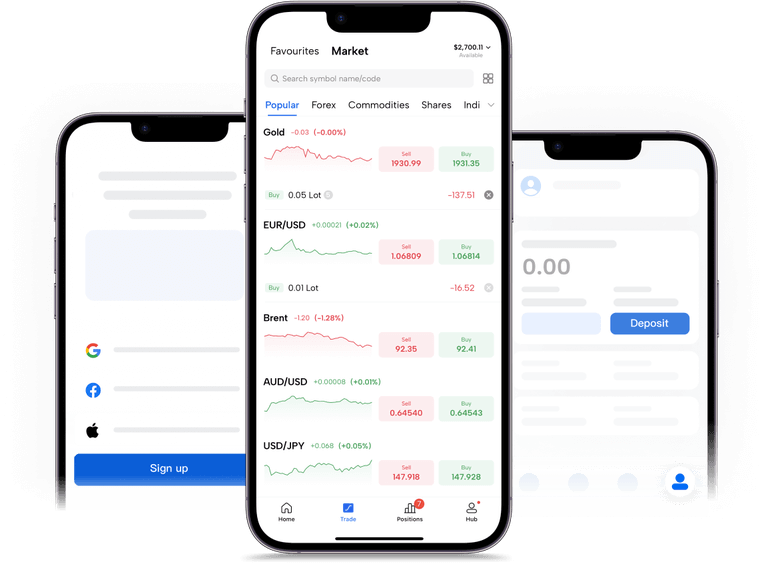
For beginners and experienced traders alike, Mitrade is one of Australia's most popular CFD platforms. It offers:
ASIC-regulated trading environment
Competitive spreads on Gold CFDs (XAU/USD)
Zero commission on Gold CFD trades
User-friendly web platform and mobile app
Free demo account to practise trading strategies with virtual funds
Risk management tools including stop-loss and take-profit orders
If you expect gold to continue climbing above US$4,200, you can open a buy (long) Gold CFD position. Alternatively, if you believe the rebound will lose momentum near resistance, you can take a sell (short)position and potentially benefit from falling prices.
👉 Ready to trade gold?
Open a free Mitrade demo account to practise trading Gold CFDs with virtual funds, or upgrade to a live account to access real-time gold prices, advanced charting tools and flexible risk management features.


1. Is gold expected to keep rising after the June Nonfarm Payrolls report?
Gold has recovered strongly after weaker-than-expected US employment data reduced expectations for further Federal Reserve rate hikes. However, whether the rally continues will depend on upcoming inflation reports, Fed commentary and movements in the US dollar.
2. Why did gold fall below US$4,000 before rebounding?
Gold came under pressure due to stronger US Treasury yields, a resilient US dollar and profit-taking after reaching record highs earlier this year. The weaker June Nonfarm Payrolls report later reversed market sentiment and supported a sharp rebound.
3. Is US$4,200 an important level for gold?
Yes. The US$4,180–4,200 area is currently one of the most important technical resistance zones. A sustained breakout above this level could strengthen bullish momentum, while rejection may lead to another period of consolidation.
4. Can Australians trade gold without buying physical bullion?
Yes. Australian investors can trade Gold CFDs, Gold ETFs, gold mining stocks or physical bullion. Gold CFDs are particularly popular because they allow traders to profit from both rising and falling prices without owning physical gold.
5. What is the best platform to trade Gold CFDs in Australia?
Many Australian traders choose Mitrade because it is ASIC regulated, offers competitive spreads, commission-free Gold CFD trading, a free demo account and an intuitive trading platform suitable for both beginners and experienced traders.
Disclaimer: The content presented above, whether from a third party or not, is considered as general advice only. CFD trading involves significant risk of loss. Past performance does not guarantee future results. This article serves informational purposes only and does not constitute financial advice. Consider your risk tolerance before trading.


