




How to Trade Volatile Markets in 2026: 7 CFD Strategies for Stocks, Gold, Oil & Crypto
Market Snapshot: Recent Volatile Markets (July 2026)
| Asset | Recent Trend | 30-Day Volatility | What's Driving the Move? | Action |
|---|---|---|---|---|
| 🟡 Gold (XAU/USD) | 📈 High | Safe-haven demand, Fed expectations, geopolitical tensions | Trade Now | |
| 🛢️ WTI Crude Oil | 📈 Very High | Middle East conflict, supply disruption fears | Trade Now | |
| 💻 Nasdaq 100 | ↕ High | AI earnings, semiconductor stocks, rate outlook | Trade Now | |
| ₿ Bitcoin | ↕ High | ETF inflows, institutional demand, risk sentiment | Trade Now | |
| 💵 USD/JPY | ↕ High | BoJ policy, US Treasury yields | Trade Now | |
| 🇺🇸 S&P 500 | ↕ Moderate | Earnings season, economic data | Trade Now |
🔴 Key takeaway: In today's market, volatility isn't limited to one asset class. Gold, oil, technology stocks, forex and cryptocurrencies are all experiencing larger-than-normal price swings, creating both opportunities and risks for active traders.
Why Are Markets So Volatile in 2026?
Market volatility has become the defining theme of 2026. Instead of trending steadily higher, global markets are reacting sharply to economic data, geopolitical events, AI-related earnings, and changing expectations for central bank policy.
For traders, volatility often creates uncertainty—but it also creates opportunity. Large price swings mean more trading setups across multiple asset classes, from stocks and indices to commodities, currencies and cryptocurrencies.
Several major factors are driving today's volatile market environment:
1. AI Stocks Are Creating Bigger Market Swings
Artificial intelligence remains one of the strongest investment themes, but expectations are extremely high. Quarterly earnings from companies involved in AI chips, cloud computing and data infrastructure frequently trigger double-digit price moves, while AI's growing concentration in major indices means even a few stocks can influence the broader market. Analysts also note that increased options activity and leveraged trading have amplified short-term volatility.
2. Geopolitical Risks Are Fueling Commodity Volatility
Ongoing tensions in the Middle East continue to create uncertainty across energy markets. Concerns over oil supply disruptions have pushed crude oil prices sharply higher, while investors have rotated into traditional safe-haven assets such as gold whenever geopolitical risks intensify. Rising energy prices also feed inflation expectations, increasing volatility across global equity and bond markets.
3. Interest Rate Expectations Keep Changing
Markets remain highly sensitive to every inflation report, employment release and central bank announcement. Even small changes in expectations for Federal Reserve policy can trigger significant moves in equities, bonds, forex pairs and precious metals as investors rapidly reprice future interest rates.
4. Trade Policies and Global Supply Chains Remain Uncertain
Tariffs, changing trade policies and ongoing supply-chain adjustments continue to affect corporate earnings and investor sentiment. Export-oriented industries, semiconductor manufacturers and commodity producers are particularly sensitive to policy announcements, often experiencing outsized price movements.
5. Markets Are Rotating Faster Than Ever
Instead of moving together, different sectors are taking turns leading and lagging the market. While AI and technology stocks may rally one week, capital can quickly rotate into energy, defence, commodities or defensive sectors the next. This lower correlation between sectors creates more frequent trading opportunities but also increases short-term volatility for individual stocks.
What Is Market Volatility?
Market volatility refers to the degree of price movement in a financial market over a given period. It measures how quickly and how far an asset's price rises or falls.
In simple terms:
Low volatility means prices move gradually and relatively predictably.
High volatility means prices experience larger and faster swings, often within hours or even minutes.
For example:
Volatility is not inherently bullish or bearish—it simply reflects the speed and magnitude of price changes. Prices can become highly volatile during strong rallies, sharp sell-offs, or periods of uncertainty.
For active traders, volatility is important because larger price movements often create more potential trading opportunities. Unlike traditional investing, where profits typically depend on rising asset prices, CFD trading allows traders to speculate on both upward and downward price movements. This means periods of heightened volatility can present opportunities regardless of market direction, provided appropriate risk management strategies are used.
“Trade volatile markets with an ASIC-regulated broker. Fast AUD funding via PayID. ”
Why Volatility Creates Trading Opportunities
For long-term investors, volatility can be uncomfortable because portfolio values fluctuate more dramatically. For active traders, however, volatility is often the fuel that creates trading opportunities.
The reason is simple: profits come from price movement, not from prices staying still. When markets experience larger intraday or multi-day swings, traders have more opportunities to identify trends, breakouts, reversals and momentum trades. Many professional macro and hedge fund managers view periods of elevated volatility as environments where active strategies can outperform, provided risks are carefully managed.
Here are several reasons why volatile markets attract active traders:
Larger Price Swings Mean More Profit Potential
When markets are calm, assets often move only a fraction of a percent each day. During volatile periods, it's common to see stocks, commodities and cryptocurrencies move several percent—or even double digits—in a single trading session.
For example:
While greater price movement increases both opportunity and risk, it gives active traders more chances to capture short-term market moves.
Opportunities Exist in Both Bull and Bear Markets
One of the biggest advantages of CFD trading is that traders can speculate on both rising and falling markets.
If you expect prices to rise, you can open a buy (long) position.
If you expect prices to fall, you can open a sell (short) position.
This flexibility means trading opportunities don't disappear during market corrections. In fact, many of the largest short-term moves occur during periods of uncertainty, when volatility is elevated and market sentiment changes rapidly. CFDs allow traders to participate in these moves without owning the underlying asset.
More Assets Become Active at the Same Time
During periods of heightened volatility, price movements often spread across multiple asset classes simultaneously.
For example:
Rising geopolitical tensions may boost gold while lifting oil prices.
Strong inflation data can move forex pairs, bond yields and stock indices within minutes.
AI earnings can trigger large swings across semiconductor stocks, the Nasdaq 100 and related ETFs.
Rather than focusing on a single market, traders can monitor opportunities across stocks, indices, commodities, forex and cryptocurrencies—all from one CFD trading account.
Short-Term Trends Develop More Frequently
High-volatility environments often produce clearer technical trading setups, including:
Breakout trades
Momentum trends
Support and resistance reversals
News-driven price reactions
Gap trading after earnings announcements
These patterns can provide more frequent entry and exit opportunities than low-volatility markets, although they also require disciplined risk management.
Volatility Rewards Preparation, Not Prediction
Successful traders don't try to predict every market move. Instead, they prepare for multiple scenarios and react when price confirms a trading setup.
Risk management becomes especially important during volatile markets. Using stop-loss orders, controlling position size and avoiding excessive leverage can help traders manage downside risk while taking advantage of larger price movements.
Ultimately, volatility is neither good nor bad—it simply creates a market environment with greater potential rewards and greater risks. Traders who combine a well-defined strategy with disciplined risk management are often better positioned to navigate rapidly changing market conditions.
7 Ways to Trade Volatility
Volatile markets create opportunities across nearly every asset class. Rather than focusing on a single market, many traders diversify their strategies based on the event driving the volatility.
Here are seven popular ways traders use CFDs to take advantage of market swings.
🔴 Remember: Higher volatility can create more trading opportunities, but it also increases risk. Successful traders focus on disciplined position sizing, stop-loss orders and a well-defined trading plan—not simply on chasing larger price swings.
Risk Management During High Volatility
High volatility can create more trading opportunities—but it also increases the risk of rapid losses. A strong trading strategy is only effective if it's supported by disciplined risk management.
Whether you're trading gold, indices, forex or cryptocurrencies, protecting your capital should always come before chasing profits.
Here are five essential risk management practices for volatile markets:
1. Always Use a Stop-Loss
A stop-loss order automatically closes your position if the market moves against you by a predetermined amount.
During periods of heightened volatility, prices can change dramatically within minutes following economic releases or breaking news. A stop-loss helps limit potential losses and removes emotional decision-making from the trading process.
Tip: Place your stop-loss based on market structure and volatility—not on an arbitrary dollar amount.
2. Reduce Position Size
Large market swings mean that the same position size carries more risk than during calmer market conditions.
Instead of increasing your exposure, many experienced traders reduce their position size when volatility rises. This helps keep the dollar amount at risk consistent, even when price movements become more unpredictable.
3. Avoid Overusing Leverage
Leverage allows traders to control larger positions with less capital, but it magnifies both gains and losses.
During volatile markets, even small price movements can have a significant impact on leveraged positions. Using lower leverage and maintaining sufficient available margin can reduce the likelihood of forced liquidations or margin calls.
4. Diversify Across Different Markets
Rather than concentrating all trades in a single asset, consider spreading exposure across different markets.
For example:
Gold may benefit from safe-haven demand.
Oil often reacts to geopolitical developments.
Forex responds to central bank announcements.
Stock indices are influenced by earnings and economic data.
Diversification doesn't eliminate risk, but it can reduce dependence on a single market event.
5. Stick to Your Trading Plan
High-volatility environments often trigger emotional decisions driven by fear or greed.
Successful traders typically follow predefined rules that include:
Entry criteria
Exit strategy
Risk per trade
Maximum daily loss
Profit targets
A consistent trading plan helps reduce emotional trading and improves long-term discipline.
🔴 Remember: Preserving capital is just as important as generating returns. Opportunities will always come and go, but effective risk management helps ensure you're still in the market when the next opportunity arrives.
How to Start Trading Volatile Markets with Mitrade
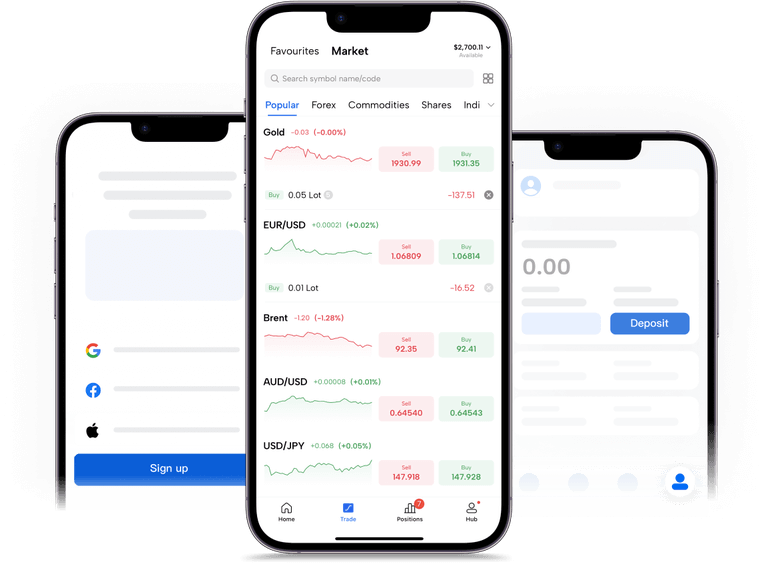
If you're looking to trade fast-moving markets, Mitrade offers access to a wide range of global CFD instruments through a single, ASIC-regulated trading platform.
With Mitrade, Australian traders can access:
Stocks and ETFs
Global stock indices
Gold, silver and crude oil
Major forex pairs
Cryptocurrencies
Key features include:
✅ Trade rising and falling markets through CFDs
✅ Tight spreads with no commission on most CFD products
✅ Advanced charts and built-in risk management tools
✅ Stop-loss, take-profit and trailing stop functionality
✅ Negative balance protection for eligible retail clients
✅ Web platform and mobile app for trading anywhere
✅ Free demo account with AUD 50,000 in virtual funds to practise strategies before trading live
Getting Started in 4 Simple Steps
Step 1 – Open a Free Demo or Live Account: Create your Mitrade account in just a few minutes. New users can begin with a free demo account to explore the platform and test trading strategies without risking real capital.
Step 2 – Explore Global Markets: Choose from hundreds of CFD instruments, including gold, oil, indices, forex, shares and cryptocurrencies, all from a single trading account.
Step 3 – Develop Your Trading Strategy: Use technical analysis, economic calendars and market news to identify trading opportunities. Before entering a position, define your entry price, stop-loss and profit target.
Step 4 – Trade with Risk Management: Execute your trade while applying appropriate position sizing and risk controls. Continue reviewing and refining your strategy as market conditions change.
Risk Warning: CFDs are leveraged products and involve a high level of risk. They may not be suitable for all investors. Ensure you understand how CFDs work and consider your financial objectives and risk tolerance before trading.


1. Is market volatility good or bad for traders?
Volatility itself is neither good nor bad. It simply reflects how much prices move. Higher volatility can create more trading opportunities, but it also increases risk. Traders should always combine opportunity with sound risk management.
2. Can you make money when markets fall?
Yes. Unlike traditional investing, CFD trading allows traders to open short (sell) positions if they expect prices to decline. However, if the market moves against your position, you may incur losses.
3. Which markets are the most volatile?
Some of the most actively traded volatile markets include:
Gold (XAU/USD)
Crude Oil (WTI & Brent)
Nasdaq 100
Bitcoin and Ethereum
Major forex pairs during economic announcements
The level of volatility changes over time depending on economic data, earnings, geopolitical events and investor sentiment.
4. Is CFD trading suitable for beginners?
CFD trading can be suitable for beginners who first learn the fundamentals of the markets, understand leverage and practise with a demo account. Starting with virtual funds allows new traders to gain experience before risking real money.
5. Why do many traders use CFDs during volatile markets?
CFDs are popular because they allow traders to:
Trade both rising and falling markets
Access multiple global asset classes from one platform
Use leverage (where appropriate)
React quickly to short-term market movements
Apply risk management tools such as stop-loss and take-profit orders
These features make CFDs a flexible instrument for active traders, although they also carry a higher level of risk due to leverage.
Disclaimer: The content presented above, whether from a third party or not, is considered as general advice only. CFD trading involves significant risk of loss. Past performance does not guarantee future results. This article serves informational purposes only and does not constitute financial advice. Consider your risk tolerance before trading.


