




Best ASX Energy Stocks in 2026: Oil Is Rallying Again and These Are the Stocks Moving With It

The ASX energy sector is having its best month in years. Woodside is up 22.83% in the past month. Ampol jumped 2.7% on July 20 alone. Santos and Beach Energy are outperforming the ASX 200 by a significant margin as oil climbs for a fifth consecutive session.
Brent crude Oil rose to $94.13 per barrel on July 22, 2026, its highest level since June 8, up 37.40% compared to the same time last year. The catalyst is the same one driving energy markets all year. The US-Iran military confrontation is intensifying, Houthi militants attacked two Saudi oil tankers in the Red Sea on July 22, and the Strait of Hormuz remains under threat. Every escalation lifts oil and every lift in oil flows directly into the earnings of Australia's upstream energy producers.
This guide covers what is driving the oil rally in July 2026, which ASX energy stocks are benefiting most and why. I’ve also covered the critical difference between upstream and downstream companies that most retail investors get wrong, and how Australian traders access the sector from both sides of the trade.
Let’s dive right in!
What Is Driving Oil Higher Right Now
Brent crude has risen 30% from its July lows in a matter of weeks, and three specific events in the past 72 hours explain exactly why.
The US resumed its blockade of Iranian ports after the interim peace agreement between Washington and Tehran unravelled. The US and Iran exchanged further military strikes across the Gulf region, marking the 11th consecutive night of US strikes targeting Iranian military facilities. Houthi militants then attacked two Saudi oil tankers in the Red Sea with missiles and drones, the first direct strikes on tankers in that waterway, raising fears of disruption to a key alternative export route for Saudi crude.
US Secretary of State Marco Rubio stated that any future agreement must guarantee freedom of navigation through the Strait of Hormuz and prevent Iran from developing nuclear weapons. Tehran threatened retaliation against US-linked energy assets across the region. That exchange is the backdrop against which every ASX energy stock is trading right now and understanding it is the starting point for any position in the sector.
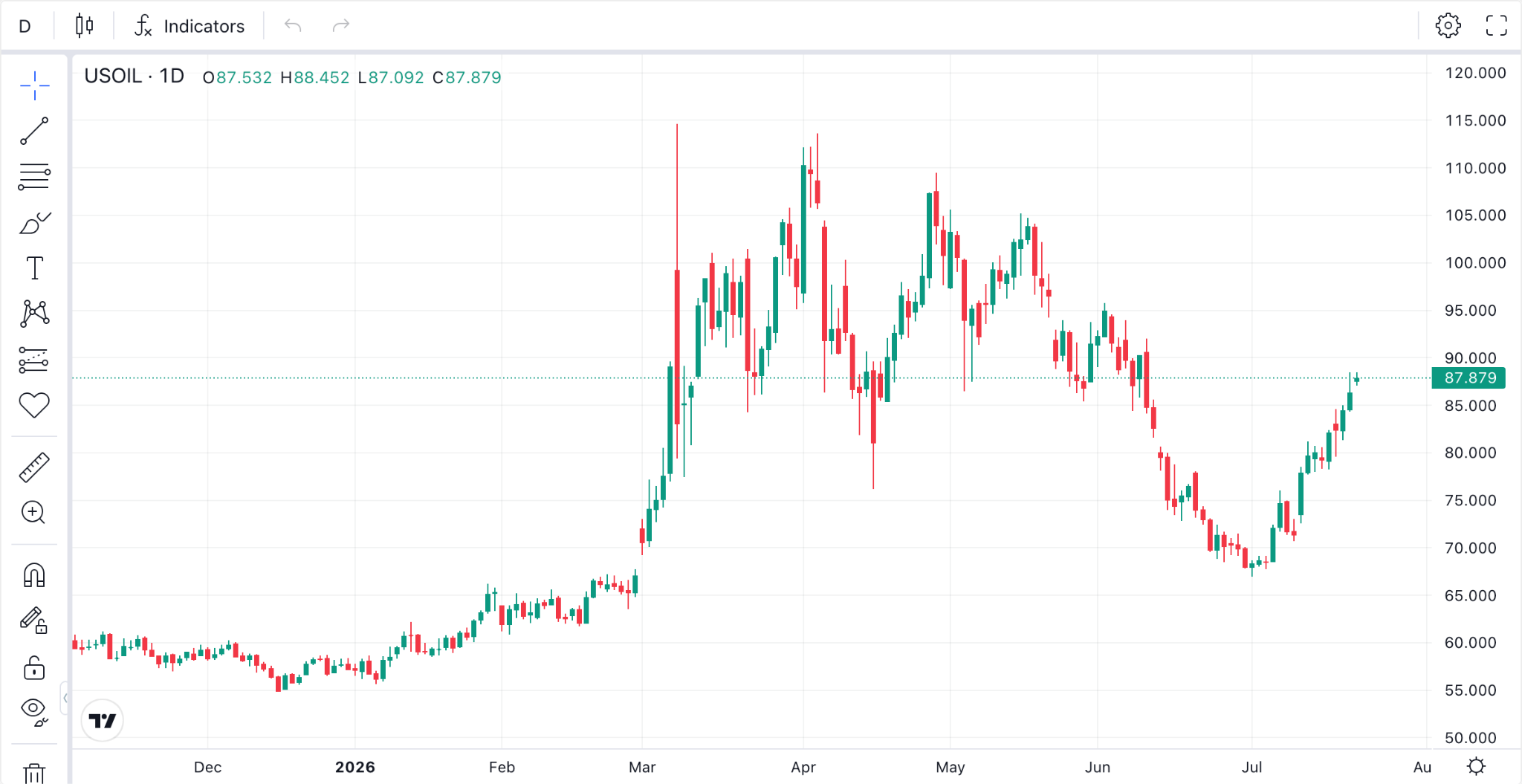
Image: Mitrade Brent Crude (UKOIL)
“Fast AUD funding via PayID with an ASIC-regulated broker. ”
The Critical Difference: Upstream vs Downstream
This is the distinction most retail investors miss and it determines whether a rising oil price is good or bad news for any given ASX energy stock.
Upstream companies explore for and produce oil and gas. When oil prices rise, they receive more revenue per barrel sold and higher oil directly boosts their earnings and free cash flow. Woodside, Santos, Beach Energy, and Karoon Energy are all upstream producers. A Brent price at $94 per barrel is a directly positive development for every one of them.
Downstream companies refine crude oil into products like petrol, diesel, and jet fuel. Their input cost is crude oil. When oil prices rise, their costs go up and the refining margin, the spread between what they pay for crude and what they sell products for, determines whether a high oil environment helps or hurts them. Ampol is a downstream refiner and fuels marketer. Its 2.7% rise on July 20 reflected sector sentiment and fuel price repricing rather than a direct earnings benefit from the crude price itself.
Getting this distinction right before buying an ASX energy stock in a rising oil environment is the difference between buying a direct beneficiary and buying a company facing a higher cost base.
Woodside Energy
Woodside Energy Group (WDS.AX) is Australia's largest energy company and the most direct proxy for Brent crude prices on the ASX.
The stock reached $31.97 on July 23, 2026, as oil prices surged and investor appetite for upstream exposure intensified. Woodside's dividend policy of paying a percentage of underlying net profit after tax means sustained revenue uplift from higher crude flows directly through to shareholder returns. The current annual dividend yield sits at 5.20%, making it one of the few ASX energy stocks that combines meaningful commodity upside with reliable income.
The Scarborough LNG project is Woodside's most significant near-term earnings catalyst, with first cargo targeted for Q4 2026. When that cargo ships, it ships at whatever the LNG price is at the time. The current elevated energy price environment makes that timing unusually favourable for shareholders. The key risk is a genuine ceasefire in the Middle East that compresses the geopolitical risk premium embedded in oil prices and reverses some of the recent share price gains.
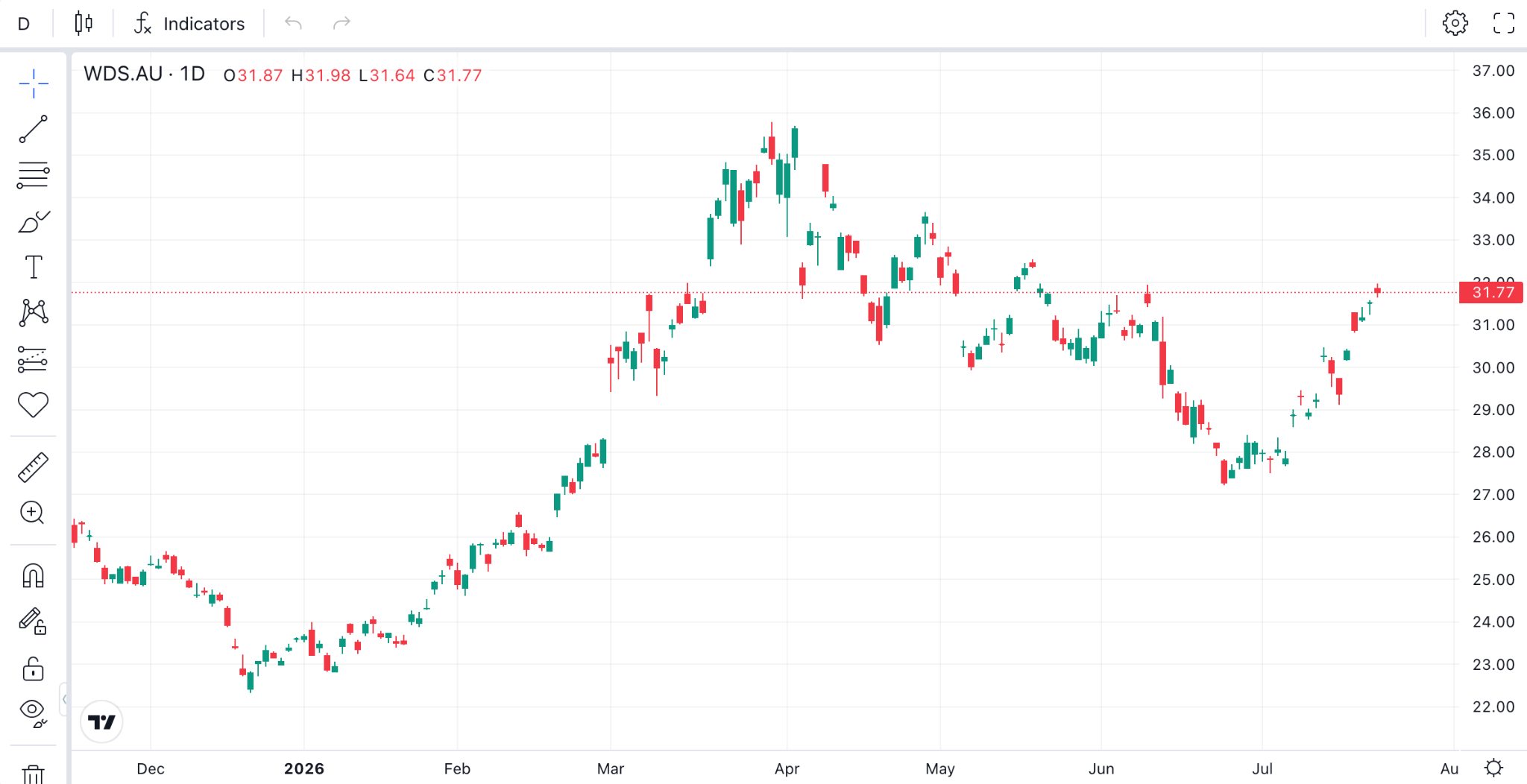
Image: Mitrade WDS.AX
“Fast AUD funding via PayID with an ASIC-regulated broker ”
Santos
Santos (STO.AX) operates one of the most geographically diversified production profiles among ASX-listed energy companies, spanning Australian LNG, Papua New Guinea, and North American conventional oil through its Alaskan operations.
The Barossa LNG project is currently operating at 75% of its planned 2026 production rate, with plateau production targeted before year end. The incremental volumes coming online as Barossa ramps toward capacity represent production added at the highest end of the current oil price cycle, maximising the revenue captured per unit of new output. Santos shares trade at $7.86 on July 23, 2026, and analysts cite the Barossa ramp and the current Brent price environment as the two clearest short-term earnings tailwinds for the stock through the second half of the year.
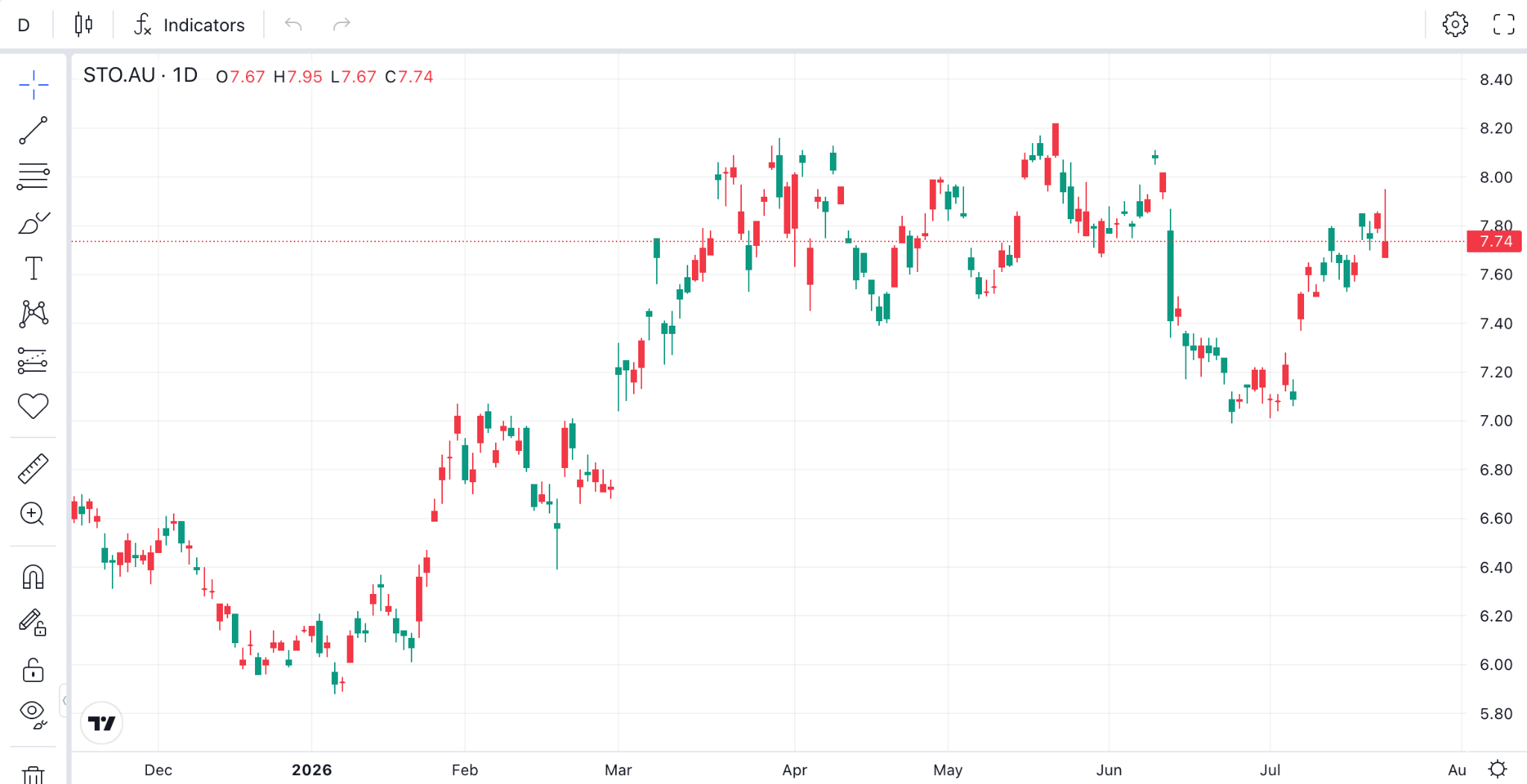
Image: Mitrade STO.AX
“Fast AUD funding via PayID with an ASIC-regulated broker. ”
Ampol: A Different Kind of Energy Stock
Ampol (ALD.AU) is one of Australia's most recognisable energy companies but it operates very differently from the upstream producers above.
Ampol is a downstream refiner and fuels marketer. Crude oil is its primary input cost rather than its revenue driver. When oil rises, Ampol's refining margin faces compression unless retail fuel prices rise fast enough to compensate. Its 2.7% rise on July 20, 2026, reflected sector sentiment and an upgrade to the Fuel Security Services Payment scheme that raised the Lytton refinery support floor to 10.0 Australian cents per litre, not a direct earnings benefit from $94 Brent.
FY2025 RCOP EBIT came in at A$946.8 million, up 32%, demonstrating the quality of the underlying business. But investors buying Ampol as a play on $94 oil are buying a different thesis from the one they think they are buying.
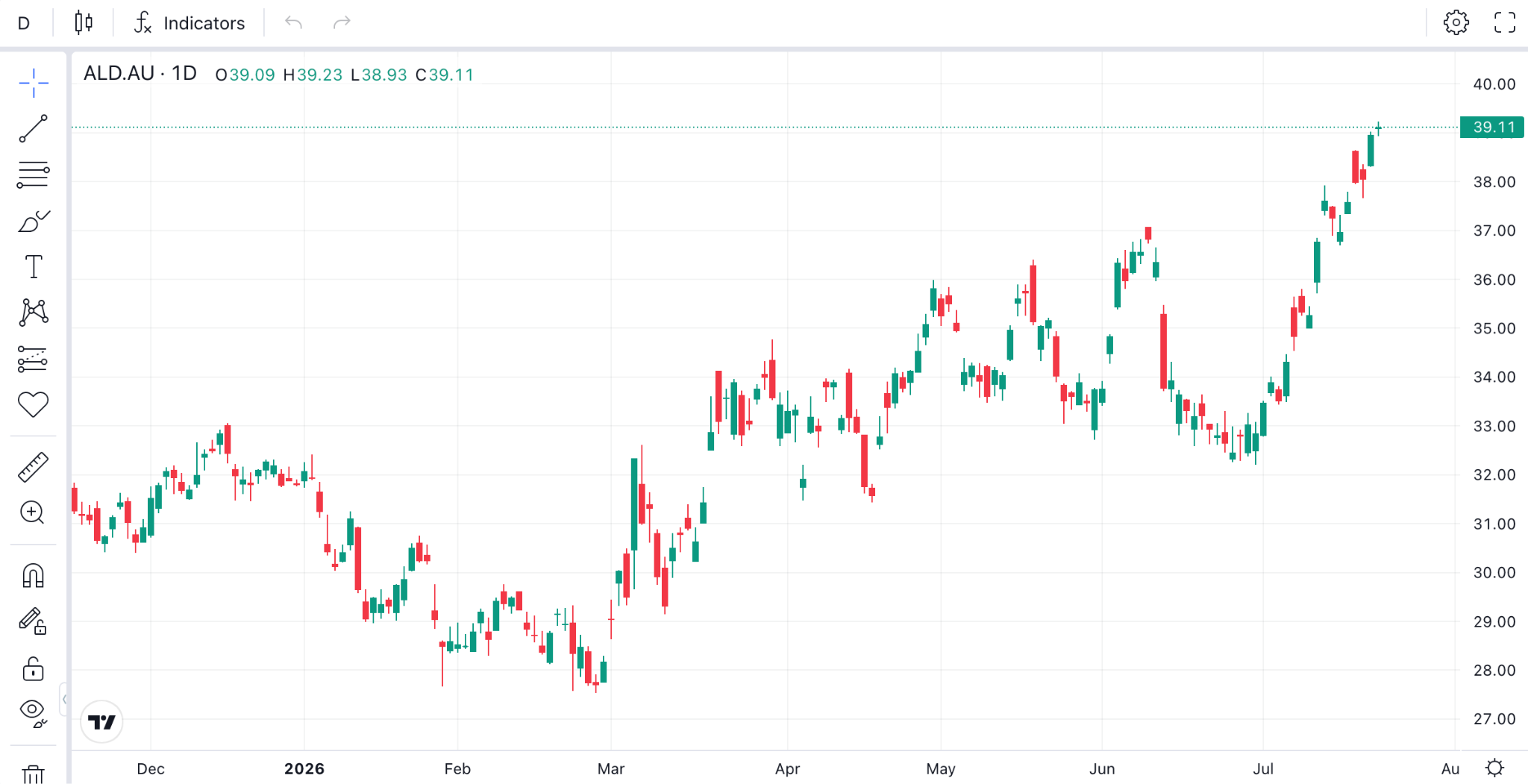
Image: Mitrade ALD.AU
“Fast AUD funding via PayID with an ASIC-regulated broker. ”
Beach Energy
Beach Energy (BPT.AX) is the highest-leverage pure-play option among the major ASX oil and gas producers.
It is smaller in market capitalisation than Woodside or Santos, which means oil price movements have a larger percentage impact on its earnings and share price. In Q3 FY2026, Beach reported a 7% quarter-on-quarter production increase to 4.8 million barrels of oil equivalent, demonstrating operational momentum that amplifies the impact of a supportive pricing environment.
The stock trades at $0.895 on July 23, 2026. Its domestic gas production mix limits some of the full upside capture from global crude prices, but for investors who want more direct leverage to the oil price rally than Woodside or Santos offer, Beach delivers it.
Karoon Energy
Karoon Energy (KAR.AX) is a pure-play oil producer up 4.62% on July 23, 2026, and one of the smaller-cap names responding most sharply to each escalation in Middle East tensions.
Karoon's operations are concentrated in offshore Brazil, giving it a production base outside the direct conflict zone while still benefiting from the global crude price that the Strait of Hormuz situation is driving higher. It is a higher-risk, higher-leverage option than Woodside or Santos and suits investors comfortable with small-cap volatility in exchange for more direct oil price sensitivity.
How to Trade ASX Energy Stocks on Mitrade
Mitrade, regulated by ASIC under licence AFSL 398528, offers Woodside (WDS.AX), Santos (STO.AX), Ampol (ALD.AU), and Brent crude as CFD instruments from a single zero-commission account. Traders can go long on upstream producers when Middle East tensions escalate and Brent rallies, or go short when ceasefire signals emerge and the geopolitical risk premium compresses out of crude prices.
Brent peaked at $120.88 on April 30, 2026, pulled back sharply on ceasefire optimism, and is now rallying again toward $95 on renewed escalation. Each of those moves has been a tradeable opportunity in either direction for CFD traders who understood the upstream versus downstream distinction and positioned themselves around the geopolitical calendar rather than holding a static long position. Stop-loss and take-profit controls appear directly on the Mitrade order screen before any trade is confirmed. A free demo account with $50,000 in virtual funds lets traders practise positioning around oil price moves and ASX energy stock CFDs before committing real capital.


1. What are ASX energy stocks and why are they moving in July 2026?
ASX energy stocks are shares of companies involved in the exploration, production, refining, or distribution of oil, gas, and other energy sources. They are moving sharply in July 2026 because Brent crude rose 30% from its July lows as the US-Iran military confrontation intensified, Houthi militants attacked Saudi oil tankers in the Red Sea, and the Strait of Hormuz remained under supply threat. Upstream producers like Woodside, Santos, and Beach Energy benefit directly from higher crude prices because oil is what they sell.
2. What is the difference between upstream and downstream ASX energy stocks?
Upstream energy companies explore for and produce oil and gas. Higher oil prices directly boost their revenue and earnings. Woodside, Santos, Beach Energy, and Karoon Energy are all upstream producers. Downstream companies like Ampol refine crude into fuel products, meaning crude is their input cost rather than their revenue. Higher oil prices can compress their refining margins unless retail fuel prices rise fast enough to compensate.
3. Is Woodside a good ASX energy stock to buy in July 2026?
Woodside is Australia's largest energy company and the most direct ASX proxy for Brent crude prices. The stock has risen 22.83% over the past month and offers a 4.43% annual dividend yield. The Scarborough LNG project targets first cargo in Q4 2026, adding a production growth catalyst to the commodity price tailwind. The key risk is a genuine ceasefire in the Middle East that compresses the oil price premium and reverses recent gains.
4. How does the Strait of Hormuz affect ASX energy stocks?
The Strait of Hormuz is the narrow waterway through which approximately 20% of global oil supply passes. When it is threatened or disrupted, global supply fears drive Brent prices higher and directly lift revenue for ASX upstream producers including Woodside, Santos, and Beach Energy. When ceasefire signals emerge and Hormuz traffic looks more secure, the geopolitical risk premium compresses and ASX energy stocks can fall sharply even if oil remains elevated in absolute terms.
5. What is Brent crude trading at today and what does it mean for ASX energy stocks?
Brent crude rose to $94.13 per barrel on July 22, 2026, its highest level since June 8, up 37.40% compared to the same time last year. WTI crude rose to $88.17 per barrel on July 23, extending gains for a fifth straight session. At these levels, the revenue environment for Australian upstream energy producers is highly supportive, with the EIA June 2026 forecast of $105 per barrel now looking conservative relative to the current trajectory.
6. Can Australian traders access ASX energy stocks on Mitrade?
Yes. Mitrade offers Woodside (WDS.AX), Santos (STO.AX), Ampol (ALD.AU), and Brent crude as CFD instruments under ASIC regulation with licence AFSL 398528. Traders can go long or short on all instruments with zero commission and stop-loss controls directly on the order screen. A free demo account with $50,000 in virtual funds is available to practise trading ASX energy stocks and Brent crude before going live.
Disclaimer: The content presented above, whether from a third party or not, is considered as general advice only. CFD trading involves significant risk of loss. Past performance does not guarantee future results. This article serves informational purposes only and does not constitute financial advice. Consider your risk tolerance before trading.


