




What Is Short Selling and How Do Traders Profit When Markets Fall?
The Dow Jones (DJIA) dropped 1,151 points across two consecutive sessions in early June 2026. Iran struck Kuwait and Bahrain, oil surged past $100, Broadcom missed earnings, and inflation data printed hot. Most retail traders watched their portfolios bleed red. But a smaller group of traders made a fortune from the exact same move. They were short selling.
Short selling is one of the most misunderstood tools available to retail traders and also one of the most powerful. It lets you profit when prices fall, hedge a portfolio during a market selloff, and trade in both directions rather than sitting on your hands when conditions turn bearish.
This guide covers exactly how short selling works, how Australian retail traders access it through CFDs, and the risks that most introductory guides conveniently skip. Let’s dive right in.
What Is Short Selling?
Short selling is a trading strategy where you sell an asset you do not own, betting that its price will fall so you can buy it back at a lower price and pocket the difference.
In traditional share markets, this requires borrowing shares from a broker, selling them immediately, waiting for the price to fall, buying them back at the lower price, and returning them to the lender. On the ASX, short selling is typically restricted to institutional investors and experienced traders who meet specific criteria. Most retail Australian investors are barred from traditional short selling unless they meet strict eligibility requirements.
For retail traders, CFDs remove every one of those barriers entirely.
How Short Selling Works Through CFDs
With CFD trading, you agree to exchange the difference in price of your chosen asset from when the position is opened to when it is closed. When you short-sell a CFD, you open a position to sell the asset without owning it or needing to borrow it from anyone.
Here is how it looks in practice. Say the Dow Jones is trading at 51,000 and you believe the combination of Middle East tensions, hot inflation data, and overextended valuations is about to send it lower. You open a short CFD position at 51,000. The index drops to 49,850. You close the position and collect the 1,150-point difference. If the index rises instead, you lose the difference from your entry to wherever you close the trade.
CFD traders can profit whether the prices of stocks, commodities, or currencies are going up or down. The most straightforward way for Australian retail investors to short a stock or index is by using CFDs. No share borrowing, no lender fees, no eligibility requirement beyond opening an ASIC-regulated account.
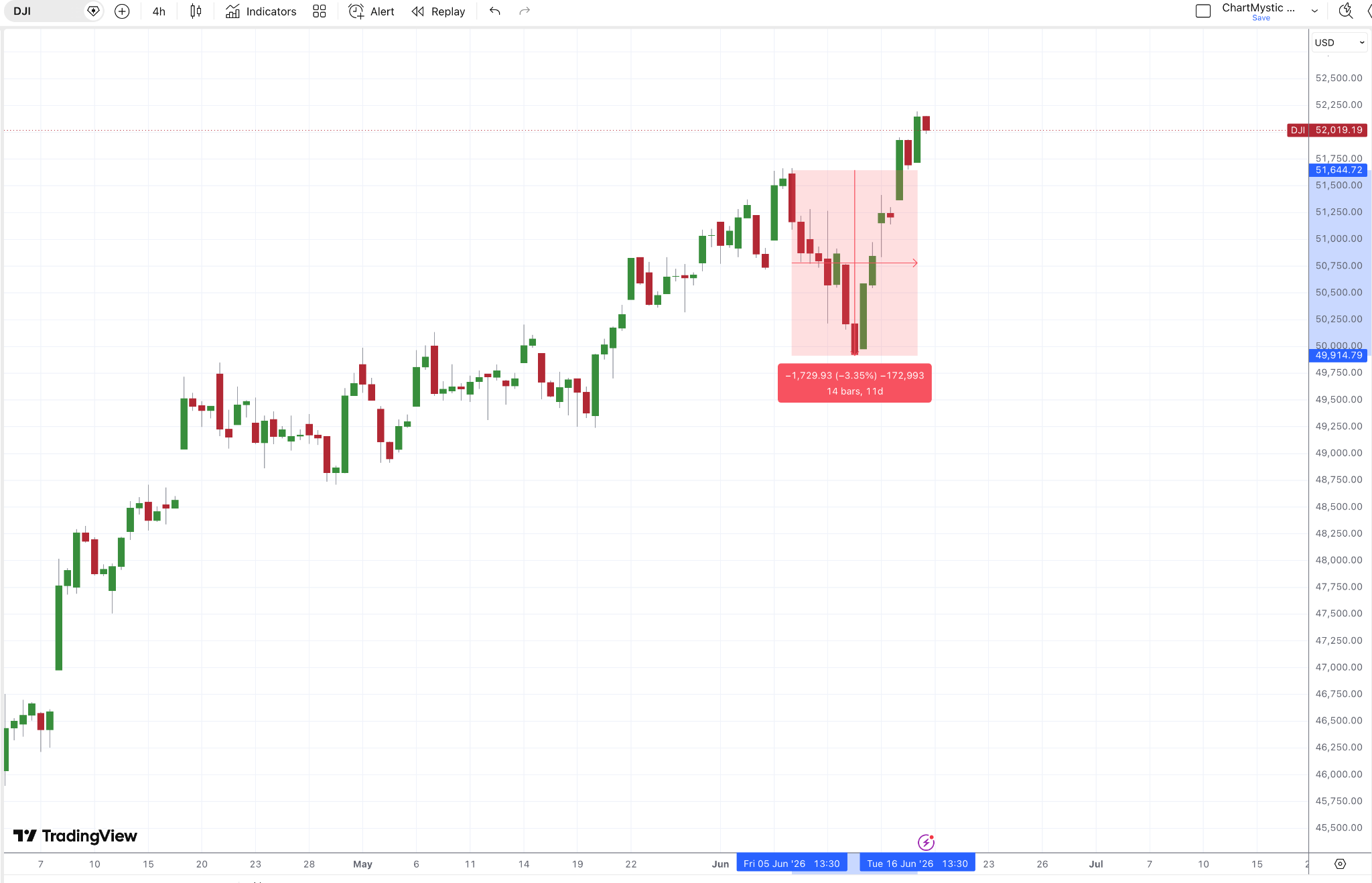
Source: DJIA TradingView Daily Chart
Four Situations Where Experienced Traders Go Short
Short selling is not something you do randomly. The traders who use it profitably apply it in four specific situations.
Earnings Misses
When a company reports revenue or profit below market expectations, the stock typically sells off immediately and sharply. Nvidia (NVDA) delivered four consecutive post-earnings declines in 2025 and 2026 despite beating estimates each time, because the market had priced in results even better than what actually arrived. Traders who shorted NVDA into each earnings report profited from the selloff while long holders watched gains evaporate in hours.
Technical Breakdown Below Key Support
When a stock or index breaks below a significant support level on strong volume, it often signals that buyers have run out of conviction and sellers are in control. A short position entered on the break of a key level with a stop loss placed just above the broken support gives traders a defined risk setup with clear direction. The Dow's test of the 49,000 support zone in June 2026 is exactly this kind of setup.
Sector Rotation Out of a Trade
When institutional money rotates out of a sector, individual stocks within that sector fall even if nothing fundamentally changes for the company. Technology stocks fell 3% as a sector in the first half of 2026 while energy and industrials surged. Traders who shorted technology CFDs during that rotation captured the downside without needing to predict which specific company would underperform.
Macro Risk-Off Events
Geopolitical shocks, central bank surprises, and inflation data that comes in hotter than expected all trigger risk-off selloffs across equities, risk currencies, and commodities simultaneously. The June 3 Iran strike is the clearest 2026 example. Traders who were short the Dow and long the US dollar through AUD/USD shorts captured two separate moves from the same macro event.
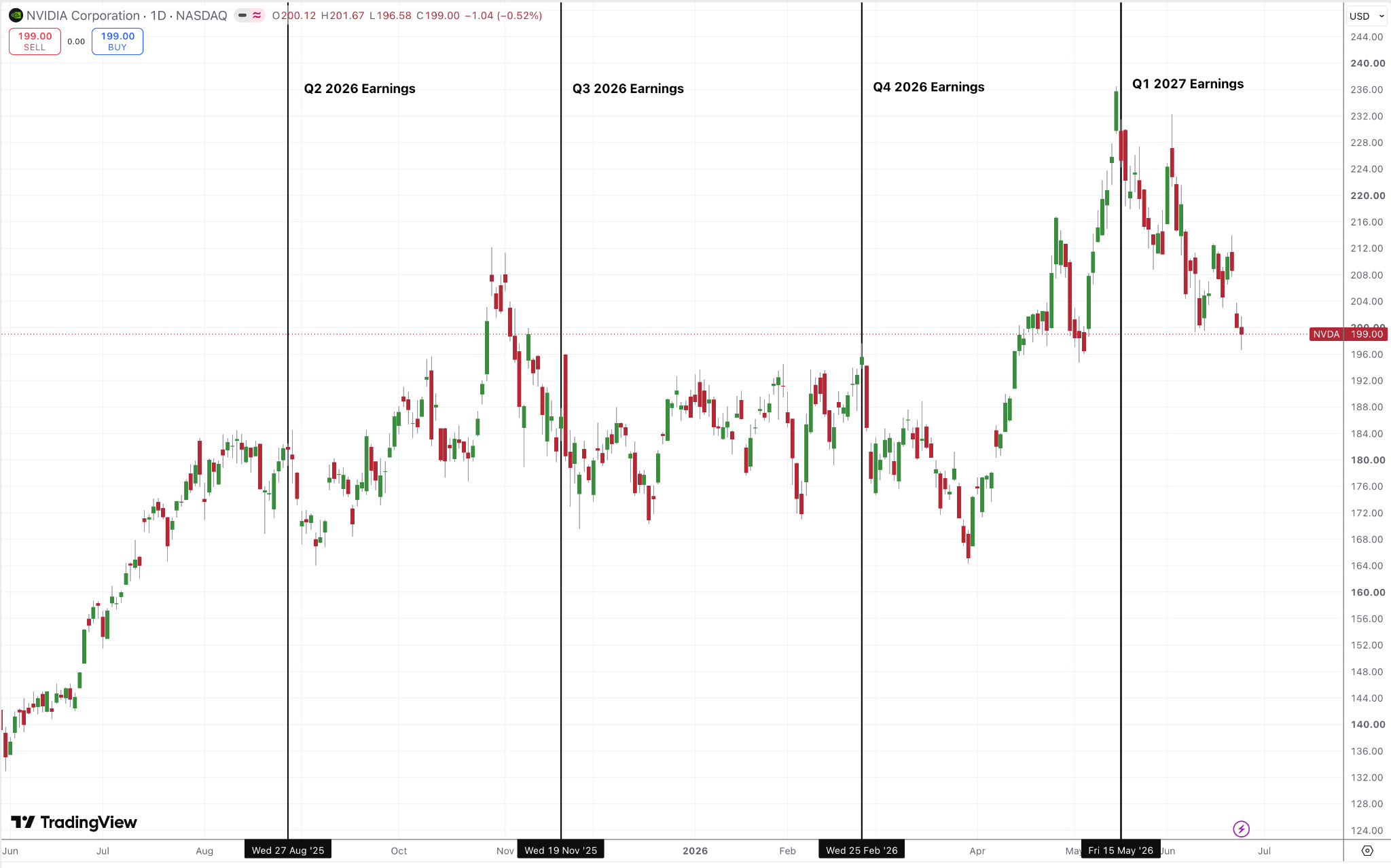
Source: NVDA TradingView Daily Chart (shows the four consecutive post-earnings red candles following each of Nvidia's last four quarterly reports, each a potential short entry setup for traders watching the earnings calendar.
“Trade CFDs with an ASIC-regulated broker. Fast AUD funding via PayID. ”
The Risks Short Sellers Have to Understand
Short selling has a risk profile that is fundamentally different from going long, and most introductory guides gloss over the part that actually matters.
When you buy a share and go long, the maximum you can lose is the amount you invested. When you go short, there are no theoretical limits to how much share prices could go up, and thus to how much you could lose. A stock you short at $100 can go to $200, $300, or $500. Your loss grows with every dollar it moves against you and there is no ceiling on that move.
The short squeeze makes this worse. A short squeeze happens when a heavily shorted stock starts rising and short sellers rush to buy back their positions simultaneously, which pushes the price even higher, which forces more short sellers to cover, which pushes the price higher still. It is a feedback loop that can destroy a short position in minutes. The GameStop squeeze in 2021 is the most famous example but it has happened to heavily shorted stocks across every market cycle since. Mitrade's stop-loss orders are the non-negotiable tool for managing this risk on every short position.
Short selling carries risks including losses and short squeezes. If a stock price rises instead of falls, losses can be theoretically infinite for traders without a stop loss in place.
The overnight financing fee is the third risk specific to short CFD positions. When you hold a short CFD position overnight, the platform charges a daily financing fee. On short-duration trades this is negligible. On positions held for weeks, it adds up and eats into your profit margin.
How to Short Sell on Mitrade
Mitrade, regulated by ASIC under licence AFSL 398528, makes short selling straightforward through its CFD platform. Here is exactly how it works across the instruments readers of this blog already follow.
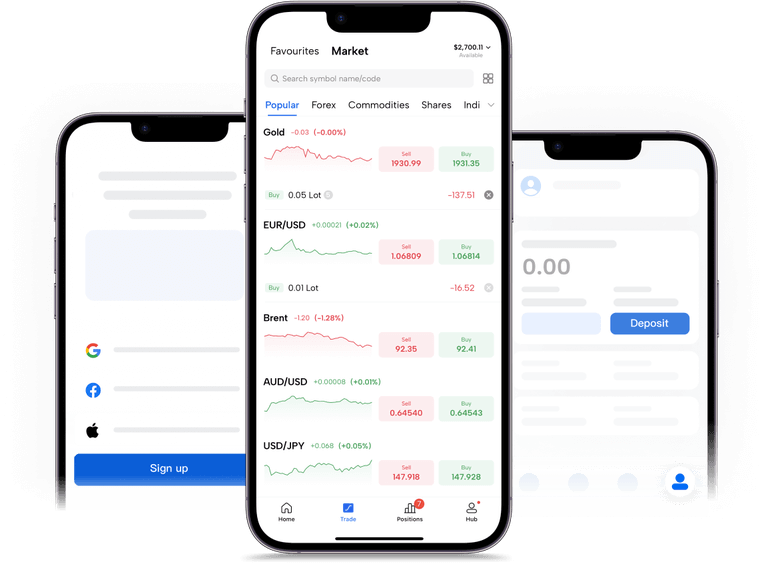
To short the Dow Jones (DJIA), open the Mitrade platform and search for US30 or Wall Street 30. Tap sell rather than buy. Set your position size, place your stop loss above your entry level at a point where your trade idea is invalidated, and confirm. The position profits as the index falls and loses as it rises. The stop loss closes the trade automatically if price moves against you beyond your chosen level.
To short gold (XAU/USD), which experienced traders do when the Fed signals a hawkish pivot and the dollar strengthens, the process is identical. Search XAU/USD, tap sell, set your stop loss above a key resistance level, and enter. The January 30, 2026 session when Kevin Warsh's nomination triggered an 11% gold crash was exactly the kind of macro event that short gold positions are built for.
To short AUD/USD, which traders do when risk-off sentiment spikes and the US dollar surges, you sell AUD/USD through the Mitrade forex instrument list. The pair moves immediately on RBA decisions, Middle East headlines, and China PMI data, giving short sellers multiple high-probability setups each month.
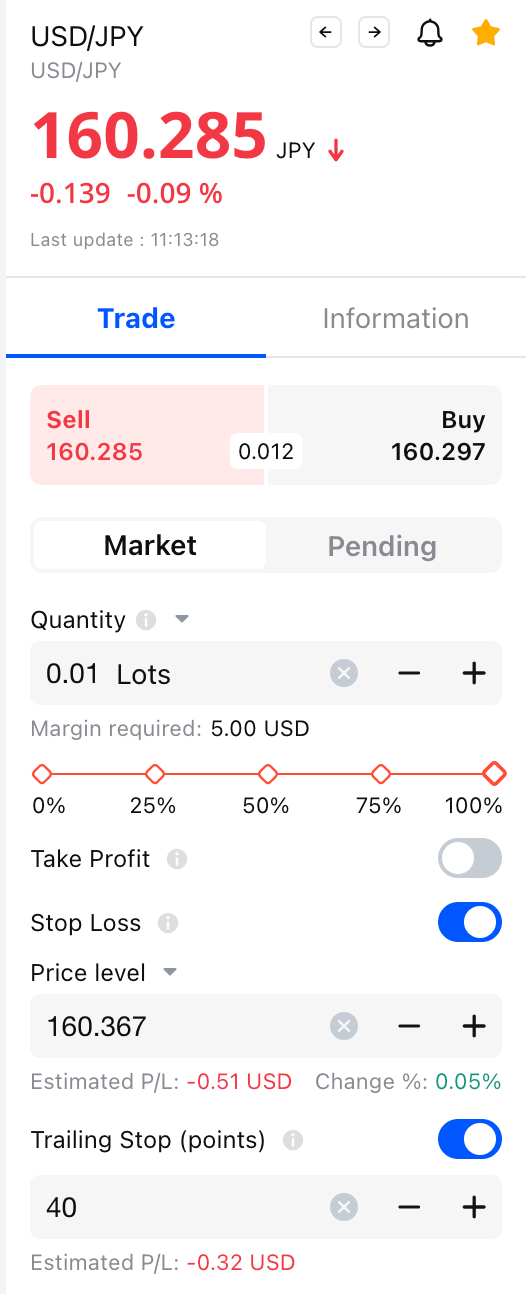
Source: Short selling and SL Panel on Mitrade platform
Pros of Short Selling Through CFDs
You can profit from market downturns that wipe out long-only portfolios. When the Dow drops 1,151 points in two days, short sellers generate returns while long-only traders absorb losses.
You can hedge your existing positions. If you hold a long position in a tech stock and want to protect it against an earnings disappointment, a short CFD on the same stock or sector index offsets the downside without forcing you to close your long position entirely.
You can trade every macro event in both directions. An Iran strike, a Fed rate hold, a China PMI miss all create directional moves that a short position captures just as effectively as a long one, depending on which side of the trade you are on when the news hits.
You can access short positions on Mitrade with zero commission and stop loss controls that appear directly on the order screen before you confirm any trade. Every short position on Mitrade comes with ASIC-mandated negative balance protection, which means your loss on any trade is capped at the funds in your account.


1. Is short selling legal in Australia?
Short selling is legal in Australia but it is primarily available to institutional investors and experienced traders who meet specific criteria on the ASX. Most retail investors are barred from traditional short selling unless they meet strict eligibility requirements. However, retail traders can access short positions on any instrument through CFDs on ASIC-regulated platforms like Mitrade, with no eligibility barrier beyond opening an account.
2. How does short selling through CFDs work?
With CFD trading, you agree to exchange the difference in price of your chosen asset from when the position is opened to when it is closed. When you short-sell a CFD, you open a position to sell the asset without owning it or needing to borrow it from anyone. If the price falls from your entry, you profit. If it rises, you lose the difference.
3. What is a short squeeze and how do you protect against it?
A short squeeze happens when a heavily shorted asset starts rising sharply, forcing short sellers to close their positions by buying back the asset, which drives the price even higher and triggers more forced buying in a feedback loop. The only reliable protection is a stop loss order placed above your entry at a level where your trade idea is invalidated. Mitrade's stop loss tool closes your position automatically when that level is hit.
4. Can you lose more than your account balance when short selling?
On ASIC-regulated CFD platforms, negative balance protection applies by law. Short selling carries risks including losses that can be theoretically unlimited if no stop loss is in place, but ASIC's mandatory negative balance protection means your losses on Mitrade are capped at the funds in your account. This protection does not replace the need for a stop loss, which should always be placed before any short position is confirmed.
5. What is the difference between going long and going short?
Going long means you buy an instrument expecting the price to rise and profit from an upward move. Going short means you sell an instrument you do not own, expecting the price to fall and profiting from a downward move. Going long caps your maximum loss at your initial investment. Going short has theoretically unlimited downside if no stop loss is in place because there is no ceiling on how high a price can move against you.
6. Can Australian traders short sell on Mitrade?
Yes. Mitrade offers short selling on forex pairs, indices including the Dow Jones, commodities including gold and oil, and US-listed shares under ASIC regulation with licence AFSL 398528. Traders tap sell rather than buy on any instrument to open a short position, with zero commission and stop loss controls available directly on the order screen. A free demo account with $50,000 in virtual funds lets you practise short selling before going live.
Disclaimer: The content presented above, whether from a third party or not, is considered as general advice only. CFD trading involves significant risk of loss. Past performance does not guarantee future results. This article serves informational purposes only and does not constitute financial advice. Consider your risk tolerance before trading.


