


SpaceX 2026 IPO: How UAE Investors Can Buy the Historic $1.75T Listing
If the IPO goes ahead, it’s likely to draw a lot of attention from both retail and institutional investors.
This guide breaks down the timeline, pricing expectations, how investors could get involved, and the key risks.
What Is the SpaceX IPO and Why Is It Getting Attention?
SpaceX (Space Exploration Technologies Corp.), founded by Elon Musk in 2002, has become a major player in the aerospace industry. It is known for reusable Falcon 9 rockets, the Starlink satellite internet system, and the development of the Starship program. Over time, SpaceX has grown from a startup into a major player in space and satellite infrastructure.
This IPO is getting extra attention partly because Elon Musk has long said he prefers to keep SpaceX private. of keeping the company private until human Mars missions are frequent. Unlike many typical tech IPOs, which are usually much smaller in scale, SpaceX represents an entire industrial ecosystem combining aerospace, defense, global telecom, and newly integrated artificial intelligence (AI) infrastructure following its recent consolidation with xAI.
If successful, this could become the largest IPO in stock market history, comfortably eclipsing the previous $29 billion record set by Saudi Aramco in 2020.
When Is the SpaceX IPO Date and Trading Debut?
The regulatory timeline has moved rapidly following the public release of SpaceX’s S-1 prospectus with the U.S. Securities and Exchange Commission (SEC) on May 20, 2026.
The institutional order book appears to be seeing strong demand, and final details are still expected to be confirmed. Although dates can still change at the last minute, the final timeline is structured as follows:
Expected Pricing Date: Thursday, June 11, 2026 (After U.S. market close)
Expected First Trading Day (Debut): Friday, June 12, 2026
Ticker Symbol: SPCX
Listing Exchange: Nasdaq
What Is the Expected SpaceX IPO Price?
The scale of the offering is unprecedented for a public market debut. Based on the amended S-1 filings, the target parameters for the listing are:
Note on Index Inclusion: Major index providers are already adjusting for this historic scale. MSCI confirmed it will apply early-inclusion rules to add SPCX to its Global Standard Indexes within 10 trading days of its debut, fueling massive automated demand from passive index funds. Conversely, the S&P 500 has temporarily blocked quick entry due to its strict net-profitability requirements.
What This Valuation Means for Retail Investors
A valuation of $1.75+ trillion places SpaceX instantly into the top 10 most valuable publicly traded companies on Earth upon debut. For retail investors, this means the company is being priced at a significant premium—roughly 92 times its 2025 revenues ($18.67 billion). Unlike mature tech giants, SpaceX is still heavily in a capital-expenditure phase, posting a net loss of $4.94 billion in 2025 due to massive investments in Starship and AI data centers.
Can Retail Investors Participate in the SpaceX IPO?
Typically, retail or individual investors are shut out of major U.S. IPO allocations, with 90% to 95% of shares reserved strictly for Wall Street institutions and sovereign wealth funds. However, SpaceX is executing an unconventional strategy.
The company has decided to reserve up to 30% of its IPO shares (approx. $22.5 billion) for individual retail investors. This is a relatively large retail allocation compared to most IPOs, likely reflecting strong interest from individual investors.
What retail investors should expect
The Demand Squeeze: Despite the 30% allocation, early reports show that total investor Early reports suggest demand could be very high, possibly exceeding $150 billion.—nearly double what the company seeks to raise.
Scaling Down: If you apply for the IPO stage through a broker, you will almost certainly not receive your full requested allocation. Your order will be heavily scaled back, or you may receive zero shares if your broker’s pool is exhausted.
Immediate Post-Listing Availability: If you do not receive an allocation during the IPO subscription phase, you can buy the stock immediately on the open market once trading begins on the Nasdaq on June 12.
How Individual Investors Can Participate in The SpaceX IPO In UAE?
Individual investors in the UAE must navigate the process through authorized financial channels rather than the company itself.
Here is how the process works:
Select the Right Financial Intermediary: Investors need to open an account with a brokerage firm or specialized investment platform (such as Interactive Brokers) that grants retail investors access to private shares or upcoming IPO allocations. Not all standard brokerages offer these specialized services.
Submit a Subscription or Pre-Purchase Request: After funding the trading account with sufficient capital, the investor submits an expression of interest or a pre-purchase order. This request specifies the desired number of shares or the total dollar amount they wish to invest based on the target offering price.
Await Share Allocation: Once the subscription window closes, the broker allocates available shares based on demand and regulatory allocation mechanisms. The approved shares are then deposited directly into the investor’s portfolio, and any unallocated, excess capital is refunded to the account.
How Can UAE and Arab Investors Buy SpaceX Stock After Listing?
Once the stock hits the Nasdaq order books on June 12, regional restrictions drop away, and global access opens up. UAE and Arab investors can access SpaceX (SPCX) in more than one way, depending on their financial goals: Do they want to actually own the underlying shares for the long term? Or do they just want to trade on short-term price movements?
1. Purchase the Actual Stock Through a Broker Supporting U.S. Equities
This option is tailored for long-term investors who want to physically own SPCX shares and hold them in a custodian portfolio. Purchases are made through standard international brokers popular in the Gulf (like Interactive Brokers, Saxo Bank, or Swissquote) or regional digital wealth platforms licensed by local regulators like the Dubai Financial Services Authority (DFSA) or Saudi Capital Market Authority (CMA).
Advantages:
✅ True Ownership: You hold actual title to the equity within your portfolio.
✅ Long-Term Aligned: Perfect for dollar-cost averaging into the commercial space economy over a 5-to-10-year horizon.
✅ Growth Compound: Direct exposure to the compounding value of the Starlink, Starship, and xAI segments.
Disadvantages:
❌ High Capital Entry: If buying directly at market open, extreme volatility could artificially pump the first-day price far above $135.
❌ Long-Only Limits: Profiting from a market correction or a drop in valuation is difficult without utilizing complex, high-risk options strategies.
2. Trading via Contracts for Difference (CFDs)
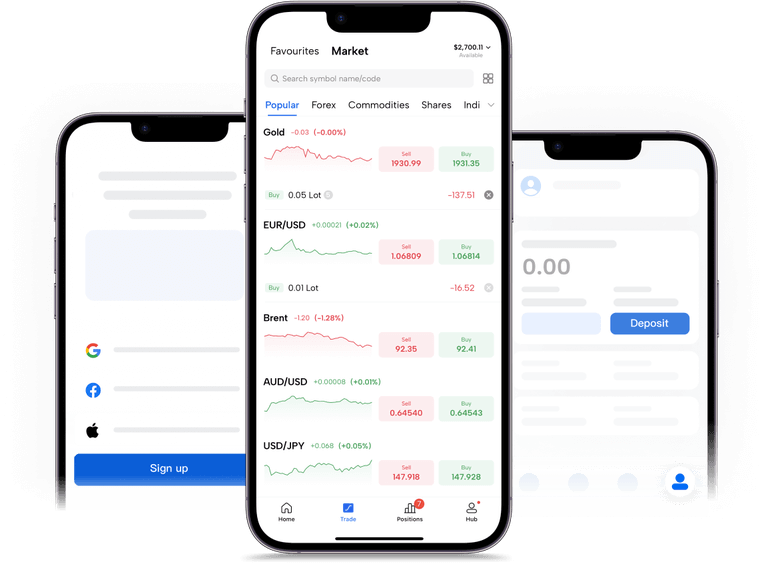
For short-term speculators, derivative platforms (such as Mitrade) support to trade the SpaceX shares after listing. When trading a CFD, you do not own the underlying aerospace assets; instead, you enter a contract to exchange the difference in the stock’s price from when the position is opened to when it is closed.
Advantages:
✅ Two-Way Trading: You can profit from both rising prices (going long) and falling prices (going short) if the valuation experiences a harsh post-IPO correction.
✅ Flexible Speculation: Highly responsive setup suited for rapid, intra-day price swings.
✅ Risk Infrastructure: Built-in access to localized automated risk controls like guaranteed stop-loss and take-profit limits.
Disadvantages:
❌ Zero Equity Rights: Yields no actual ownership, voting rights, or corporate claims on SpaceX or Starlink.
❌ Leverage Hazard: CFD leverage can significantly magnify losses just as quickly as it accelerates gains, presenting substantial risk in a highly volatile asset.


Is SpaceX Stock a Good Investment, or Is the Risk Too High?
While SpaceX is undeniably an industry powerhouse, its stock could carry substantial risk if it hits the market at an inflated valuation and premium price. Therefore, an investment decision should not rely solely on the company’s stellar reputation or the star power of Elon Musk. Instead, it must be based on a careful analysis of its long-term growth potential weighed against the risks of valuation traps and high volatility.
Where Do the Investor Opportunities Lie?
SpaceX’s primary appeal stems from its dominant position in the commercial aerospace sector and its rapid expansion into global satellite internet via Starlink. Furthermore, the company benefits from a robust pipeline of government and commercial contracts, alongside accelerating global demand for space infrastructure and universal connectivity.
🔸 Long-Term Investment Opportunities
If Starlink successfully scales its revenue and expands its profit margins over the coming years, long-term investors stand to benefit from a sector that is still in its global infancy.
However, this thesis requires patience. Because SpaceX commands a premium valuation, the market has likely already priced in a significant portion of its anticipated growth. Consequently, the stock may require considerable time to justify its price tag, particularly if it begins trading at overextended levels immediately following its public debut.
🔸Short-Term Trading Opportunities
For short-term traders, the primary opportunity lies in the heavy volatility expected after the listing. The combination of intense retail demand, a limited initial public float (available shares), and relentless media coverage is highly likely to trigger dramatic price swings during the opening trading sessions.
Capitalizing on Volatility: “Short-term traders may try to take advantage of volatility, although risk will likely be high risk management.
There are two possible short-term scenarios: the stock could spike at the open, or it could pull back after early excitement fades. Savvy traders may find opportunities to short the stock or buy the dip following a market correction. Conversely, if the price stabilizes and establishes firm support levels, it could offer highly calculated, lower-risk entry points.
Catch the SpaceX's golden trading opportunities with free live prices on Mitrade.
What Are the Main Risks to Consider Before Buying SpaceX Stock?
Before allocating capital to SPCX, retail investors must look past the media fanfare and isolate the hard operational risks:
1. Valuation Concerns: SpaceX posted a net loss of $4.94 billion in 2025, even as its top-line revenue climbed 33% to $18.67 billion. Paying $1.75 trillion for a company that is fundamentally net-loss making requires massive trust in future margins.
2. Extreme Capital Expenditure (CapEx): Building Starship fleets, deploying tens of thousands of Starlink V3 satellites, and scaling high-output AI data centers demands tens of billions in continuous, burning cash layout.
3. The "Elon Musk" Premium: Much of the investor excitement is driven strictly by Elon Musk’s name. This creates a psychological premium where the stock trades on sentiment rather than balance sheets. If Musk faces regulatory, legal, or personal distractions, the stock price could suffer disproportionately.
4. Geopolitical and Regulatory Shocks: SpaceX is heavily reliant on highly sensitive U.S. defense contracts and international wireless spectrum allocations. Changes in global space law or localized regulatory bottlenecks can affect future growth and government contracts..
Is Buying SpaceX Stock on the First Trading Day a Good Idea?
Historically, mega-tech IPOs that capture intense global media hype undergo a predictable phenomenon known as the "IPO Pop and Drop." On the first trading day, intense retail FOMO (Fear of Missing Out) frequently drives the opening market price drastically higher than the official underwriter price ($135).
While entering early lets you participate in immediate momentum, buying during a highly volatile first session exposes you to severe capital risk. If you buy at the absolute peak of the opening day retail surge, you could find yourself holding overvalued shares if institutional investors decide to lock in profits.
🔺Often, waiting weeks or even months for the initial media hype to decay allows the stock to settle into a logical trading range, providing a far safer, more calculated entry point.
Conclusion
SpaceX is undoubtedly one of the most anticipated IPOs of 2026, marking a historic milestone for retail investors looking to enter the orbital economy.
While long-term investors may choose to purchase actual shares, short-term speculators can utilize specialized platforms like Mitrade to trade SpaceX via CFDs to capitalize on rapid price movements in both rising and falling markets. To navigate this extreme opening volatility safely, beginners can practice strategy deployment risk-free by using Mitrade’s free demo account, which comes preloaded with $50,000 in virtual funds.
In the end, it’s better to look at the numbers and risks instead of getting carried away by the hype.
Allocation not fully filled?
Don't worry, Mitrade opens the door to the U.S. market to buy SpaceX shares the moment trading begins!
FAQs
1. When will SpaceX stock start trading?
SpaceX is officially scheduled to set its final IPO price on Thursday, June 11, 2026, and will mark its public trading debut on the Nasdaq exchange on Friday, June 12, 2026 under the ticker SPCX.
2. What is the expected SpaceX IPO price?
Underwriters are currently targeting an initial public offering price of $135 per share, which aims to raise up to $80 billion and values the combined corporate entity at approximately $1.75 trillion to $1.8 trillion.
3. Can investors in Egypt buy SpaceX stock?
Yes. While pre-IPO allocation is highly restricted, any investor in Egypt can buy SpaceX stock on or after June 12, 2026, by utilizing any local or international brokerage platform that offers direct access to the U.S. Nasdaq market and supports USD-denominated accounts.
4. Can retail investors participate in the SpaceX IPO?
Primary access to the $135 institutional price is strictly limited due to record-breaking demand from institutional funds. The vast majority of retail investors will need to wait until the stock officially opens for public trading on the secondary market on June 12.
5. Is it better to buy SpaceX on the first trading day or wait?
For long-term, risk-averse investors, waiting is generally recommended. First-day trading sessions for mega-hype IPOs are notoriously volatile and frequently prone to artificial price spikes driven by retail emotion, making a delayed entry point structurally safer.
* The content presented above, whether from a third party or not, is considered as general advice only. This article should not be construed as containing investment advice, investment recommendations, an offer of or solicitation for any transactions in financial instruments.


