



Ethereum isn't only a digital currency anymore. It's part of decentralized finance, NFTs, smart contracts and all new things blockchain. It’s also the second-largest currency and changes how we build apps, send things of value and interact making it one of the best technologies in finance. To fully understand the extent of this network, we must look at its main features as well as the building blocks that make it work.
Through this complete guide, you will discover exactly how Ethereum works, how Layer 2 scaling networks reduce transaction costs by 99%, and how to position yourself—whether by buying physical ETH for long-term compounding or trading its high volatility short-term.
What is Ethereum?
Ethereum aims to be a decentralized “world computer.” It’s a distributed blockchain and programmable network. Centrally controlled computer networks use centralized server infrastructures. On Ethereum’s open source blockchain ledger, decentralized applications are deployed and maintained permanently and immutably.
Centralized servers are big data centers owned by a single entity. Google, X, and other mainstream digital platforms use a centralized server. Centralized server design creates structural vulnerabilities. If a data center goes offline or is attacked, the entire digital platform and the data contained in it become inaccessible. Ethereum turns things around completely by running on a global network of independent computers which are called nodes.
This decentralized system means there are no single data points of failure for Ethereum. Therefore, making it an efficient and well-connected supercomputer.
The Evolution History of Ethereum
The co-founder of Bitcoin Magazine, Vitalik Buterin invented Ethereum in 2013. Buterin claimed Bitcoin’s blockchain required a coding language to enable the development of apps. These apps would allow for more than just transferring assets. Buterin tried to get the Bitcoin community to adopt the idea but, when they resisted, he published the Ethereum Whitepaper.
In July 2014, the founders of Ethereum including Gavin Wood (the guy who wrote the Ethereum Yellow Paper and made Solidity) and Charles Hoskinson, did an online presale for crowdfunding. They sold the first ETH tokens for Bitcoin and made around $18 million. Frontier was the first live version of the network and was launched on July 30, 2015.
Key Events
How Does Ethereum Work? The Infrastructure
Ethereum is an example of a huge, decentralized computer system with a global reach. It uses a Proof-of-Stake (PoS) consensus mechanism. Traditional computers operate with a central server. The way Ethereum works is different. It uses a computer network that keeps itself up to date. This network is called a blockchain ledger. It consists of independent computers which are called nodes.
The Blockchain Ledger
The blockchain ledger is a ledger where you can see all the transactions in order of occurrence and it notes all the updates of the network in real time.
There are no bank accounts. Instead, you can see the state of all the accounts right on the network. Every twelve seconds, a new batch of transactions is added to a permanent block. These are then linked in order. This creates a publicly verifiable record of DeFi activity and wallet balances.
Since data can't be deleted, it can be assumed that the previous block data can never be changed.
Proof of Stake (PoS): Secure Infrastructure Without Crypto Mining
Proof of Stake (PoS) is a consensus mechanism used by Ethereum to verify transactions and create new blocks. Ethereum started utilizing a PoS system after The Merge on September 15, 2022. At that time, Ethereum became free from traditional crypto mining. This is preferred over the costly, energy-consuming hardware systems that mine and solve complicated math problems.
To clarify, miners are replaced with validators in Ethereum. Validators lock ETH which makes it more secure through a process known as staking. They create new blocks and help protect the system by staking 32 ETH. For this, they receive staking rewards that include freshly created ETH and a portion of the transaction fees.
Liquid staking protocols make it so people can combine their ETH to meet the requirement since you need 32 ETH to stake. This opens up network security and yield generation for all.
PoS has many benefits like lowering the impact on the environment as Ethereum reduced its electricity usage by 99% after The Merge. Plus, it improves the efficiency of the network as a whole.
The EVM (Ethereum Virtual Machine): The Global Operating System
The EVM (Ethereum Virtual Machine) executes smart contract code across the entire Ethereum blockchain. It is one of the biggest innovations from Ethereum as it gives developers the ability to build decentralized apps (dApps), DeFi protocols and more.
All Ethereum nodes run the same instruction at the same time to provide the same output across everything in the network. Apps can be created and launched without centralized servers anywhere in the world thanks to the consistency of the EVM.
Even Polygon and Base which are Ethereum-compatible blockchains are also powered by the EVM. Because of this compatibility of EVM, Ethereum is the leading smart contract ecosystem.
Nodes and Validators
Nodes store copies of the blockchain and verify transactions while validators stake ETH and approve blocks to join the Proof of Stake process. With the help of nodes and validators, decentralization and security of Ethereum are preserved.
Key Components of the Ethereum Network
You must also learn what the key components of this network are. Keep in mind that it is a network of tools which all work together to allow Ethereum to function. Smart contracts lie at the center of this network.
Smart Contracts: The Unbreakable Digital Agreements
A smart contract is a digital agreement with the terms of the contract written directly into the software code. This means that they can do all the work automatically without any middlemen. Without them, Ethereum would just be a simple payment network for moving ETH from Person A to Person B. Smart contracts turn Ethereum into a programmable infrastructure layer. They act as the backend logic for Decentralized Applications (dApps).
A conventional contract may have banks and lawyers. But, a smart contract can replace all of this with code. They function on the "If X, then Y" basis in the Ethereum system. For instance, in a decentralized lending app, a smart contract would release a borrower's digital collateral the instant they made the required deposit.
Ethereum was the first blockchain to allow for smart contracts. This is why they now have the biggest ecosystem for smart contracts.
Ether (ETH): The Fuel vs. The Currency
You need to know how to tell apart the Ethereum network from the Ether crypto (ETH). Ether has two main uses:
1. ETH as Network Fuel
ETH is what runs the Ethereum network since it is used for transaction fee payments. It is given as rewards to validators as well. As a simple analogy, ETH can be compared to a car’s fuel. If a user wants the global computer to run their transaction to the smart contract, they must pay for the gas.
2. ETH as Digital Currency
The ETH crypto can be bought and sold as well as used to buy things online. You can also perform secure borderless transactions without needing a middleman like a bank with it. ETH really dominates the DeFi space. People will lock their ETH in smart contracts to secure loans in other assets, like stablecoins. They can do this without selling their ETH.
Understanding Gas Fees
Gas fees are the costs for transactions on Ethereum. They come into play for every action that you do on the Ethereum network. For instance, sending ETH or doing token swaps. Gas fees can skyrocket once millions of users use the main blockchain at the same time.
At their core, they exist because they stop spam on the network and give validators payment for their work. However, high gas fees have turned some people away from using Ethereum.
L2
Layer 2 (L2) networks like Arbitrum, Optimism and Base operate as scaling solutions on the main Ethereum layer (Layer 1).
Here is how they work to reduce the cost of consumer transaction fees by as high as 99%.
Off-Chain Execution: L2 networks avoid processing user transactions one at a time and instead group thousands of transactions, execute them quickly off-chain and create a single compact package.
On-Chain Settlement: This compact package is then sent to Ethereum Layer 1 for permanent settlement.
The Economic Result: Since thousands of users share the cost of a single block transaction on the Ethereum mainnet, gas fees are reduced to a fraction of a cent.
This process helps the Ethereum network scale for mass adoption.
Types of L2 Solutions
Ethereum has plenty of L2 Solutions, such as Optimistic Rollups or ZK Rollups. These protocols act as secondary execution layers that process transactions off-chain, bundle them together and settle them back on the Ethereum mainnet. Both of these rollups are considered secure as they inherit the security from the mainnet itself.
Optimistic Rollups: The main thing they offer is fast inexpensive transactions while still being completely Ethereum Virtual Machine (EVM) compatible. So, for developers, you can easily transfer your smart contracts from the mainnet to L2 networks like Arbitrum and Optimism without having to change anything.
Zero-Knowledge (ZK) Rollups: These create a way to quickly validate a transaction cryptographically to ensure the transaction is valid and then send it to Ethereum. Starknet and zkSync use this technology to provide really fast and secure transactions.
Wallets: A Path to Ethereum
Ethereum wallets are apps designed for managing your account. Because Ethereum is a decentralized network with no central authority to reset passwords, your wallet is the only tool responsible for generating and safeguarding your private keys.
Like your real-world wallet, a digital wallet has all the information you need to authenticate who you are and to manage what is yours. Your Ethereum wallet lets you log into apps, check your account and even send transactions.
When it comes to the types of wallets, we have hardware wallets (cold storage) and mobile wallets (hot storage).
Cold storage refers to any kind of physical storage mechanism that stores private keys offline, such as a USB device. Some popular ones are Trezor and Ledger.
Hot storage is everything you keep online. For example, apps on your smartphone which let you check on your ETH whenever you want. Some popular hot storage options are MetaMask and Trust Wallet.
What Can You Do on the Ethereum Network? (Real-World Use Cases)
Because you can program anything into Ethereum, many industries can use Ethereum.
1. Tokenization of Real-World Assets (RWAs)
Ethereum makes it possible to create crypto tokens for physical assets. This has become popular for some big corporations that use Ethereum to create tokens for things like real estate, gold etc. Tokenization lets assets that normally can’t be split into parts be divided into smaller parts. Therefore, you can own a part of a real-life object without buying it fully. Plus, it can even be traded anytime even in places that normally don't allow it and for much lower costs.
2. Payments
Ethereum is a global, 24/7 financial platform where you can send money just as easily as sending a text. Since it uses a decentralized and open network, it crosses political borders and can be used at any time of day without dealing with a bank. It allows you to send money (stablecoin) anywhere in the world and buy things with a self-custodial crypto debit card.
3. Digital Identity
A self-governing digital identity is built through Ethereum Name Service (ENS) and decentralized identifiers (DIDs). Instead of logging into websites with accounts from big companies like Facebook and Google, people use a secure Ethereum public address as a master key. In other words, you don’t need to rely on third parties at all with decentralized identity.
Ethereum vs Bitcoin
Even though they are at the top of the list of big players, Bitcoin and Ethereum are very different. Bitcoin controls the market as a store of value while Ethereum controls the market as a programmable blockchain. Rather than seeing them as competitors, people are starting to see them as the two partners.
Pros and Cons of Ethereum
Ethereum has some noteworthy pros but it also has trade-offs.
Pros of Ethereum
✅Flexibility: No one has better network effects than Ethereum. It has the largest ecosystem of active developers, dApps, liquid capital and institutional integrations compared to any other smart contract platform. This gives you more flexibility if you are looking for certain services like creating apps or just utilizing smart contracts.
✅Security: As of 28 May 2026 there are over 892.2K validators for Ethereum as per Token Terminal. They are located worldwide and have made Ethereum structurally resilient to points of failure or attacks. This means more security for users.
✅Interoperability: Ethereum uses standards like ERC-20 and ERC-721 for fungible and non-fungible tokens. This boosts Ethereum's interoperability with multiple platforms and other blockchains. Furthermore, the dApp design presents the opportunity for the development and integration of many solutions within the blockchain ecosystem. This means you can easily build solutions that connect with the bigger ecosystem.
Cons of Ethereum
❌Network Congestion: High traffic can lead to delays in terms of transaction speeds as well as spike the gas fees.
❌Scalability Problems: L2 solutions have helped with some scaling. However, the underlying L1 is still slow. Currently, it processes around 30 TPS which is way slower than traditional payment networks like Mastercard which can process thousands.
❌User Experience: If you are not super technical, using Ethereum can be tough. You have to deal with private keys, gas fees and other things like dApps.
How to Get Started: Buying vs. Trading Ethereum Safely
To see the potential for Ethereum’s growth, you need to decide if your goal is to secure an asset for the long-term or if you prefer to take advantage of it for the short-term.
Option 1: Buying and Storing Physical ETH (For Long-Term Holders)
If you want to invest in ETH for a long time and plan to get involved in the network’s governance, buying ETH and storing it in a physical wallet is what you want to do.
You must go to a crypto exchange, open an account and connect a bank account to buy ETH. As a long-term holder, you are entirely responsible for the safety of your ETH. As a result, make sure you transfer your ETH off the crypto exchange and into a secure private hardware cold wallet.
Remember that if you lose the wallet’s seed phrase, you lose your wallet and ETH for good. Proper security management is key.
Option 2: Trading ETH CFDs with Mitrade (For Active Traders)
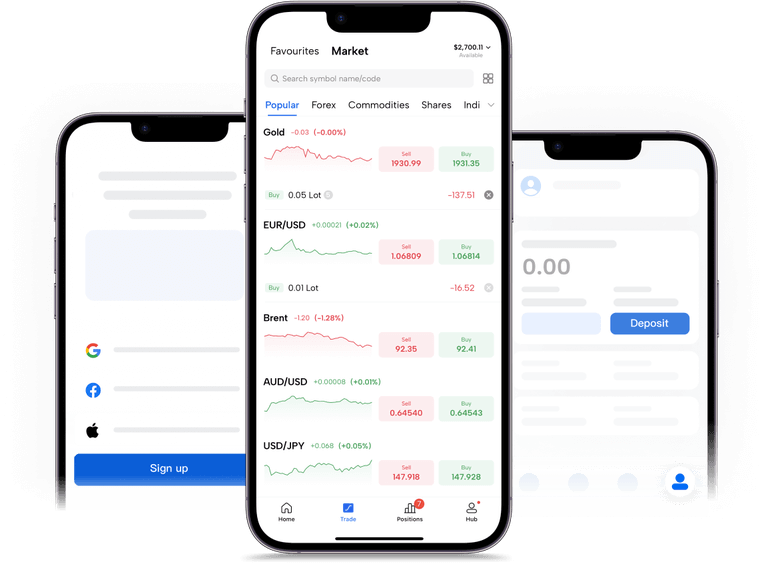
Let's say you want to profit from changes in ETH’s daily price without the hassle of managing assets on the blockchain. Trading Contracts for Differences (CFDs) with a reliable broker like Mitrade is another great option.
A CFD is a contract that allows you to bet on the price changes of a certain asset without having to buy it. There are certain benefits for this option as well:
✅ Zero Storage Hassle: When you trade ETH CFDs with Mitrade all you do is speculate on future price movement and you do not own the actual ETH. This removes the need for storage.
✅ Two Way Trading (Long/Short): To make money on regular markets, prices have to go up. CFDs are a bit different. If you think Ethereum will go up, you open a Long position. Open a short position if you think it will drop.
✅ Leverage Flexibility: With a CFD, you're allowed to trade with leverage. A leverage trade means you can open a larger market position with a smaller deposit. In other words, trading can be more effective.
Now you may be asking yourself, why Mitrade? Let’s talk about it.
✅ Regulated Platform: Mitrade follows a ton of different regulations. They have licenses from the Cyprus Securities and Exchange Commission (CySEC - CIF438/23), the Australian Securities and Investments Commission (ASIC) and the Certified Management Accountant (CMA) from the UAE. When you trade with them, your money is safe.
✅ Low Spreads: Mitrade has one of the lowest spreads in the industry. For example, you “pay” about 0.6-0.8 pips EUR/USD or 0.10-0.20 USD gold when you make a trade.


Ethereum started out as just an idea. Now, it is the second biggest crypto in terms of market cap in the world. It has developed a lot in smart contracts and established the frameworks for digital finance and real world tokenization. With ongoing scaling upgrades, like danksharding, Ethereum has a bright future ahead.
Remember that knowing how ETH works is important no matter whether you buy it for the long-term or trading ETH CFDs with Mitrade.
FAQs
1. What affects Ethereum's price?
You can attribute Ethereum's market valuation to the utility of its network. Demand for dApps, tokenization of institutional assets and the use of L2 scaling pushes users to buy ETH to pay their gas fees. This results in increased buying demand.
2. What is Ethereum 2.0?
Ethereum 2.0 was a multi-phase upgrade that transformed the network from Proof of Work to Proof of Stake. This added security and made the block chain much less energy intensive and more scalable.
3. How do Layer 2 networks help with Ethereum's high fees?
Think of L2 networks as extra lanes on the Ethereum highway, where the main traffic is processed. They handle loads of transactions outside of the main chain, bundle them together and send the summary down to L1. L2 networks basically lighten the load on the congested chain which can reduce transaction costs by 99%.
Risk-Free Demo Account
CMA-regulated | 24х7 | T+0 | low spreads. Enjoy limit and stop loss for every trade!
* The content presented above, whether from a third party or not, is considered as general advice only. This article should not be construed as containing investment advice, investment recommendations, an offer of or solicitation for any transactions in financial instruments.


