


Is SpaceX Stock Worth Buying? 2026 Valuation Analysis & Guide for Arab Investors
When SpaceX went public in June 2026, the numbers felt almost fictional. By selling roughly half a billion shares at $135 each, the company raised a staggering $75 billion, debuted at a $2.1 trillion valuation, and briefly pushed its stock past $150—officially minting Elon Musk as the world’s first trillionaire.
But beyond the breathless global headlines, serious investors are left with a critical question: Is SPCX a generational growth asset, or an overhyped bubble?
🎯 This comprehensive 2026 deep dive breaks down SpaceX’s three core revenue pillars—including its highly anticipated orbital AI compute division—and weighs the definitive bull versus bear case. More importantly, we provide a practical, localized guide on how UAE investors can strategically position themselves and navigate this historic market event.
*Go Small with Mitrade—Low Deposit from $50 USD!
What is SpaceX?
SpaceX began life in 2002 as a scrappy start-up run on Elon Musk’s PayPal fortune. The first three Falcon 1 launches failed; the fourth succeeded in 2008 and earned a lifeline NASA contract. When it got listed last week at $135 per share under the ticker SPCX, Musk retained about 85 percent of voting power through super-voting stock.
Understanding its staggering valuation starts with the three pillars on which the company now rests, namely Aerospace & Defense, Starlink, and AI and Orbital Compute.
1. Aerospace & Defense
SpaceX’s Falcon 9 rocket dominates the global launch market, flying 165 missions in 2025—more than all other countries combined. Government clients range from NASA to the Pentagon, and the company also holds a $1.8 billion Starshield spy-satellite contract. Next-generation Starship aims for full reusability; the division generated $4.1 billion in revenue in 2025 but still lost $657 million as Starship R&D soaked up cash.
2. Starlink: Driving Global Connectivity
SpaceX’s broadband arm uses thousands of low-orbit satellites to deliver internet access. By early 2026, it served 10.3 million subscribers across 164 markets and produced $11.4 billion in revenue with $4.4 billion in operating profit. Average revenue per user of about $66 underscores a still-premium service that provides more than half of the company’s sales and nearly all of its cash flow.
3. AI and Orbital Compute: The Game Changer
SpaceX absorbed Musk’s AI start-up xAI in 2026 and plans to deploy up to one million solar-powered data-center satellites, with demonstration missions expected by late 2027. In 2025, the division generated $3.2 billion in revenue but lost $6.4 billion and consumed $12.7 billion in capital expenditure, making it highly speculative despite its transformative ambition.
Why Did SpaceX Trigger a Wall Street Avalanche Upon Listing?
Understanding the massive trading volume that triggered the SpaceX Wall Street avalanche requires looking past the retail hype. Behind the scenes, the buying frenzy was fueled by two primary engines: one structural narrative and one powerful mechanical catalyst.
1. The AI Convergence Premium
Bankers pitched SpaceX as a mash-up of Lockheed Martin, AT&T, and Nvidia, and Goldman's and Morgan Stanley analysts envision orbital AI revenues growing 100-fold by 2030 with a fully reusable Starship slashing launch costs. In this framing, SPCX offers exposure to three mega-themes at once, which helps explain why investors accepted a nearly 92× price-to-sales multiple.
2. Forced Buying by Index Funds
Nasdaq tweaked its rules so newly listed giants can join the Nasdaq-100 within 15 trading days and assign them a five-times float multiplier. Because SpaceX floated only about four percent of its stock, the multiplier boosted its index weight to roughly 0.7 percent.
Passive funds, therefore, had to buy billions of dollars of SPCX regardless of fundamentals; researchers estimate $9–14 billion of forced purchases across index waves, and ETF strategist Dave Nadig warned of about $7 billion in a single day. By contrast, SpaceX didn’t qualify for the S&P 500 because it posted a $4.9 billion net loss in 2025—proof that index mechanics, not profitability, drove much of the early demand.
What Drives SpaceX?
Space may be the final frontier, but where does SpaceX actually make its money today? Understanding the company's real revenue drivers is essential for any trader.
1. Launch Services
Falcon 9 launches bring in several billion dollars a year but remain unprofitable because of Starship research and development. SpaceX believes a fully reusable Starship will slash costs and unlock new markets, but until then, launches are more about strategic positioning than profits.
Government payloads, commercial satellites, and crewed missions make up a broad customer mix, ensuring the company maintains a foothold across civil and private sectors even as it invests heavily in the future.
2. Starlink Economics
Connectivity is the company’s cash engine. With more than ten million subscribers, Starlink generated $11.4 billion in revenue and $4.4 billion in operating income in 2025. Monthly ARPU around $66 remains high even as the service expands into price-sensitive regions, and enterprise and government clients pay more for dedicated bandwidth.
ARPU slipped as Starlink pushed into emerging markets, prompting management to raise consumer prices in May 2026 to protect margins.
3. Defense and Government
The Starshield spy-satellite program and classified launches highlight SpaceX’s deepening role as a defense contractor. These contracts carry higher margins and long-term visibility but hinge on U.S. budget priorities and geopolitics.
The $1.8 billion National Reconnaissance Office contract underscores a growing partnership with U.S. intelligence agencies and illustrates the dual-use nature of SpaceX’s technology.
4. AI Experimentation
The AI division, buoyed by a $45 billion Anthropic contract, remains a cost centre requiring heavy capital investment. Orbital computing is still conceptual, and investors should treat this pillar as a long-dated option.
Overall revenue was $18.7 billion with $6.6 billion in adjusted EBITDA and an operating loss of $2.6 billion in 2025. These figures illustrate a company still in investment mode.
Is SpaceX Worth Buying? SpaceX 2026 Valuation Deep Dive

At nearly 92× trailing sales and a market cap hovering above $2 trillion, SPCX’s premium sticker price is every bit as breathtaking as its rockets. To determine whether this staggering figure represents visionary pricing or an unsustainable bubble, we must weigh the starkly competing bull and bear cases that divide Wall Street.
Bull Case
Proponents view SpaceX as a new-age utility that combines launches, broadband, and AI. Goldman’s and Morgan Stanley’s models foresee orbital AI demand exploding by 2030 and a fully reusable Starship driving launch costs below $10 million. Starlink supplies predictable, high-margin cash flow and remains largely uncontested. Bulls note that Amazon looked absurdly valued in 1999, yet rewarded patient investors; if orbital computing succeeds, SPCX could unlock revenue streams unimaginable today.
Bear Case
Skeptics highlight the 92× sales multiple and point out that Morningstar values SpaceX at about $780 billion, roughly half its IPO valuation. Capex is enormous—$3.8 billion on Starship and $12.7 billion on AI hardware in 2025—and launching up to one million data-center satellites could cost tens of billions. Governance is risky because Musk controls about 85 percent of voting power. Orbital compute is untested and faces radiation and debris challenges.
A reasonable middle ground is to treat SPCX as a venture-style bet: the rewards could be spectacular, but the journey will be turbulent and the outcome uncertain.
From Mitrade analyst: I’d urge readers to approach SPCX with humility. Treat it as a speculative satellite in your portfolio rather than a core holding, and size your exposure so that a deep drawdown won’t upend your financial plan. The upside could be enormous if Starship works and orbital AI emerges, but the downside is equally real if technical or governance risks overwhelm. Your time horizon and risk tolerance should determine whether you participate at all. |
*Go Small with Mitrade—Low Deposit from $50 USD!
SpaceX’s Core Investment Value vs. Tech Giants
To understand if SpaceX's price tag is justified, you have to benchmark it against the heavyweights competing for the exact same investor dollars. Comparing SPCX to Apple and Tesla isn't just about size—it’s about mapping out where the company sits on the risk-reward spectrum, allowing you to gauge its capital intensity, execution risks, and ultimate growth runway against proven market leaders.
For Arab investors, SpaceX’s profile may feel familiar: heavy spending and an uncertain but potentially huge payoff, while Apple provides steadier income and Tesla sits between the two.
Conservative investors may gravitate toward Apple’s predictable cash flows; Tesla suits traders comfortable with volatility; SpaceX is a speculative bet best reserved for those willing to stomach deep drawdowns.
Risks You Need to Know Before Trading SPCX
⚠️1. Valuation risk: With a roughly 92× sales multiple, SPCX could see sharp multiple compression if growth disappoints. Past examples of companies trading at similar ratios often saw their valuations shrink once reality set in, leading to painful drawdowns for late entrants.
⚠️2. Capital intensity: Funding Starship and orbital compute will require tens of billions; setbacks could strain liquidity. Massive capex makes the company sensitive to financing conditions—rising rates or waning investor appetite could force SpaceX to slow expansion or raise capital on onerous terms.
⚠️3. Governance concentration: Musk controls about 85 percent of the votes, so one person’s decisions can swing the stock. This concentration makes SPCX uniquely vulnerable to Musk’s shifting focus, legal issues, or controversies unrelated to the core business.
⚠️4. Technological and competitive uncertainty: Starship and orbital AI are unproven, and rivals like Amazon’s LEO network could erode Starlink’s pricing power. Engineering challenges—radiation, debris, and latency—could delay deployments, while terrestrial broadband providers may undercut pricing in key markets.
How Can Arab Investors Invest in SpaceX?
For Arab and GCC investors, the excitement surrounding the SpaceX listing is often met with immediate structural hurdles. While the desire to participate in a $2.1 trillion space economy is strong, traditional cross-border investing presents significant friction—moving market participants to weigh the heavy burdens of direct stock ownership against more agile, localized trading alternatives.
The Direct-Buy Problem
❌Access and paperwork: U.S. brokerages often require extensive documentation, tax forms, and large minimum deposits, making them impractical for many GCC investors. Obtaining U.S. tax IDs and navigating cross-border regulations is slow and bureaucratic, discouraging smaller investors from even trying.
❌Cost and capital lock-up: Currency conversions and international transfers erode returns, and buying enough SPCX to matter ties up substantial capital with no easy way to hedge. You’re also exposed to swings between the dollar and your home currency, adding another layer of risk.
❌Limited flexibility: Direct ownership doesn’t let you short the stock or manage risk dynamically, so you’re stuck with whatever the market does. If sentiment turns sour, your only choice is to sell your entire position, whereas professionals often hedge or go short to limit downside.
Why Are CFDs More Suitable for Arab Investors to Trade SPCX?
✅Two-Way Flexibility: Profit from both market directions by going long (buying) if you expect SPCX to rise, or going short (selling) if you think it will fall.
✅Capital Efficiency: Utilize leverage to control a larger market position with a smaller upfront deposit, though remember that leverage amplifies both gains and losses.
✅Flexible Position Sizes: Trade with smaller, highly flexible contract sizes that easily fit your specific budget and personal risk management plan.
✅Built-in Risk Protection: Secure your trades before entering the market by using automated Stop Loss and Take Profit orders to shield your capital.
✅Built for Volatility: Quickly capture sharp, news-driven price swings triggered by fast-moving Starlink, Starship, or orbital AI breaking headlines.
*Go Small with Mitrade—Low Deposit from $50 USD!
How to Buy SpaceX on Mitrade for Arab Investors?
For investors comfortable with the risks, here’s a streamlined process for trading SPCX via Mitrade licensed by ASIC in Australia and the UAE’s CMA and keeps client funds in segregated accounts.
Step 1: Open and verify your account. Sign up through Mitrade’s website or app and submit identity documents such as a passport or proof of address. Know-your-customer checks typically take one to two business days, and Arabic-language support is available.
Step 2: Fund your account. Once approved, deposit funds via card, e-wallet or bank transfer; the minimum is about $50, and client money is held in a segregated trust account.
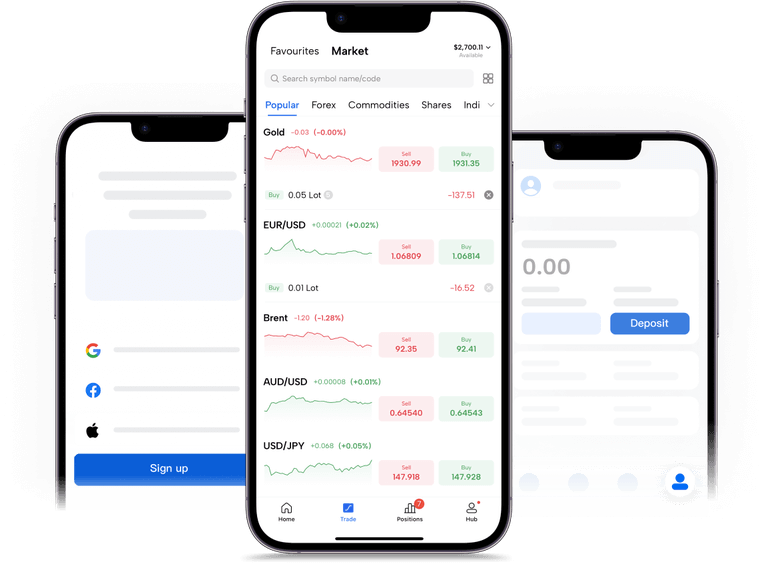
Step 3: Place your trade. Search for “SPCX”, choose to buy or sell, select your leverage, and set stop-loss and take-profit levels.


The Most Suitable Strategies for Trading SPCX
Trading a newly listed giant like SPCX requires a tactical approach. Because the stock trades at an extreme valuation multiple, exhibits high beta (market sensitivity), and remains deeply tied to news-driven momentum, traditional long-only investing may expose you to heavy drawdowns.
Here are three tailored strategies to trade SPCX effectively using CFDs:
🔹Momentum & Catalyst Trading: Enter short-term trades aligned with major physical milestones. Go long ahead of scheduled Starship test flights or major Starlink subscriber updates, and use strict stop-losses to exit if technical setbacks occur.
🔹The Nasdaq-100 Rebalancing Play: Capitalize on the mechanical buying waves. Because Nasdaq rules allow multi-trillion-dollar firms to join the index within 15 trading days with a float multiplier, look to trade the short-term upward price squeeze as passive ETFs are forced to buy billions in shares.
🔹 Range-Bound Scalping & Hedging: Take advantage of high intraday volatility. Use automated Stop-Loss and Take-Profit orders to capture swift $15–$20 price swings, or use short positions to hedge against valuation corrections if the broader tech sector faces a multi-fold compression.
Conclusion
SpaceX is no longer just a rocket company; it aims to own the vital infrastructure of the next global economy—from launch and broadband to orbital AI. While its blockbuster IPO spurred immediate debate over whether SPCX is the next Amazon or an unsustainable bubble, navigating this high-stakes asset requires both agility and robust risk management.
For Arab and GCC investors, regulated CFD platforms like Mitrade provide the flexible tools needed to participate in this space-age super-cycle. Whether you choose to go long on Musk's vision or short the valuation premium, Mitrade allows you to trade both market directions with automated stop-losses and flexible leverage.
* The content presented above, whether from a third party or not, is considered as general advice only. This article should not be construed as containing investment advice, investment recommendations, an offer of or solicitation for any transactions in financial instruments.


