


Goldman Sachs Q3 Earnings Preview: FICC Revenue Cools, Expenses Rise; Can GS Stock Stem the Decline?
TradingKey - Goldman Sachs (GS) will report its third-quarter 2026 financial results at 7:30 a.m. Eastern Time on October 13 and hold an earnings conference call at 9:30 a.m.
As of the close on October 9, Goldman Sachs shares stood at $895.32, down approximately 22.4% from their 52-week intraday high of $1,153.99. Following record net revenue and diluted earnings per share in the second quarter, whether the company can sustain year-over-year growth in the third quarter is a key focus of this earnings report.
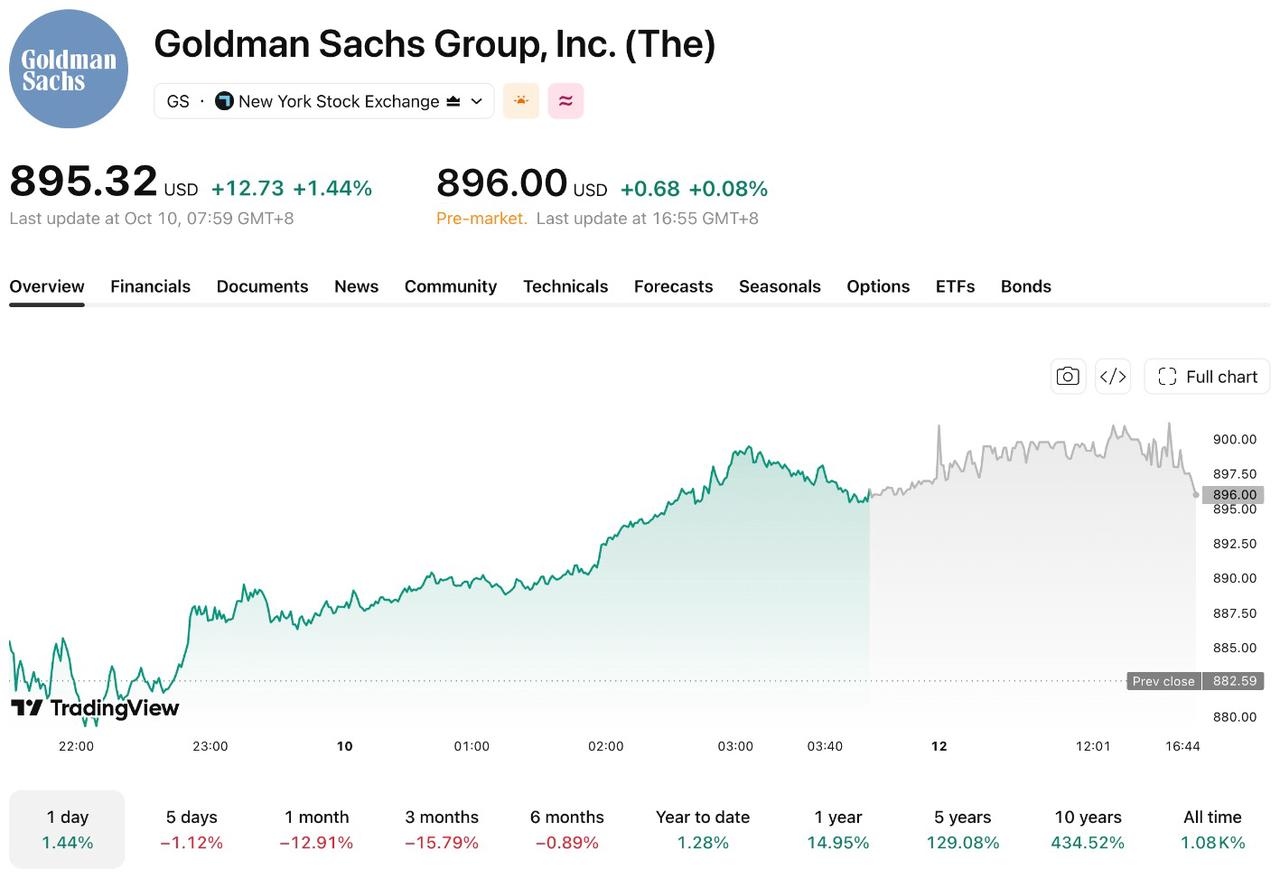
[Source: TradingView]
Market Expects Revenue to Grow About 11% YoY
As of October 12, analyst expectations compiled by MarketBeat show that Goldman Sachs' third-quarter revenue is projected at approximately $16.83 billion, up 10.9% year-over-year, and earnings per share (EPS) at around $12.86, up 5% year-over-year. Compared with the second quarter, revenue is expected to decline by about 17% and EPS by about 39%, but both metrics remain higher than the same period last year.
In the second quarter, Goldman Sachs' net revenue rose 39% year-over-year to $20.34 billion, with net income of $6.63 billion, diluted earnings per share of $20.98, and an annualized return on average common shareholders' equity (ROE) of 23.5%. Net revenue from the Global Banking & Markets segment reached $15.52 billion, up 53% year-over-year, representing approximately 76% of the company's total net revenue.
Can Equities Business Offset FICC Decline?
In the second quarter, Goldman Sachs' equities revenue reached $7.42 billion, up 72% year-over-year; fixed income, currency, and commodities (FICC) revenue was $4.59 billion, up 32% year-over-year; and investment banking fee revenue was $3.4 billion, up 55% year-over-year.
CEO David Solomon stated in September that the equities business remained strong in the third quarter, while the FICC business was relatively weak. Whether equities can offset the decline in FICC revenue will directly impact the performance of the Global Banking & Markets segment.
Wall Street's overall trading revenue is also expected to pull back from second-quarter highs. Bloomberg consensus estimates show that combined equities and fixed-income revenue for Goldman Sachs, JPMorgan (JPM), Morgan Stanley (MS), Citigroup (C), and Bank of America (BAC) in the third quarter will total approximately $38 billion, down about 19% from $47 billion in the second quarter, but still about 13% higher than the same period last year.
Investment banking also faces a high quarter-over-quarter comparison base. Goldman Sachs' investment banking backlog at the end of the second quarter was higher than at the end of the first quarter and the end of 2025; attention in the third quarter will focus on whether these deals can convert into advisory and underwriting revenue.
Expense Growth May Squeeze Profit Margins
According to Solomon's forecast, third-quarter non-compensation expenses will increase by more than $500 million from the second quarter, primarily driven by higher transaction activity and technology investments. Second-quarter operating expenses had already grown 26% year-over-year to $11.67 billion. If expense growth outpaces revenue growth, Goldman Sachs' profit margins and return on equity could decline.
The Asset & Wealth Management business provides relatively stable management fee revenue. The division's second-quarter revenue grew 20% year-over-year to $4.6 billion, with management and other fees accounting for $3.36 billion. Goldman Sachs has set a medium-term target to raise the business's pre-tax margin to approximately 30%.
According to StockAnalysis data, 26 analysts give Goldman Sachs a consensus rating of "Hold," with an average price target of around $1,069, about 19.1% above its October 9 closing price.
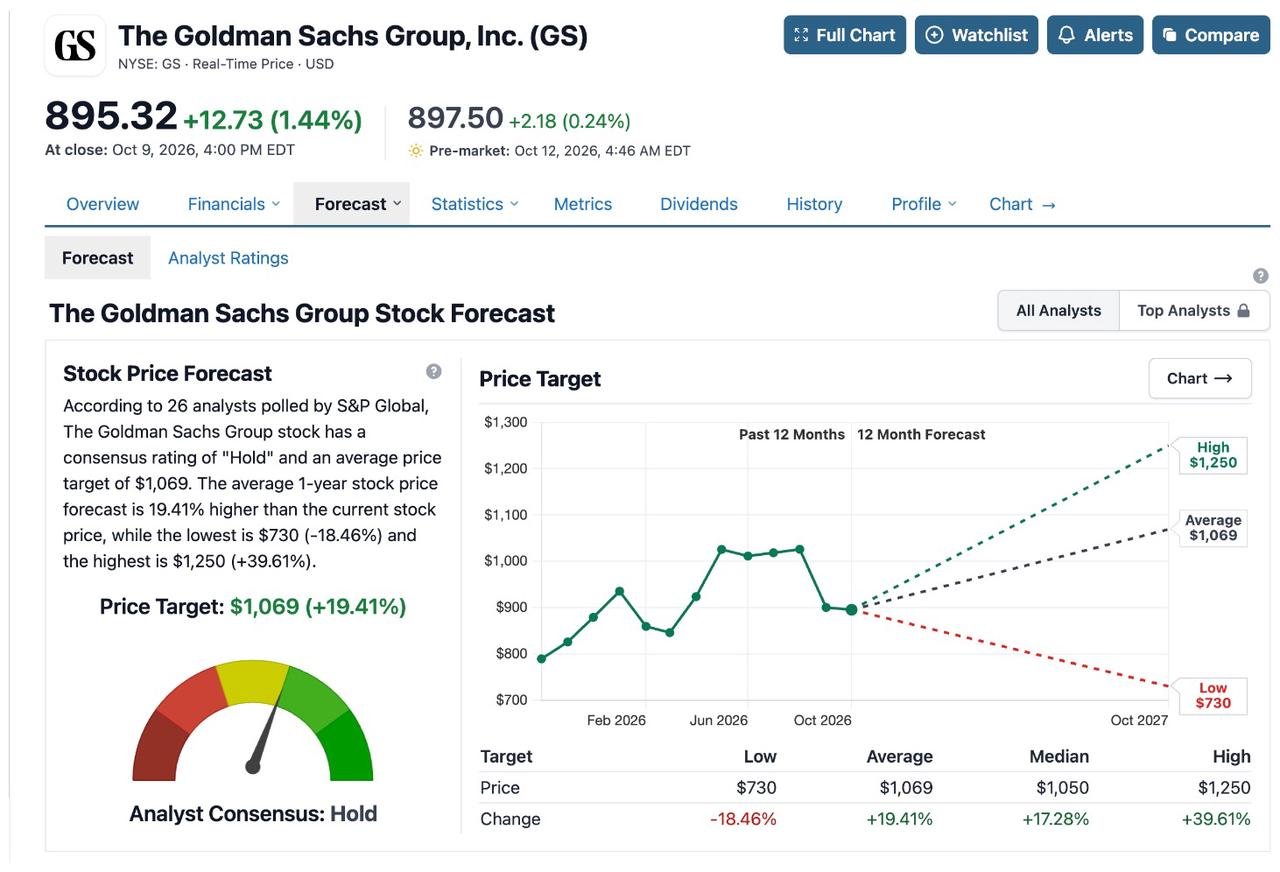
[Source: StockAnalysis]
Following the earnings report, key focus areas should include equities revenue, the decline in FICC, investment banking fees, and non-compensation expenses. If the performance of equities and investment banking is stronger than expected and offsets the decline in FICC and rising costs, Goldman Sachs' earnings could beat market consensus; if expense growth is too rapid, profit margins and return on equity will come under pressure.
Recommended Articles


