


Seagate vs. Western Digital: Which Is the Better Investment Amid the AI Storage Cycle?
TradingKey - The expansion of AI computing power is driving up storage demand in data centers. Although HDDs receive less attention in AI storage discussions than high-performance storage media such as HBM and NAND flash, they handle the long-term storage of AI training data, inference logs, and model versions.
Morgan Stanley (MS) projects that HDD supply will fall 10%-15% short of demand in 2026, with AI-driven demand growth (40%-50%) far outpacing supply growth (30%-35%), and the shortage persisting until at least 2028.
Currently, Seagate (STX) and Western Digital (WDC) are the two core companies in the global high-capacity HDD market, both benefiting from this AI storage supercycle. So, during the AI storage cycle, between Seagate and Western Digital, which is the better investment?
Stock Price Trends Diverge: Seagate Is More Stable, Western Digital More Volatile
Judging from recent performance, the stock price fluctuations of Seagate and Western Digital show clear differences. As of the close on August 18, affected by a surge in long-term macro bond yields and a general pullback in tech stocks from high levels, both stocks suffered a sharp shakeout:
Seagate closed at $903.68 that day, down 9.16%, giving back a portion of its earlier gains. Western Digital closed at $496.16, down 7.43%. Because it operates both HDD and price-sensitive NAND flash memory businesses, capital flows have seen frequent short-term volatility.
According to the latest quantitative backtest data from Yahoo Finance, Seagate's 5-year monthly Beta is approximately 2.1, while Western Digital's reaches as high as 2.22. Both exhibit volatility significantly above the market average (Beta = 1), and Western Digital's short-term price swings are noticeably wider and more intense than Seagate's, making it better suited for short-term investors with an extremely high risk tolerance.
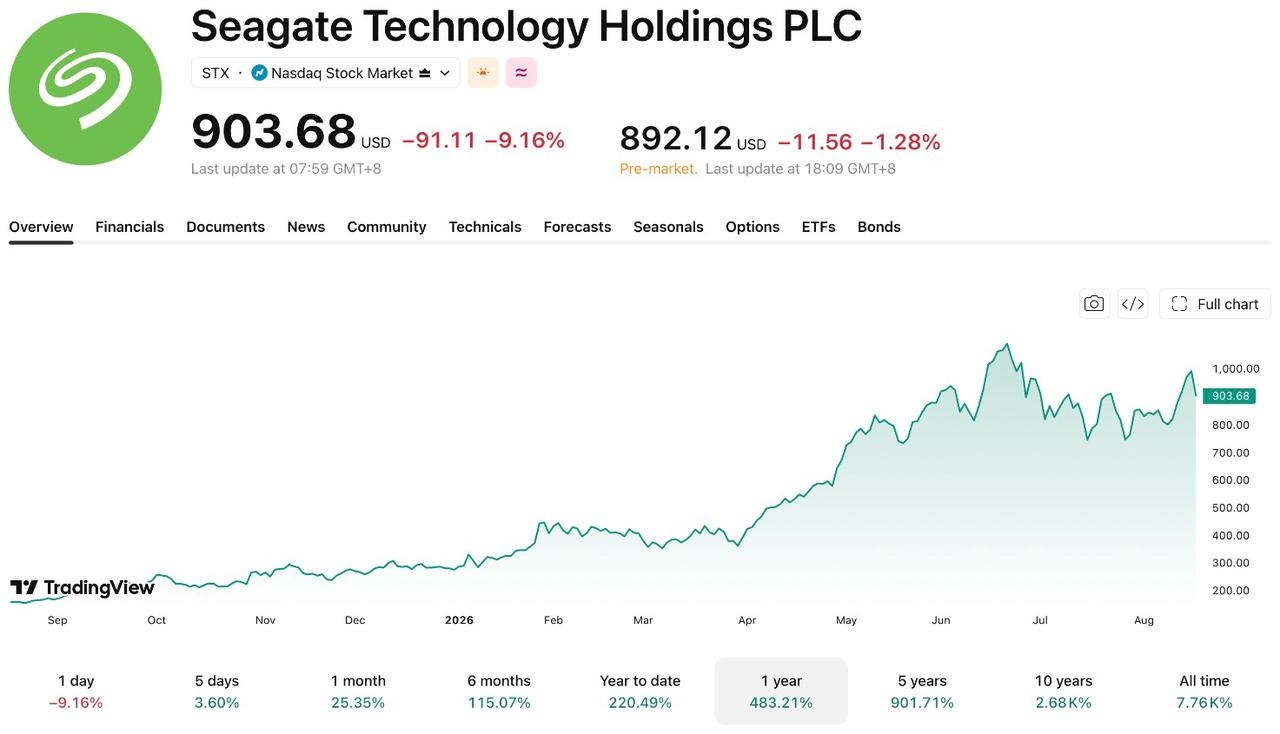
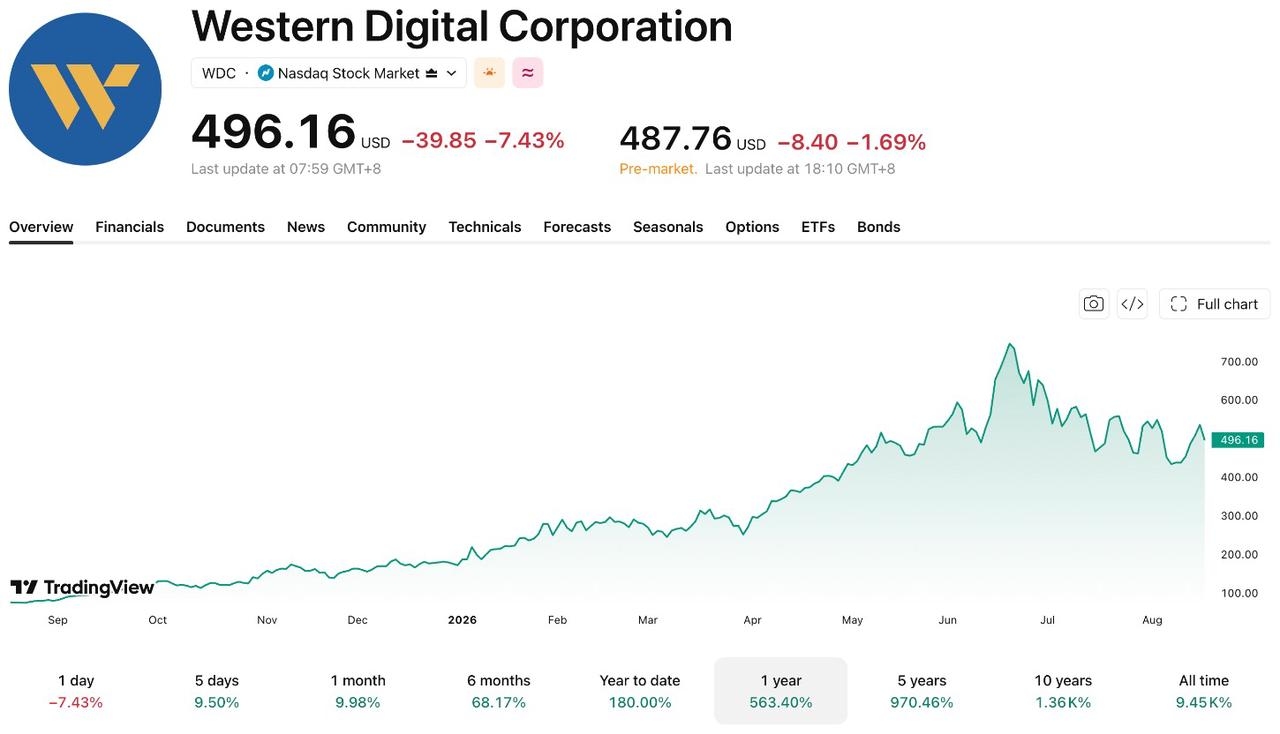
[Source: TradingView]
Earnings and Technological Advantage: Seagate Leads Mass Production, Western Digital Catches Up
Seagate's core advantage lies in its leading mass-production progress in HAMR technology. Its Mozaic 4+ platform has completed qualification at two hyperscale cloud providers and entered mass production, with capacities of up to 44TB, making it the industry's only HAMR storage platform deployed at scale. Seagate is advancing its technology roadmap as planned, moving from the current 4TB-plus per platter toward 10TB per platter in the future, ultimately reaching 100TB capacity.
According to the latest earnings report, Q4 fiscal 2026 revenue was $3.6 billion, up 48% year-over-year, while adjusted EPS reached $5.71, far exceeding market expectations of $5.10.
Brokerage analysts believe that as capacity continues to ramp up and more customer qualifications advance, Seagate's gross margin is expected to enter the mid-to-high 50% range. The company's nearline capacity is largely committed through fiscal 2027, and management is confident in delivering quarter-over-quarter revenue and profit growth in fiscal 2027.
Meanwhile, Western Digital plans to mass-produce 40TB-class products in the second half of 2026, targeting the launch of 100TB HAMR hard drives in 2029, a mass-production timeline slightly behind Seagate's. However, its free cash flow for fiscal 2026 reached approximately $2.372 billion, demonstrating strong cash generation capabilities.
However, the market reaction to Western Digital's Q4 earnings was largely negative. Revenue for the quarter was $3.747 billion, up 44% year-over-year, with a gross margin of 54.1%. Although both metrics beat expectations, the next-quarter gross margin guidance of 55%-56% fell short of the extremely high market expectations formed by benchmarking against Seagate.
Weighed down by this, the stock opened more than 18% lower on the day and ultimately closed down 11.9%, failing to sustain its strong pre-earnings rally.
Institutional Price Targets: Western Digital Has More Implied Upside, Seagate Higher Certainty
According to data from Stock Analysis, as of August 20, 25 analysts have an average price target of $1,125 for Seagate, implying an upside potential of approximately 32.32%; 26 analysts have an average price target of $664.92 for Western Digital, implying an upside potential of about 41.76%. In terms of potential upside, Western Digital offers a better risk-reward profile.
However, behind Western Digital's larger potential upside lies higher uncertainty. The sharp pullback following its earnings release indicates market doubts about the sustainability of its earnings. Whether institutional price targets can be realized depends on whether management can provide a stronger signal in the next quarter that surpasses the 55%-56% gross margin guidance.
In contrast, although Seagate's upside potential reflected in its price targets is slightly smaller, the strength of its earnings guidance has already been validated by the market, and Morgan Stanley's $1,035 price target reflects recognition of its earnings quality.
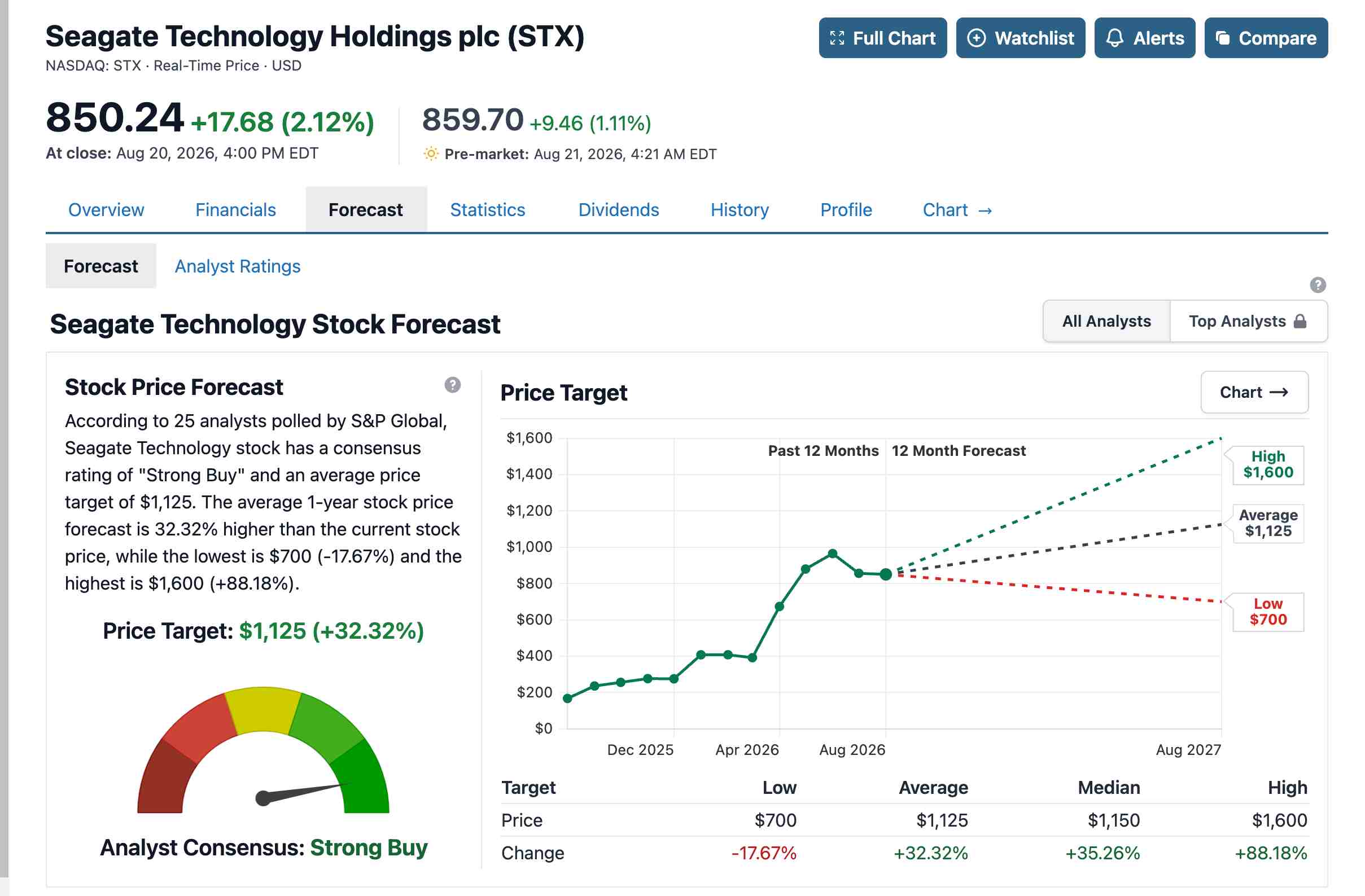
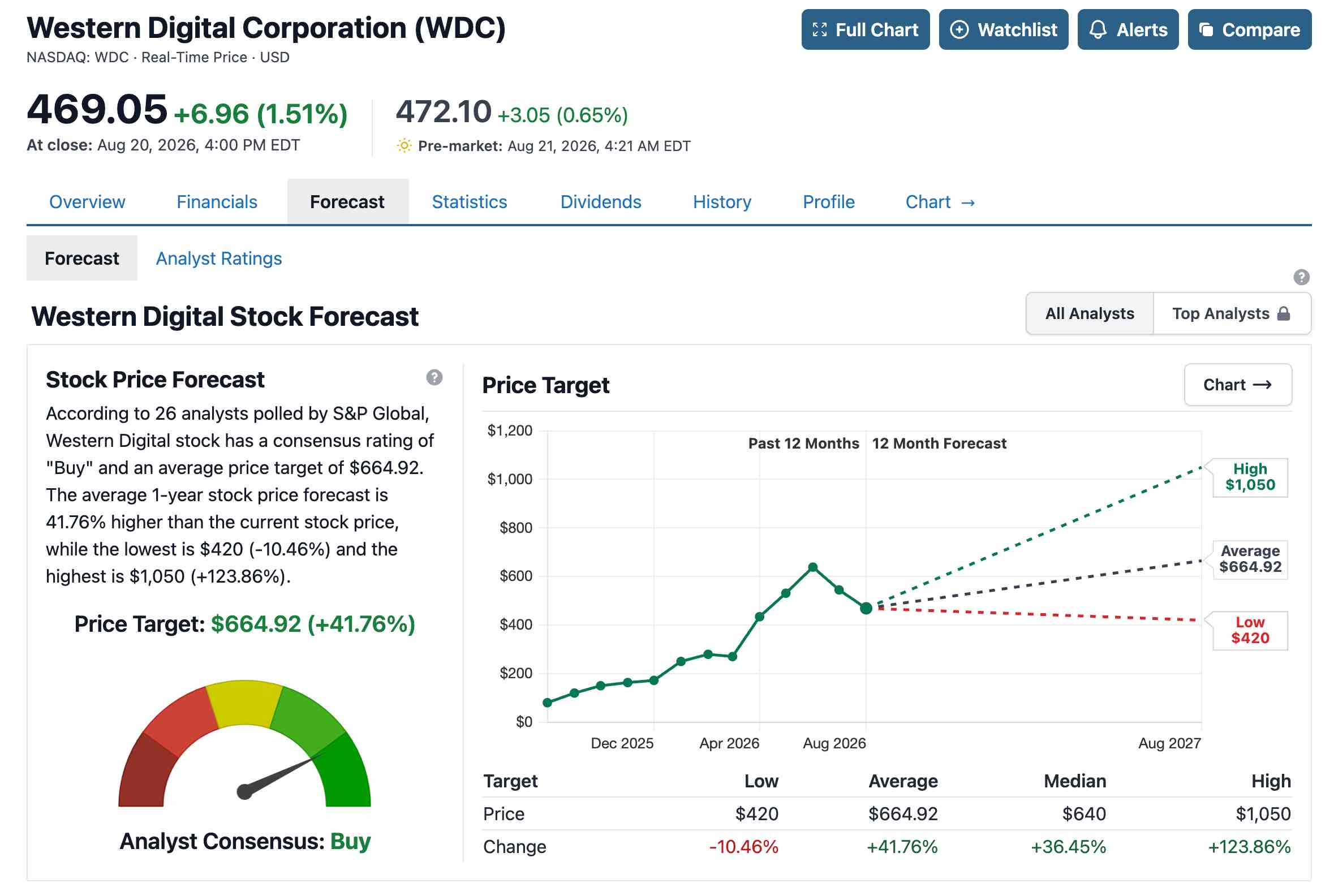
[Source: Stock Analysis Official Website]
Seagate vs. Western Digital: Which Is the Better Investment?
For those who prefer certainty in earnings guidance and quality of earnings, Seagate is the safer choice. Its stock price surged directly following earnings, with guidance implying a gross margin of over 57%, indicating greater management confidence in short-term operating prospects. Morgan Stanley's $1,035 price target also offers a relatively clear benchmark for its valuation.
If valuation elasticity and potential upside are prioritized, Western Digital offers a lower entry cost and greater upside implied by institutional target prices. The sharp post-earnings pullback has already priced in some of the pessimistic sentiment, so once gross margin guidance for next quarter shows marginal improvement, its upside elasticity will be higher. For investors willing to tolerate short-term volatility, Western Digital's risk-reward profile may be more attractive.
However, the common risk facing both is identical: current valuations already reflect a high degree of optimism. If HDD supply and demand conditions ease marginally, or if capital expenditure growth among cloud providers slows, both stocks could suffer an equally sharp pullback.
Recommended Articles


